On This Page
Description
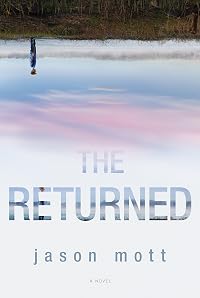
When their son Jacob, who died tragically at his 8th birthday party in 1966, arrives on their doorstep, still 8 years old, Harold and Lucille Hargrave must navigate a strange new reality as chaos erupts around the world as people's loved ones are returned from beyond.Tags
Recommendations


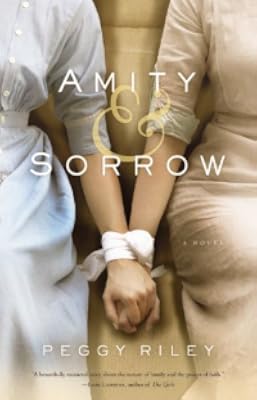
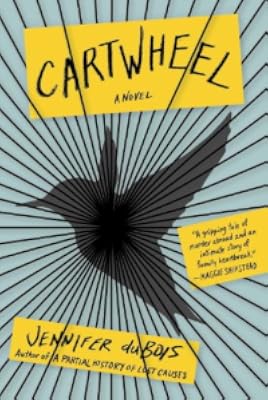
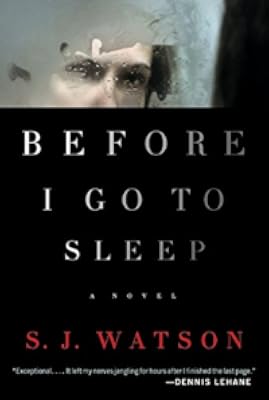
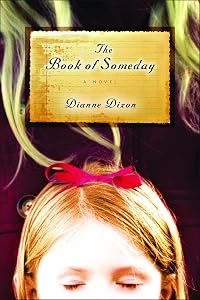
Member Recommendations
michellebarton Both stories about loved ones returned from the dead and the complicated relationships involved.
50
BookshelfMonstrosity Like The Returned, Familiar is an emotionally complex, suspenseful narrative focused on a woman whose dead son inexplicably returns to life years later.
Member Reviews
The dead are returning. They're not ghosts, not zombies, just our departed loved ones -- or perhaps reasonable copies thereof? -- suddenly reappearing, all over the world. One of the Returned is Jacob, an eight-year-old boy who died fifty years ago and is suddenly once again part of the lives of his now-elderly parents, who'd thought they'd lost him forever.
It's a fantastic premise for a novel, and I was eagerly looking forward to reading it. Unfortunately, the execution disappointed me greatly. There were, perhaps, tiny hints here and there of the book it could have been -- something subtle and deeply emotionally complicated and full of a sense of the mysteries of life and death and love -- but it just never quite got there for me, and show more I found that terribly frustrating.
I think a big part of the problem is that I just never found any of the characters emotionally convincing. For example, the boy's mother, Lucille, is deeply religious and starts off the novel ranting about how the Returned are tools of Satan and a sign of the End Times, only to immediately do a one-eighty and declare her no-longer-dead child a miracle sent by God when he shows up on her doorstep. Now, that's not a change of heart that's hard to believe in, but the problem is that we're never given any sense of what's going on in her mind as that happens, or how she justifies it to herself (or fails to), or how it feels in any really deep way. Even though we spend a lot of time in that character's head throughout the course of the novel. And she's not the only one I felt that way about, either.
And then there's the child himself. I think my sense of unease about this story really started when he shows up after having been dead for fifty years and immediately throws himself at his parents yelling "Mommy!' and "Daddy!", with absolutely no acknowledgment that they've aged so much they should be nearly unrecognizable to him. He's like that through the entire book, too. A hollow, depthless, plot device of a character. Which actually could have worked really well, if there were a sense that we were supposed to find him disturbing and uncanny, or if we were used really, really well as a mirror to reflect his parents' emotions. But if that's what Mott is going for, he doesn't exactly pull it off.
Mostly, what the story ends up focusing on is a program put in place by the government to round up the Returned in camps, in part because so many people fear and resent them. But, while we're told about this fear and resentment, the reasons for it never felt particularly well-grounded. And, as social commentary, this storyline feels kind of shallow and over-familiar. I couldn't help thinking, the entire way through, how much better the TV show In the Flesh handled similar themes with actual zombies as the returned-from-the-dead characters.
The writing didn't exactly thrill me, either. We'd get paragraphs or pages of slightly artificial-sounding dialog and okay but uninspired prose, then it'd seem like the author would suddenly realize he was supposed to be a "literary" writer and would throw in some odd, fancy turn of phrase or metaphor that, often as not, just would not work. (My favorite: "'Colonel Willis!' Lucille said, calling the man's name like shouting for a tax auditor." I mean... what?)
Sigh.
Rating: 2.5/5. And, OK, I feel kind of bad about that. It's not an awful book, I guess. I'm probably punishing it simply for not being the book I wanted to read. But, man, it was really, really not the book I wanted to read. show less
It's a fantastic premise for a novel, and I was eagerly looking forward to reading it. Unfortunately, the execution disappointed me greatly. There were, perhaps, tiny hints here and there of the book it could have been -- something subtle and deeply emotionally complicated and full of a sense of the mysteries of life and death and love -- but it just never quite got there for me, and show more I found that terribly frustrating.
I think a big part of the problem is that I just never found any of the characters emotionally convincing. For example, the boy's mother, Lucille, is deeply religious and starts off the novel ranting about how the Returned are tools of Satan and a sign of the End Times, only to immediately do a one-eighty and declare her no-longer-dead child a miracle sent by God when he shows up on her doorstep. Now, that's not a change of heart that's hard to believe in, but the problem is that we're never given any sense of what's going on in her mind as that happens, or how she justifies it to herself (or fails to), or how it feels in any really deep way. Even though we spend a lot of time in that character's head throughout the course of the novel. And she's not the only one I felt that way about, either.
And then there's the child himself. I think my sense of unease about this story really started when he shows up after having been dead for fifty years and immediately throws himself at his parents yelling "Mommy!' and "Daddy!", with absolutely no acknowledgment that they've aged so much they should be nearly unrecognizable to him. He's like that through the entire book, too. A hollow, depthless, plot device of a character. Which actually could have worked really well, if there were a sense that we were supposed to find him disturbing and uncanny, or if we were used really, really well as a mirror to reflect his parents' emotions. But if that's what Mott is going for, he doesn't exactly pull it off.
Mostly, what the story ends up focusing on is a program put in place by the government to round up the Returned in camps, in part because so many people fear and resent them. But, while we're told about this fear and resentment, the reasons for it never felt particularly well-grounded. And, as social commentary, this storyline feels kind of shallow and over-familiar. I couldn't help thinking, the entire way through, how much better the TV show In the Flesh handled similar themes with actual zombies as the returned-from-the-dead characters.
The writing didn't exactly thrill me, either. We'd get paragraphs or pages of slightly artificial-sounding dialog and okay but uninspired prose, then it'd seem like the author would suddenly realize he was supposed to be a "literary" writer and would throw in some odd, fancy turn of phrase or metaphor that, often as not, just would not work. (My favorite: "'Colonel Willis!' Lucille said, calling the man's name like shouting for a tax auditor." I mean... what?)
Sigh.
Rating: 2.5/5. And, OK, I feel kind of bad about that. It's not an awful book, I guess. I'm probably punishing it simply for not being the book I wanted to read. But, man, it was really, really not the book I wanted to read. show less
I had no idea where this story was headed. A story about the deceased popping up all over the world, alive once more and wishing for nothing more than home, could go in so many directions. I am happy to say that I really enjoyed being on the road it took.
If you're looking for a fast paced horror story, keep looking. This story, while it has elements of horror (I mean, just imagine if you answered the door to find a government agent accompanying the dead relative who's been looking for you), this is more a story of beliefs, morals and possibilities. I saw elements of the Holocaust as the Returned were taken from their homes and locked in camps while the government tried to figure out what to do with them. I saw elements of human rights show more struggles. Do we give the Returned the same rights as the True Living or do we treat them as sub-human or (even worse) sinister?
The book moves calmly, almost lazily, within the setting of a small Southern town. But it is thought provoking from the first to the last page. It makes you think about life, about those you love, about family and losses and second chances. It's a good little book.
The narrator of this audiobook version was phenomenal! Tom Stechschulte is excellent and does a fine job of telling the story and bring the characters to life.
Recommended listening. show less
If you're looking for a fast paced horror story, keep looking. This story, while it has elements of horror (I mean, just imagine if you answered the door to find a government agent accompanying the dead relative who's been looking for you), this is more a story of beliefs, morals and possibilities. I saw elements of the Holocaust as the Returned were taken from their homes and locked in camps while the government tried to figure out what to do with them. I saw elements of human rights show more struggles. Do we give the Returned the same rights as the True Living or do we treat them as sub-human or (even worse) sinister?
The book moves calmly, almost lazily, within the setting of a small Southern town. But it is thought provoking from the first to the last page. It makes you think about life, about those you love, about family and losses and second chances. It's a good little book.
The narrator of this audiobook version was phenomenal! Tom Stechschulte is excellent and does a fine job of telling the story and bring the characters to life.
Recommended listening. show less
I'm going to begin my review with an announcement, a caveat, a warning. The Returned isn't a zombie book. The Returned isn't even about what happens when one dies, nor is it particularly interested in why the dead are Returning to life. It is a literary novel looking into the deepest, darkest corners of human nature, and as such, is far more concerned with the living than it ever is with the Returned.
The haunting premise of The Returned pulled me in the moment I first heard about it at a Harlequin event. Gorgeously written and realised, this book explores humanity in a way that I've never seen before: it explores what happens when the one certainty in life, death, suddenly becomes a lot less certain. How would you, as an individual, show more deal with it? How would your community, your country, the whole world, deal with the Returned?
Jason Mott tackles the issue on a variety of levels: firstly with Harold and Lucille, and then with their small-town community of Arcadia, and finally with the whole of America and the rest of the world. The same confusion, desperation and fear are examined at these different levels, and one of the most interesting things the author proposes is that, while people are nice on an individual-by-individual basic, there is some number, some critical mass, after which we group together and discriminate against what's different.
I love how the author examines this through Arcadia. This is one of those towns where everyone says sir and ma'am, where there's one major road and two traffic lights, where the same families have lived for generations, where there are no secrets. When the Returned first appear, the people predictably turn to their pastor for guidance and support, and they stay calm because he preaches acceptance and patience. But the longer they go without answers, the more agitated the townspeople become, and the Return of the Wilsons, a family who was murdered in the past, unearths deep prejudices, fears and secrets and threatens to tear the community apart.
Mott uses a cast of relatable, dimensional characters to tell this story, including a FBI agent stationed in Arcadia and other inhabitants of the small town. Peppered throughout are short glimpses of what's going on in other areas of the country and other parts of the world. Taken together with the emotional story of the newly reunited Hargrave family, they paint a picture of a world struggling to accept the new reality it finds itself in.
I love the story-telling style that the author has chosen, it's vivid and lyrical and enthralled me easily. The book is carefully and simply told, and one gets the feeling that every word, every sentence, is carefully measured and thought out. I think The Returned is exceptionally well told - it's a literary novel, and aside from the premise, there's not an iota of speculative fiction within it, which I really enjoyed because it made me think very hard about the things I've taken for granted for my whole life.
A beautifully told, richly imagined novel, The Returned isn't the book to turn to if you're looking for an apocalypse, for a fight for survival against zombies in horrendous conditions, for guns and blood and hunger and desperation. However if you're interested in a deep but gentle exposition that looks into human nature, with the most interesting premise I have ever had the pleasure to read about, then The Returned is perfect for you!
A copy of this book was provided by the publisher for review.
You can read more of my reviews at Speculating on SpecFic. show less
The haunting premise of The Returned pulled me in the moment I first heard about it at a Harlequin event. Gorgeously written and realised, this book explores humanity in a way that I've never seen before: it explores what happens when the one certainty in life, death, suddenly becomes a lot less certain. How would you, as an individual, show more deal with it? How would your community, your country, the whole world, deal with the Returned?
Jason Mott tackles the issue on a variety of levels: firstly with Harold and Lucille, and then with their small-town community of Arcadia, and finally with the whole of America and the rest of the world. The same confusion, desperation and fear are examined at these different levels, and one of the most interesting things the author proposes is that, while people are nice on an individual-by-individual basic, there is some number, some critical mass, after which we group together and discriminate against what's different.
I love how the author examines this through Arcadia. This is one of those towns where everyone says sir and ma'am, where there's one major road and two traffic lights, where the same families have lived for generations, where there are no secrets. When the Returned first appear, the people predictably turn to their pastor for guidance and support, and they stay calm because he preaches acceptance and patience. But the longer they go without answers, the more agitated the townspeople become, and the Return of the Wilsons, a family who was murdered in the past, unearths deep prejudices, fears and secrets and threatens to tear the community apart.
Mott uses a cast of relatable, dimensional characters to tell this story, including a FBI agent stationed in Arcadia and other inhabitants of the small town. Peppered throughout are short glimpses of what's going on in other areas of the country and other parts of the world. Taken together with the emotional story of the newly reunited Hargrave family, they paint a picture of a world struggling to accept the new reality it finds itself in.
I love the story-telling style that the author has chosen, it's vivid and lyrical and enthralled me easily. The book is carefully and simply told, and one gets the feeling that every word, every sentence, is carefully measured and thought out. I think The Returned is exceptionally well told - it's a literary novel, and aside from the premise, there's not an iota of speculative fiction within it, which I really enjoyed because it made me think very hard about the things I've taken for granted for my whole life.
A beautifully told, richly imagined novel, The Returned isn't the book to turn to if you're looking for an apocalypse, for a fight for survival against zombies in horrendous conditions, for guns and blood and hunger and desperation. However if you're interested in a deep but gentle exposition that looks into human nature, with the most interesting premise I have ever had the pleasure to read about, then The Returned is perfect for you!
A copy of this book was provided by the publisher for review.
You can read more of my reviews at Speculating on SpecFic. show less
The Returned is one of those books that is quietly moving and thought provoking. At the heart of the story are Harold and Lucille Hargrave, whose eight year old son Jacob, drowned some fifty years ago during his birthday party. Now, all over the world a strange and miraculous phenomenon is occurring, where people who have passed away seem to be returning home. Soon enough, Jacob finds his way home to Harold and Lucille.
Wow, this book grabbed me at page one and did not let go. I love the way author Jason Mott quietly drew me in. The storyline is an unsettling one and makes for great discussion. What if our loved ones returned from beyond? Would we welcome them home with open arms? Human nature is to fear the unknown and those who are show more deemed different.
Harold and Lucille are from a small town down South called Arcadia, where everybody knows everyone else and where gossip runs rampant. Jacob is not the only one who has returned, and not before long, the town, and the world over seem divided as far as what they want to do with these people. A few of the other townspeople have returned and I enjoyed the way the author breathes life into Arcadia and its residents. I felt like this was a real place.
I found this novel to be a wonderfully written piece on human nature. The Returned are viewed as different, and some people want them separated from the rest of society, or even killed.
Very interesting to me were the dynamics within Lucille, Harold and Jacob's relationship. Harold and Lucille would have flashbacks of their lives since losing Jacob. These scenes were heartbreaking. Here is this little family who has been giving a second chance and I wanted them to have a happy ending.
My single qualm with this novel is that I didn't get as much details as I would have liked from the Returned themselves. There are no solid explanations given as to why this is all happening. A few of the Returned give some detail about their deaths, but that's about it.
As the story flows, alternating shorter chapters are included from various points of views of the Returned from around the world. I thought these short alternating chapters were a nice touch as far as showcasing all the different situations involved.
With its interesting, well written and thought provoking plot, The Returned has made it to one of my top reads for 2013. This is a beautiful novel that showcases the human condition and brings to light quite a few topics to ponder. With the subject matter being what it is here, some scenes were eerie, yet the author never crosses the line and make it nasty or gory. He keeps it just unsettling enough.
At 345 pages, I read this one in just a few days and that is just what I expect from a great novel, one that engages me until the final page is turned. I love a book that has me wondering.
disclaimer:
This review is my honest opinion. I did not receive any type of compensation for reading and reviewing this book. While I receive free books from publishers and authors, such as this one, I am under no obligation to write a positive review. I received my copy of The Returned via NetGalley show less
Wow, this book grabbed me at page one and did not let go. I love the way author Jason Mott quietly drew me in. The storyline is an unsettling one and makes for great discussion. What if our loved ones returned from beyond? Would we welcome them home with open arms? Human nature is to fear the unknown and those who are show more deemed different.
Harold and Lucille are from a small town down South called Arcadia, where everybody knows everyone else and where gossip runs rampant. Jacob is not the only one who has returned, and not before long, the town, and the world over seem divided as far as what they want to do with these people. A few of the other townspeople have returned and I enjoyed the way the author breathes life into Arcadia and its residents. I felt like this was a real place.
I found this novel to be a wonderfully written piece on human nature. The Returned are viewed as different, and some people want them separated from the rest of society, or even killed.
Very interesting to me were the dynamics within Lucille, Harold and Jacob's relationship. Harold and Lucille would have flashbacks of their lives since losing Jacob. These scenes were heartbreaking. Here is this little family who has been giving a second chance and I wanted them to have a happy ending.
My single qualm with this novel is that I didn't get as much details as I would have liked from the Returned themselves. There are no solid explanations given as to why this is all happening. A few of the Returned give some detail about their deaths, but that's about it.
As the story flows, alternating shorter chapters are included from various points of views of the Returned from around the world. I thought these short alternating chapters were a nice touch as far as showcasing all the different situations involved.
With its interesting, well written and thought provoking plot, The Returned has made it to one of my top reads for 2013. This is a beautiful novel that showcases the human condition and brings to light quite a few topics to ponder. With the subject matter being what it is here, some scenes were eerie, yet the author never crosses the line and make it nasty or gory. He keeps it just unsettling enough.
At 345 pages, I read this one in just a few days and that is just what I expect from a great novel, one that engages me until the final page is turned. I love a book that has me wondering.
disclaimer:
This review is my honest opinion. I did not receive any type of compensation for reading and reviewing this book. While I receive free books from publishers and authors, such as this one, I am under no obligation to write a positive review. I received my copy of The Returned via NetGalley show less
Jason Mott’s The Returned is nothing like the synopsis would indicate. While readers might open the book expecting a good speculative fiction novel, what they find is something much more contemplative and less fantastic. The returning dead are not the main focus of the story but rather the impetus for the story. As such, the reasons behind their return and later second disappearance remain unsolved mysteries left for the reader to interpret based on his or her own belief systems.
The characters spend most of their energy not attempting to solve the riddle of how these people are returning from the dead but instead trying to interpret the meaning behind why they are returning. Whether the townspeople view the Returned as a religious show more symbol of redemption or of damnation, worthy of reverence or of fear and loathing, their responses will mirror a reader’s own doubt and confusion. The best part is the fact that Mr. Mott carefully avoids presenting any outright answers. Rather, he leaves the conclusion-making to the characters and subsequently to the readers. For, the characters’ introspection forces readers to do their own examination of the facts as presented in the novel and come to their own conclusions as to the meanings, if any, behind what occurs.
Speaking of the characters, for the most part, they are fairly one-dimensional and stereotypical. There is some character development, but just like with the mystery surrounding the Returned, the characters are not the main point of the novel either. The lack of fully-fleshed characters are okay given they are also an means to the end; readers are too busy justifying or judging characters’ actions based on the few facts given and their own values.
The Returned is a surprising novel in that it is much more religious-based than science fiction, philosophical rather than suspenseful. In a sense, what occurs in Harold and Lucille’s tiny southern town is nothing more than a symbol for the ongoing religious and political tensions in the Middle East and throughout the globe. The Returned and their loved ones are thrust into a world where all former knowledge about the human lifespan no longer applies, and rather than searching out why this is happening, they separate into factions spent fighting each other versus working together to unravel the mystery. More so than the mysterious Returned, the fighting and eventual government involvement is an indictment of today’s uncompromising society that prefers fists over mediation. In his focus on the whys rather than the hows, Mr. Mott creates a novel that forces introspection and evaluation and leaves a reader pondering the definition of life as well as our treatment of that life. It may not be what a reader expects when first starting the novel, but it makes for an enjoyable reading experience. show less
The characters spend most of their energy not attempting to solve the riddle of how these people are returning from the dead but instead trying to interpret the meaning behind why they are returning. Whether the townspeople view the Returned as a religious show more symbol of redemption or of damnation, worthy of reverence or of fear and loathing, their responses will mirror a reader’s own doubt and confusion. The best part is the fact that Mr. Mott carefully avoids presenting any outright answers. Rather, he leaves the conclusion-making to the characters and subsequently to the readers. For, the characters’ introspection forces readers to do their own examination of the facts as presented in the novel and come to their own conclusions as to the meanings, if any, behind what occurs.
Speaking of the characters, for the most part, they are fairly one-dimensional and stereotypical. There is some character development, but just like with the mystery surrounding the Returned, the characters are not the main point of the novel either. The lack of fully-fleshed characters are okay given they are also an means to the end; readers are too busy justifying or judging characters’ actions based on the few facts given and their own values.
The Returned is a surprising novel in that it is much more religious-based than science fiction, philosophical rather than suspenseful. In a sense, what occurs in Harold and Lucille’s tiny southern town is nothing more than a symbol for the ongoing religious and political tensions in the Middle East and throughout the globe. The Returned and their loved ones are thrust into a world where all former knowledge about the human lifespan no longer applies, and rather than searching out why this is happening, they separate into factions spent fighting each other versus working together to unravel the mystery. More so than the mysterious Returned, the fighting and eventual government involvement is an indictment of today’s uncompromising society that prefers fists over mediation. In his focus on the whys rather than the hows, Mr. Mott creates a novel that forces introspection and evaluation and leaves a reader pondering the definition of life as well as our treatment of that life. It may not be what a reader expects when first starting the novel, but it makes for an enjoyable reading experience. show less
Harold and Lucille’s son Jacob drowned at his 8th birthday party. Fifty years later they answer a knock at the door to find him standing on their porch, returned. A Government Agent of the newly formed Bureau of the Returned has reunited him with his parents. He is still the same little 8 year old boy, but he seems just a little different, a little less than he was. Jacob is not the only Returned. There are many of them around the world. They are returning to life with no explanation of why, or where they have been, or how long they will remain.
There is much speculation in their small town in Southern USA of whether the Returned have been sent from God or are the work of the Devil, or are even really alive. But however they arrived, show more they seem to be there to stay, and more and more of them are returning to overwhelm the small town of Arcadia with dire results.
This is a very powerful debut novel by Jason Mott. He has raised some thought provoking issues in this riveting tale where faith and morality are tested and love and responsibility are questioned. show less
There is much speculation in their small town in Southern USA of whether the Returned have been sent from God or are the work of the Devil, or are even really alive. But however they arrived, show more they seem to be there to stay, and more and more of them are returning to overwhelm the small town of Arcadia with dire results.
This is a very powerful debut novel by Jason Mott. He has raised some thought provoking issues in this riveting tale where faith and morality are tested and love and responsibility are questioned. show less
There are a few themes that will resonate with me now that I have finished this incredible book. The first is a defining characteristic of humanity and the second is a question of the time after good bye.
The Returned, as any product description will tell you, centers on the elderly married couple, Harold and Lucille Hargrave, and the return of their long-dead young son, Jacob. Jacob is one of many Returned and part of a phenomena occurring all around the world. No one can explain how or why, but the dead are waking up in random locations across the globe - alive, well, and looking just as they did on the day they died. Jacob Hargrave drowned on his 8th birthday in 1966, and when the book opens in the present day, septuagenarian Harold show more Hargrave opens his front door and sees 8-year-old Jacob standing before him, the son he had buried so many decades before.
As more and more dead return, questions are coming up: are the Returned the people they were before their deaths? Is this phenomena of people returning from the dead a miracle or a portent of doom? And it is these questions, posed in such magnificent prose by Mott, that brought me to wondering myself: what is the defining characteristic of humanity? There is more than one, but the one seen here most clearly is fear. Fear of the unknown. And fear of the different.
In the novel, as the Returned continue to grow in number and the True Living (as they come to call themselves) can't find answers to how or why, they react as humans are wont to do: with fear. The Returned are rounded up and moved to detention centers where they are "processed" and held against their will. They become victims of violence, and in some of the novel's darker moments, they are murdered in cold blood by the military and by their fellow humans. All because the True Living are afraid. Afraid of something different from themselves. And Mott captures here, very subtly by the way, this deplorable aspect of the human condition.
I think of racism, prejudices, and phobias - they are all rooted in fear. Fear that somebody with a different skin color or different religion or a different sexual orientation is somehow different in a more fundamental and crucial way. And the first step in responding to fear? Isolation and categorization - in the novel, there are the Returned and the True Living. The people are categorized by what makes them different, and by applying a label, we have defined them by the characteristic that makes them different. Oh, you're a man attracted to other men? You're gay. And that is all you are at that point. Gay. Nothing else matters except that one characteristic of your life, and because that is "different" from me, then it is something to fear... and ultimately to hate because it has caused me to fear.
Bullying, cruelty, and hate crimes are all rooted in fear too. Now that we have categories, we have to find a way to "deal with them." People are afraid of those characteristics that make us different, and they lash out in horribly violent ways when they are afraid. I found myself thinking on the Holocaust as I worked my way through the novel, and the ultimate horror that comes from something as simple and identifiable as fear. I don't want to give away too much of the novel, but suffice it to say, there are a number of similarities between the plight of the Returned and the Holocaust.
That dim view of human nature aside, I was also touched by this concept of what happens after we say good bye. In the novel, 8-year-old Jacob returns to an overjoyed mother and a skeptical father. Lucille Hargrave, thrilled and delighted to have her only son back, basks in his presence, while Harold is indifferent and aloof. And it is Harold's reaction that made me think: wouldn't it be a dream come true to have a loved one return? Don't we all lose somebody way too soon, and somebody we never told everything we needed to say? It seems that way ideally, but as Mott beautifully illustrates through the story, idealism and reality are very different. Because there is a difference in how we would want to react, and how we would actually react if the situation came to pass. In the novel, an entire family murdered in their home years before returns. The town had never fully recovered from the shock and horror of losing an entire family in such a grisly way, but when the family returns, no one is sure how to interact with them. People are afraid again, of course, but also unsure. What do you say to a family that was murdered in cold blood? A family no one in the town protected from their violent fate? And nobody knows quite how to find the closure they thought they needed.
It's an incredible question when thought about in some detail. What does define closure and how do we achieve it? It may not be as obvious as we would think.
All this rabble said, this was a truly amazing and spectacular book. There are themes of love, forgiveness, loss, reconciliation, relationships, and strength in the novel too, and the author even says himself in his Author's Note that he wants his readers to find comfort from the story. It is a gift, this book, and one I definitely recommend. show less
The Returned, as any product description will tell you, centers on the elderly married couple, Harold and Lucille Hargrave, and the return of their long-dead young son, Jacob. Jacob is one of many Returned and part of a phenomena occurring all around the world. No one can explain how or why, but the dead are waking up in random locations across the globe - alive, well, and looking just as they did on the day they died. Jacob Hargrave drowned on his 8th birthday in 1966, and when the book opens in the present day, septuagenarian Harold show more Hargrave opens his front door and sees 8-year-old Jacob standing before him, the son he had buried so many decades before.
As more and more dead return, questions are coming up: are the Returned the people they were before their deaths? Is this phenomena of people returning from the dead a miracle or a portent of doom? And it is these questions, posed in such magnificent prose by Mott, that brought me to wondering myself: what is the defining characteristic of humanity? There is more than one, but the one seen here most clearly is fear. Fear of the unknown. And fear of the different.
In the novel, as the Returned continue to grow in number and the True Living (as they come to call themselves) can't find answers to how or why, they react as humans are wont to do: with fear. The Returned are rounded up and moved to detention centers where they are "processed" and held against their will. They become victims of violence, and in some of the novel's darker moments, they are murdered in cold blood by the military and by their fellow humans. All because the True Living are afraid. Afraid of something different from themselves. And Mott captures here, very subtly by the way, this deplorable aspect of the human condition.
I think of racism, prejudices, and phobias - they are all rooted in fear. Fear that somebody with a different skin color or different religion or a different sexual orientation is somehow different in a more fundamental and crucial way. And the first step in responding to fear? Isolation and categorization - in the novel, there are the Returned and the True Living. The people are categorized by what makes them different, and by applying a label, we have defined them by the characteristic that makes them different. Oh, you're a man attracted to other men? You're gay. And that is all you are at that point. Gay. Nothing else matters except that one characteristic of your life, and because that is "different" from me, then it is something to fear... and ultimately to hate because it has caused me to fear.
Bullying, cruelty, and hate crimes are all rooted in fear too. Now that we have categories, we have to find a way to "deal with them." People are afraid of those characteristics that make us different, and they lash out in horribly violent ways when they are afraid. I found myself thinking on the Holocaust as I worked my way through the novel, and the ultimate horror that comes from something as simple and identifiable as fear. I don't want to give away too much of the novel, but suffice it to say, there are a number of similarities between the plight of the Returned and the Holocaust.
That dim view of human nature aside, I was also touched by this concept of what happens after we say good bye. In the novel, 8-year-old Jacob returns to an overjoyed mother and a skeptical father. Lucille Hargrave, thrilled and delighted to have her only son back, basks in his presence, while Harold is indifferent and aloof. And it is Harold's reaction that made me think: wouldn't it be a dream come true to have a loved one return? Don't we all lose somebody way too soon, and somebody we never told everything we needed to say? It seems that way ideally, but as Mott beautifully illustrates through the story, idealism and reality are very different. Because there is a difference in how we would want to react, and how we would actually react if the situation came to pass. In the novel, an entire family murdered in their home years before returns. The town had never fully recovered from the shock and horror of losing an entire family in such a grisly way, but when the family returns, no one is sure how to interact with them. People are afraid again, of course, but also unsure. What do you say to a family that was murdered in cold blood? A family no one in the town protected from their violent fate? And nobody knows quite how to find the closure they thought they needed.
It's an incredible question when thought about in some detail. What does define closure and how do we achieve it? It may not be as obvious as we would think.
All this rabble said, this was a truly amazing and spectacular book. There are themes of love, forgiveness, loss, reconciliation, relationships, and strength in the novel too, and the author even says himself in his Author's Note that he wants his readers to find comfort from the story. It is a gift, this book, and one I definitely recommend. show less
Members
- Recently Added By
Lists

Top Five Books of 2013
1,562 works; 715 members

Kirkus Reviews Best Fiction of 2013
99 works; 6 members

Books Set in North Carolina
84 works; 7 members
Author Information

25 Works 2,817 Members
Jason Mott received a BFA in fiction and an MFA in poetry from the University of North Carolina at Wilmington. His poetry and fiction have appeared in various journals including Prick of the Spindle, The Thomas Wolfe Review, The Kakalak Anthology of Carolina Poets, Measure and Chautauqua. His works include two poetry collections, We Call This show more Thing Between Us Love and Hide Behind Me, and the novel The Returned. (Bowker Author Biography) show less
Awards and Honors
Series

Common Knowledge
- Canonical title
- The Returned
- Original title
- The Returned
- Original publication date
- 2013-08-27
- Related movies
- Resurrection (2013 | IMDb)
- Dedication
- For my mother and father.
- First words
- Harold opened the door that day to find a dark-skinned man in a well-cut suit smiling at him.
- Last words
- (Click to show. Warning: May contain spoilers.)Things were happening like this all over.
- Original language
- English
Classifications
Statistics
- Members
- 1,012
- Popularity
- 25,763
- Reviews
- 118
- Rating
- (3.35)
- Languages
- 7 — Dutch, English, Estonian, German, Italian, Portuguese, Spanish
- Media
- Paper, Audiobook, Ebook
- ISBNs
- 40
- ASINs
- 9