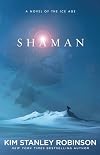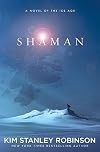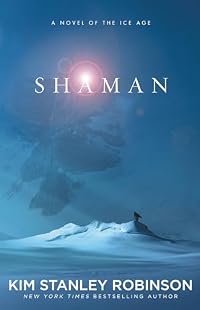
Shaman
by Kim Stanley Robinson
On This Page
Description
A saga of life thirty thousand years ago during the Ice Age depicts the lives of the shaman Thorn, an outsider named Elga, and Loon, the next shaman, who is struggling to find his own path in a treacherous and uncertain world.Tags
Recommendations













Member Reviews
I suspected while reading *The High Sierra*, by the same author, that Robinson had it in him to write a well-researched and empathetic treatment of Cro Magnon life. That turned out to be correct; I enjoyed this one a lot. His descriptions of the land and animals are evocative and seem personal, and he lends humanity to a people whose world view is both foreign and recognizable to us. Some of the details are, by necessity, speculative — tribal ("pack") behavior, religion, outlook, technology — but all these counterfactuals seem to me at least within the bounds of possibility, so they didn't distract from the story.
An amazing reconstruction of the world of the Stone Age, when there were still Neanderthal people around, and huge glaciers covered much of the northern lands. The story starts with Loon, a reluctant shaman, being sent out naked on his wander (sort of a cross between a vision quest and a test of survival), and follows his adventures and those of his tribe for several years after that. It’s fascinating and well researched, based on the available archaeological evidence. (Don’t read it if you’re squeamish about descriptions of animals being killed and butchered for food.) The characters are deftly and well drawn, and the dynamics of the group and how society works are very interesting.
There are no dragons in Kim Stanley Robinson's ice age novel Shaman. There are no elves, no spaceships, no magic. Rather, Robinson achieves the fantastic by showing the reader that's what old is fresh, and what's new is timeless. The magic of Shaman is found in humanity's quest for continuity and meaning.
Shaman is set during the ice age, and its premise is simple: a boy, Loon, is apprenticed to his tribe's shaman, Thorn. Loon reluctantly pursues the shaman's path and grows into a man. There are a lot of animals and trees.
The story works. Shaman begins with Loon's "wander," his initiation into manhood through two weeks of solitary living in the wilderness. It's not giving anything away to say that he succeeds. Loon's wander is a show more life-altering experience, a rite that will shape the rest of his life. Just weeks after his return, Loon watches his tribe from a hilltop and wishes that he could have stayed on his wander "forever," rather than hearing his people say the same things over and over again.
Robinson successfully captures a sense of what life might have been like for our ancient ancestors. He describes the various tasks that took up their days, mostly oriented around gathering sufficient food for survival. Processes like painting or crafting snowshoes are described in minute detail. Rather than boring the reader, though, these discourses demonstrate the boundless potential for creativity shared by all people, ancient and modern.
Robinson makes evident that there is a connection between humanity's past and its present. Loon's maturation reveals a process of discovery common to all people across time. Loon defies his elders, he enjoys first love, he starts a family. Though for humanity as a whole all is old, the individual experiences things anew. It is the duty of people to pass their knowledge on to the young, as Thorn makes clear to his apprentice.
Nature figures prominently in the book, of course. Robinson lavishes great detail on the landscape and weather, influences from which modern people have insulated themselves, but which were matters of survival for ancient humans. Animals are almost characters in their own right, perceived as brothers and sisters by the men who hunt them. "Thank you!" the hunters cry after making a kill. Loon interprets as a blessing the siting of a horse at the end of his wander. Here are people in tune with the land.
What according to Robinson is the nature of shamanism? It is not spirit quests or dancing or chanting. Rather, shamans are people who take upon themselves the role of storyteller. By constructing narratives, shamans pass knowledge on to their people. They ensure the continuity of the human experience. They make meaning. In that sense, Kim Stanley Robinson is a shaman.
Shaman is a wonderful book. Robinson provides great detail about the natural world and the lives of ancient people. There is no (or very little) magic or mystery here; Shaman is about the wonder to be found in very real human experience. Some readers may be put off by the level of detail or pacing in some parts; try to persevere. show less
Shaman is set during the ice age, and its premise is simple: a boy, Loon, is apprenticed to his tribe's shaman, Thorn. Loon reluctantly pursues the shaman's path and grows into a man. There are a lot of animals and trees.
The story works. Shaman begins with Loon's "wander," his initiation into manhood through two weeks of solitary living in the wilderness. It's not giving anything away to say that he succeeds. Loon's wander is a show more life-altering experience, a rite that will shape the rest of his life. Just weeks after his return, Loon watches his tribe from a hilltop and wishes that he could have stayed on his wander "forever," rather than hearing his people say the same things over and over again.
Robinson successfully captures a sense of what life might have been like for our ancient ancestors. He describes the various tasks that took up their days, mostly oriented around gathering sufficient food for survival. Processes like painting or crafting snowshoes are described in minute detail. Rather than boring the reader, though, these discourses demonstrate the boundless potential for creativity shared by all people, ancient and modern.
Robinson makes evident that there is a connection between humanity's past and its present. Loon's maturation reveals a process of discovery common to all people across time. Loon defies his elders, he enjoys first love, he starts a family. Though for humanity as a whole all is old, the individual experiences things anew. It is the duty of people to pass their knowledge on to the young, as Thorn makes clear to his apprentice.
Nature figures prominently in the book, of course. Robinson lavishes great detail on the landscape and weather, influences from which modern people have insulated themselves, but which were matters of survival for ancient humans. Animals are almost characters in their own right, perceived as brothers and sisters by the men who hunt them. "Thank you!" the hunters cry after making a kill. Loon interprets as a blessing the siting of a horse at the end of his wander. Here are people in tune with the land.
What according to Robinson is the nature of shamanism? It is not spirit quests or dancing or chanting. Rather, shamans are people who take upon themselves the role of storyteller. By constructing narratives, shamans pass knowledge on to their people. They ensure the continuity of the human experience. They make meaning. In that sense, Kim Stanley Robinson is a shaman.
Shaman is a wonderful book. Robinson provides great detail about the natural world and the lives of ancient people. There is no (or very little) magic or mystery here; Shaman is about the wonder to be found in very real human experience. Some readers may be put off by the level of detail or pacing in some parts; try to persevere. show less
I really liked the idea of the book, and was excited to see how KSR executed it. The book itself would probably have been good if it were about 40% shorter. The padding was painful to read - almost like it was designed to be skimmed. I hope this wasn't bowing to a page count requirement, or some other lame art-sapping motive. The story at its heart was good. There were definitely areas of interest, though these were far outnumbered by predictable elements that were buried in pages upon pages of irrelevant repetitive description. The highlight is probably the bit of adventure around 60% in.
I chose this book as my introduction to Robinson - feeling that the Mars books would feel like a bigger commitment. I'm afraid it will be a while show more before I read him again, because this outing - while not bad - just wasn't quite worth the time it took to read it. show less
I chose this book as my introduction to Robinson - feeling that the Mars books would feel like a bigger commitment. I'm afraid it will be a while show more before I read him again, because this outing - while not bad - just wasn't quite worth the time it took to read it. show less
In "The High Sierra," Kim Stanley Robinson says that "Shaman" is his work of fiction that most closely resembles his High Sierra life, despite being set thirty thousand years in the past. Having enjoyed "The High Sierra," I thought I should give "Shaman" a chance.
I keep coming back to the writing of KSR because I like his choice of subjects. Musing on life thirty thousand years ago is a worthwhile meditation. That said, I often feel let down be the KSR's methodically plodding prose.
My wish was that "Shaman" would be a deeply weird book, like a myth. Many myths feels too peculiar to have been manufactured; no matter how many times you hear them, they remain inscrutable, growing more mysterious with each passing year. "Shaman" does not show more have this sense of mystery to it. Although there are animist elements to the book, and moments of mystery, they do not form the black whole at the center of the book's galaxy.
For example, the story begins with a passage dripping with terror at the end of of the protagonist's vision fast where he is being pursued by a humanoid but beastly entity. Given the dark power of the haunting vision, one might think that it would be an anchor point for the rest of the book. Instead, not only does KSR leave this vision languishing, at the end of the book, the protagonist's teacher dispels any weight the vision might have had by saying a neighboring shaman probably dressed up as this geist, and not to make anything of it.
KSR continues to sidestep potentially potent core themes. Our protagonist has a child, but very little is made of this seemingly significant life chapter. Although shamans are said to be healers, our protagonist spends almost none of his time doing healing work.
To make matters worse, the bulk of the book is taken up when our protagonist's life is sidetracked by the kidnapping of his wife and his subsequent enslavement. Like many of the social norms in the book, this trope of slavery seems to have more to do with modern social norms than with inspired archeology and anthropology. KSR is perpetually projecting contemporary bigotry onto our ancient ancestors; for example, monogamous relationship guarded by jealousy. If I'm reading a book set thirty thousand years in the past, I don't want any of the social norms to feel familiar—otherwise the book should just be contemporary.
The one other major flaw of the plot involves an incident of cannibalism perpetrated against a friendly and helpful Neanderthal. The plot point feels entirely unnecessary (do we need more fiction justifying cannibalism?), and also comes across as racist (if they had to eat someone, why did it have to be the only Neanderthal whose name we learn?).
Despite the let downs of "Shaman," I have not given up on Late Pleistocene fiction. Next up: "Reindeer Moon" by Elizabeth Marshall Thomas. show less
I keep coming back to the writing of KSR because I like his choice of subjects. Musing on life thirty thousand years ago is a worthwhile meditation. That said, I often feel let down be the KSR's methodically plodding prose.
My wish was that "Shaman" would be a deeply weird book, like a myth. Many myths feels too peculiar to have been manufactured; no matter how many times you hear them, they remain inscrutable, growing more mysterious with each passing year. "Shaman" does not show more have this sense of mystery to it. Although there are animist elements to the book, and moments of mystery, they do not form the black whole at the center of the book's galaxy.
For example, the story begins with a passage dripping with terror at the end of of the protagonist's vision fast where he is being pursued by a humanoid but beastly entity. Given the dark power of the haunting vision, one might think that it would be an anchor point for the rest of the book. Instead, not only does KSR leave this vision languishing, at the end of the book, the protagonist's teacher dispels any weight the vision might have had by saying a neighboring shaman probably dressed up as this geist, and not to make anything of it.
KSR continues to sidestep potentially potent core themes. Our protagonist has a child, but very little is made of this seemingly significant life chapter. Although shamans are said to be healers, our protagonist spends almost none of his time doing healing work.
To make matters worse, the bulk of the book is taken up when our protagonist's life is sidetracked by the kidnapping of his wife and his subsequent enslavement. Like many of the social norms in the book, this trope of slavery seems to have more to do with modern social norms than with inspired archeology and anthropology. KSR is perpetually projecting contemporary bigotry onto our ancient ancestors; for example, monogamous relationship guarded by jealousy. If I'm reading a book set thirty thousand years in the past, I don't want any of the social norms to feel familiar—otherwise the book should just be contemporary.
The one other major flaw of the plot involves an incident of cannibalism perpetrated against a friendly and helpful Neanderthal. The plot point feels entirely unnecessary (do we need more fiction justifying cannibalism?), and also comes across as racist (if they had to eat someone, why did it have to be the only Neanderthal whose name we learn?).
Despite the let downs of "Shaman," I have not given up on Late Pleistocene fiction. Next up: "Reindeer Moon" by Elizabeth Marshall Thomas. show less
Love it unreservedly.
There's a passage in "The Gold Coast" where Jim and his friends try to imagine, generation by generation, a rough sketch of the lives of the inhabitants of a Greek island, ticking off with each leap back in time who they would've been governed by, the language the inhabitants would've spoken, until the arrive at roughly the time the island would've first been inhabited by a group of friends and their families, spreading out from the village where they would've been born to make a living together on a likely looking patch of land where they could imagine making it work. That passage has stuck with me through the years and this novel is almost like an extended riff on the idea -- imagining how the earliest humans show more would've found a place to eek out a living and increased their numbers until there was a little group ready to break away and make a go of it a little further upriver, or in the next valley over, keeping ties (here: sharing a shaman who's just come of age), but creating a new village. Near the dawn of humanity, when homo sapiens and neanderthals lived side-by side, this story feels more than possible; sure, it's imagined history, speculation, extrapolation, poetic license taken, and yet knowing that we still feel like Stan has told it way that it had to be so.
There are other notes hit here that strike me as mining some of the same rich vein as "The Gold Coast," which, in case it's not obvious, is one of my favorite of Mr. Robinson's novels, if not my favorite. Loon may not be a pre-historic Jim McPherson, but he's not far off. Loon's relationship to Sage and then Elga doesn't map precisely to that of Jim to Virginia Novello and Hana Steentoft but it's another echo.
But this is by no means of pastiche or just a re-shuffling of elements we've seen before. It's beautiful, and haunting, and epic (in a way, but small and deeply personal, too), and tense, and earthy and gross, and spiritual, and it stands alone.
If the storyteller is our shaman, then in the parlance of this novel, we have a good shaman. (Which is just another way to say this is a beautiful story well-told.) show less
There's a passage in "The Gold Coast" where Jim and his friends try to imagine, generation by generation, a rough sketch of the lives of the inhabitants of a Greek island, ticking off with each leap back in time who they would've been governed by, the language the inhabitants would've spoken, until the arrive at roughly the time the island would've first been inhabited by a group of friends and their families, spreading out from the village where they would've been born to make a living together on a likely looking patch of land where they could imagine making it work. That passage has stuck with me through the years and this novel is almost like an extended riff on the idea -- imagining how the earliest humans show more would've found a place to eek out a living and increased their numbers until there was a little group ready to break away and make a go of it a little further upriver, or in the next valley over, keeping ties (here: sharing a shaman who's just come of age), but creating a new village. Near the dawn of humanity, when homo sapiens and neanderthals lived side-by side, this story feels more than possible; sure, it's imagined history, speculation, extrapolation, poetic license taken, and yet knowing that we still feel like Stan has told it way that it had to be so.
There are other notes hit here that strike me as mining some of the same rich vein as "The Gold Coast," which, in case it's not obvious, is one of my favorite of Mr. Robinson's novels, if not my favorite. Loon may not be a pre-historic Jim McPherson, but he's not far off. Loon's relationship to Sage and then Elga doesn't map precisely to that of Jim to Virginia Novello and Hana Steentoft but it's another echo.
But this is by no means of pastiche or just a re-shuffling of elements we've seen before. It's beautiful, and haunting, and epic (in a way, but small and deeply personal, too), and tense, and earthy and gross, and spiritual, and it stands alone.
If the storyteller is our shaman, then in the parlance of this novel, we have a good shaman. (Which is just another way to say this is a beautiful story well-told.) show less
Fantasy about the life in the ice age. Tracks the adventures of a human, starting from his initiation rites, to finding and keeping a partner, to taking the place of the old shaman. There a lot of details about what the daily life must have been back then and we get the point of view of the character thoughts. The charm of the story comes from all the things that are missing as they are not yet present in the world at that time. This still does not diminish in any way the humanity of the characters and the fact that you end up caring for them.
Members
- Recently Added By
Published Reviews
ThingScore 100
This detailed study of where we came from, including our rivalry with our Neanderthal predecessors, offers insight into who we are, wrapped in a fascinating tale about a boy coming into manhood.
added by KelMunger
Lists

Best Historical Fiction
620 works; 257 members

Best 21st Century Books (So Far)
670 works; 86 members

Top Five Books of 2014
1,064 works; 398 members

Books Read in 2020
4,379 works; 124 members

Best Prehistoric Novels
64 works; 10 members

Prehistoric Peoples and Animals
10 works; 3 members
Author Information

142+ Works 49,305 Members
Kim Stanley Robinson was born in Orange County, California on March 23, 1952. He received a B. A. and Ph. D. from the University of California at San Diego and an M. A. from Boston University. His first trilogy of books, Orange County, collectively won a Nebula Award and two Hugo Awards. His other works include the Mars trilogy, 2312, and Aurora. show more He has won an Asimov Award, a World Fantasy Award, a Locus Reader's Poll Award, and a John W. Campbell Award. (Bowker Author Biography) show less
Some Editions
Awards and Honors
Awards
Distinctions
Common Knowledge
- Canonical title*
- Schamane
- Original publication date
- 2013-09-03
- People/Characters
- Loon; Huard; Thorn; Piquant; Elga; Bruyère (show all 8); Heather; Clic
- Dedication
- To the memory of Ralph Vicinanza
- First words
- We had a bad shaman.
- Last words
- (Click to show. Warning: May contain spoilers.)And he reached out and flicked the boy on the ear.
- Publisher's editor
- Holman, Tim
- Blurbers
- Banks, Iain M.
- Original language
- English
*Some information comes from Common Knowledge in other languages. Click "Edit" for more information.
Classifications
- Genres
- Fiction and Literature, Science Fiction, Historical Fiction, General Fiction
- DDC/MDS
- 813.54 — Literature & rhetoric American literature in English American fiction in English 1900-1999 1945-1999
- LCC
- PS3568 .O2893 .S53 — Language and Literature American literature American literature Individual authors 1961-
- BISAC
Statistics
- Members
- 722
- Popularity
- 39,057
- Reviews
- 38
- Rating
- (3.70)
- Languages
- English, French, German, Spanish
- Media
- Paper, Audiobook, Ebook
- ISBNs
- 17
- ASINs
- 5