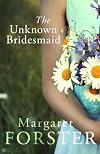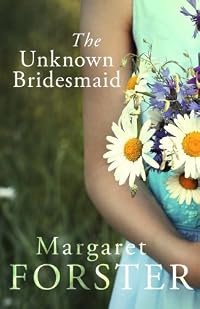
The Unknown Bridesmaid
by Margaret Forster
On This Page
Description
When Julia was eight, she was asked to be a bridesmaid at her beautiful cousin Iris's wedding. Her mother saw this as a chore--expensive, inconvenient-- but Julia was thrilled. When the time came, even the fact that her bridesmaid's dress didn't fit, and was plain cream rather than the pink she'd hoped for, couldn't ruin the day. But after this, things began to go wrong for Julia, starting with an episode involving her cousin's baby, a pram and a secret trip round the block. A lifetime show more later, Julia is a child psychologist working with young girls at risk. In her sessions, Julia has a knack for determining which of her young patients are truly troubled, and which are simply at the mercy of the oppressive adults around them. show lessTags
Recommendations












Member Reviews
The Unknown Bridesmaid is an entirely absorbing and compelling tale of a troubled girl, and the troubled adult she became. Julia believes that she is responsible for the death of her cousin's baby and turns this guilt into mischief towards that cousin and her family that takes until midlife to expiate and understand. Julia grows up to be a successful counselor of troubled children and her work eventually forces her to deal with her own demons. Julia is not unsympathetic in my opinion, and while her behavior is not "justified" Margaret Forster lets us see the forces pushing and pulling this little girl this way and that. Her relationship with her mother, her cousin and her cousin's children are stark and scary in their rawness. It's one show more of the best books I've read about the dark side of growing up. show less
This is a wonderful book: about families, mothers and daughters, secrets kept and secrets told and the unseen cruelties of children. The tone throughout captures perfectly the small resentments of family life that can fester untold for years, and the realities of less than perfect families.
Julia is a psychologist dealing with problem children: her clients are the bullies and the bullied, the runaways, the petty criminals and the violent. Successful in her career, she carries out her duties diligently, and is acknowledged by her colleagues to be very good at her job. But as Julia probes the motivations of client after client, frequently finding the problem to be with the parent rather than the child, it becomes obvious that she has show more issues from her own childhood that remain unaddressed. And the book follows Julia back to her childhood, to the pivotal year when at the age of eight she is a bridesmaid for her cousin Iris. Julia's mother, a widow with little money, is at first inclined to resent the request from the daughter of her only sister for Julia to be her bridesmaid: there is the expense of the dress and the shoes, and the cost of travel to her home town of Manchester for the wedding. And for Julia's mother, resentment is often the predominant feeling. But eventually allowed to take part, Julia is completely won over by her rarely seen blonde haired, blue-eyed cousin who has the ability to charm everyone, and who, as her mother says, is making a very good match, to a major in the army and the son of an MP at that. Julia's mother's view is that such good fortune cannot last, and so it proves, with Iris widowed within weeks of the wedding when her husband is killed by a sniper's bullet in Northern Ireland. But when a baby is born to Iris, Julia is completely unable to understand the attention it receives from her family, even from her normally unemotional and aloof mother, and resentment starts to develop...
This is a quiet book, full of small incidents: the drinking of tea takes the place of meaningful discussion. The major events are off stage and not talked about but exert their influence nonetheless. It is a wonderful depiction of people who believe that if something isn't talked about then perhaps it didn't really happen, and of the unreliability of memory.
The review which led me to this book felt that Margaret Forster was an unduly neglected writer, whose work would have found its way onto many more prize lists if her subject matter was different, and based on the quality of this book I have to say that I agree. But mothers and daughters, and women left resentful after unfulfilled lives, often seem to be regarded as less 'literary' than middle-aged male angst, although I have to say that personally I think the Booker short list would often be improved by a change of outlook. So, highly recommended. show less
Julia is a psychologist dealing with problem children: her clients are the bullies and the bullied, the runaways, the petty criminals and the violent. Successful in her career, she carries out her duties diligently, and is acknowledged by her colleagues to be very good at her job. But as Julia probes the motivations of client after client, frequently finding the problem to be with the parent rather than the child, it becomes obvious that she has show more issues from her own childhood that remain unaddressed. And the book follows Julia back to her childhood, to the pivotal year when at the age of eight she is a bridesmaid for her cousin Iris. Julia's mother, a widow with little money, is at first inclined to resent the request from the daughter of her only sister for Julia to be her bridesmaid: there is the expense of the dress and the shoes, and the cost of travel to her home town of Manchester for the wedding. And for Julia's mother, resentment is often the predominant feeling. But eventually allowed to take part, Julia is completely won over by her rarely seen blonde haired, blue-eyed cousin who has the ability to charm everyone, and who, as her mother says, is making a very good match, to a major in the army and the son of an MP at that. Julia's mother's view is that such good fortune cannot last, and so it proves, with Iris widowed within weeks of the wedding when her husband is killed by a sniper's bullet in Northern Ireland. But when a baby is born to Iris, Julia is completely unable to understand the attention it receives from her family, even from her normally unemotional and aloof mother, and resentment starts to develop...
This is a quiet book, full of small incidents: the drinking of tea takes the place of meaningful discussion. The major events are off stage and not talked about but exert their influence nonetheless. It is a wonderful depiction of people who believe that if something isn't talked about then perhaps it didn't really happen, and of the unreliability of memory.
The review which led me to this book felt that Margaret Forster was an unduly neglected writer, whose work would have found its way onto many more prize lists if her subject matter was different, and based on the quality of this book I have to say that I agree. But mothers and daughters, and women left resentful after unfulfilled lives, often seem to be regarded as less 'literary' than middle-aged male angst, although I have to say that personally I think the Booker short list would often be improved by a change of outlook. So, highly recommended. show less
This is a thoroughly absorbing and moving story of a life that is shaped and dominated by childhood events that leave Julia plagued by her earlier actions and secrets. Switching between her childhood and her later life into her late 40s, the book reveals how Julia is influenced by the events of her youth and how they affect both her personal and professional life. There is a contrast between these two parts, in that Julia has great difficulty in making and keeping close relationships in her personal life. However, her childhood actions and regrets are put to a humane and understanding approach to people in her choice of career as a child psychologist and later as a magistrate. Margaret Forster explores in a thoughtful and fully show more believable manner these contradictions and weaves a fascinating and sensitive novel from them. show less
A very clever book and not just clever - the emotions are fully engaged via the intellect. Offers so much food for thought yet so smoothly written that it's a real page turner and hard to put down. In some ways it is the earlier generations that are the protagonists, the grandparents that are dead before the book starts and about which we hardly hear, and the two sisters whose internal life is never explored directly, but who each have a daughter. A lot of other reviewers have drawn morals from the tale but I don't think the author is moralising, just that there is room for each reader to make their own. For me it's just keep talking, love your family and friends and hope for some good luck at times.
A story told from Julia’s perspective, back and forth between the present and past, when she and her mother went to live with relatives and she was drawn into that family. In the present day she’s an insightful therapist who works with troubled youth for the court system. In the past, she’s very different. Forster is very skilled at depicting the subtleties of family relationships and the misunderstandings and communications. But mysteries remain: How did this messed up young person become the skilled therapist? What makes her draw back from friends and family?
Very readable and compelling, like all her books.
Very readable and compelling, like all her books.
I read this book a week ago, whilst on holiday and now find I'm having difficulty remembering it. Not a good sign. Julia, the child of a somewhat puritanical and disapproving mother, didn't tell when she accidentally tipped over her niece's pram when out walking with her... and then the child dies. Keeping her secret colours Julia's life, and the person she grows into isn't easy to like. An uncomfortable read in which the pages turn quickly and easily. The only thing I didn't believe in, under the circumstances, was Julia's choice of profession. Read the book and see if you agree.
Wow. The narrator here is a somewhat unsympathetic character for much of the novel, but by the end we have sincere compassion for all she has survived as well as the unnecessary guilt she's carried with her all of her life. Highly recommended.
Members
- Recently Added By
Published Reviews
ThingScore 100
Margaret Forster is a brilliant and prolific writer..She is an unassuming prose stylist. Her sentences are crafted with an artisanal eye – brief descriptions that never intrude; quietly powerful turns of phrase. Her plots take place in ordinary houses, on ordinary streets, within ordinary families..The book it most reminded me of, curiously enough, was Julian Barnes's The Sense of an Ending. show more There is the same sense of a psychological detective story, of piecing together the fragments of an unresolved past. The passages where Julia deals with her young clients – alternately rebellious, sullen or confused – are particularly intriguing. As an adult, Julia possesses great insight into their behaviour and yet seems to have cultivated a wilful blindness to her own past transgressions.
Just like Barnes's protagonist, Julia has retold her own story in order to create a self she can live with. But unlike The Sense of an Ending, The Unknown Bridesmaid has a sustained momentum and a more satisfying resolution, while leaving enough unanswered questions to keep the mind ticking over long after the final page has been turned.
Barnes, of course, won the Booker for his novel. I hope that Margaret Forster gets the recognition she deserves for this one. show less
Just like Barnes's protagonist, Julia has retold her own story in order to create a self she can live with. But unlike The Sense of an Ending, The Unknown Bridesmaid has a sustained momentum and a more satisfying resolution, while leaving enough unanswered questions to keep the mind ticking over long after the final page has been turned.
Barnes, of course, won the Booker for his novel. I hope that Margaret Forster gets the recognition she deserves for this one. show less
added by vancouverdeb
Author Information

41+ Works 4,634 Members
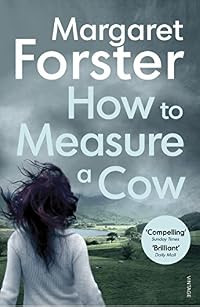
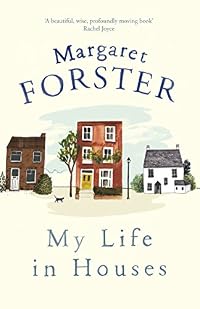
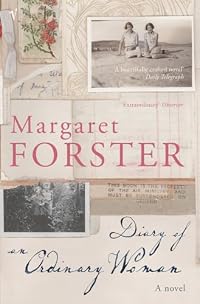
Margaret Forster was born in Carlisle, England on May 25, 1938. She read history at Somerville College, Oxford. Before her writing career took off, she was a teacher at a girls' school. She is the author of over 40 books of fiction and non-fiction. Her novel include Mother, Can You Hear Me?, Have the Men Had Enough?, Lady's Maid, Private Papers, show more Diary of an Ordinary Woman, Over, Isa and May, The Unknown Bridesmaid, and How to Measure a Cow. Georgy Girl, published in 1965, was made into a film starring Lynn Redgrave in 1966. She has written several memoirs including Hidden Lives, Precious Lives, and My Life in Houses. Her biography Elizabeth Barrett Browning won the Heinemann award and her 1993 biography of Daphne du Maurier won the Fawcett book prize and was filmed for the BBC as Daphne in 2007. She also wrote a history of feminism entitled Significant Sisters in 1984. She died of cancer on February 8, 2016 at the age of 77. (Bowker Author Biography) show less
Common Knowledge
- Original publication date
- 2013
Classifications
Statistics
- Members
- 103
- Popularity
- 312,903
- Reviews
- 9
- Rating
- (3.80)
- Languages
- English, Italian
- Media
- Paper, Audiobook, Ebook
- ISBNs
- 12
- ASINs
- 3