On This Page
Description
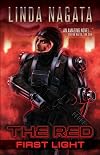
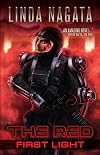
Lieutenant James Shelley commands a high-tech squad of soldiers in a rural district within the African Sahel. They hunt insurgents each night on a harrowing patrol, guided by three simple goals: protect civilians, kill the enemy, and stay alive. In a for-profit war manufactured by the defense industry there can be no cause worth dying for. To keep his soldiers safe, Shelley uses every high-tech asset available to him, but his best weapon is a flawless sense of imminent danger as if God is show more with him, whispering warnings in his ear. show lessTags
Recommendations















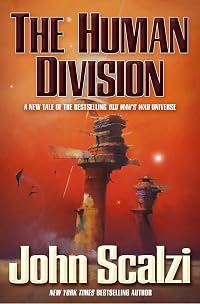


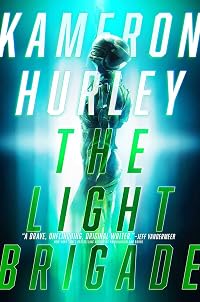
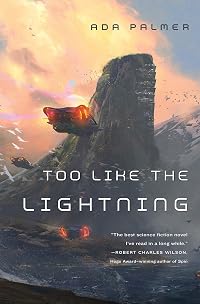







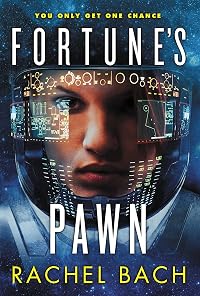

















Member Recommendations

reading_fox Mil-SF with an unusual antagonist.
Member Reviews
Every major war inspires a science-fiction novel. Starship Troopers is a paean to World War II Marines and Paratroopers, now dropping into an atomic hell against commie bugs. Vietnam inspired The Forever War with its reluctant draftees and purposeless battles. Now, with The Red: First Light, Nagata has given us the milSF novel for the Global War on Terror.
Lt. James Shelley is the commander of a Linked Combat Squad, an American infantry unit with powered exoskeletons, HUD targeting helmets, drones overhead, neural implants that suppress stress, and comlinks to each other and "Guidance" back in the states that give them an uncanny ability to coordinate. The enemy is well... anybody overseas will do, as the cynical Shelley explains to his show more squad: War is profitable, and defense contractors manipulate the media to ensure that people like Shelley are out there somewhere, on the end of a very long supply chain that can be milked dry.
Along with all the high-tech gear, Shelley has a 6th Sense, or maybe a direct line to God, that warns him about danger. His uncanny alertness saves him multiple times on patrol, only failing when fighter jets that shouldn't have even been in the war blow the hell out his outpost. Shelley loses his legs, and becomes the test subject for an experimental program in neuroprosthetics. Meanwhile, the army and Shelley's ex are coming to terms with the fact that Shelley's 6th Sense is because something is dancing through the best military grade encryption to manipulate Shelley's mind.
The entity, an AI that antagonist and bugfuck-nuts defense contractor CEO Thelma Sheridan identifies as the Devil deems "the red stain that creeps through human affairs" and which is adapted as The Red by Shelley and his friends, seems to be manipulating thousands or millions of people via subtle chains of coincidence. As Shelley recuperates and learns to use his new cyborg legs, Sheridan launches an all out assault against The Red, using tactical nukes against key data centers in an attempt to cut The Red apart in the Cloud. Millions of people die, the country is paralyzed, The Red limps along, and Sheridan retreats to an arctic lair to plot her next step, insulated from the consequences by her immense power (remember, this is a private citizen with a nuclear arsenal). The final third of the book is a sheer rocket, as Shelley attempts to bring Sheridan to justice, with terrible terrible cost.
The Red: First Light is a great story, balancing action and Clancy-esque "tomorrow's weapons" (trust me on that one, I know the subject), with rich characters and some worrying insights about the rise of algorithmic filter bubbles, ubiquitous computing, and the power of super-elite individuals. I'm excited to see how the rest of the series plays out. show less
Lt. James Shelley is the commander of a Linked Combat Squad, an American infantry unit with powered exoskeletons, HUD targeting helmets, drones overhead, neural implants that suppress stress, and comlinks to each other and "Guidance" back in the states that give them an uncanny ability to coordinate. The enemy is well... anybody overseas will do, as the cynical Shelley explains to his show more squad: War is profitable, and defense contractors manipulate the media to ensure that people like Shelley are out there somewhere, on the end of a very long supply chain that can be milked dry.
Along with all the high-tech gear, Shelley has a 6th Sense, or maybe a direct line to God, that warns him about danger. His uncanny alertness saves him multiple times on patrol, only failing when fighter jets that shouldn't have even been in the war blow the hell out his outpost. Shelley loses his legs, and becomes the test subject for an experimental program in neuroprosthetics. Meanwhile, the army and Shelley's ex are coming to terms with the fact that Shelley's 6th Sense is because something is dancing through the best military grade encryption to manipulate Shelley's mind.
The entity, an AI that antagonist and bugfuck-nuts defense contractor CEO Thelma Sheridan identifies as the Devil deems "the red stain that creeps through human affairs" and which is adapted as The Red by Shelley and his friends, seems to be manipulating thousands or millions of people via subtle chains of coincidence. As Shelley recuperates and learns to use his new cyborg legs, Sheridan launches an all out assault against The Red, using tactical nukes against key data centers in an attempt to cut The Red apart in the Cloud. Millions of people die, the country is paralyzed, The Red limps along, and Sheridan retreats to an arctic lair to plot her next step, insulated from the consequences by her immense power (remember, this is a private citizen with a nuclear arsenal). The final third of the book is a sheer rocket, as Shelley attempts to bring Sheridan to justice, with terrible terrible cost.
The Red: First Light is a great story, balancing action and Clancy-esque "tomorrow's weapons" (trust me on that one, I know the subject), with rich characters and some worrying insights about the rise of algorithmic filter bubbles, ubiquitous computing, and the power of super-elite individuals. I'm excited to see how the rest of the series plays out. show less
The Red: First Light
Linda Nagata 2013
This was a very good hard sf novel. At first one would be tempted to call it military sf, but that is not accurate in my opinion. What's the difference? Everything that separates good writing from formula and meaningful provocative sf from old tropes rehashed.
Told in the present tense, the narrative is compelling from the beginning. It is filled with action scenes that have meaning rather than existing just for excitement. Part of the way Nagata accomplishes this is through character development. Each actor is unique and the action scenes develop this uniqueness and make us care about the players. We are fascinated by the technology, excited by the action and interested in what motivates each show more character.
In short order we are introduced to the main themes of the book: the mysterious voice that Lt. Shelley hears and which saves him and his squad numerous times; the cultural crisis of wars fought for economic stimulus and promoted by large defense contractors; the political corruption that this culture creates.
It is these themes and these characters that drive the narrative and that narrative ties unexpected directions. This is the greatest aspect of the novel--we cannot predict the events, but when they occur, we realize their importance to both the characters and the themes. There are big ideas and concepts here, not in the sense of Niven's Ringworld, but in the sense of where is our world headed and do we want to passively go along for the ride.
Lt. Shelley does not, and neither do the members of his squad, Sgt. Vasquez and private Ransom, who refers to Shelley as King David because he thinks Shelley listens to the voice of god. Neither does Lissa, Shelley's girlfriend, although she is a very reluctant participant.
This is an exemplary novel that succeeds on three levels: enough action for anyone; an important sf theme that engages a cautionary sense of wonder; and characters who breathe with emotional life and death. show less
Linda Nagata 2013
This was a very good hard sf novel. At first one would be tempted to call it military sf, but that is not accurate in my opinion. What's the difference? Everything that separates good writing from formula and meaningful provocative sf from old tropes rehashed.
Told in the present tense, the narrative is compelling from the beginning. It is filled with action scenes that have meaning rather than existing just for excitement. Part of the way Nagata accomplishes this is through character development. Each actor is unique and the action scenes develop this uniqueness and make us care about the players. We are fascinated by the technology, excited by the action and interested in what motivates each show more character.
In short order we are introduced to the main themes of the book: the mysterious voice that Lt. Shelley hears and which saves him and his squad numerous times; the cultural crisis of wars fought for economic stimulus and promoted by large defense contractors; the political corruption that this culture creates.
It is these themes and these characters that drive the narrative and that narrative ties unexpected directions. This is the greatest aspect of the novel--we cannot predict the events, but when they occur, we realize their importance to both the characters and the themes. There are big ideas and concepts here, not in the sense of Niven's Ringworld, but in the sense of where is our world headed and do we want to passively go along for the ride.
Lt. Shelley does not, and neither do the members of his squad, Sgt. Vasquez and private Ransom, who refers to Shelley as King David because he thinks Shelley listens to the voice of god. Neither does Lissa, Shelley's girlfriend, although she is a very reluctant participant.
This is an exemplary novel that succeeds on three levels: enough action for anyone; an important sf theme that engages a cautionary sense of wonder; and characters who breathe with emotional life and death. show less
Ready, Set, Fight for what you believe!
This is a fairly fast-action milspec SF with great cyberpunk tones, but it's still more than just that. I mean, how many times do you get a modern military thriller with thematic tones of Daniel and Goliath, prophets, and some serious questioning of reality?
Oh, wait... :)
Still, this is one of easiest reads and clearest expressions of all those ideas that I've read, no obfuscation or trickiness. This is straight faith in your commanding officer and a willingness to throw away your career (even if you're heavily dependent on a huge support staff because you're a cyborg) in the service of your ideals.
What might have been a straight and interesting twist on cynical mission-based objectives quickly took show more a turn for the worse when we add mysterious hackers, a world-wide popular broadcast of one's fighting adventures, and the widespread subversion of the people's perceptions of reality through propaganda through personal "filters" that are a thin reference to our own world of ever narrowing perceptions.
(We find those people who think and feel the way we do, cultivate those ideas, and slowly begin to lose sight of the fact that there's a much wider world full of people who don't believe as you do.)
Kinda obvious, right? Well what happens when all of those constantly-adjusting google algorithms narrows everyone's perceptions so well that no one can even know what the truth is?
Ah, I guess this is the time for a hot knife to meet some butter, right?
I may not like milspec that much, but I have a very, very high tolerance for anything that is just plain good, and this is good. :)
I'm looking forward to more! show less
This is a fairly fast-action milspec SF with great cyberpunk tones, but it's still more than just that. I mean, how many times do you get a modern military thriller with thematic tones of Daniel and Goliath, prophets, and some serious questioning of reality?
Oh, wait... :)
Still, this is one of easiest reads and clearest expressions of all those ideas that I've read, no obfuscation or trickiness. This is straight faith in your commanding officer and a willingness to throw away your career (even if you're heavily dependent on a huge support staff because you're a cyborg) in the service of your ideals.
What might have been a straight and interesting twist on cynical mission-based objectives quickly took show more a turn for the worse when we add mysterious hackers, a world-wide popular broadcast of one's fighting adventures, and the widespread subversion of the people's perceptions of reality through propaganda through personal "filters" that are a thin reference to our own world of ever narrowing perceptions.
(We find those people who think and feel the way we do, cultivate those ideas, and slowly begin to lose sight of the fact that there's a much wider world full of people who don't believe as you do.)
Kinda obvious, right? Well what happens when all of those constantly-adjusting google algorithms narrows everyone's perceptions so well that no one can even know what the truth is?
Ah, I guess this is the time for a hot knife to meet some butter, right?
I may not like milspec that much, but I have a very, very high tolerance for anything that is just plain good, and this is good. :)
I'm looking forward to more! show less
If ever you hear someone say women can’t write military science fiction, please do me a favor and smack them over the head with this book. First Light is the excellent, smart, and action-packed introduction to The Red series, originally indie-published but re-released again recently by a major publisher along with an audiobook – because it is JUST. THAT. GOOD.
Seriously, it doesn’t get more edge-of-your-seat than this near-future thriller, which seamlessly blends advanced technology and military action with political drama. In First Light, readers get to meet protagonist Lieutenant James Shelley in an explosive introduction. Stationed in a remote military outpost deep in the Sahel, Shelley and his team work round-the-clock to show more enforce the peace and gather intelligence in the area, aided by a cyber-framework that keeps them all wirelessly linked. But that was all before the devastating airstrike.
Shelley barely makes it out alive, saved by the mysterious power of precognition that he possesses, a phenomenon not even the top military scientists can explain. The attack, however, had cost him both his legs, forcing Shelley to agree to an experimental cybernetics program involving synthetic legs and a permanent monitoring “skullcap” implanted in his head. Very Robocop-ish stuff. While recovering, Shelley is hit with another whammy: all throughout his assignment in Sub-Saharan Africa, he and his team had been recorded for a reality TV show. The lines begin to blur for Shelley as tough questions come to the surface. What is real and what is artificial? Who or what is this voice in his head, and is it as benign as it wants him to think? Hidden forces are steering humanity towards an unknown agenda, and for whatever reason, Shelley is at the center of this storm.
There’s so much happening in this first volume, sometimes it gets hard to tease apart the threads. The story’s first act transports readers to its not-too-distant future, describing the soldiers and their state-of-the-art military tech which includes everything from combat armor to surveillance drones. Shelley and his team are hooked into the central intelligence network at all times, physiologically and mentally monitored and even altered by their gear. A process even kicks in for soldiers on the same squad which makes them regard each other as close as siblings, encouraging familial bonds of loyalty while at the same time removing distractions which might be caused by any sexual desire.
But the technology is also far from perfect. It is not uncommon for soldiers like Shelley to become “emo-junkies”, becoming overly dependent on the processes of the skullcaps they wear. You can never be sure whether or not the emotions you feel are really yours, or if they are being controlled or altered by the skullnet. This question of “what’s real vs. what’s not” is a recurring theme that pops up throughout the novel, in many different contexts. War is also introduced as something prevalent and inevitable, a powerful driving force behind the economy. Soldiers are treated like property in this world where reality TV shows can be made of their lives without them even knowing about it, while rich CEOs of big defense contractors play games of political chance using the world as their game board.
This is actually a major premise in the second half of the novel, broadening the scope of the story to tackle conflicts with more significant and far-reaching consequences. The sequence of events that make up the climax and the ending of this book had to be one of the most intense experiences I’ve ever had with an audiobook. My heart was pounding the whole time as I listened, and you probably couldn’t have convinced me to take off my headphones even if the house were on fire.
I only have a minor gripe specific to the audiobook, and it is related to the narrator. Kevin T. Collins’ performance was good, and I love his enthusiasm. But this also means he sometimes overacts, his voice bordering on frantic. Good for when we’re in those tense scenes, but very distracting when we’re not.
Nevertheless, this book has my full recommendation, especially for fans of military science fiction. It’s certainly the best of this genre that I’ve read in a good long while. First Light is engaging, intelligent, and full of thrills. It’s been getting all kinds of attention lately, and now I understand why. show less
Seriously, it doesn’t get more edge-of-your-seat than this near-future thriller, which seamlessly blends advanced technology and military action with political drama. In First Light, readers get to meet protagonist Lieutenant James Shelley in an explosive introduction. Stationed in a remote military outpost deep in the Sahel, Shelley and his team work round-the-clock to show more enforce the peace and gather intelligence in the area, aided by a cyber-framework that keeps them all wirelessly linked. But that was all before the devastating airstrike.
Shelley barely makes it out alive, saved by the mysterious power of precognition that he possesses, a phenomenon not even the top military scientists can explain. The attack, however, had cost him both his legs, forcing Shelley to agree to an experimental cybernetics program involving synthetic legs and a permanent monitoring “skullcap” implanted in his head. Very Robocop-ish stuff. While recovering, Shelley is hit with another whammy: all throughout his assignment in Sub-Saharan Africa, he and his team had been recorded for a reality TV show. The lines begin to blur for Shelley as tough questions come to the surface. What is real and what is artificial? Who or what is this voice in his head, and is it as benign as it wants him to think? Hidden forces are steering humanity towards an unknown agenda, and for whatever reason, Shelley is at the center of this storm.
There’s so much happening in this first volume, sometimes it gets hard to tease apart the threads. The story’s first act transports readers to its not-too-distant future, describing the soldiers and their state-of-the-art military tech which includes everything from combat armor to surveillance drones. Shelley and his team are hooked into the central intelligence network at all times, physiologically and mentally monitored and even altered by their gear. A process even kicks in for soldiers on the same squad which makes them regard each other as close as siblings, encouraging familial bonds of loyalty while at the same time removing distractions which might be caused by any sexual desire.
But the technology is also far from perfect. It is not uncommon for soldiers like Shelley to become “emo-junkies”, becoming overly dependent on the processes of the skullcaps they wear. You can never be sure whether or not the emotions you feel are really yours, or if they are being controlled or altered by the skullnet. This question of “what’s real vs. what’s not” is a recurring theme that pops up throughout the novel, in many different contexts. War is also introduced as something prevalent and inevitable, a powerful driving force behind the economy. Soldiers are treated like property in this world where reality TV shows can be made of their lives without them even knowing about it, while rich CEOs of big defense contractors play games of political chance using the world as their game board.
This is actually a major premise in the second half of the novel, broadening the scope of the story to tackle conflicts with more significant and far-reaching consequences. The sequence of events that make up the climax and the ending of this book had to be one of the most intense experiences I’ve ever had with an audiobook. My heart was pounding the whole time as I listened, and you probably couldn’t have convinced me to take off my headphones even if the house were on fire.
I only have a minor gripe specific to the audiobook, and it is related to the narrator. Kevin T. Collins’ performance was good, and I love his enthusiasm. But this also means he sometimes overacts, his voice bordering on frantic. Good for when we’re in those tense scenes, but very distracting when we’re not.
Nevertheless, this book has my full recommendation, especially for fans of military science fiction. It’s certainly the best of this genre that I’ve read in a good long while. First Light is engaging, intelligent, and full of thrills. It’s been getting all kinds of attention lately, and now I understand why. show less
Back in my indie book reviewer days, I'd heard that this book was originally self-published before it was picked up by Saga Press (Simon & Schuster). Then the accolades poured in, and the story garnered three award nominations. So I made a note to pick it up once I had the chance. Now, having read it, I can see why. The writing is tight and polished. The opening hook grabs you ("There needs to be a war going on somewhere...") and pulls you in, the action is well-choreographed, and there's plenty of dramatic tension.
The military jargon and procedural actions ring true. The gear is well thought out and frickin' cool. Nagata provides mid-21st century soldiers with powered exoskeletons, "skullcap" computer interfaces that send signals to show more the body to adjust biochemical responses to the surrounding environment, and implants to connect with weapons and recon drones.
The story starts in the Sahel, and I enjoyed the way it unfolded, but then, in a major plot twist, Shelley gets injured and the story shifts stateside to focus on his recovery and rehabilitation. The time in the hospital gives him a chance to reconnect with his former lover, his father, and the journalist who fatefully led to his army recruitment. We learn more of Shelley's past and the dystopian world (similar to our own) he lives in. We also learn that there appears to be an AI that's gone rogue (The Red). It's intentions are unknown, but it seems very interested in Shelley.
I would've thought that a military thriller with cyberpunk elements would've been everything I needed here, but it didn't pan out. So what's the problem? Quite simply, me. The book had me hooked at the start, but then it lost me with the setting change. Developed characters were suddenly lost, irrelevant to the overall story. The pace slowed way down, too. I cut it some slack, feeling that Nagata was ramping things up for this new direction, but then the plot radically changed course again. The confrontation I expected was pushed back to another novel. I couldn't get on board with the new course.
As well written as the story was, I couldn't connect to it. I felt like I was reading the script to the Rock's next action movie. Once Nagata described Shelley, I couldn't not picture him in the lead. And that's fine. I think he's incredibly talented for a particular genre of films, and I've enjoyed every one that I've seen him in. It's just that Mr. Johnson's movies aren't something I want to read.
3.5 stars. show less
The military jargon and procedural actions ring true. The gear is well thought out and frickin' cool. Nagata provides mid-21st century soldiers with powered exoskeletons, "skullcap" computer interfaces that send signals to show more the body to adjust biochemical responses to the surrounding environment, and implants to connect with weapons and recon drones.
The story starts in the Sahel, and I enjoyed the way it unfolded, but then, in a major plot twist, Shelley gets injured and the story shifts stateside to focus on his recovery and rehabilitation. The time in the hospital gives him a chance to reconnect with his former lover, his father, and the journalist who fatefully led to his army recruitment. We learn more of Shelley's past and the dystopian world (similar to our own) he lives in. We also learn that there appears to be an AI that's gone rogue (The Red). It's intentions are unknown, but it seems very interested in Shelley.
I would've thought that a military thriller with cyberpunk elements would've been everything I needed here, but it didn't pan out. So what's the problem? Quite simply, me. The book had me hooked at the start, but then it lost me with the setting change. Developed characters were suddenly lost, irrelevant to the overall story. The pace slowed way down, too. I cut it some slack, feeling that Nagata was ramping things up for this new direction, but then the plot radically changed course again. The confrontation I expected was pushed back to another novel. I couldn't get on board with the new course.
As well written as the story was, I couldn't connect to it. I felt like I was reading the script to the Rock's next action movie. Once Nagata described Shelley, I couldn't not picture him in the lead. And that's fine. I think he's incredibly talented for a particular genre of films, and I've enjoyed every one that I've seen him in. It's just that Mr. Johnson's movies aren't something I want to read.
3.5 stars. show less
Lieutenant James Shelley keeps getting “feelings”, intuition about things that that he couldn’t possibly know, that save his life and the lives of his squad. If it’s not some sort of precognition - and there’s no such thing - then what is feeding him this information, and why?
The Red: First Light is a sort of near-future science fiction, with a lot of technology that we're starting to see hints (or more than hints) of today but isn't yet in common use, like mechanical exoskeletons to help people carry heavy loads, prosthetic limbs that are somewhat beyond what is currently possible (as far as I know, anyway), and computers connected to the brain. Some of it is neat and some of it is pretty creepy, as tends to be the case in show more near-future SF.
I have somewhat mixed feelings about this book overall. I liked it, but it wasn’t quite the story I wanted it to be. I am curious if the sequel(s) will bring it more around to the hows and whys of what’s happening and focus less on military actions.
Some tired tropes that I wish the author hadn’t succumbed to: while there are a variety of minor female characters, the only main characters who are women are the girlfriend and the antagonist. The antagonist is also the only woman in any position of power (doctors, generals, journalists, etc, are all men).The girlfriend dies .
Content warnings:War/battle imagery, including death and serious injuries. Mentions of possible pedophilia and rape. Death of animals. Voluntary and involuntary use of mind-altering substances/devices. Voyeurism. show less
The Red: First Light is a sort of near-future science fiction, with a lot of technology that we're starting to see hints (or more than hints) of today but isn't yet in common use, like mechanical exoskeletons to help people carry heavy loads, prosthetic limbs that are somewhat beyond what is currently possible (as far as I know, anyway), and computers connected to the brain. Some of it is neat and some of it is pretty creepy, as tends to be the case in show more near-future SF.
I have somewhat mixed feelings about this book overall. I liked it, but it wasn’t quite the story I wanted it to be. I am curious if the sequel(s) will bring it more around to the hows and whys of what’s happening and focus less on military actions.
Some tired tropes that I wish the author hadn’t succumbed to: while there are a variety of minor female characters, the only main characters who are women are the girlfriend and the antagonist. The antagonist is also the only woman in any position of power (doctors, generals, journalists, etc, are all men).
Content warnings:
There were things I really liked about this book. The premise of the Red (which I won't go into because spoilers), the bleak idea of defense contractors starting and continuing wars so they can sell weapons, the beginning and the ending.
But the only character with any substance is Shelley, the MC, and he isn't that developed. Everyone else is basically cardboard, especially Shelley's crew of soldiers. Even his girlfriend is pretty flat. And the villain, too, seems very threadbare. So I just didn't connect with any of the people, and I didn't care what happened to them.
In addition, the plot jerks around, not in a thriller-twisty way, but in a kind of wait-what? way. It also dragged in the middle where it wasn't clear what the story was. show more But despite all that, it was well-written and I was interested enough to finish. Not intending to read the sequels at this time, but you never know. show less
But the only character with any substance is Shelley, the MC, and he isn't that developed. Everyone else is basically cardboard, especially Shelley's crew of soldiers. Even his girlfriend is pretty flat. And the villain, too, seems very threadbare. So I just didn't connect with any of the people, and I didn't care what happened to them.
In addition, the plot jerks around, not in a thriller-twisty way, but in a kind of wait-what? way. It also dragged in the middle where it wasn't clear what the story was. show more But despite all that, it was well-written and I was interested enough to finish. Not intending to read the sequels at this time, but you never know. show less
Members
- Recently Added By
Lists

Science Fiction by female authors
43 works; 4 members

Bookriot's 100 Must-Read Sci-Fi Fantasy Novels By Female Authors
100 works; 9 members
io9 Book Club
70 works; 4 members

hypatian_kat to-read
429 works; 3 members
Author Information

43+ Works 3,280 Members

Linda Nagata is a LibraryThing Author, an author who lists their personal library on LibraryThing.
All Editions
Some Editions
Awards and Honors
Series

Work Relationships
Is contained in
Common Knowledge
- Original publication date
- 2013-03
- People/Characters
- James Shelley
Classifications
Statistics
- Members
- 422
- Popularity
- 72,844
- Reviews
- 25
- Rating
- (3.60)
- Languages
- English, German, Polish
- Media
- Paper, Audiobook, Ebook
- ISBNs
- 9
- ASINs
- 5