On This Page
Description
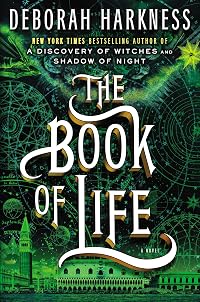
"After traveling through time in Shadow of Night, the second book in Deborah Harkness's enchanting series, historian and witch Diana Bishop and vampire scientist Matthew Clairmont return to the present to face new crises and old enemies. At Matthew's ancestral home at Sept-Tours, they reunite with the cast of characters from A Discovery of Witches--with one significant exception. But the real threat to their future has yet to be revealed, and when it is, the search for Ashmole 782 and its show more missing pages takes on even more urgency. In the trilogy's final volume, Harkness deepens her themes of power and passion, family and caring, past deeds and their present consequences. In ancestral homes and university laboratories, using ancient knowledge and modern science, from the hills of the Auvergne to the palaces of Venice and beyond, the couple at last learn what the witches discovered so many centuries ago"-- show lessTags
Recommendations
Member Recommendations
vwinsloe witches and vampires and an occasional ghost
Member Reviews
It did not take me long to purchase and read the final installment, The Book of Life, of the All Souls Trilogy when it went on sale. I had been anxiously awaiting the conclusion to the trilogy I began reading back in 2012. I thoroughly enjoyed A Discovery of Witches and Shadow of Night, both books so very different from one another and yet delicious in details about characters I have come to love. And so it was with great anticipation that I began reading The Book of Life, both excited to see what would happen and sad to know the story would be coming to an end.
It is no wonder The Book of Life is over five hundred pages. Deborah Harkness fills them well. She continues to breath life into her characters and the world she began creating show more years ago, each growing and evolving with time and circumstance. I love the depth she has gone to in building her world, the history, science, religion, and lore. I found this final installment of Deborah Harkness's trilogy to be satisfying in every way--except perhaps I did not want to see it end.
Diana and Matthew are not the same people they were when they first stepped back in time. They have returned changed and they face a whole new set of problems along with the old ones. The Book of Life picks up hot on the heels of where Shadow of Night left off. I liked the way the author captured the suddenness of it all for Diana and yet the distance in time it has been for those who knew her centuries ago.
The couple's love is stronger than ever and it continues to be tested time and again as they race to solve the mystery of Ashmole 782, otherwise known as the Book of Life. They must deal with other obstacles as well, including Matthew's blood rage, family politics, and possible war between the preternatural creatures on earth, all as Diana continues to struggle with her identity and accepting herself.
I liked Diana from the very first book, and I like her even more now, after having read The Book of Life. She continues to be a strong woman in her own right, intelligent and thoughtful. She truly grows as a person over the course of the novels, her attitudes and ideas shifting based on her experiences. I appreciated how far Matthew has come in respecting that about Diana--how hard it had been for him in the beginning given his natural inclination as a vampire to control those he loves.
I love how the author is able to balance the supernatural and science throughout the trilogy, especially in this book as she brings her story to a conclusion. It was nice to revisit Diana and Matthew's friends and families. I think I most enjoyed my time back at Diana's childhood home. I just love her house. However, I also really enjoyed the time spent in London. The magic of one and the history of the other. Oh, how I wanted to step inside the pages of this book many times as I read!
There is much to this novel, many story threads woven in, and so much I would like to say. In an effort to avoid spoilers, however, I am trying to remain vague. I thoroughly enjoyed The Book of Life, a contented smile spread across my face as I finished the last page. Deborah Harkness did not tie every loose end up with a neat little bow, but I did not really want or expect her to. She did just enough. I cannot wait to reread this trilogy again one day.
Review orginally posted on my blog, Musings of a Bookish Kitty show less
It is no wonder The Book of Life is over five hundred pages. Deborah Harkness fills them well. She continues to breath life into her characters and the world she began creating show more years ago, each growing and evolving with time and circumstance. I love the depth she has gone to in building her world, the history, science, religion, and lore. I found this final installment of Deborah Harkness's trilogy to be satisfying in every way--except perhaps I did not want to see it end.
Diana and Matthew are not the same people they were when they first stepped back in time. They have returned changed and they face a whole new set of problems along with the old ones. The Book of Life picks up hot on the heels of where Shadow of Night left off. I liked the way the author captured the suddenness of it all for Diana and yet the distance in time it has been for those who knew her centuries ago.
The couple's love is stronger than ever and it continues to be tested time and again as they race to solve the mystery of Ashmole 782, otherwise known as the Book of Life. They must deal with other obstacles as well, including Matthew's blood rage, family politics, and possible war between the preternatural creatures on earth, all as Diana continues to struggle with her identity and accepting herself.
I liked Diana from the very first book, and I like her even more now, after having read The Book of Life. She continues to be a strong woman in her own right, intelligent and thoughtful. She truly grows as a person over the course of the novels, her attitudes and ideas shifting based on her experiences. I appreciated how far Matthew has come in respecting that about Diana--how hard it had been for him in the beginning given his natural inclination as a vampire to control those he loves.
I love how the author is able to balance the supernatural and science throughout the trilogy, especially in this book as she brings her story to a conclusion. It was nice to revisit Diana and Matthew's friends and families. I think I most enjoyed my time back at Diana's childhood home. I just love her house. However, I also really enjoyed the time spent in London. The magic of one and the history of the other. Oh, how I wanted to step inside the pages of this book many times as I read!
There is much to this novel, many story threads woven in, and so much I would like to say. In an effort to avoid spoilers, however, I am trying to remain vague. I thoroughly enjoyed The Book of Life, a contented smile spread across my face as I finished the last page. Deborah Harkness did not tie every loose end up with a neat little bow, but I did not really want or expect her to. She did just enough. I cannot wait to reread this trilogy again one day.
Review orginally posted on my blog, Musings of a Bookish Kitty show less
So, more than seven years after I read 'A Discovery Of Witches' I finally read 'The Book Of Life', the last book in the All Souls trilogy and I enjoyed myself. The almost six hundred pages of the book slid by in a curl up on the sofa with a coffee binge read that was relaxing and exciting at the same time. The story was well told. I admired how Deborah Harkness managed to start the novel in a way that caught me up with the previous books without and tedious repetition or clumsy info-dumping and set the tone for a series of highly charged encounters with layer upon layer of secrets behind them. For me, the ending satisfying, resolving the main conflicts and mysteries without being too neat and tidy.
This was the book were Diana finally show more comes into her own. She's in control of her power, she has children to protect and she's determined to use the Book Of Life to bring down the Covenant that puts her family at risk. It did surprise me that, when Diana finally came into her power, she used it as if she had been born into the de Clarmont family. She slipped on the wealth and entitlement of the de Clarmont's like a tailored jacket and became someone truly formidable. This is no longer the woman we met in 'A Discovery Of Witches'. This is someone who on having finally understood the her options and abilities had been constrained by the power of the Congregation her whole life, took hold of her power and focused it on their destruction. It seemed to me that the various vampires and witches who had conspired to stop her along the way had had very good reason to do so.
There were lots of scenes in the book that caught me by surprise.
I loved that Deborah Harkness gave us a detailed account of the birthing of the twins, drenching it in physicality and making Diana's pain and exertion into something emotionally powerful.
The other scenes that surprised me I loved rather less. These were the scenes where Benjamin abducted and imprisoned witches and live-streamed their gangrape and eventual death and where he killed children as a way of torturing Matthew. Then there were the scenes that showed the terrible things that were done to Matthew. The images are strong and bloody and vicious and I'd rather not have had them in my head. I know that these scenes are no stronger than I might have read in a book by Anne Rice or Clive Barker but I hadn't expected them here. They took the book and Diana into a darker, more violent place that seemed much more threatening than anything that they encountered in their travels in the Sixteenth Century.
It took me almost to the end of the book to understand that this whole trilogy is primarily a love story. I never quite understood why Diana felt so attracted to the monstrous Matthew, a vampire with the blood of hundreds of his own kind on his hands, or how she could accept his sire, Ysabeau de Clermont, who spent decades hunting and killing witches. I know it was supposed to be a grande amore but it didn't feel like that to me. This time around, I was very aware of the de Claremont's immense wealth and unquestioned privilege and how seductive it is. An ancient, remote castle in France, made so much less remote when you arrive by helicopter. A Queen Anne Townhouse, fully furnished and with hot and cold running servants in Central London, given as a wedding gift. Easy, private travel between countries and continents and never ever having to think about the cost of anything. It seemed to me that Diana fell in love with what the de Claremont's offered her as much as she did with Matthew and, by the end of this book, she had made herself a pillar of the de Claremont's power. It seemed to me that I was also being seduced into thinking of the de Claremont as the good guys: as if their good taste in art, their education, their scientific endeavours and their loyalty to each other made their sense of entitlement and the violence that they wrought to keep themselves secure, entirely acceptable. We've travelled a long way from a New England haunted house and a belief that all Creatures are equal and should be free. Diana Bishop's liberalism turned out to be of the deeply conservative kind that grants liberty to others as long as her own privilege is preserved.
Having said all that, this was an enjoyable book with memorable characters, strong emotions, and a clever plot delivered with a skill that made it easy to fall into the de Claremont's world and believe in it.
I recommend the audiobook, expertly narrated by Jennifer Ikeda. Click on the SoundCloud link below to hear a sample. show less
Damn, I love Harkness' writing. I want to take in every single word and ruminate over them. I read with my dictionary open because I can't even let one word slip by if I'm not 100% sure what it means.
The story is fantastic, characters likeable - and hate-able - in equal measures.
A perfect end to the trilogy ... and a perfect set-up for another book. I guess we'll see what Harkness decides. Either way, I'll be happy.
The story is fantastic, characters likeable - and hate-able - in equal measures.
A perfect end to the trilogy ... and a perfect set-up for another book. I guess we'll see what Harkness decides. Either way, I'll be happy.
Matthew and Diana are back from the past and ready to face whatever the future holds. This means more loss, more uncovering of secrets, more love, and more danger. As the rush to find Ashmole 782 draws to a close, each character involved in Matthew and Diana’s life together must discover his or her true mettle because a test of loyalties is only half of the battle. For it is a battle – not just of blood but also of wits, something fans of the series will recognize immediately as being a signature aspect of the story. The Book of Life is a culmination of Matthew and Diana’s story as everything previously experienced funnels into the final showdown between sides for the ultimate secret.
The Book of Life is not a novel to pick up on a show more whim. Not only does it require a clear memory of the previous two books, it is a cerebral story. There are many references to Diana’s experiences in Elizabethan England as well as Matthew’s and Diana’s courtship from the first novel. Readers who do not remember Diana’s struggles to discover her powers or Matthew’s research at Oxford may miss connections between past and present. Also, readers head back into the labs with Matthew and his family as his research becomes a central part of the story. The numerous and detailed discussions of genetics may be intimidating to some, but Ms. Harkness excels at making the most complex genetic coding understandable and interesting as it pertains directly to Diana’s and Matthew’s fate. Between the historical references, something necessary when the main character is 1500 years old, and the science, readers must pay attention because everything is a clue.
Not that paying attention is difficult when the story is as exciting as it is and the characters are so delicious. Matthew and all of his vampire family remain perilously close to their baser instincts, maintaining that sense of danger first sensed in Matthew upon his initial appearance. Adding to that is Diana’s growing sense of purpose and greater acceptance of her powers, which are so immense that she also balances on the precipice of control. It creates an atmosphere of barely-contained calm as each is tested to the extreme. As for the secret finally revealed, it is worth the wait. The Book of Life really does hold all the answers, for the Bishop-Clairmonts as well as for readers.
While Ms. Harkness never shies away from a battle scene, particularly gory ones involving dismemberment or other bodily tortures, it is the psychology of the story that also entices a reader. The mental issues involved with every aspect of Matthew’s and Diana’s lives are remarkably clear, understandable, and realistic. The mental stamina involved with remaining alive for more than a few hundred centuries, for hiding among humans, for fighting one’s true nature, for the fear and anger associated with danger targeting family members – there is no wonder that Matthew and Diana appear to be on the edge. Just as with her science, her psychology of her characters’ minds is utterly compelling.
The Book of Life is the type of series finales about which fans dream. It has everything readers want plus more than they could imagine. Ms. Harkness does a superb job answering remaining questions and providing as much Matthew and Diana as fans need. The conclusion to this intense story is satisfyingly complex with the perfect blend of fantasy, science, and adventure that has so strongly defined the entire series. Any ending to a great story is bittersweet as readers must let go of beloved characters; while this does hold true for The Book of Life, one finds that she takes the bite out of her finale by providing stellar action, an enchanting story, and amazing characters that feel more like long-lost friends than pieces of fiction. Of course, if she opts to give readers a glimpse into future Matthew and Diana adventures, no one is going to complain. show less
The Book of Life is not a novel to pick up on a show more whim. Not only does it require a clear memory of the previous two books, it is a cerebral story. There are many references to Diana’s experiences in Elizabethan England as well as Matthew’s and Diana’s courtship from the first novel. Readers who do not remember Diana’s struggles to discover her powers or Matthew’s research at Oxford may miss connections between past and present. Also, readers head back into the labs with Matthew and his family as his research becomes a central part of the story. The numerous and detailed discussions of genetics may be intimidating to some, but Ms. Harkness excels at making the most complex genetic coding understandable and interesting as it pertains directly to Diana’s and Matthew’s fate. Between the historical references, something necessary when the main character is 1500 years old, and the science, readers must pay attention because everything is a clue.
Not that paying attention is difficult when the story is as exciting as it is and the characters are so delicious. Matthew and all of his vampire family remain perilously close to their baser instincts, maintaining that sense of danger first sensed in Matthew upon his initial appearance. Adding to that is Diana’s growing sense of purpose and greater acceptance of her powers, which are so immense that she also balances on the precipice of control. It creates an atmosphere of barely-contained calm as each is tested to the extreme. As for the secret finally revealed, it is worth the wait. The Book of Life really does hold all the answers, for the Bishop-Clairmonts as well as for readers.
While Ms. Harkness never shies away from a battle scene, particularly gory ones involving dismemberment or other bodily tortures, it is the psychology of the story that also entices a reader. The mental issues involved with every aspect of Matthew’s and Diana’s lives are remarkably clear, understandable, and realistic. The mental stamina involved with remaining alive for more than a few hundred centuries, for hiding among humans, for fighting one’s true nature, for the fear and anger associated with danger targeting family members – there is no wonder that Matthew and Diana appear to be on the edge. Just as with her science, her psychology of her characters’ minds is utterly compelling.
The Book of Life is the type of series finales about which fans dream. It has everything readers want plus more than they could imagine. Ms. Harkness does a superb job answering remaining questions and providing as much Matthew and Diana as fans need. The conclusion to this intense story is satisfyingly complex with the perfect blend of fantasy, science, and adventure that has so strongly defined the entire series. Any ending to a great story is bittersweet as readers must let go of beloved characters; while this does hold true for The Book of Life, one finds that she takes the bite out of her finale by providing stellar action, an enchanting story, and amazing characters that feel more like long-lost friends than pieces of fiction. Of course, if she opts to give readers a glimpse into future Matthew and Diana adventures, no one is going to complain. show less
When the second volume of this trilogy ended with vampire Matthew de Clairmont and his wife, witch Diana Bishop, returning to Sept-Tours from their “honeymoon” in sixteenth century Europe, readers were well aware that a final confrontation was looming: both with Matthew’s renegade vampire son, Benjamin, and with the Congregation, who have for centuries banned just the kind of “inter-species” relationship that Matthew and Diana have forged. Now that Diana is pregnant, there is even more at stake, and Sept-Tours, the de Clairmont ancestral home, seems like the logical place to regroup and figure out how to do more than simply respond to attacks. Above all, how can they complete their quest for the missing pages from the show more Ashmolean manuscript that started it all – a manuscript they now know to have been made up of the skins of daemons, vampires and witches – and restore them to the Book of Life? Perhaps, if that can be accomplished, the rest will fall into place…
I found the first 100 pages of this to be relatively slow going, and was slightly disappointed to be back in the 21st century after following Matthew and Diana on their travels through the 16th century and their encounters with everyone from Christopher Marlowe to Rudolf, the Habsburg ruler of Prague. But the pace picked up, and soon enough Deborah Harkness had enough plot elements bubbling away to keep me entertained, as well as introducing some new characters and themes into the mix.
What appealed to me most here is the way that Diana, who only learned how to master her powers in the final chapters of the second book in the trilogy, really emerges here both as a powerful force and a powerful character in her own right. Until now, she had struck me as somewhat of a quintessential romantic heroine, swept off her feet by the handsome and domineering vampire (albeit being feisty and intelligent enough to command his respect). Here Diana’s independent actions – magical and otherwise – will prove crucial as the story unfolds, and that was an interesting and welcome addition to the mix. There are some unexpected additions to the ranks as Matthew and Diana prepare for the final confrontation, and while violent magical battles formed a part of it, I was glad to see that Harkness didn’t shy away from adding additional levels of complexity to the mix.
Criticisms? Sometimes the nature of the magical spells that Diana is casting (if not the nature of her powers – which is actually a very intriguing concept indeed, for which Harkness deserves kudos) felt rushed through or glossed over, as if the author hadn’t really thought them through herself and thus couldn’t explain them thoroughly. So I found myself reading, re-reading and re-re-reading several passages to try to figure out exactly what had happened, only to shrug and simply move on. I also found myself a little surprised at the ease with which the non-magical folks to whom the existence of vampires, daemons and witches is revealed in this final book is accepted. It’s all very matter of fact; oh yes, of course, I thought there was something unusual going on – as if you’d finally learned that the person with the slight accent had in fact been born in Denmark. But there’s a big difference between being born in Denmark and being a witch or a vampire who is 1,500 years old…
And occasionally the injection of moments of wit and levity felt out of keeping with the overall tone, as when one member of the team quips about having to restrain a stressed out-Sarah (Diana’s aunt) from disabling the smoke detector system on a long-haul flight, or when Sotheby’s employee, Phoebe – now the girlfriend of one of the de Clairmont family – spots a Holbein masterpiece hanging in a bathroom. Ysabeau tries to reassure her that Margaret More (the painting’s subject) wouldn’t have been worried by “a bit of exposed flesh.” Phoebe responds, spluttering, ‘It’s not the decorum of the situation that troubles me, but the fact that Margaret More might tumble into the loo at any moment!’ “ Now, this is about the seventh time that Phoebe has been awestruck by de Clairmont family treasures; the characters are about to conduct some serious magic; and yet all of a sudden they’re getting girly and giggly about a Holbein painting? Some of these moments were fine; others were misplaced and the humor felt off-kilter.
That said, the novel was tremendously entertaining, and served as an unusually satisfactory conclusion to the trilogy. Unusually, because it went beyond the traditional “let’s make sure the bad guys get their just desserts” kind of thing, and was an altogether more interesting conclusion, with an interesting and subtle reference or reminder of parallels in our non-magical world.
I also think that Harkness has left herself with enough leeway to come back to her characters in the future. True, the conundrums that Diana and Matthew had to face at the beginning of this book have been resolved in one way or another, but I would imagine that life for any supernatural creature is never going to be easy or straightforward, and certainly the struggle to carve out an independent path for themselves doesn’t necessarily mean it will be happily ever after, undisturbed? Regardless, I’ll be curious to see what Harkness does next. 4.3 stars; the second volume remains my favorite of the series.
Full disclosure: my copy of this was an ARC that I obtained at BEA (BookExpo). show less
I found the first 100 pages of this to be relatively slow going, and was slightly disappointed to be back in the 21st century after following Matthew and Diana on their travels through the 16th century and their encounters with everyone from Christopher Marlowe to Rudolf, the Habsburg ruler of Prague. But the pace picked up, and soon enough Deborah Harkness had enough plot elements bubbling away to keep me entertained, as well as introducing some new characters and themes into the mix.
What appealed to me most here is the way that Diana, who only learned how to master her powers in the final chapters of the second book in the trilogy, really emerges here both as a powerful force and a powerful character in her own right. Until now, she had struck me as somewhat of a quintessential romantic heroine, swept off her feet by the handsome and domineering vampire (albeit being feisty and intelligent enough to command his respect). Here Diana’s independent actions – magical and otherwise – will prove crucial as the story unfolds, and that was an interesting and welcome addition to the mix. There are some unexpected additions to the ranks as Matthew and Diana prepare for the final confrontation, and while violent magical battles formed a part of it, I was glad to see that Harkness didn’t shy away from adding additional levels of complexity to the mix.
Criticisms? Sometimes the nature of the magical spells that Diana is casting (if not the nature of her powers – which is actually a very intriguing concept indeed, for which Harkness deserves kudos) felt rushed through or glossed over, as if the author hadn’t really thought them through herself and thus couldn’t explain them thoroughly. So I found myself reading, re-reading and re-re-reading several passages to try to figure out exactly what had happened, only to shrug and simply move on. I also found myself a little surprised at the ease with which the non-magical folks to whom the existence of vampires, daemons and witches is revealed in this final book is accepted. It’s all very matter of fact; oh yes, of course, I thought there was something unusual going on – as if you’d finally learned that the person with the slight accent had in fact been born in Denmark. But there’s a big difference between being born in Denmark and being a witch or a vampire who is 1,500 years old…
And occasionally the injection of moments of wit and levity felt out of keeping with the overall tone, as when one member of the team quips about having to restrain a stressed out-Sarah (Diana’s aunt) from disabling the smoke detector system on a long-haul flight, or when Sotheby’s employee, Phoebe – now the girlfriend of one of the de Clairmont family – spots a Holbein masterpiece hanging in a bathroom. Ysabeau tries to reassure her that Margaret More (the painting’s subject) wouldn’t have been worried by “a bit of exposed flesh.” Phoebe responds, spluttering, ‘It’s not the decorum of the situation that troubles me, but the fact that Margaret More might tumble into the loo at any moment!’ “ Now, this is about the seventh time that Phoebe has been awestruck by de Clairmont family treasures; the characters are about to conduct some serious magic; and yet all of a sudden they’re getting girly and giggly about a Holbein painting? Some of these moments were fine; others were misplaced and the humor felt off-kilter.
That said, the novel was tremendously entertaining, and served as an unusually satisfactory conclusion to the trilogy. Unusually, because it went beyond the traditional “let’s make sure the bad guys get their just desserts” kind of thing, and was an altogether more interesting conclusion, with an interesting and subtle reference or reminder of parallels in our non-magical world.
I also think that Harkness has left herself with enough leeway to come back to her characters in the future. True, the conundrums that Diana and Matthew had to face at the beginning of this book have been resolved in one way or another, but I would imagine that life for any supernatural creature is never going to be easy or straightforward, and certainly the struggle to carve out an independent path for themselves doesn’t necessarily mean it will be happily ever after, undisturbed? Regardless, I’ll be curious to see what Harkness does next. 4.3 stars; the second volume remains my favorite of the series.
Full disclosure: my copy of this was an ARC that I obtained at BEA (BookExpo). show less
I'll write a review of the series as a whole. "What!" you say? How could I have read the series and yet given it a one-star rating? If it was that bad, why didn't I just leave it midway or better still read just the first book. You see, I purchased the whole d***n series and I've hardly ever, in my life, abandoned a book once I've started reading it.
The book is BORING. Even skimming is a task. While the premise of the book had initially fascinated me, the book quickly devolved into an unnecessary and elaborate thesis on just about everything. There's fantasy, sure. And historical references galore. Enough to qualify as historical fiction. But then there's just so much discussion about wine. And tea. And architecture. And anything and show more everything else the author could think of. You have to wade through a hundred pages to get even five pages worth of information that's actually pertinent to the story.
The romance between Matthew and Diana is sappy and thoroughly unexciting. Matthew, despite having lived for innumerable centuries, has no character to speak of. He looms like an overgrown bat (no pun intended!) and has simply no contribution to make throughout. He might as well have been absent. Diana, despite being a qualified historian, comes across as a highly subservient woman simply pandering to Matthew to make him feel needed.There's no depth to any of the characters, for that matter. With all the time the author has spent on describing yoga poses and Indian food, she'd have done better sketching her characters with more to their persona than just the superficial witch/vampire. Ysabeau, Sarah, Marcus, Emily--there was so much to be done with them than just the bare bones we're presented with.
Book 2 was especially bad with the kind of artistic licence the author has taken with the historical characters. So, almost all the most famous people of the time are daemons, witches, or vampires. Anyone who's got anything going for them is bound to be one of these. And so, Shakespeare, poor human that he is, has nothing original to say. All his writing is either derived from Marlowe or inspired by a time-traveler from the future. Really? It seems Ms. Harkness harbors a special dislike for Shakespeare. And the whole rigmarole is just too much. The whole book could have been written in fewer than fifty pages, for all the content that it provides. And the time travel: how could Diana and Matthew's long presence not affect history? And how convenient that the original Matthew of that period just disappears.... where does he disappear to? how will he pick up the threads once he's back... these questions are all unanswered, and we, gullible and naive that we readers are, are expected to swallow this spiel. And why were Jack and Anne introduced? Like Matthew, they seem to have no part to play.
The third book's not as bad as the second one, but the faults are the same. One good thing is that there's a bit less of Matthew, though just a bit. The whole blood rage thing doesn't work. Neither does the weaver bit. Or the Book of Life. I mean what is the book? How was it made? Who made it? None of the questions that have been raised from the beginning have been answered.
Pathetic. Writing the review has made me even angrier. Wish I could ask the author to refund my money and time. DO NOT READ. show less
The book is BORING. Even skimming is a task. While the premise of the book had initially fascinated me, the book quickly devolved into an unnecessary and elaborate thesis on just about everything. There's fantasy, sure. And historical references galore. Enough to qualify as historical fiction. But then there's just so much discussion about wine. And tea. And architecture. And anything and show more everything else the author could think of. You have to wade through a hundred pages to get even five pages worth of information that's actually pertinent to the story.
The romance between Matthew and Diana is sappy and thoroughly unexciting. Matthew, despite having lived for innumerable centuries, has no character to speak of. He looms like an overgrown bat (no pun intended!) and has simply no contribution to make throughout. He might as well have been absent. Diana, despite being a qualified historian, comes across as a highly subservient woman simply pandering to Matthew to make him feel needed.There's no depth to any of the characters, for that matter. With all the time the author has spent on describing yoga poses and Indian food, she'd have done better sketching her characters with more to their persona than just the superficial witch/vampire. Ysabeau, Sarah, Marcus, Emily--there was so much to be done with them than just the bare bones we're presented with.
Book 2 was especially bad with the kind of artistic licence the author has taken with the historical characters. So, almost all the most famous people of the time are daemons, witches, or vampires. Anyone who's got anything going for them is bound to be one of these. And so, Shakespeare, poor human that he is, has nothing original to say. All his writing is either derived from Marlowe or inspired by a time-traveler from the future. Really? It seems Ms. Harkness harbors a special dislike for Shakespeare. And the whole rigmarole is just too much. The whole book could have been written in fewer than fifty pages, for all the content that it provides. And the time travel: how could Diana and Matthew's long presence not affect history? And how convenient that the original Matthew of that period just disappears.... where does he disappear to? how will he pick up the threads once he's back... these questions are all unanswered, and we, gullible and naive that we readers are, are expected to swallow this spiel. And why were Jack and Anne introduced? Like Matthew, they seem to have no part to play.
The third book's not as bad as the second one, but the faults are the same. One good thing is that there's a bit less of Matthew, though just a bit. The whole blood rage thing doesn't work. Neither does the weaver bit. Or the Book of Life. I mean what is the book? How was it made? Who made it? None of the questions that have been raised from the beginning have been answered.
Pathetic. Writing the review has made me even angrier. Wish I could ask the author to refund my money and time. DO NOT READ. show less
Rating: Reflects my rating of the entire series as does the following review.
Disclaimer: I am currently going through a phase where I find the traditional path the media thinks most women follow in their twenties to be greatly annoying. Such an opinion thoroughly taints my interpretation of Diana's actions in the All Souls Trilogy.
Review: The first time I started reading A Discovery of Witches, it had just come out in paperback. I’d been intrigued by the title for some time, but the synopsis sounded vaguely Twilight-y and that I did not like. I started reading it, and my prejudices got the better of me and I quit after 30 pages. Almost a year later, I started it because I heard there would be a second one that involved time travel to show more Elizabethan England and Queen Elizabeth I has been my habitual woman crush Wednesday since I was 10 so sign me up! I read A Discovery of Witches solely so I could read Shadow of Night and have it make sense. I’m glad I approached it this way as it allowed me to make it through A Discovery of Witches, and enjoy it, because I was so looking forward to Diana and Matthew’s Elizabethan adventure in both London and on the continent (particularly Prague).
Diana thoroughly intrigued me and her attraction to Matthew just felt like every young woman going through a “bad boy phase.” I didn’t expect it to last, or to take over her entire life, but of course, it did. This was strike one. I’m all for an opposites-attract, star-crossed lovers romantic subplot but I like it when it is just that: a subplot. While traipsing about Renaissance Europe in Shadow of Night, Matthew and Diana are married by Matthew’s father (who is deceased in the present). The marriage was bound to happen, it happens in all books with a protagonist in her late twenties/early thirties. However, while the books were spaced out over the course of a year and a half, in the land of The All Souls Trilogy it’s been a few months. Immediate red flag, strike two. Our sharp and quippy Diana becomes an insipid and annoying newlywed who just wants babies. Or maybe she doesn’t and I’m projecting my annoyance at the fact that this attitude has thoroughly consumed my peers, onto innocent Diana. Point being, I’m so sick and tired of every woman’s story ending the same way: marriage, babies, now my life completely revolves around marriage and babies and I can’t seem to remember the fact that I was an awesome individual before my life became defined by my partner and offspring.
Yes, Diana becomes a kick ass witch, yes she thoroughly lays waste to all the big baddies in her way, yes she still is witty. But why couldn’t she have done all that without having to marry and have babies? Why did that have to become her new purpose in life? Why couldn’t she remain an academic? Why was she so okay with giving up her entire life to follow Matthew? And he may claim it’s all for her and the book, The Book of Life, but is it really? He’s controlling and manipulative and has an incurable RAGE disease! He warns Diana that he’s basically unstable and unsafe and does she listen? No. Does any female protagonist when faced with a hot vampire ever turn and run? No. Because that’s not the story line every woman my age supposedly wants to read.
I guess this is why I don’t read books like 50 Shades of Grey and Twilight. I’m just so annoyed and disenchanted with the protagonist and for me, if I can’t identify with them, there’s no way I’ll love the book. show less
Disclaimer: I am currently going through a phase where I find the traditional path the media thinks most women follow in their twenties to be greatly annoying. Such an opinion thoroughly taints my interpretation of Diana's actions in the All Souls Trilogy.
Review: The first time I started reading A Discovery of Witches, it had just come out in paperback. I’d been intrigued by the title for some time, but the synopsis sounded vaguely Twilight-y and that I did not like. I started reading it, and my prejudices got the better of me and I quit after 30 pages. Almost a year later, I started it because I heard there would be a second one that involved time travel to show more Elizabethan England and Queen Elizabeth I has been my habitual woman crush Wednesday since I was 10 so sign me up! I read A Discovery of Witches solely so I could read Shadow of Night and have it make sense. I’m glad I approached it this way as it allowed me to make it through A Discovery of Witches, and enjoy it, because I was so looking forward to Diana and Matthew’s Elizabethan adventure in both London and on the continent (particularly Prague).
Diana thoroughly intrigued me and her attraction to Matthew just felt like every young woman going through a “bad boy phase.” I didn’t expect it to last, or to take over her entire life, but of course, it did. This was strike one. I’m all for an opposites-attract, star-crossed lovers romantic subplot but I like it when it is just that: a subplot. While traipsing about Renaissance Europe in Shadow of Night, Matthew and Diana are married by Matthew’s father (who is deceased in the present). The marriage was bound to happen, it happens in all books with a protagonist in her late twenties/early thirties. However, while the books were spaced out over the course of a year and a half, in the land of The All Souls Trilogy it’s been a few months. Immediate red flag, strike two. Our sharp and quippy Diana becomes an insipid and annoying newlywed who just wants babies. Or maybe she doesn’t and I’m projecting my annoyance at the fact that this attitude has thoroughly consumed my peers, onto innocent Diana. Point being, I’m so sick and tired of every woman’s story ending the same way: marriage, babies, now my life completely revolves around marriage and babies and I can’t seem to remember the fact that I was an awesome individual before my life became defined by my partner and offspring.
Yes, Diana becomes a kick ass witch, yes she thoroughly lays waste to all the big baddies in her way, yes she still is witty. But why couldn’t she have done all that without having to marry and have babies? Why did that have to become her new purpose in life? Why couldn’t she remain an academic? Why was she so okay with giving up her entire life to follow Matthew? And he may claim it’s all for her and the book, The Book of Life, but is it really? He’s controlling and manipulative and has an incurable RAGE disease! He warns Diana that he’s basically unstable and unsafe and does she listen? No. Does any female protagonist when faced with a hot vampire ever turn and run? No. Because that’s not the story line every woman my age supposedly wants to read.
I guess this is why I don’t read books like 50 Shades of Grey and Twilight. I’m just so annoyed and disenchanted with the protagonist and for me, if I can’t identify with them, there’s no way I’ll love the book. show less
Members
- Recently Added By
Lists

Bloody Good Vampire Books
394 works; 28 members

Summer Reads 2014
207 works; 70 members

Top Five Books of 2014
1,064 works; 398 members

BingoDOG - Books With Mythical Creatures
57 works; 16 members

Favorite Books Published in 2014
27 works; 7 members

Books Read in 2019
4,052 works; 110 members

Books Read in 2022
5,168 works; 114 members

Favorite Romance Fiction
247 works; 115 members

Books read in 2024
26 works; 1 member
Author Information

31+ Works 32,681 Members
Deborah Harkness was born in 1965. She received a B. A. from Mount Holyoke College in 1986, a M. A. from Northwestern University in 1990, and a Ph. D. from the University of California at Davis in 1994. She is a professor of history at the University of Southern California. Harkness is a well-regarded historian of science and medicine, show more specializing in the fifteenth through seventeenth centuries. Her first novel, A Discovery of Witches, was published in 2011. She is the author of the All Souls Trilogy. In 2006, she began a wine blog entitled, Good Wine Under $20. It provides an online record of her search for the best, most affordable wines. She made The New York Times Bestseller List with The Book of Life and Shadow of Night. (Bowker Author Biography) show less

Deborah Harkness is a LibraryThing Author, an author who lists their personal library on LibraryThing.
Some Editions
Awards and Honors
Awards
Distinctions
Series

Work Relationships
Is contained in
Common Knowledge
- Canonical title
- The Book of Life
- Original title
- The Book of Life
- Original publication date
- 2014-07-15
- People/Characters
- Diana Bishop; Matthew Clairmont; Sarah Bishop; Gallowglass de Clermont (a.k.a., Eric Reynold); Marcus Whitmore (a.k.a., Marcus Raphael Galen Thomas Chauncey de Clermont); Ysabeau de Clermont (show all 18); Benjamin de Clermont (a.k.a., Benjamin Fuchs, Benjamin Fox); Emily Mather; Phoebe Taylor; Phillipe de Clermont; Rebecca Bishop; Fernando Gonçalves; Baldwin de Clermont (a.k.a., Lucias Sigeric Benoit Christopher Baldwin de Clermont, Baldwin Montclair); Andrew Hubbard; Jack Blackfriars; Miriam Shephard; Chris Roberts; Peter Knox
- Important places
- Yale University, New Haven, Connecticut, USA; London, England, UK; Venice, Veneto, Italy
- Epigraph
- Het zijn niet de sterkste soorten die overleven, en ook niet de intelligentste. Het is de soort die het beste reageert op veranderingen
- Philippe de Clermont, dikwijls toegeschreven aan Charles Darwin
It is not the strongest of the species that survives, nor the most intelligent that survives. It is the one that is most adaptable to change. - Philippe de Clermont, often attributed to Charles Darwin - Dedication
- For Karen, who knows why
- First words
- Ghosts didn't have much substance.
- Last words
- (Click to show. Warning: May contain spoilers.)Without beginning or end.
- Blurbers
- James, E.L.; Scott, Manda
- Original language
- English US
Classifications
Statistics
- Members
- 5,803
- Popularity
- 2,248
- Reviews
- 184
- Rating
- (4.04)
- Languages
- 13 — Czech, Danish, Dutch, English, French, German, Hungarian, Italian, Polish, Portuguese, Romanian, Spanish, Turkish
- Media
- Paper, Audiobook, Ebook
- ISBNs
- 53
- ASINs
- 15