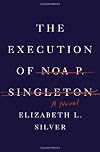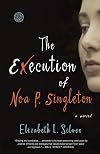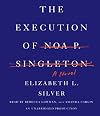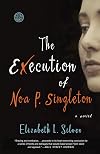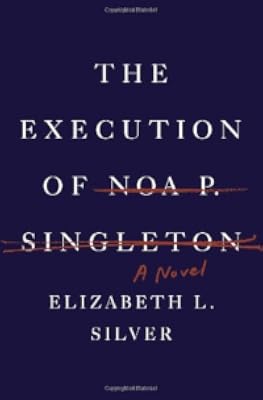
The Execution of Noa P. Singleton
by Elizabeth L. Silver
On This Page
Description
An unforgettable and unpredictable debut novel of guilt, punishment, and the stories we tell ourselves to surviveNoa P. Singleton never spoke a word in her own defense throughout a brief trial that ended with a jury finding her guilty of first-degree murder. Ten years later, having accepted her fate, she sits on death row in a maximum-security penitentiary, just six months away from her execution date.
Meanwhile, Marlene Dixon, a high-powered Philadelphia attorney show more who is also the mother of the woman Noa was imprisoned for killing. She claims to have changed her mind about the death penalty and will do everything in her considerable power to convince the governor to commute Noa's sentence to life in prison, in return for the one thing Noa can trade: her story. Marlene desperately wants to understand the events that led to her daughter’s...
. show less
Tags
Recommendations














Member Reviews
I sat on a jury once. It was a murder trial in which a man was accused of murdering his live-in girlfriend. Both had been drinking extensively and engaged in a domestic dispute. He killed his girlfriend, beating her with his hands and feet and a hand held vacuum cleaner. I found the entire criminal court process . . . interesting. I had worked in a courtroom for years, but only in the juvenile dependency court. So, the criminal case was a new experience for me. The information that could be entered into evidence, the way the attorneys made their arguments, the instructions to the jury . . . I came away from that experience feeling a bit disillusioned and not too confident in the entire jury trial process. At least not in the case I show more heard. It's hard to be when no one cares about the juror sleeping off a hangover during testimony or the jury foreman who asked his fellow jurors to keep in mind the defendant's age when condemning him to prison time despite having just been instructed by the judge not to take that into consideration because it wasn't relevant to whether he had in fact committed first degree murder.
And so Noa P. Singleton's story was not surprising. I have worked with a variety of attorneys over the years--some inexperienced, others burnt out or apathetic. They were mixed in with the good ones. One of my favorite juvenile court attorneys was a court appointed one, not a private attorney brought in from the outside. So the stereotype of court appointed attorneys not being the best advocates for their clients isn't always true. That's neither here nor there. In terms of the book, however, what most stood out for me was Noa's experience with the court process and how, unfortunately, realistic it was portrayed. It's clear from the novel that the author is well versed in criminal law and the ins and outs of the courtroom, particularly in criminal cases involving someone without much money.
I was caught up in Noa's tale right from the start. The novel is told from her perspective, in first person with the occasional pause for letters written by Marlene Dixon to her daughter, the murder victim. The two narratives offer a glimpse into both Noa's mind and Marlene's. Their stories are intertwined right from the start. Their relationship is an interesting one, one that creates more suspicion at first rather than understanding.
The author has a gift for only offering a piece of the mystery of how and why Sarah was killed here and there, keeping the suspense building and the reader wanting to know more. Neither Noa or Marlene are particularly likeable characters. Neither are very reliable as narratives--or are they? It's a question that I kept asking myself as I continued to read.
I never really connected with Noa. Being isolated on death row had given her a lot of time to reflect on her life and the direction it had taken. We learn about her childhood and her relationship with her parents, particularly her absent father who suddenly reappears in her life. She hadn't had an easy life, and I could see how her behavior and attitudes led her to make the decisions she did. Still, I never quite got a handle on her. She seemed disconnected from her own life and the people in it. Was this a reflection of her current situation and isolation or was it really a part of who she was?
Marlene brought in her own complications. She said she had a change of heart about the death penalty, but Noa suspected an ulterior motive from the start--and as the reader, I did too. It was in the way Marlene presented herself and the words that came out of her mouth. I just didn't trust her. Truth be told, I trusted Noa more.
I admit going into the novel I expected a rather fast read, but I didn't find it to be so. Elizabeth L. Silver is a descriptive writer. Whether that was a part of Noa's character or just Silver's style, I am not sure. Add to that the fact that the reader spends so much time in Noa's head, philosophizing and analyzing things, it slowed the pacing of the book down. At times I didn't mind at all as I found it interesting, but other times I wished I could hurry the book along. I really wanted to get to the truth. What happened to Sarah? Why was she killed? What was Noa's role? And what about the motive? All of this remains a mystery until the end of the book. And, although by then the truth comes less as a surprise, there are still some surprises to be had.
When I finished reading The Execution of Noa P. Singleton, I wasn't immediately sure what I thought of the book. On the one hand, I did enjoy it. On the other, I felt a bit unsatisfied. Ultimately though, I am glad I read the novel and feel that, as a whole, it was a worthwhile book, one that is particularly thought provoking.
Review copy provided by publisher. show less
And so Noa P. Singleton's story was not surprising. I have worked with a variety of attorneys over the years--some inexperienced, others burnt out or apathetic. They were mixed in with the good ones. One of my favorite juvenile court attorneys was a court appointed one, not a private attorney brought in from the outside. So the stereotype of court appointed attorneys not being the best advocates for their clients isn't always true. That's neither here nor there. In terms of the book, however, what most stood out for me was Noa's experience with the court process and how, unfortunately, realistic it was portrayed. It's clear from the novel that the author is well versed in criminal law and the ins and outs of the courtroom, particularly in criminal cases involving someone without much money.
I was caught up in Noa's tale right from the start. The novel is told from her perspective, in first person with the occasional pause for letters written by Marlene Dixon to her daughter, the murder victim. The two narratives offer a glimpse into both Noa's mind and Marlene's. Their stories are intertwined right from the start. Their relationship is an interesting one, one that creates more suspicion at first rather than understanding.
The author has a gift for only offering a piece of the mystery of how and why Sarah was killed here and there, keeping the suspense building and the reader wanting to know more. Neither Noa or Marlene are particularly likeable characters. Neither are very reliable as narratives--or are they? It's a question that I kept asking myself as I continued to read.
I never really connected with Noa. Being isolated on death row had given her a lot of time to reflect on her life and the direction it had taken. We learn about her childhood and her relationship with her parents, particularly her absent father who suddenly reappears in her life. She hadn't had an easy life, and I could see how her behavior and attitudes led her to make the decisions she did. Still, I never quite got a handle on her. She seemed disconnected from her own life and the people in it. Was this a reflection of her current situation and isolation or was it really a part of who she was?
Marlene brought in her own complications. She said she had a change of heart about the death penalty, but Noa suspected an ulterior motive from the start--and as the reader, I did too. It was in the way Marlene presented herself and the words that came out of her mouth. I just didn't trust her. Truth be told, I trusted Noa more.
I admit going into the novel I expected a rather fast read, but I didn't find it to be so. Elizabeth L. Silver is a descriptive writer. Whether that was a part of Noa's character or just Silver's style, I am not sure. Add to that the fact that the reader spends so much time in Noa's head, philosophizing and analyzing things, it slowed the pacing of the book down. At times I didn't mind at all as I found it interesting, but other times I wished I could hurry the book along. I really wanted to get to the truth. What happened to Sarah? Why was she killed? What was Noa's role? And what about the motive? All of this remains a mystery until the end of the book. And, although by then the truth comes less as a surprise, there are still some surprises to be had.
When I finished reading The Execution of Noa P. Singleton, I wasn't immediately sure what I thought of the book. On the one hand, I did enjoy it. On the other, I felt a bit unsatisfied. Ultimately though, I am glad I read the novel and feel that, as a whole, it was a worthwhile book, one that is particularly thought provoking.
Review copy provided by publisher. show less
The book held my attention from beginning to end. The reader was pretty effective, although at times she seemed to be in the wrong character’s speaking voice. Her expression was excellent, however.
The narrative was sharp and very descriptive presenting a clear picture of a young woman on death row. It was presented almost like a lecture or a dissertation. The main character showed little emotion and the dialogue perfectly represented her personality. It was a presentation of facts, but often, the reader could not be sure if they were true or false. I was constantly drawing different conclusions and making incorrect guesses to solve the mystery.
The audio begins with a brief introduction to Noa, a woman of a very checkered past, who is show more engaged in a prison interview, a death row interview, where she has been for 10 years. She has no remaining appeals and will be executed in six months. .Noa is very bright but not a well adjusted human being .She once wanted to be a doctor but left school after one year and abandoned her ambitions.
This new lawyer represents a newly formed group called MAD, Mothers Against Death. The founder is actually Marlene Dixon, the mother of Noa’s murder victim, Sarah Dixon. She is a powerful woman who knows anyone who is anyone. She uses her wiles to get her way and her power and information to intellectually blackmail those she needs to control. She insists she no longer wants Noa to be sentenced to death and will write an appeal for clemency, although at Noa’s trial she petitioned the court for the death penalty. She says that an appeal from the mother of the victim will usually be granted. Oliver is the young lawyer who comes to interview her and believes Marlene’s motives and objectives are genuine. Oliver and Noa develop a warm relationship and he asks her to write her memoir to explain who she was. He tells her to send it to Marlene, when she is finished.
Noa was brought up by a single parent, a rather no-account wannabe actress who did a lot of sleeping around. She has a ne’er do well brother whom she rarely sees. Growing up, she did not know her father. There are many devastating and traumatic secrets in Noa’s life that are slowly revealed as the book progresses. When her father reappears, she is drawn into the maelstrom that is his life. When she discovers he is having an affair with Sarah, a girl her age, trouble and tragedy follow. Marlene, Sarah’s mother, wants the relationship ended and asks for Noa’s help. Her father begs for her help when the relationship goes further than he wants it to go. Sarah is very much caught in the middle. Through a series of letters from Marlene Dixon to her deceased daughter and the information in Noa’s memoir, the details of the crime and of Noa’s background, are revealed.
I found the interrogation and trial testimony interesting, especially with the way information was presented and manipulated. Emotion and innuendo can easily sentence a person to death and I kept wondering if Noa was framed. There seemed to be several miscarriages of justice occurring. Also, the facts kept pointing in different directions. There was no shortage of people willing to testify against the accused to have their fifteen minutes of fame.
I did not admire any of the characters. They were far from stellar individuals. None seemed to live in the real world, but rather a world they created around themselves to satisfy their needs. They were manipulative and dishonest, willing to do just about anything to accomplish what was in their best interest, regardless of the consequences for others. If I had to try and pick one, it would be Oliver.
In the end, was justice actually served? Was anyone framed? Who was the real killer? Were they all guilty in some way with only one paying the ultimate price? What happens to Noa’s memoir? At one point, I wondered if the story was about the faults in our legal system rather than who committed the murder and why. Who was the real victim? Who was being victimized? There are so many questions that will rattle your brain until all the pieces come together. Although you will probably never be able to guess all of the hidden secrets in this novel, in the end, it may feel a little flat. You may find that the mystery was really obvious all along, if only you had been looking for the ordinary, instead of the extraordinary and more creative ending. show less
The narrative was sharp and very descriptive presenting a clear picture of a young woman on death row. It was presented almost like a lecture or a dissertation. The main character showed little emotion and the dialogue perfectly represented her personality. It was a presentation of facts, but often, the reader could not be sure if they were true or false. I was constantly drawing different conclusions and making incorrect guesses to solve the mystery.
The audio begins with a brief introduction to Noa, a woman of a very checkered past, who is show more engaged in a prison interview, a death row interview, where she has been for 10 years. She has no remaining appeals and will be executed in six months. .Noa is very bright but not a well adjusted human being .She once wanted to be a doctor but left school after one year and abandoned her ambitions.
This new lawyer represents a newly formed group called MAD, Mothers Against Death. The founder is actually Marlene Dixon, the mother of Noa’s murder victim, Sarah Dixon. She is a powerful woman who knows anyone who is anyone. She uses her wiles to get her way and her power and information to intellectually blackmail those she needs to control. She insists she no longer wants Noa to be sentenced to death and will write an appeal for clemency, although at Noa’s trial she petitioned the court for the death penalty. She says that an appeal from the mother of the victim will usually be granted. Oliver is the young lawyer who comes to interview her and believes Marlene’s motives and objectives are genuine. Oliver and Noa develop a warm relationship and he asks her to write her memoir to explain who she was. He tells her to send it to Marlene, when she is finished.
Noa was brought up by a single parent, a rather no-account wannabe actress who did a lot of sleeping around. She has a ne’er do well brother whom she rarely sees. Growing up, she did not know her father. There are many devastating and traumatic secrets in Noa’s life that are slowly revealed as the book progresses. When her father reappears, she is drawn into the maelstrom that is his life. When she discovers he is having an affair with Sarah, a girl her age, trouble and tragedy follow. Marlene, Sarah’s mother, wants the relationship ended and asks for Noa’s help. Her father begs for her help when the relationship goes further than he wants it to go. Sarah is very much caught in the middle. Through a series of letters from Marlene Dixon to her deceased daughter and the information in Noa’s memoir, the details of the crime and of Noa’s background, are revealed.
I found the interrogation and trial testimony interesting, especially with the way information was presented and manipulated. Emotion and innuendo can easily sentence a person to death and I kept wondering if Noa was framed. There seemed to be several miscarriages of justice occurring. Also, the facts kept pointing in different directions. There was no shortage of people willing to testify against the accused to have their fifteen minutes of fame.
I did not admire any of the characters. They were far from stellar individuals. None seemed to live in the real world, but rather a world they created around themselves to satisfy their needs. They were manipulative and dishonest, willing to do just about anything to accomplish what was in their best interest, regardless of the consequences for others. If I had to try and pick one, it would be Oliver.
In the end, was justice actually served? Was anyone framed? Who was the real killer? Were they all guilty in some way with only one paying the ultimate price? What happens to Noa’s memoir? At one point, I wondered if the story was about the faults in our legal system rather than who committed the murder and why. Who was the real victim? Who was being victimized? There are so many questions that will rattle your brain until all the pieces come together. Although you will probably never be able to guess all of the hidden secrets in this novel, in the end, it may feel a little flat. You may find that the mystery was really obvious all along, if only you had been looking for the ordinary, instead of the extraordinary and more creative ending. show less
This book has been the subject of countless laudatory reviews and was, until the longlist was announced, a constant on the lists on various sites of possible contenders for the National Book Award. And I can't figure out why this over-written novel of thin characters has come in for so much praise. Sure, it's got the young woman on death row thing which, to be honest, made me want to read it over more worthy books set in less exotic locations. Here's the premise; Noa P. Singleton is sitting in prison, waiting for her execution date, having exhausted her appeals when the mother of the woman she shot appears and offers to help with her final plea for clemency. The rest of the book looks back on the events leading up to the crime, show more explaining Noa's motivation and the events that led her to kill another person.
I know, right? I was on board from the start and ready for something that I wouldn't be able to put down. Then, over the course of the first chapter I noticed that the author had chosen to give Noa an overblown style of expression, with no noun or verb left undecorated and with a wide assortment of metaphors and similes called into use. Often Noa made no sense, but I chalked it up to the author choosing to write Noa's words like she were competing for the Bulwer-Lytton Prize. Then Elizabeth L. Silver added a series of letters written by the mother of the dead woman and used the same unreadable style and I was forced to acknowledge that the poor writing wasn't a conscious choice, but actual poor writing.
His moans lubricated the phone lines like a sexually transmitted disease.
Waves of perspiration dripped over my fingers.
He had eyelids like meat patties, slight flaps of creamy skin folded over his lids like a blanket tucking his pupils in.
Dark black hair hung over those phosphorescent eyes, while her Greek knob of a nose poked through the waterfall of curls.
These are not occasional flights into sloppy writing (dark black? Really? As opposed to light black? And what about those STDs to make a woman wet?) but a constant barrage of randomly constructed descriptions. And despite the first person narration, I knew as little about the main character on the final page as I had on the first. Sure, there's the Big Reveal at the end to explain some of her actions, but it was too little, too late. show less
I know, right? I was on board from the start and ready for something that I wouldn't be able to put down. Then, over the course of the first chapter I noticed that the author had chosen to give Noa an overblown style of expression, with no noun or verb left undecorated and with a wide assortment of metaphors and similes called into use. Often Noa made no sense, but I chalked it up to the author choosing to write Noa's words like she were competing for the Bulwer-Lytton Prize. Then Elizabeth L. Silver added a series of letters written by the mother of the dead woman and used the same unreadable style and I was forced to acknowledge that the poor writing wasn't a conscious choice, but actual poor writing.
His moans lubricated the phone lines like a sexually transmitted disease.
Waves of perspiration dripped over my fingers.
He had eyelids like meat patties, slight flaps of creamy skin folded over his lids like a blanket tucking his pupils in.
Dark black hair hung over those phosphorescent eyes, while her Greek knob of a nose poked through the waterfall of curls.
These are not occasional flights into sloppy writing (dark black? Really? As opposed to light black? And what about those STDs to make a woman wet?) but a constant barrage of randomly constructed descriptions. And despite the first person narration, I knew as little about the main character on the final page as I had on the first. Sure, there's the Big Reveal at the end to explain some of her actions, but it was too little, too late. show less
Just about the best I've ever read about complete and total alienation caused by a string of the worst possible luck. There is much to admire about the protagonist Noa, a young woman who's on Death Row for a seemingly motiveless murder. The writing is also crisp and goes very deep into the psyche of this poor woman.
Strong portrayals of her mother, father, attorney, friends, boyfriends, and the demonness on her tail make this a completely satisfying tale, albeit not your ideal beach read. It's an object lesson in taking more care.
Strong portrayals of her mother, father, attorney, friends, boyfriends, and the demonness on her tail make this a completely satisfying tale, albeit not your ideal beach read. It's an object lesson in taking more care.
The Execution of Noa P. Singleton by Elizabeth Silver
5 Stars
This book grabbed me right from the beginning. The story starts out by introducing us to Noa P. Singleton, a young woman in prison due to be executed in six months. One day, the mother of her victim, Philadelphia lawyer Marlene Dixon, shows up at the prison to tell Noa that she has formed an organization called MAD (Mothers Against Death) and no longer believes in the death penalty. She wants to use the resources of her firm to appeal to the governor for clemency on Noa's behalf. What she wants in exchange is for Noa to tell her why she killed her daughter. Apparently during the trial Noa never gave her lawyers any explanation and refused to testify on her own behalf.
The story show more is told from Noa's perspective and I love the way the author slowly extracts the story over the course of the book. The story is dispassionately narrated by Noa and she weaves her way through her life and how she ended up on death row. That part of the story is interspersed with visits from Oliver Stanstet, a young lawyer preparing the clemency paperwork. The other part of the story are letters Marlene has written to her daughter, giving us a window into the mother's actions and feelings without changing the focus of the story.
Noa's character is extremely well done. While I was reading I could never be sure she was the victim of circumstance or an evil killer who deserved to be on death row. The plot is interesting and well developed, with both the murder and Noa's approaching execution date running in parallel. I'm still thinking about it days after I have finished it. It was one of the best books I've read all year. show less
5 Stars
This book grabbed me right from the beginning. The story starts out by introducing us to Noa P. Singleton, a young woman in prison due to be executed in six months. One day, the mother of her victim, Philadelphia lawyer Marlene Dixon, shows up at the prison to tell Noa that she has formed an organization called MAD (Mothers Against Death) and no longer believes in the death penalty. She wants to use the resources of her firm to appeal to the governor for clemency on Noa's behalf. What she wants in exchange is for Noa to tell her why she killed her daughter. Apparently during the trial Noa never gave her lawyers any explanation and refused to testify on her own behalf.
The story show more is told from Noa's perspective and I love the way the author slowly extracts the story over the course of the book. The story is dispassionately narrated by Noa and she weaves her way through her life and how she ended up on death row. That part of the story is interspersed with visits from Oliver Stanstet, a young lawyer preparing the clemency paperwork. The other part of the story are letters Marlene has written to her daughter, giving us a window into the mother's actions and feelings without changing the focus of the story.
Noa's character is extremely well done. While I was reading I could never be sure she was the victim of circumstance or an evil killer who deserved to be on death row. The plot is interesting and well developed, with both the murder and Noa's approaching execution date running in parallel. I'm still thinking about it days after I have finished it. It was one of the best books I've read all year. show less
A friend of mine from college horrified all of us at one of our reunions with her tale of sitting on a jury in a capital murder case. She mercilessly skewered clueless fellow jurors, the defendant with his earnest but undeniable lies, the entire process really, finishing with the comment that her experience with our legal system has left her very jaded and disappointed. I want to forewarn her to never read Elizabeth Silver's debut novel, The Execution of Noa P. Singleton, a story of the unreliability, corruptibility, and bumbling incompetence in the US legal system. It will further erode her confidence in people finding justice through our court system, not because Noa P. Singleton didn't shoot Sarah Dixon, the crime for which she is show more incarcerated (she did), but because there's so much more to the story than just this simple, unequivocal verdict and it's the "more" that changes everything as my friend found when sitting as a juror.
Noa P. Singleton is a broken woman. Ten years ago she was convicted of murdering Sarah Dixon and sentenced to death. She sat through the trial without saying a word in her defense and in her decade on Death Row, through countless appeals, and under the representation of young (incompetent) lawyer after lawyer looking to make their own reputations through her notoriety, she has never told her side of the story. Six months before her execution date, another young lawyer comes to see her at the behest of Marlene Dixon, the mother of the young woman Noa shot. Oliver tells her that Marlene has changed her opinion on the death penalty, has created an organization--MAD or Mothers Against Death--to further her new aims, and wants Noa to be granted clemency. Despite the fact that Marlene is herself a very high powered, ruthless attorney, she has Oliver Stansted, a junior lawyer at her firm, doing the pro bono work and meeting with Noa. All that Marlene asks of Noa in return for her legal intervention is that Noa finally explain why she shot Sarah. Noa contends that Marlene already knows without acknowledging that she knows and she must decide if Marlene deserves the comfort or exoneration of hearing anything further from Noa. And yet she starts writing down her version of her life and the events that are marching her inexorably towards November 7, the date she is scheduled to die.
Narrated primarily by Noa with short supplemental letters from Marlene written to Sarah which change the reader's view of Marlene's motivations and a few other semi-problematic point of view shifts, this is a slow, contemplative and philosophical novel. Noa tells of the neglect in her childhood and the tragedies in her young life that formed the woman she grew into. And her background should be one that inspires some sympathy but she narrates all of it with a rather flat affect leaving the reader strangely unmoved as well. Woven in with Noa's life story are her thoughts on the prison system and the ponderings of an inmate on Death Row. There are long lists comparing others' last meals and last words as she wonders what hers will be and why. And there are many reflections on Noa's arrest and trial. The portions of the novel that focus on the legal system were less interesting than the events that led to the arrest in the first place. The writing was sometimes overblown and the plethora of similies and metaphors needed to be pared down. The narrative tension was a bit uneven with it substantially increasing in the second half of the novel as new revelations came out in Noa's account which alter the reader's idea of just what the truth is in this case. But the novel as a whole did pick up as it went on, becoming more compelling reading further into the narrative.
In a perfect world, we punish the guilty but sometimes guilt and punishment are only tangentially related. And teasing out this relationship is one of the things that the reader is asked to do here. A dark, occasionally surprising tale of manipulation, subterfuge, and culpability, ultimately, this novel asks, what is the truth and what would justice be for that truth? I felt a drawn out, tightening, squeezing suffocation as I read this which wasn't the world's most comfortable sensation but it certainly raises disturbing questions about guilt and innocence, the role of our upbringing in forming our moral character, and our justice system as it stands now. show less
Noa P. Singleton is a broken woman. Ten years ago she was convicted of murdering Sarah Dixon and sentenced to death. She sat through the trial without saying a word in her defense and in her decade on Death Row, through countless appeals, and under the representation of young (incompetent) lawyer after lawyer looking to make their own reputations through her notoriety, she has never told her side of the story. Six months before her execution date, another young lawyer comes to see her at the behest of Marlene Dixon, the mother of the young woman Noa shot. Oliver tells her that Marlene has changed her opinion on the death penalty, has created an organization--MAD or Mothers Against Death--to further her new aims, and wants Noa to be granted clemency. Despite the fact that Marlene is herself a very high powered, ruthless attorney, she has Oliver Stansted, a junior lawyer at her firm, doing the pro bono work and meeting with Noa. All that Marlene asks of Noa in return for her legal intervention is that Noa finally explain why she shot Sarah. Noa contends that Marlene already knows without acknowledging that she knows and she must decide if Marlene deserves the comfort or exoneration of hearing anything further from Noa. And yet she starts writing down her version of her life and the events that are marching her inexorably towards November 7, the date she is scheduled to die.
Narrated primarily by Noa with short supplemental letters from Marlene written to Sarah which change the reader's view of Marlene's motivations and a few other semi-problematic point of view shifts, this is a slow, contemplative and philosophical novel. Noa tells of the neglect in her childhood and the tragedies in her young life that formed the woman she grew into. And her background should be one that inspires some sympathy but she narrates all of it with a rather flat affect leaving the reader strangely unmoved as well. Woven in with Noa's life story are her thoughts on the prison system and the ponderings of an inmate on Death Row. There are long lists comparing others' last meals and last words as she wonders what hers will be and why. And there are many reflections on Noa's arrest and trial. The portions of the novel that focus on the legal system were less interesting than the events that led to the arrest in the first place. The writing was sometimes overblown and the plethora of similies and metaphors needed to be pared down. The narrative tension was a bit uneven with it substantially increasing in the second half of the novel as new revelations came out in Noa's account which alter the reader's idea of just what the truth is in this case. But the novel as a whole did pick up as it went on, becoming more compelling reading further into the narrative.
In a perfect world, we punish the guilty but sometimes guilt and punishment are only tangentially related. And teasing out this relationship is one of the things that the reader is asked to do here. A dark, occasionally surprising tale of manipulation, subterfuge, and culpability, ultimately, this novel asks, what is the truth and what would justice be for that truth? I felt a drawn out, tightening, squeezing suffocation as I read this which wasn't the world's most comfortable sensation but it certainly raises disturbing questions about guilt and innocence, the role of our upbringing in forming our moral character, and our justice system as it stands now. show less
A rating of two stars is probably one star too many.
I really wanted to like this book, because I believe in supporting debut novels. So I'm giving this book two stars because I'm sure Silver was really, really trying. But I'm at 268/308, and I honestly don't care how the book ends. Silver's writing is stunningly bad, completely distracting from everything else she's trying to do. At this point in the book I can only laugh out loud at her tortured metaphors. On just about every page are sentences that sound like candidates for the Bulwer-Lytton contest.
"I do sit alone, sometimes, wondering whether the clouds are gathering together, communing like a collection of cotton balls in a tightly sealed ziplock bag, or whether they've been show more flattened out like a stack of pancakes. Or if they've been vaccinated with a syringe of rainy dye so that only a select few darken into grays, blacks, and charcoals." OMG.
"Madison McCall tried unsuccessfully to throw out my interrogation, but only after an intestinal road of paperwork throwing around words like Miranda and police misconduct." What does this sentence even mean?
"My bladder was full, my eyes were leaking, my pores were leaking, but none of them could move." Huh?
"His heart was too visible outside his garments, where it resided like lint on a week-old sweater." No comment required.
Almost worse than her writing is the fact that she can thank "the team at Crown" for all their help, including her "fiercely kind" editor Christine Kopprasch (this book had an editor!?) and the rest of them for their "creative and inventive marketing and publicity." Yeah, thanks loads for suckering me into buying this thing, including AMAZON who made this an Amazon Best Book of the Month for June. Wow, June must be one terrible month for book publishing.
Understand that I'm not simply mocking or having fun at the expense of a debut novel. I respect this woman's effort. What insults me is the aggressive professional marketing this thing has received. The quotations from the "editorial reviews" at Amazon are simply over-the-top. Call me naïve, which I pretty much get called by someone at least once a day, but this kind of marketing is dishonest and wrong, and it disrespects readers who buy these books IN GOOD FAITH with hard-earned $$ (not to mention spending our hard-earned reading time as well).
P.S. I finished the book, and, true to form, Ms. Silver never stopped with the metaphors. My favorite one at the end is the gun resting on the table, "almost like a scared puppy during a thunderstorm. . . my gun by congenital defect. . . ." And no, I have no idea what that means. And yes, a rating of two stars is one too many, so I'm bumping it down to one star. show less
I really wanted to like this book, because I believe in supporting debut novels. So I'm giving this book two stars because I'm sure Silver was really, really trying. But I'm at 268/308, and I honestly don't care how the book ends. Silver's writing is stunningly bad, completely distracting from everything else she's trying to do. At this point in the book I can only laugh out loud at her tortured metaphors. On just about every page are sentences that sound like candidates for the Bulwer-Lytton contest.
"I do sit alone, sometimes, wondering whether the clouds are gathering together, communing like a collection of cotton balls in a tightly sealed ziplock bag, or whether they've been show more flattened out like a stack of pancakes. Or if they've been vaccinated with a syringe of rainy dye so that only a select few darken into grays, blacks, and charcoals." OMG.
"Madison McCall tried unsuccessfully to throw out my interrogation, but only after an intestinal road of paperwork throwing around words like Miranda and police misconduct." What does this sentence even mean?
"My bladder was full, my eyes were leaking, my pores were leaking, but none of them could move." Huh?
"His heart was too visible outside his garments, where it resided like lint on a week-old sweater." No comment required.
Almost worse than her writing is the fact that she can thank "the team at Crown" for all their help, including her "fiercely kind" editor Christine Kopprasch (this book had an editor!?) and the rest of them for their "creative and inventive marketing and publicity." Yeah, thanks loads for suckering me into buying this thing, including AMAZON who made this an Amazon Best Book of the Month for June. Wow, June must be one terrible month for book publishing.
Understand that I'm not simply mocking or having fun at the expense of a debut novel. I respect this woman's effort. What insults me is the aggressive professional marketing this thing has received. The quotations from the "editorial reviews" at Amazon are simply over-the-top. Call me naïve, which I pretty much get called by someone at least once a day, but this kind of marketing is dishonest and wrong, and it disrespects readers who buy these books IN GOOD FAITH with hard-earned $$ (not to mention spending our hard-earned reading time as well).
P.S. I finished the book, and, true to form, Ms. Silver never stopped with the metaphors. My favorite one at the end is the gun resting on the table, "almost like a scared puppy during a thunderstorm. . . my gun by congenital defect. . . ." And no, I have no idea what that means. And yes, a rating of two stars is one too many, so I'm bumping it down to one star. show less
Members
- Recently Added By
Lists

Top Five Books of 2013
1,562 works; 721 members

Dishonourable Mentions of 2013
189 works; 62 members

Books Read in 2013
1,630 works; 51 members
Author Information

3+ Works 546 Members
Awards and Honors
Common Knowledge
- Canonical title
- The Execution of Noa P. Singleton
- Original publication date
- 2013-06-11
- People/Characters
- Noa P. Singleton; Marlene Dixon; Oliver Stansted
- Blurbers
- Koch, Herman; Dunn, Katherine; Waldman, Ayelet; Fountain, Ben; Lupton, Rosamund; Dawson, Jill
Classifications
Statistics
- Members
- 475
- Popularity
- 63,961
- Reviews
- 53
- Rating
- (3.31)
- Languages
- English, French
- Media
- Paper, Audiobook, Ebook
- ISBNs
- 13
- ASINs
- 5