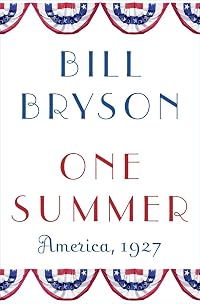
One Summer: America, 1927
by Bill Bryson
On This Page
Description
A Chicago Tribune Noteworthy BookA GoodReads Reader's Choice
In One Summer Bill Bryson, one of our greatest and most beloved nonfiction writers, transports readers on a journey back to one amazing season in American life.
The summer of 1927 began with one of the signature events of the twentieth century: on May 21, 1927, Charles Lindbergh became the first man to cross the Atlantic by plane nonstop, and when he landed in Le Bourget airfield near Paris, he ignited an explosion of worldwide show more rapture and instantly became the most famous person on the planet. Meanwhile, the titanically talented Babe Ruth was beginning his assault on the home run record, which would culminate on September 30 with his sixtieth blast, one of the most resonant and durable records in sports history. In between those dates a Queens housewife named Ruth Snyder and her corset-salesman lover garroted her husband, leading to a murder trial that became a huge tabloid sensation. Alvin “Shipwreck” Kelly sat atop a flagpole in Newark, New Jersey, for twelve days—a new record. The American South was clobbered by unprecedented rain and by flooding of the Mississippi basin, a great human disaster, the relief efforts for which were guided by the uncannily able and insufferably pompous Herbert Hoover. Calvin Coolidge interrupted an already leisurely presidency for an even more relaxing three-month vacation in the Black Hills of South Dakota. The gangster Al Capone tightened his grip on the illegal booze business through a gaudy and murderous reign of terror and municipal corruption. The first true “talking picture,” Al Jolson’s The Jazz Singer, was filmed and forever changed the motion picture industry. The four most powerful central bankers on earth met in secret session on a Long Island estate and made a fateful decision that virtually guaranteed a future crash and depression.
All this and much, much more transpired in that epochal summer of 1927, and Bill Bryson captures its outsized personalities, exciting events, and occasional just plain weirdness with his trademark vividness, eye for telling detail, and delicious humor. In that year America stepped out onto the world stage as the main event, and One Summer transforms it all into narrative nonfiction of the highest order. show less
Tags
Recommendations

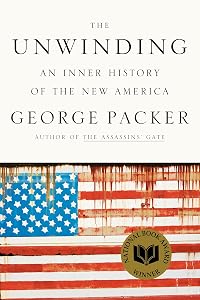
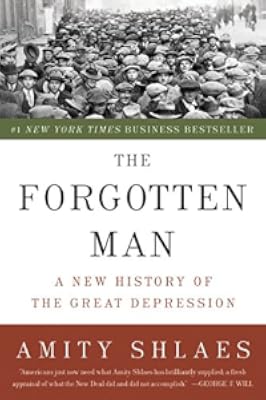
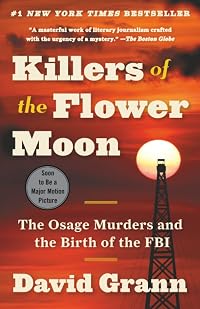
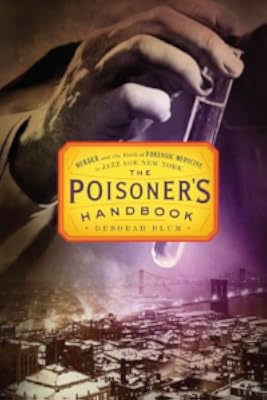
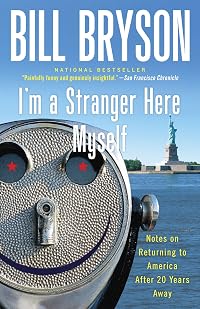

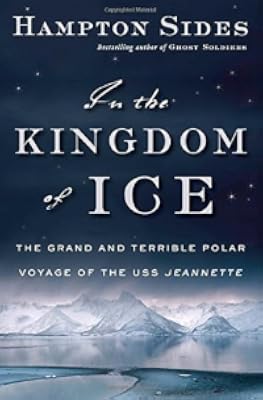
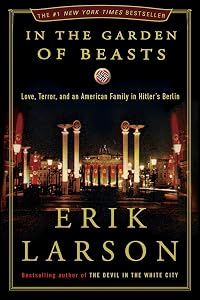


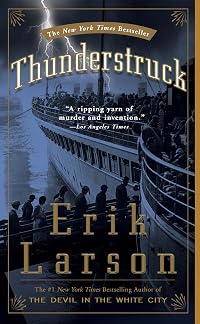



Member Recommendations
Member Reviews
It was the best of times, it was the worst of times .... okay, so 1927 America may not have achieved either of these extremes, but Bill Bryson's entertaining, informative, unexpectedly even-handed stroll through the events of 1927 is a timely reminder that those who wish to restore our country to the "good old days" are either ill-informed or deliberately deceiving.
True, 1927 was a year that celebrated many of the things that we Americans celebrate about ourselves and our heritage: "Lucky Lindbergh" courageously conquered the Atlantic crossing; Hollywood released the first talkie blockbuster, The Jazz Singer; Dempsey & Tunney staged what may have been the greatest "boxing exhibition" of all times; a teenager plowing a field suddenly show more came up with the inspiration for the technology that would make television possible; the U.S. stock market soared, due in no small measure to American entrepreneurship and ingenuity; and Babe Ruth, a big-hearted orphan from Jersey, hit an almost unimaginable 60 home runs.
But it was also the year that Al Capone reigned supreme in Chicago, backed up by Tommy-gun armed hoodlums; thousands of people died or were rendered homeless by unprecedented flooding in the Mississippi valley; anarchists bombed the homes of politicians and judges; a disturbed public employee set off a bomb in a school, killing 38 children - still the deadliest school disaster in U.S. history; a group of secretive bankers made and implemented a decision that would make the Great Depression inevitable; and the KKK staged a major resurgence on the backs of self-aggrandizing eugenicists who wrote best-selling books about the dire need to "cleanse" the US of undesirables such as criminals, the mentally feeble, immigrants, blacks, and Jews.
Admit I'm not the biggest fan of some of Bryson's other works, but I found this engrossing. It helps that he made some good editorial decisions along the way, such as giving himself permission to temporarily depart the confines of 1927 long enough to place the events of the year in the context of what had come before and what would follow. Thanks to this, what could have felt like a collection of loosely related anecdotes - sepia-tinted postcards from a "simpler time" - is transformed into something a lot more narratively complex, morally ambiguous, and thought-provoking.
By all means enjoy the opportunity Bryson provides to celebrate our country in all its over-eager, quirky glory (what kind of country makes pole-sitting a thing?); but don't pick this up unless you're also prepared to be reminded of the fact that our country's history is a whole lot more socially and morally complex than some conservative narratives would have us believe. show less
True, 1927 was a year that celebrated many of the things that we Americans celebrate about ourselves and our heritage: "Lucky Lindbergh" courageously conquered the Atlantic crossing; Hollywood released the first talkie blockbuster, The Jazz Singer; Dempsey & Tunney staged what may have been the greatest "boxing exhibition" of all times; a teenager plowing a field suddenly show more came up with the inspiration for the technology that would make television possible; the U.S. stock market soared, due in no small measure to American entrepreneurship and ingenuity; and Babe Ruth, a big-hearted orphan from Jersey, hit an almost unimaginable 60 home runs.
But it was also the year that Al Capone reigned supreme in Chicago, backed up by Tommy-gun armed hoodlums; thousands of people died or were rendered homeless by unprecedented flooding in the Mississippi valley; anarchists bombed the homes of politicians and judges; a disturbed public employee set off a bomb in a school, killing 38 children - still the deadliest school disaster in U.S. history; a group of secretive bankers made and implemented a decision that would make the Great Depression inevitable; and the KKK staged a major resurgence on the backs of self-aggrandizing eugenicists who wrote best-selling books about the dire need to "cleanse" the US of undesirables such as criminals, the mentally feeble, immigrants, blacks, and Jews.
Admit I'm not the biggest fan of some of Bryson's other works, but I found this engrossing. It helps that he made some good editorial decisions along the way, such as giving himself permission to temporarily depart the confines of 1927 long enough to place the events of the year in the context of what had come before and what would follow. Thanks to this, what could have felt like a collection of loosely related anecdotes - sepia-tinted postcards from a "simpler time" - is transformed into something a lot more narratively complex, morally ambiguous, and thought-provoking.
By all means enjoy the opportunity Bryson provides to celebrate our country in all its over-eager, quirky glory (what kind of country makes pole-sitting a thing?); but don't pick this up unless you're also prepared to be reminded of the fact that our country's history is a whole lot more socially and morally complex than some conservative narratives would have us believe. show less
A cast of characters small and large, famous in their day but mostly forgotten now, Bryson helps us to remember what it was like to be our (great) grandparents. Bryson mined newspaper headlines and carries the reader along as if living out the weeks of the summer, experiencing the change in moods and excitement as it happened. It's not exactly a new approach, Frederick Lewis Allen's Only Yesterday: An Informal History of the 1920s (1931) did much the same, though without the hindsight of 80 years (Bryson mentions this book). 80 years is a perfect time to revisit an era, not too old to be academic, yet not too uncomfortably close, everyone who lived the era is gone four generations on. Though I knew it intellectually I gained a much show more deeper understanding of the impact Lindbergh had on the global psyche - airplanes were no longer curiosities or science fiction possibilities, people realized that in their lifetime they would travel vast distances in the blink of an eye, and they were right. It would be like if someone proved affordable space travel to Mars, space would suddenly be open to possibility in the lives of ordinary people. Another aspect I found fascinating was train travel in the era, with thousands of private railroads and labyrinthine trail schedules and connections. Well the details go on and on, the book is loaded with trivia for better and worse, but with Bryson telling it, who cares. Well worth the read or listen (Bryson is a talented narrator too). show less
Audiobook: Bill Bryson is a national treasure. I have read all of his books except the most recent and that problem will be remedied shortly. My wife and I especially enjoy listening to Bryson read his own work while driving; Bryson never fails to entertain and inform, the best combination ever.
This book is no exception. He uses the year 1927 as a springboard to recount events and people that defined early 20th century culture such as Lindbergh’s flight, Babe Ruth’s prowess, Tilden’s unusual skill, and Herbert Hoover’s self-aggrandizement. Some of the events have been forgotten and startled me. I don't remember ever hearing of the Bath Massacre. Andrew Kehoe was about to lose his farm to foreclosure and he blamed the school show more district taxes for his dilemma (ironically he was school board treasurer who had just been defeated for reelection). He packed hundreds of pounds of explosives in the basement of a local school and then watched from his car as children’s body parts were hurled into the air from the massive explosion. 38 elementary school children and six adults were killed with over fifty others injured. That the death was not higher was only because the explosives under other wings of the building did not ignite. More people were killed when he blew up his shrapnel-filled truck with himself in it while rescuers were trying to get children out of the destroyed building. It was shortly discovered he had murdered his wife who was dying of tuberculosis and set fire to all his farm buildings. Sandy Hook pales by comparison.
Another interesting tidbit. When Lindbergh made his famous flight, no one was quite sure how he would be received. The United states was hated by most of Europe, but France and Britain in particular, as they had been forced to take out loans to aid Austria after the war. Congress had forbidding American money to be spent on current or former enemies, so this was a way around that prohibition. Austria then defaulted on the loans, but Congress insisted that France and Britain repay the loans, with interest, even though the U.S. had prospered since a requirement of the transaction was that all the money had to be spent in the United States, a clever form of double-dipping.
Prohibition was one of those curious American phenomena and probably the only case in which of government deliberately poisoned its citizens. Because of the nature of alcohol being used for so many different other purposes besides drinking Industrial alcohol was often denatured and adulterated by the government with all sorts of these are poisons including strychnine so that those people who drank it illegally would suffer the consequences. It was another interesting fact was that many states were upset about the Volstead Act because they lost so much revenue in fact New York's revenue was cut in half when they lost the tax revenue from the sale of alcohol. It made criminals out of honest people, too. (War Against Drugs, anyone?) Churches had an exception (of course) and one church in California offered fourteen different vintages of communion wine. Doctors could prescribe whiskey and it’s estimated that loophole brought them some $40,000,000 in revenue. And, it was dangerous. The murder rate went up by 30%. The revenue agents themselves killed 23 innocent bystanders in a short period of time.
Henry Ford is highlighted. Brilliant in some ways, obnoxious and bigoted in most, he was the only American to have been mentioned favorably in Mein Kampf. Among his more interesting failures was Fordlandia, an attempt to build an all-American city in the middle of the Brazilian jungles. Those who worry about Amazon’s desire to control, will only marvel at Ford’s obsession to control all aspects of his care production so as to keep costs to an absolute minimum in order to produce the best car for the least amount of money. (Part of the reason why he invented the forty-hour week and double his workers pay was to help keep workers from leaving but also so they would have enough money to be able to buy his cars.) Fordlandia was an effort to return Brazil to its former glory as a rubber producer. Ford, the largest consumer of rubber in the world, wanted to control prices. He failed miserably. His manager was a thug, diseases and noxious animals were rampant. Greg Grandin has written a history of the city, Fordlandia: The Rise and Fall of Henry Ford's Forgotten Jungle City, which I have acquired and look forward to reading.
Another fascinating section discusses the development of radio and television and that greatest of unknown 20th century inventors Philo Farnsworth who came up for the idea of using a cathode ray tube to display images while plowing his father’s field. Ironically, it was a businessman with no inkling of the mechanics of radio that made it ubiquitous. David Sarnoff’s genius was making the connection between content and device. Who would buy a radio if there was nothing to listen to? The first public demonstration, a broadcast of a boxing match turned out to be a fraud as a technical difficulty prevented the live broadcast, but the huge crowd in Times Square listening on speakers to an imaginative reader of ticker tape thought it was live, and that’s all that mattered. Soon NBC was having to create all sorts of expensive content to be delivered for free to radio listeners. Enter advertising.
Bryson’s writing is a delicious melding words and phrases together that routinely bring a smile to your face (the Tribune’s lawyers revealed the shallow waters of his mind - re Ford). Or after talking about the number of flying accidents he mentioned the man who was injured by a whirling propeller being hit on the head and having his arm sliced off, “leaving him much diminished.”
Bryson’s audio narrative whets the reading appetite. show less
This book is no exception. He uses the year 1927 as a springboard to recount events and people that defined early 20th century culture such as Lindbergh’s flight, Babe Ruth’s prowess, Tilden’s unusual skill, and Herbert Hoover’s self-aggrandizement. Some of the events have been forgotten and startled me. I don't remember ever hearing of the Bath Massacre. Andrew Kehoe was about to lose his farm to foreclosure and he blamed the school show more district taxes for his dilemma (ironically he was school board treasurer who had just been defeated for reelection). He packed hundreds of pounds of explosives in the basement of a local school and then watched from his car as children’s body parts were hurled into the air from the massive explosion. 38 elementary school children and six adults were killed with over fifty others injured. That the death was not higher was only because the explosives under other wings of the building did not ignite. More people were killed when he blew up his shrapnel-filled truck with himself in it while rescuers were trying to get children out of the destroyed building. It was shortly discovered he had murdered his wife who was dying of tuberculosis and set fire to all his farm buildings. Sandy Hook pales by comparison.
Another interesting tidbit. When Lindbergh made his famous flight, no one was quite sure how he would be received. The United states was hated by most of Europe, but France and Britain in particular, as they had been forced to take out loans to aid Austria after the war. Congress had forbidding American money to be spent on current or former enemies, so this was a way around that prohibition. Austria then defaulted on the loans, but Congress insisted that France and Britain repay the loans, with interest, even though the U.S. had prospered since a requirement of the transaction was that all the money had to be spent in the United States, a clever form of double-dipping.
Prohibition was one of those curious American phenomena and probably the only case in which of government deliberately poisoned its citizens. Because of the nature of alcohol being used for so many different other purposes besides drinking Industrial alcohol was often denatured and adulterated by the government with all sorts of these are poisons including strychnine so that those people who drank it illegally would suffer the consequences. It was another interesting fact was that many states were upset about the Volstead Act because they lost so much revenue in fact New York's revenue was cut in half when they lost the tax revenue from the sale of alcohol. It made criminals out of honest people, too. (War Against Drugs, anyone?) Churches had an exception (of course) and one church in California offered fourteen different vintages of communion wine. Doctors could prescribe whiskey and it’s estimated that loophole brought them some $40,000,000 in revenue. And, it was dangerous. The murder rate went up by 30%. The revenue agents themselves killed 23 innocent bystanders in a short period of time.
Henry Ford is highlighted. Brilliant in some ways, obnoxious and bigoted in most, he was the only American to have been mentioned favorably in Mein Kampf. Among his more interesting failures was Fordlandia, an attempt to build an all-American city in the middle of the Brazilian jungles. Those who worry about Amazon’s desire to control, will only marvel at Ford’s obsession to control all aspects of his care production so as to keep costs to an absolute minimum in order to produce the best car for the least amount of money. (Part of the reason why he invented the forty-hour week and double his workers pay was to help keep workers from leaving but also so they would have enough money to be able to buy his cars.) Fordlandia was an effort to return Brazil to its former glory as a rubber producer. Ford, the largest consumer of rubber in the world, wanted to control prices. He failed miserably. His manager was a thug, diseases and noxious animals were rampant. Greg Grandin has written a history of the city, Fordlandia: The Rise and Fall of Henry Ford's Forgotten Jungle City, which I have acquired and look forward to reading.
Another fascinating section discusses the development of radio and television and that greatest of unknown 20th century inventors Philo Farnsworth who came up for the idea of using a cathode ray tube to display images while plowing his father’s field. Ironically, it was a businessman with no inkling of the mechanics of radio that made it ubiquitous. David Sarnoff’s genius was making the connection between content and device. Who would buy a radio if there was nothing to listen to? The first public demonstration, a broadcast of a boxing match turned out to be a fraud as a technical difficulty prevented the live broadcast, but the huge crowd in Times Square listening on speakers to an imaginative reader of ticker tape thought it was live, and that’s all that mattered. Soon NBC was having to create all sorts of expensive content to be delivered for free to radio listeners. Enter advertising.
Bryson’s writing is a delicious melding words and phrases together that routinely bring a smile to your face (the Tribune’s lawyers revealed the shallow waters of his mind - re Ford). Or after talking about the number of flying accidents he mentioned the man who was injured by a whirling propeller being hit on the head and having his arm sliced off, “leaving him much diminished.”
Bryson’s audio narrative whets the reading appetite. show less
Much as I enjoy Bill Bryson's travel and autobiographical writing, I like his histories – A Short History of Nearly Everything and this – even better. This is just marvelously funny, appalling, startling, and fascinating. Who would have thought that one summer could encompass so much?
Actually, of course, Bryson doesn't limit his story to America in the summer of 1927. He moves forward and backward in time, to more fully tell about events, and he takes readers with his characters to South America, France, England, etc. But the summer of 1927 ties it all together, and that summer included memorable moments in the history of baseball, boxing, aeronautics, politics, crime, automobiles, radio and television, movies, pulp fiction, and show more more. Bryson's lively, humorous style keeps the book zipping along, even when he's covering topics in which I have little interest (such as transatlantic flight, boxing, baseball, automobiles... well quite a bit of the book, actually, but my point is, if he can make these things interesting to me, he's working some real magic!), and while the organization, theoretically by month, might seem to chop stories up oddly, I never found it to be so.
On the surface, America of almost 90 years ago seems very... “other,” but, on second thought, there are disconcerting similarities to the way things are today. A few things, like the crazed mobs throwing themselves onto airport runways in hope of catching a glimpse of Charles Lindbergh, do seem to have changed, perhaps due to the ease of celebrity watching via the internet and television, but others – the hypocritical politicians, corrupt police, white supremacists, xenophobic demagogues, prurient “news” journals, financial chicanery, etc. – are still, sadly, very familiar. While Bryson doesn't hesitate to look at the seamy side of history, he doesn't wallow, and he manages to find the fun in the stories of Prohibition, Al Capone, and even Henry Ford. The most joyful segments, though, are about baseball. As I said, I'm not much interested in baseball, but Babe Ruth's story, even with its sordid aspects, is heartwarming, if not exactly wholesome, and adds a nice warmth and optimism. A very enjoyable book. I should note that I listened to this, read by the author, (with a physical copy on hand), and once I got used to Bryson's peculiar accent – Midwestern with an English twang? – I enjoyed his reading very much. You can hear the laughter in his voice when he gets to particularly funny bits in his own writing, and I love that. show less
Actually, of course, Bryson doesn't limit his story to America in the summer of 1927. He moves forward and backward in time, to more fully tell about events, and he takes readers with his characters to South America, France, England, etc. But the summer of 1927 ties it all together, and that summer included memorable moments in the history of baseball, boxing, aeronautics, politics, crime, automobiles, radio and television, movies, pulp fiction, and show more more. Bryson's lively, humorous style keeps the book zipping along, even when he's covering topics in which I have little interest (such as transatlantic flight, boxing, baseball, automobiles... well quite a bit of the book, actually, but my point is, if he can make these things interesting to me, he's working some real magic!), and while the organization, theoretically by month, might seem to chop stories up oddly, I never found it to be so.
On the surface, America of almost 90 years ago seems very... “other,” but, on second thought, there are disconcerting similarities to the way things are today. A few things, like the crazed mobs throwing themselves onto airport runways in hope of catching a glimpse of Charles Lindbergh, do seem to have changed, perhaps due to the ease of celebrity watching via the internet and television, but others – the hypocritical politicians, corrupt police, white supremacists, xenophobic demagogues, prurient “news” journals, financial chicanery, etc. – are still, sadly, very familiar. While Bryson doesn't hesitate to look at the seamy side of history, he doesn't wallow, and he manages to find the fun in the stories of Prohibition, Al Capone, and even Henry Ford. The most joyful segments, though, are about baseball. As I said, I'm not much interested in baseball, but Babe Ruth's story, even with its sordid aspects, is heartwarming, if not exactly wholesome, and adds a nice warmth and optimism. A very enjoyable book. I should note that I listened to this, read by the author, (with a physical copy on hand), and once I got used to Bryson's peculiar accent – Midwestern with an English twang? – I enjoyed his reading very much. You can hear the laughter in his voice when he gets to particularly funny bits in his own writing, and I love that. show less
In many respects, the 1920s were a pivotal decade in American history. The midpoint in our transformation from a predominantly rural to primarily urban nation, it also was the point at which the United States first enjoyed an unchallengeable dominance in the world economy. Domestically it was a decade of achievement and transformation, as many Americans undertook new challenges and attempted to push the boundaries of what was possible. It is this sense of transformation and achievement that underscores Bill Bryson’s new book. In it, he focuses on a five-month period from May to September 1927, describing the dramatic events that took place during that time and showing how they embodied that point in time and dramatized many of the show more changes that were taking place in the nation.
The central figure in Bryson’s account is Charles Lindbergh. Leading off with the much-publicized effort to cross the Atlantic that summer, he portrays Lindbergh as the embodiment of the national moment – a reluctant presence on the public stage, yet eager to demonstrate what was possible for Americans to accomplish. Lindbergh’s triumph, Bryson shows, came at a time when Europeans rather than Americans were seen as the leader of the new field of aviation. With the success of his flight, the perception reversed itself overnight, and was further underscored by the subsequent flights made in the weeks that followed by other Americans.
Yet Lindbergh is just one of the large cast of characters in this book. His account ranges widely to include politics, sports, crime, and arts and literature. Bryson uses their experiences to describe the many events of that summer (the great flood of the Mississippi River, the home run race between Babe Ruth and Lou Gehrig, the succession of bombings related to the impending execution of Sacco and Vanzetti), as well as the broader developments taking place in both America and the world. Through it all he makes some excellent arguments for the significance of these months, which he details in a narrative that is never less than enjoyable. While Bryson occasionally gets some of the details wrong (Clara Bow’s career, for example, was not ended by the arrival of sound films, while the U.S. Navy had been launching planes from ships at sea years before Clarence Chamberlin flew off the SS “Leviathan”), the book overall is a superb account of an extraordinary time in American history, one that readers will find both enlightening and entertaining. show less
The central figure in Bryson’s account is Charles Lindbergh. Leading off with the much-publicized effort to cross the Atlantic that summer, he portrays Lindbergh as the embodiment of the national moment – a reluctant presence on the public stage, yet eager to demonstrate what was possible for Americans to accomplish. Lindbergh’s triumph, Bryson shows, came at a time when Europeans rather than Americans were seen as the leader of the new field of aviation. With the success of his flight, the perception reversed itself overnight, and was further underscored by the subsequent flights made in the weeks that followed by other Americans.
Yet Lindbergh is just one of the large cast of characters in this book. His account ranges widely to include politics, sports, crime, and arts and literature. Bryson uses their experiences to describe the many events of that summer (the great flood of the Mississippi River, the home run race between Babe Ruth and Lou Gehrig, the succession of bombings related to the impending execution of Sacco and Vanzetti), as well as the broader developments taking place in both America and the world. Through it all he makes some excellent arguments for the significance of these months, which he details in a narrative that is never less than enjoyable. While Bryson occasionally gets some of the details wrong (Clara Bow’s career, for example, was not ended by the arrival of sound films, while the U.S. Navy had been launching planes from ships at sea years before Clarence Chamberlin flew off the SS “Leviathan”), the book overall is a superb account of an extraordinary time in American history, one that readers will find both enlightening and entertaining. show less
With Bill Bryson, a lack of focus is actually an asset. He is always at his best when he is allowed to ramble in his books, moving from one topic to another, wherever his interests take him. “One Summer: America 1927” (2013) is just such a book.
So much was going on in America during the summer of 1927 that Bryson is free to ramble at will, turning up fascinating stories and trivia wherever he turns. This was the summer Babe Ruth hit 60 homes runs (and Lou Gehrig almost as many), Charles Lindbergh flew across the Atlantic, Gene Tunney beat Jack Dempsey, Henry Ford introduced the Model A, Al Capone became the most powerful man in Chicago, Walt Disney introduced Mickey Mouse to the world, silent movies reached their peak with show more “Wings” just as talkies burst upon the scene, Sacco and Vanzetti were executed and on and on.
And so Bryson wanders from flagpole sitters to the severe flooding that covered much of the Midwest in water that summer to the invention of hot dogs to flappers to Prohibition. He tells us that Babe Ruth spent his first paycheck on a bicycle. The IQ test was designed to determine stupidity, not intelligence. The Rockettes were originally called the Roxyettes after Roxy Rothafel, founder of the Roxy theaters.
There is never a dull moment reading these nearly 500 pages. It makes one wonder what someone like Bryson might someday be able to write about the wild year 2020, with the impeachment of one president, the scandal uncovered in the administration of the previous president and the virus that shut down not just the country but the entire world. Bryson himself is too close to these events, hardly objective enough to do them justice. But 90 years from now, give or take, some writer will give it a go and amaze readers with the wonder of it all. Let's hope this writer will be the equal of Bill Bryson. show less
So much was going on in America during the summer of 1927 that Bryson is free to ramble at will, turning up fascinating stories and trivia wherever he turns. This was the summer Babe Ruth hit 60 homes runs (and Lou Gehrig almost as many), Charles Lindbergh flew across the Atlantic, Gene Tunney beat Jack Dempsey, Henry Ford introduced the Model A, Al Capone became the most powerful man in Chicago, Walt Disney introduced Mickey Mouse to the world, silent movies reached their peak with show more “Wings” just as talkies burst upon the scene, Sacco and Vanzetti were executed and on and on.
And so Bryson wanders from flagpole sitters to the severe flooding that covered much of the Midwest in water that summer to the invention of hot dogs to flappers to Prohibition. He tells us that Babe Ruth spent his first paycheck on a bicycle. The IQ test was designed to determine stupidity, not intelligence. The Rockettes were originally called the Roxyettes after Roxy Rothafel, founder of the Roxy theaters.
There is never a dull moment reading these nearly 500 pages. It makes one wonder what someone like Bryson might someday be able to write about the wild year 2020, with the impeachment of one president, the scandal uncovered in the administration of the previous president and the virus that shut down not just the country but the entire world. Bryson himself is too close to these events, hardly objective enough to do them justice. But 90 years from now, give or take, some writer will give it a go and amaze readers with the wonder of it all. Let's hope this writer will be the equal of Bill Bryson. show less
We read this book for our family book club and talked about it for two hours. Some of our discussions were about what disturbed us the most (eugenics), why baseball was so much more popular then (because the skill gap between amateurs and professionals was smaller, for one) and how life back then was much more a shoestring operation. We also debated whether people were all that different and how events garnered massive amounts of attention in a way similar events today don't. This is a book dense with facts and back stories that I would describe as Ken Burns in print (a good thing in my view).
Members
- Recently Added By
Lists

Top Five Books of 2013
1,562 works; 715 members

Top Five Books of 2014
1,064 works; 397 members

Top Five Books of 2018
802 works; 265 members

Non-Fiction Worth Reading
1,015 works; 261 members

Books Read in 2018
4,360 works; 110 members

Books Read in 2023
5,547 works; 145 members

Books to Read
95 works; 2 members

Books With Time Words in the Title
160 works; 4 members

Books Read in 2019
4,052 works; 108 members

Books With Numbers in the Title
308 works; 13 members

Books Read in 2013
1,630 works; 51 members

Books read in 2015
213 works; 5 members

Carole's List
445 works; 13 members

Books Read in 2015
3,299 works; 129 members

My E-Book Collection - Opinions Welcome
92 works; 10 members

infjsarah's wishlist
408 works; 2 members

Books Read in 2014
2,343 works; 89 members

Read
27 works; 1 member
Author Information

70+ Works 136,293 Members
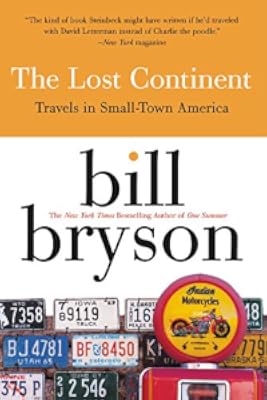
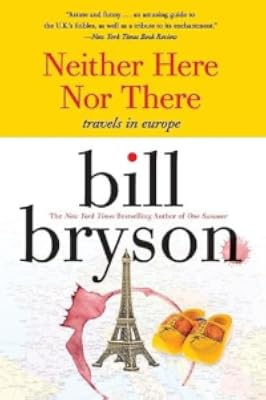
Bill Bryson was born in Des Moines, Iowa on December 8, 1951. In 1973, he went backpacking in England, where he eventually decided to settle. He wrote for the English newspapers The Times and The Independent, as well as supplementing his income by writing travel articles. He moved back to the United States in 1995. His first travel book, The Lost show more Continent: Travels in Small-Town America, was published in 1989. His other books include I'm a Stranger Here Myself, In a Sunburned Country, Bill Bryson's Dictionary of Troublesome Words, Neither Here nor There: Travels in Europe, Made in America, The Mother Tongue, Bill Bryson's African Diary, A Short History of Nearly Everything, At Home: A Short History of Private Life, Walk About, and Seeing Further: The Story of Science, Discovery, the Genius of the Royal Society. A Walk in the Woods was adapted into a movie starring Robert Redford and Nick Nolte. Bryson's titles, The Road to Little Dribbling: Adventures of an American in Britain, Notes from a Small Island and Neither Here Nor There made the New York Times bestseller list in 2016. (Bowker Author Biography) show less
Some Editions
Awards and Honors
Awards
Distinctions
Work Relationships
Common Knowledge
- Canonical title*
- De zomer van 1927
- Original title
- One Summer: America, 1927
- Original publication date
- 2013 (Engels) (Engels); 2014 (Nederlands) (Nederlands)
- People/Characters
- Charles A. Lindbergh; Babe Ruth; Calvin Coolidge; Bartolomeo Vanzetti; Nicola Sacco; Charles Nungesser (show all 50); Francois Coli; Richard Byrd; Jacob Ruppert; Bernt Balchen; George Noville; Bert Acosta; Charles A. Levine; Clarence Chamberlin; Edsel Ford; Henry Ford; Lou Gehrig; Judd Gray; Ruth Snyder; Jack Dempsey; Robert G. Elliott; Alvan Fuller; Myron Herrick; Herbert Hoover; Miller Huggins; Dwight Morrow; Benjamin Strong; Webster Thayer; Gene Tunney; Luis Firpo; Bill Tilden; Al Capone; Charles Ponzi; Mabel Walker Willebrandt; Francesco de Pinedo; Al Jolson; Roxy Rothafel; Clara Bow; William Wellman; John Monk Saunders; Jerome Kern; Oscar Hammerstein II; Raymond Orteig; Gutzon Borglum; Montagu Norman; Alexis Carrel; Big Bill Thompson; Kenesaw Mountain Landis; Evangeline Lodge Land Lindbergh; Anne Morrow Lindbergh
- Dedication
- To Annie, Billy and Gracie, and in memory of Julia Richardson
- First words
- On a warm spring evening just before Easter 1927, people who lived in tall buildings in New York were given pause when the wooden scaffolding around the tower of the brand new Sherry-Netherland Apartment Hotel caught fire and... (show all) it became evident that the city's firemen lacked any means to get water to such a height.
- Last words
- (Click to show. Warning: May contain spoilers.)She died in 2001 at the ripe age of ninety-four, the last person of consequence to this story to have lived through that long, extraordinary summer.
- Blurbers
- Brown, Craig; Ridley, Matt; Wagner, Erica; Showalter, Elaine
- Original language
- English
*Some information comes from Common Knowledge in other languages. Click "Edit" for more information.
Classifications
- Genres
- History, Sports and Leisure, General Nonfiction, Nonfiction
- DDC/MDS
- 973.91 — History & geography History of North America United States 1901- World Wars and Depression Era (1901-1953)
- LCC
- E791 .B79 — History of the United States United States Twentieth century 1919-1933. Harding-Coolidge-Hoover era. "The Coolidge's administration, August 2, 1923-1929
- BISAC
Statistics
- Members
- 3,373
- Popularity
- 4,990
- Reviews
- 167
- Rating
- (4.05)
- Languages
- 9 — Dutch, English, Estonian, French, German, Italian, Portuguese, Romanian, Spanish
- Media
- Paper, Audiobook, Ebook
- ISBNs
- 43
- ASINs
- 26