On This Page
Description
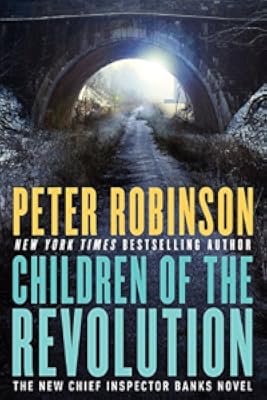
"A disgraced college lecturer is found murdered on a disused railway line near his home. He has 5,000 euros in his pocket, yet in the four years since his dismissal has been living a poverty-stricken and hermit-like existence. There are many suspects, mostly at the college where he used to teach, but Detective Chief Inspector Alan Banks, much to the chagrin of his boss, soon becomes fixated on Lady Veronica Chalmers, who appears to have links with the victim going back to the early 1970s at show more the University of Essex, then a hotbed of political activism. Banks suspects that Lady Chalmers is not telling the whole truth, and after he pushes his inquiries a bit too far, he is called on the carpet and warned to lay off. He must continue to conduct his investigation surreptitiously. When the breakthroughs come, they are not the ones that Banks and his team expected, and everything turns in a different direction and moves into very high gear"-- show lessTags
Recommendations


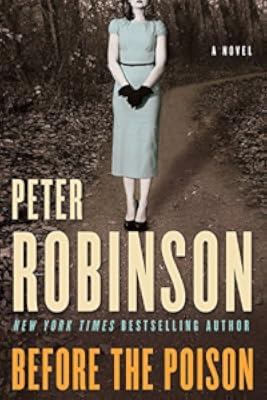


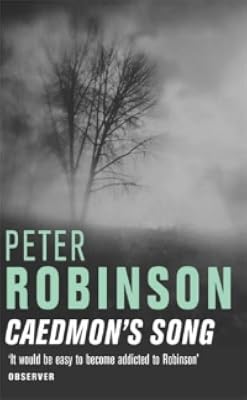











Member Reviews
I don't even bother looking at the flyleaf on Peter Robinson's books. I just know I'm in for a good read with whatever case he's cooked up for Inspector Alan Banks. Children of the Revolution is the latest (21st) entry in this favourite series.
Was it an accident? When the body of a recluse, once a professor at local Eastvale College, is found at the bottom of a ravine in an area difficult to access, it looks like it may be. Perhaps a sucicide.It is only when they the local constable finds an envelope containing a significant amount of cash on the body, that Banks and his team are called in. Maybe it was murder. But why wasn't the cash taken? Where did this destitute man come up with such a sum?
As Banks and his team dig into his show more background, surprising revelations are revealed. Professor Miller was accused of sexual misconduct at the school, summarily dismissed and that began his descent to the marginalized life he was leading. Further investigation leads them to a connection with Lady Veronica Chalmers. The higher ups warn Banks away from this line of investigation, but of course he can't leave it be.
The victim in this case is close to Banks' age. Robinson has moved his character steadily forward, both chronologically and in his personal life. This man's death has Alan taking a second look at his own life. This is one of the things that have made this series one of my favourites - the personal lives of the characters. I often feel like one of the locals in the pub, catching up on the latest. Banks' music selections are a big part of the books as well - I've often followed up on these and have discovered many new artists.
Recurring characters such as Winsome and Annie are also back. Winsome and her calm ways are a perennial favourite. Annie is a character I used to enjoy, but her personality has changed since her accident a year ago. She is more difficult now, with rougher edges and less patience. She too, is aware of the changes in herself. Robinson adds another female character to his team in this latest book. Gerry Masterson is young and green, but brilliant at research. Will she fit in with the team? I quite liked her and hope she continues to be a part of the series going forward.
Robinson's mysteries are always intelligent, well thought out and a pleasure to read. In Children of the Revolution, we are taken back forty years to the early 1970's, Communism, Marxism, political activism and more. Specific references had me off to the computer to follow up. (Yes, Robinson's book is based on facts) Robinson presents many options, alternatives and paths to explore alongside of Banks and his team. Attention to detail will lead careful readers to the whodunit before the final pages, but this won't lessen anyone's enjoyment of this latest entry in an excellent series. Robinson still managed to surprise me with the ending. show less
Was it an accident? When the body of a recluse, once a professor at local Eastvale College, is found at the bottom of a ravine in an area difficult to access, it looks like it may be. Perhaps a sucicide.It is only when they the local constable finds an envelope containing a significant amount of cash on the body, that Banks and his team are called in. Maybe it was murder. But why wasn't the cash taken? Where did this destitute man come up with such a sum?
As Banks and his team dig into his show more background, surprising revelations are revealed. Professor Miller was accused of sexual misconduct at the school, summarily dismissed and that began his descent to the marginalized life he was leading. Further investigation leads them to a connection with Lady Veronica Chalmers. The higher ups warn Banks away from this line of investigation, but of course he can't leave it be.
The victim in this case is close to Banks' age. Robinson has moved his character steadily forward, both chronologically and in his personal life. This man's death has Alan taking a second look at his own life. This is one of the things that have made this series one of my favourites - the personal lives of the characters. I often feel like one of the locals in the pub, catching up on the latest. Banks' music selections are a big part of the books as well - I've often followed up on these and have discovered many new artists.
Recurring characters such as Winsome and Annie are also back. Winsome and her calm ways are a perennial favourite. Annie is a character I used to enjoy, but her personality has changed since her accident a year ago. She is more difficult now, with rougher edges and less patience. She too, is aware of the changes in herself. Robinson adds another female character to his team in this latest book. Gerry Masterson is young and green, but brilliant at research. Will she fit in with the team? I quite liked her and hope she continues to be a part of the series going forward.
Robinson's mysteries are always intelligent, well thought out and a pleasure to read. In Children of the Revolution, we are taken back forty years to the early 1970's, Communism, Marxism, political activism and more. Specific references had me off to the computer to follow up. (Yes, Robinson's book is based on facts) Robinson presents many options, alternatives and paths to explore alongside of Banks and his team. Attention to detail will lead careful readers to the whodunit before the final pages, but this won't lessen anyone's enjoyment of this latest entry in an excellent series. Robinson still managed to surprise me with the ending. show less
For his 21st book of the series, Peter Robinson delivered a complex, intriguing murder mystery for DCI Alan Banks to solve. I enjoyed this book and I appreciated how the author took this case in two different directions and then let Banks and his crew discover which one led to the murderer. Both directions involved university storylines, one involving accusations of misconduct on the part of a professor, the other going back into a 40 year past with politically and sexually active students. Both these storylines involved the victim whose body was thrown from a bridge onto a disused railway track.
My only complaint is that I wasn’t too thrilled with the direction that Alan Banks is taking in the love department. I would prefer him to show more be attracted to a woman closer to his own age, but as is often the case, Banks has had his head turned by a much younger women. Time will tell whether he’s made a good choice.
Overall, Children of the Revolution was well-plotted, subtle and interesting. This book is a great addition to this excellent police procedural series. show less
My only complaint is that I wasn’t too thrilled with the direction that Alan Banks is taking in the love department. I would prefer him to show more be attracted to a woman closer to his own age, but as is often the case, Banks has had his head turned by a much younger women. Time will tell whether he’s made a good choice.
Overall, Children of the Revolution was well-plotted, subtle and interesting. This book is a great addition to this excellent police procedural series. show less
Gavin Miller is found dead under the railroad trestle with 5,000 British pounds in his pocket. Sixty-ish, Miller had a checkered past. Several years earlier, he was relieved of his teaching position because of alleged sexual misconduct. Living an isolated existence, the interesting thing was that one of the last phone calls he made was to Lady Chalmers, someone clearly outside of his social circle.
DCI Banks is called on the case, bringing along his crew, Annie Cabbott and Winsome Jackman, along with a newbie, Gerry Masterson.
As with many a Peter Robinson mystery, there is a past and a present. The investigators spend time researching Miller’s whereabouts in the early 1970s, what they call the missing years, as well as the sexual show more misconduct charges and the present. How Robinson/Banks brings it all together can’t be beat.
What I like about Peter Robinson’s Alan Banks is that he’s a person. We know what music he likes to listen to, what he likes to drink, where he takes his meals. As the books progress, we also learn more about Cabbott and Jackman. You can’t always say that about detectives. Being around the same age as Banks, I like his music references to the Grateful Dead, Pink Floyd, King Crimson. Brings back lots of memories for me.
What I like about Robinson’s books is that they’re more cerebral. Don’t get me wrong, a surprise ending may pop up in one of his books as well as other mystery writers, but he’s got you thinking all along the way. I certainly didn’t see this ending until it was revealed.
I’ve even taken to watching DCI Banks on public television and while the actor isn’t how I pictured Banks originally, now that’s the way I see him in the books as well.
Suffice it to say, DCI Banks has become one of my favorite mysteries. Children of the Revolution will not disappoint readers and may even score as one of your favorite series. show less
DCI Banks is called on the case, bringing along his crew, Annie Cabbott and Winsome Jackman, along with a newbie, Gerry Masterson.
As with many a Peter Robinson mystery, there is a past and a present. The investigators spend time researching Miller’s whereabouts in the early 1970s, what they call the missing years, as well as the sexual show more misconduct charges and the present. How Robinson/Banks brings it all together can’t be beat.
What I like about Peter Robinson’s Alan Banks is that he’s a person. We know what music he likes to listen to, what he likes to drink, where he takes his meals. As the books progress, we also learn more about Cabbott and Jackman. You can’t always say that about detectives. Being around the same age as Banks, I like his music references to the Grateful Dead, Pink Floyd, King Crimson. Brings back lots of memories for me.
What I like about Robinson’s books is that they’re more cerebral. Don’t get me wrong, a surprise ending may pop up in one of his books as well as other mystery writers, but he’s got you thinking all along the way. I certainly didn’t see this ending until it was revealed.
I’ve even taken to watching DCI Banks on public television and while the actor isn’t how I pictured Banks originally, now that’s the way I see him in the books as well.
Suffice it to say, DCI Banks has become one of my favorite mysteries. Children of the Revolution will not disappoint readers and may even score as one of your favorite series. show less
When an old man is found dead in a ravine below a bridge, there is some question as to whether he jumped or was thrown over, but it doesn’t take long for DCI Alan Banks and his team to discover that the answer to that question will lie in the man’s life history, and who he knew when…."Children of the Revolution" is the 21st Banks novel in Mr. Robinson’s series, and it’s one of the best. We have the usual complicated relationships and insights, and an even greater reference to music than he usually includes, which I enjoyed immensely. Highly recommended!
I decided to read this book on the basis of a blog recommendation, forgetting I had read and disliked the only other instalment in this series I have read. The plot of this one was intriguing and well done, but I gave up reading in disgust at the end of chapter 10 and skipped to the end just to find out whodunnit.
The portrayal of the female characters was extremely problematic: Banks' immediate team seems to be entirely made up of women, two of whom fight over him in a bizarre and emotionally unconvincing scene which comes out of nowhere; Banks reflects that they are 'bitches' before romancing a woman 30 years his junior, who finds men her own age 'far too shallow'.
No more Peter Robinson for me.
The portrayal of the female characters was extremely problematic: Banks' immediate team seems to be entirely made up of women, two of whom fight over him in a bizarre and emotionally unconvincing scene which comes out of nowhere; Banks reflects that they are 'bitches' before romancing a woman 30 years his junior, who finds men her own age 'far too shallow'.
No more Peter Robinson for me.
This is the 21st book in a crime series set in Eastvale, North Yorkshire, England, featuring Detective Chief Inspector Alan Banks.
Banks is called to a crime scene in an isolated area where 59-year-old Gavin Miller has been found dead under suspicious circumstances and with 5,000 pounds in his pocket.
Miller was a former college professor who was obsessed with the Seventies and the music, drugs, and politics associated with that time. Banks, being around the same age, finds, disconcertedly, that he has much in common with the victim in some ways.
But Miller was more than just a fan of artsy movies, the Grateful Dead, and soulful poetry. He had been dismissed from his job as a college lecturer after an accusation by two female students of show more having made inappropriate sexual advances. He was low on cash, malnourished, and without much hope for his future. Now, suddenly, he had a fortune in his pocket, and was reportedly much more upbeat. Could he have been involved with blackmail or drugs?
As Banks and his team try to sort it all out, they get stymied by an order to abandon one particular line of inquiry. A week before his death, Miller had a seven-minute phone call with a very wealthy woman who was the same age as Miller, and was known as a fiery revolutionary in her past. But this woman has friends in high places, and Banks is forbidden to “harass” her. Needless to say, Banks is not deterred, and gets help in pursuing that angle from some unexpected places.
Discussion: This is a book that started off a bit slow, but got better as it went along. There are some nice culture clashes which older readers should appreciate as the younger detectives are totally at sea when subjects from the early Seventies come up. A few side plots allow Robinson to explore the problems women have reporting rape; the mistreatment and under-appreciation of workers by society; the persistence of class conflict; the cognitive dissonance experienced by those who migrate between classes; and the relative merits of “truth” versus “justice.”
Evaluation: Robinson provides lots to think about in this book, which takes a more philosophical look at crime, rather than employing the usual thriller-type ending. show less
Banks is called to a crime scene in an isolated area where 59-year-old Gavin Miller has been found dead under suspicious circumstances and with 5,000 pounds in his pocket.
Miller was a former college professor who was obsessed with the Seventies and the music, drugs, and politics associated with that time. Banks, being around the same age, finds, disconcertedly, that he has much in common with the victim in some ways.
But Miller was more than just a fan of artsy movies, the Grateful Dead, and soulful poetry. He had been dismissed from his job as a college lecturer after an accusation by two female students of show more having made inappropriate sexual advances. He was low on cash, malnourished, and without much hope for his future. Now, suddenly, he had a fortune in his pocket, and was reportedly much more upbeat. Could he have been involved with blackmail or drugs?
As Banks and his team try to sort it all out, they get stymied by an order to abandon one particular line of inquiry. A week before his death, Miller had a seven-minute phone call with a very wealthy woman who was the same age as Miller, and was known as a fiery revolutionary in her past. But this woman has friends in high places, and Banks is forbidden to “harass” her. Needless to say, Banks is not deterred, and gets help in pursuing that angle from some unexpected places.
Discussion: This is a book that started off a bit slow, but got better as it went along. There are some nice culture clashes which older readers should appreciate as the younger detectives are totally at sea when subjects from the early Seventies come up. A few side plots allow Robinson to explore the problems women have reporting rape; the mistreatment and under-appreciation of workers by society; the persistence of class conflict; the cognitive dissonance experienced by those who migrate between classes; and the relative merits of “truth” versus “justice.”
Evaluation: Robinson provides lots to think about in this book, which takes a more philosophical look at crime, rather than employing the usual thriller-type ending. show less
In terms of the twists and turns of a good detective story, this is up there with the best. I did not work out the perpetrator before Mr Robinson explained it so, why award only four stars?
It is difficult to answer that question without revealing the criminal (which I would not like to do because this might be read by someone who hasn't completed the book or, even worse, myself before re-reading it!) I will give the analogy of some Sherlock Holmes novels, in which, Lord So-and-so is allowed to retire to the drawing room and put a bullet through his brain, rather than have his family face the disgrace of having a murderer in their midst. The fact that this cover up leaves the murdered housemaid still with the reputation of a common show more prostitute, who was killed by a client, is ignored.
I am not naïve enough to believe that, in real life, such miscarriages of justice do not occur and, I would not expect Mr Robinson to pretend they do not, either. I was hoping that my hero, DCI Banks, would collude a little less readily and that the author would not assume that the solution was an acceptable one.
Banks ends the novel with a new girlfriend who is connected with the whitewashed family and I, for one, will feel no sadness if I read that he has been dumped in the next tale in the series. show less
It is difficult to answer that question without revealing the criminal (which I would not like to do because this might be read by someone who hasn't completed the book or, even worse, myself before re-reading it!) I will give the analogy of some Sherlock Holmes novels, in which, Lord So-and-so is allowed to retire to the drawing room and put a bullet through his brain, rather than have his family face the disgrace of having a murderer in their midst. The fact that this cover up leaves the murdered housemaid still with the reputation of a common show more prostitute, who was killed by a client, is ignored.
I am not naïve enough to believe that, in real life, such miscarriages of justice do not occur and, I would not expect Mr Robinson to pretend they do not, either. I was hoping that my hero, DCI Banks, would collude a little less readily and that the author would not assume that the solution was an acceptable one.
Banks ends the novel with a new girlfriend who is connected with the whitewashed family and I, for one, will feel no sadness if I read that he has been dumped in the next tale in the series. show less
Members
- Recently Added By
Lists

...read all, pay nowt (Books set in Yorkshire)
86 works; 14 members

Kirkus Reviews Best Fiction of 2014
100 works; 7 members

Books Read in 2017
4,249 works; 129 members

Books Read in 2021
5,361 works; 114 members
Author Information

82+ Works 30,052 Members
Peter Robinson was born in Castleford, Yorkshire, in 1950. He received a B.A. Honours Degree in English literature from the University of Leeds, moved to Canada, and went on to earn a M.A. in English and creative writing from the University of Windsor and a Ph.D. in English from York University. His first novel, Gallows View, was published in 1987 show more and became the first book in the Inspector Banks Mystery series. His other works include Caedmon's Song, No Cure for Love, Not Safe after Dark and Other Stories, Before the Poison, and When the Music's Over. He has received several awards including the Crime Writers of Canada's Arthur Ellis Award for Best Novel in 1992 for Past Reason Hated and the Author's Award from the Foundation for the Advancement of Canadian Letters in 1994 for Final Account. He has also published many short stories in anthologies and in Ellery Queen's Mystery Magazine, including Innocence, which won the CWC Best Short Story Award, and The Two Ladies of Rose Cottage, which won a Macavity Award. He has taught at a number of Toronto colleges and served as Writer-in-Residence at the University of Windsor, Ontario, 1992-93. (Bowker Author Biography) show less
Some Editions
Awards and Honors
Distinctions
Series

Common Knowledge
- Canonical title
- Children of the Revolution
- Original title
- Children of the revolution
- Original publication date
- 2013
- People/Characters
- Alan Banks (Detective Chief Inspector); Lady Veronica Chalmers; Gavin Miller; Annie Cabbot; Winsome Jackman; Peter Darby (show all 29); Barry Kirwan; Gerry Masterson; Catherine Gervaise; Trevor Lomax; Liam; Kyle McClusky; Kayleigh Vernon; Dayle Snider; Stefan Nowak; D.C. Doug Watson; George Spalding; Keith Overville; Beth Gallagher; Brian Banks; Angeline Chalmers; Oliver Litton; Chad Bueller; Lisa Gray; Ralph Nathan; Anthony Litton; Oriana Serroni; Ken Blackstone; Joe Jarvis
- Important places
- Eastvale, Yorkshire, England, UK; North Yorkshire, England, UK; Essex, England, UK
- Epigraph
- 'The past lies like a nightmare upon the present.'
Karl Marx, The 18th Brumaire of Louis Bonaparte - Dedication
- For Sheila
- First words
- As Detective Chief Inspector Alan Banks walked along the disused railway track, he couldn't help but imagine two young lovers kissing on the footbridge ahead, shrouded in smoke from a steam engine.
- Last words
- (Click to show. Warning: May contain spoilers.)All the way to the pub he felt as if he were walking on air.
- Original language*
- Engels
*Some information comes from Common Knowledge in other languages. Click "Edit" for more information.
Classifications
Statistics
- Members
- 712
- Popularity
- 39,937
- Reviews
- 42
- Rating
- (3.67)
- Languages
- 6 — Dutch, English, Estonian, Finnish, Polish, Swedish
- Media
- Paper, Audiobook, Ebook
- ISBNs
- 34
- ASINs
- 8