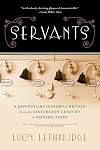
Servants: A Downstairs History of Britain from the Nineteenth Century to Modern Times
by Lucy Lethbridge
On This Page
Description
A compassionate and discerning exploration of the complex relationship between the server, the served, and the world they lived in, Servants opens a window onto British society from the Edwardian period to the present.Tags
Recommendations




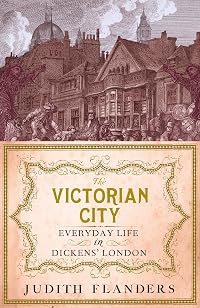


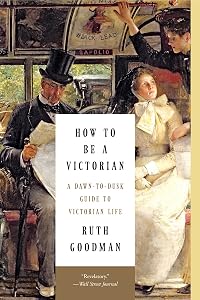


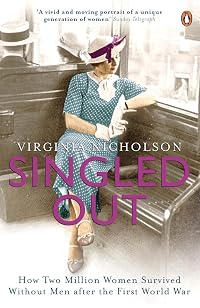


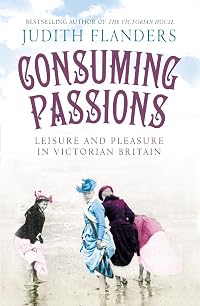
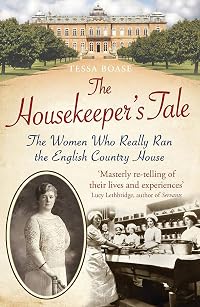


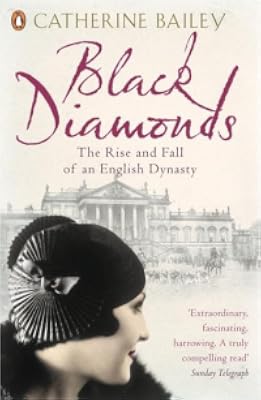






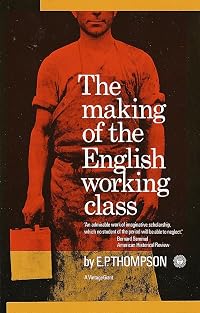
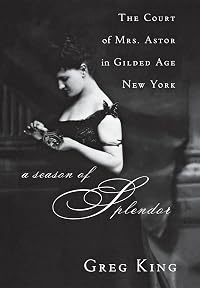








Member Recommendations
fannyprice Bryson's discussion of the development of the home from a more open, collaborative space to a warren of special-purpose rooms as the concept of "privacy" became more important dovetails nicely with Lethbridge's discussion of the increasing physical separation between servants and the served in 18th and 19th century British homes.
20


by fannyprice
Member Reviews
Lucy Lethbridge gives an entertaining and thought provoking view of the realities of servant life in the twentieth century. From the swan song of the great country house with its servant for every task to the inter-war years when the impossibility of finding a good servant seemed to be at the forefront of many a (female) writer's mind, to the Second World War when the place of home grown domestics was frequently taken by Jewish refugees brought up to have servants of their own, to today's completely different social climate, where the middle and upper classes retain a mixture of cleaning ladies, gardeners, au-pairs and nannies (but of course never servants).
There's a tendency to think of servants as existing in the world of Downton show more Abbey and Upstairs Downstairs but for the majority of servants life was very different. Of the one and a half million female servants in Edwardian Britain (out of a total female workforce of four million) the majority worked in single servant households. And when you consider how far down the social structure servant keeping went this isn't perhaps surprising. With the middle-classes servant keeping was a requirement of respectability but even prosperous members of the working class, faced with a growing family and housework that was a much more back-breaking operation than it was today would be tempted to hire a servant:
And those maids of all work would not have the good food and decent living conditions that might be expected in the big houses either. A bed in the kitchen and breakfast of bread and dripping with herring every day for dinner might be all that was available from them.
And as the century progressed, and more and more opportunities opened for women elsewhere the middle classes became more and more desperate to find the servants that they consider essential. And it's clear that they really did consider them essential: labour-saving devices having failed to make an early appearance in British homes largely because of the perception that the 'labour' that they purportedly saved was that of the servants, who would somehow be 'spoilt' if their jobs were made too easy. And it's clear that most of the women writers of the period, while very clear on their own rights to a fulfilling intellectual and cultural life, were rather more vague when it came to the same rights of their female servants.
There are some many quotes from this book that I'd like to share, but here is just one piece of advice offered by a mother-in-law to a new wife that illustrates the appalling snobbery that existed at the beginning of the period in question:
One thing which I hadn't appreciated before reading this book was that the gulf in the status of the servant employing classes and the servants themselves was one that to a large part had been a creation of the nineteenth century. In earlier centuries the divide had been much less fixed and more fluid, so that servants were almost part of the family (albeit a less important part). This makes sense when I consider some of the particularly old books I have read, but was something I hadn't really given any thought to previously. show less
There's a tendency to think of servants as existing in the world of Downton show more Abbey and Upstairs Downstairs but for the majority of servants life was very different. Of the one and a half million female servants in Edwardian Britain (out of a total female workforce of four million) the majority worked in single servant households. And when you consider how far down the social structure servant keeping went this isn't perhaps surprising. With the middle-classes servant keeping was a requirement of respectability but even prosperous members of the working class, faced with a growing family and housework that was a much more back-breaking operation than it was today would be tempted to hire a servant:
Among the higher class artisans, the little nurse-girl, the young slavey or general and the periodical char woman are quite frequent; for in this class the daughters of the house on leaving school are generally put out to some trade, and the mother of the house has her hands full with the cooking, mending and washing, for a family with a standard to maintain; but it is rare to find an adult servant in possession of all her faculties until you come to the shop-keeping class.
And those maids of all work would not have the good food and decent living conditions that might be expected in the big houses either. A bed in the kitchen and breakfast of bread and dripping with herring every day for dinner might be all that was available from them.
And as the century progressed, and more and more opportunities opened for women elsewhere the middle classes became more and more desperate to find the servants that they consider essential. And it's clear that they really did consider them essential: labour-saving devices having failed to make an early appearance in British homes largely because of the perception that the 'labour' that they purportedly saved was that of the servants, who would somehow be 'spoilt' if their jobs were made too easy. And it's clear that most of the women writers of the period, while very clear on their own rights to a fulfilling intellectual and cultural life, were rather more vague when it came to the same rights of their female servants.
There are some many quotes from this book that I'd like to share, but here is just one piece of advice offered by a mother-in-law to a new wife that illustrates the appalling snobbery that existed at the beginning of the period in question:
Army or naval officers, diplomats or clergymen might be invited to lunch or dinner. The vicar might be in invited regularly to Sunday lunch or supper if he was a gentleman. Doctors and solicitors might be invited to garden parties, though never, of course, to lunch or dinner. Anyone engaged in the arts, the stage, trade or commerce, no matter how well connected, could not be asked to the house at all.
One thing which I hadn't appreciated before reading this book was that the gulf in the status of the servant employing classes and the servants themselves was one that to a large part had been a creation of the nineteenth century. In earlier centuries the divide had been much less fixed and more fluid, so that servants were almost part of the family (albeit a less important part). This makes sense when I consider some of the particularly old books I have read, but was something I hadn't really given any thought to previously. show less
An info-packed and engrossing social history that got a bit repetitious at times but was very worth reading.
Lethbridge draws on a range of biographies and memoirs of servants and those they served to show how the roles and lives of people in service in England changed from the late 19th century through the present day. While the book actually continues almost right up to the now, less space is devoted to the decades after the 1960s, when service in England dramatically changed with the influx of foreign workers and the growth of things like the au pair program. She also weaves in a history of things like cleanliness standards, the rise of the labor movement, domestic architecture, and the invention of labor-saving devices, as changes in show more these fields affected the lives of servants and were themselves affected by issues the supply and demand for servants.
I particularly enjoyed Lethbridge's discussions of the knotty relationships between the middle class or the new rich and their servants. As not having servants seems to have been a true class demarcation, people scrimped and scraped to afford this help, which often meant that servants in middle and lower-class homes saw their employers as stingy and barely more well-off than they were. Newly middle-class or wealthy people often did not know how to behave with their servants, which lead both sides to trespass and then reinforce social boundaries. The newly rich often could not discern all-important social distinctions and relied on their experienced servants to do the distinguishing for them. As middle class woman began to see leisure time and intellectual enrichment as a right, they often relied on the labor of poorer women to pursue these rights, oblivious to the fact that their servants might desire learning as well. Even class-conscious socialist women writers and activists fell victim to this bias, so entrenched was the feeling that some people were just meant to serve others.
I loved when Lethbridge looked at labor saving technologies or amenities like central heating and discussed the reluctance of Britons, particularly the wealthiest, to adopt these innovations. There were many reasons, including the fear that easing the burden on servants would make them lazy, the British upper class ethic that equated bodily discomfort with virtue (drafts build character), and the feeling that human hard work (as long as it was done by others) built character and was more effective. What this meant in practice was that servants had to keep pace with increasingly rigid standards of cleanliness with increasingly obsolete tools.
Lethbridge discusses the impact of WWI on servants and the served but highlights how in the 1920s and 1930s, many women who had left service or who had never been in service in were forced into the life by economic desperation or the belief that they should give up factory jobs to men returning from the war. This was something I hadn't really been aware of and explains how WWII was the true death knell for service as the dominant occupation in Britain.
Lethbridge also includes a fascinating section on the pre-WWII immigration of Germans and Austrians, mostly Jews, to Britain to fill growing shortages in service positions as a way of escaping the rising threats to them in Continental Europe. She looks at how these often wealthy and educated people found themselves considerably reduced in order to survive, the cultural shocks that a lot of Continentals experienced when confronted with the relative uncleanliness and technological backwardness of British homes, and the suspicion that many found themselves under when war did break out.
A great read, lots more I probably could include in this review. Highly recommended for anyone interested in service, England, social history, or gender history. show less
Lethbridge draws on a range of biographies and memoirs of servants and those they served to show how the roles and lives of people in service in England changed from the late 19th century through the present day. While the book actually continues almost right up to the now, less space is devoted to the decades after the 1960s, when service in England dramatically changed with the influx of foreign workers and the growth of things like the au pair program. She also weaves in a history of things like cleanliness standards, the rise of the labor movement, domestic architecture, and the invention of labor-saving devices, as changes in show more these fields affected the lives of servants and were themselves affected by issues the supply and demand for servants.
I particularly enjoyed Lethbridge's discussions of the knotty relationships between the middle class or the new rich and their servants. As not having servants seems to have been a true class demarcation, people scrimped and scraped to afford this help, which often meant that servants in middle and lower-class homes saw their employers as stingy and barely more well-off than they were. Newly middle-class or wealthy people often did not know how to behave with their servants, which lead both sides to trespass and then reinforce social boundaries. The newly rich often could not discern all-important social distinctions and relied on their experienced servants to do the distinguishing for them. As middle class woman began to see leisure time and intellectual enrichment as a right, they often relied on the labor of poorer women to pursue these rights, oblivious to the fact that their servants might desire learning as well. Even class-conscious socialist women writers and activists fell victim to this bias, so entrenched was the feeling that some people were just meant to serve others.
I loved when Lethbridge looked at labor saving technologies or amenities like central heating and discussed the reluctance of Britons, particularly the wealthiest, to adopt these innovations. There were many reasons, including the fear that easing the burden on servants would make them lazy, the British upper class ethic that equated bodily discomfort with virtue (drafts build character), and the feeling that human hard work (as long as it was done by others) built character and was more effective. What this meant in practice was that servants had to keep pace with increasingly rigid standards of cleanliness with increasingly obsolete tools.
Lethbridge discusses the impact of WWI on servants and the served but highlights how in the 1920s and 1930s, many women who had left service or who had never been in service in were forced into the life by economic desperation or the belief that they should give up factory jobs to men returning from the war. This was something I hadn't really been aware of and explains how WWII was the true death knell for service as the dominant occupation in Britain.
Lethbridge also includes a fascinating section on the pre-WWII immigration of Germans and Austrians, mostly Jews, to Britain to fill growing shortages in service positions as a way of escaping the rising threats to them in Continental Europe. She looks at how these often wealthy and educated people found themselves considerably reduced in order to survive, the cultural shocks that a lot of Continentals experienced when confronted with the relative uncleanliness and technological backwardness of British homes, and the suspicion that many found themselves under when war did break out.
A great read, lots more I probably could include in this review. Highly recommended for anyone interested in service, England, social history, or gender history. show less
This book feels like a wildly informative chat with a well-informed friend. Lethbridge definitely has scoured all the sources: contemporary accounts, movies, literature, newspaper articles, "sits vac" ads in the papers, the job registry and list goes on. Her grasp of the topic is momentous though she never feels the need to boast, simply to share the wealth.
A fascinating subject for me, an adequate book might have left me somewhat enthralled. What a treat to have something fantastic to read instead!
A fascinating subject for me, an adequate book might have left me somewhat enthralled. What a treat to have something fantastic to read instead!
The perfect antidote to those people who are living in the golden haze produced by too many hours watching Downton Abbey and other movie/TV shows that portray English servants in the early twentieth century as happy employees in harmony with their upper class employers, this well-researched book will put to rest any such fantasies. Instead it shows servants in the first half of the century to be over worked while being underpaid as well as under appreciated.
The typical domestic worker entered service at age fourteen or fifteen (although some were even younger) and worked until they died as most were not provided with pensions of any kind. Employers, especially the aristocracy and upper middle classes eschewed any kind of labor saving show more devices - even electricity as "vulgar," preferring to adhere to the old artisan methods of cooking and house keeping that had been in place since the eighteenth century. It wasn't until the 1920's, when the after effects of the First World War forced changes to the system, that modern conveniences started to trickle down to the servants hall.
Even worse than the hard labor, however, was the attitude of employer to employee. Those employing servants seemed not to consider even the basic needs of their cooks, housemaids or footman, requiring them to be invisible as they went about their jobs of making like pleasant for those who lived above stairs.
The author uses interviews, letters and diaries of former servants to bring this long gone world to life. Highly recommended. show less
The typical domestic worker entered service at age fourteen or fifteen (although some were even younger) and worked until they died as most were not provided with pensions of any kind. Employers, especially the aristocracy and upper middle classes eschewed any kind of labor saving show more devices - even electricity as "vulgar," preferring to adhere to the old artisan methods of cooking and house keeping that had been in place since the eighteenth century. It wasn't until the 1920's, when the after effects of the First World War forced changes to the system, that modern conveniences started to trickle down to the servants hall.
Even worse than the hard labor, however, was the attitude of employer to employee. Those employing servants seemed not to consider even the basic needs of their cooks, housemaids or footman, requiring them to be invisible as they went about their jobs of making like pleasant for those who lived above stairs.
The author uses interviews, letters and diaries of former servants to bring this long gone world to life. Highly recommended. show less
Um wow this book has everything, detailed accounts of servants and those they served. Fascinating details on servants daily life, career track, as well as life both inside of service and outside of service. This equally covers the class system and distinctions both within society at large as well as society below stairs and behind green baize doors. Fascinating how the wars (WWI and WWII) change service. Service barely stabilizes, a very much smaller and less presumptuous affair than in Edwardian heyday. WW2 just kills whatever is left of that style of living, very much to the benefit of the rest of the country. The vast poverty that existed across the country, while the Aristocracy lived so unbelievably better was horrifying. To think show more poverty lived next door to extreme abundance like that. It's also fascinating how the war as well as fair taxation for the Aristocracy took the class down so quickly. The nostalgia for the wealthy of that time period puzzles me. I love Downton Abbey but the treatment of those below stairs is vastly and unrealistically idealized. The Aristocracy controlled massive amounts of wealth and largely ignored the suffering of the poor. Only taking advantage of them in service. Harrowing system. show less
Thank you Goodreads First Reads for a copy of this book!
Well, watching Downton Abbey, I find myself thinking often that Fellows has used too much poetic license. I think, no way! Reading Servants, I realized just how much of DA is actually textbook stuff. This was really surprising. Things that seemed puzzling, like how Carson (the butler) was always huffing and puffing over the smallest details, and how he is often dressed to the teeth for dinner downstairs (in the kitchen, mind you!), and why the driver was such a class of his own compared to the other servants, and if one of the ladies of the house were to elope with any servant, why in the hell would it be the driver, and not, say a footman... Well, many things that don't make sense show more seem to make much more sense reading Lucy Lethbridge's account of the lives of those servants from Victorian, then Edwardian, and through the 20th century. Lethrbidge does a good job of putting things in perspective, and giving anecdotal as well as demographic information pertaining to the lives of servants and how service changed as the British identity that was partly defined by its servants changed over the last century.
The study of service, presented here by Lethbridge in meticulous detail peppered with many accounts of aristocrats as well as servants, really is a study of how the changing political and socioeconomical landscape shaped modern ideals in hospitality, domesticity, and personal freedom. Some of the changes reveal very interesting international dynamics; how the lords and ladies returning from the colonies were considered too spoiled and incapable of managing British servants effectively, how waves of European and Jewish immigrants brought some stark differences between England and continental Europe into focus... It is fascinating to see how the uber-rich British families living in large estates with many servants resisted technological changes (like central heating, gas lamps, gas ovens, fridges, vacuum cleaners, washing machines...) and valued elbow grease as the only valid form of domestic work that was clean enough, good enough, perfect enough. It is interesting how they valued organic, whole grain, farm-grown over mass-produced, how they resisted buying clothes "off the peg" and kept their wardrobes of 5-layered dresses, each layer requiring a different iron setting... Hmm, parts o this is starting to sound like Brooklyn: in fact, the stuff that the estate did, Brooklynites are doing as hobbies now: pickling, canning, raising chickens, beekeeping... Except, no servants. So how far we have come to thing these laborious things for wholesome living have become hobbies rather than back-breaking chores for invisible servants. The main difference is perhaps that we do not have to can our own food, or make our own pickles. We can walk out to the corner and buy it form the corner store, or order it online. We have, it seems, learned to value exactly the opposite things for the same reasons as these aristocrats. Very strange.
What's perhaps even more striking is how poor the poor were, most of whom would have a much much better quality of life if they went into service. Complete lack of freedom and back-breaking work for amazing amounts of food, and good, fresh food, with lots of unaffordable stuff like butter and tea and meat meat meat. So reading this book I learned that the British poor used to be poor like the poor in the rest of the world. The poor in the rest of the world have remained as poor, and the British have perhaps ceased to be as poor. It is unbelievable now that they were that poor, eating dripping and bread every day, maybe once a day. Yet there are millions who are this poor now in the world, and I am not sure if this means there is hope or absolutely no hope.
Lastly, the book gave me some interesting vocabulary like donkey stone (a scouring stone used to scrub the front steps of the house, usually first thing in the morning, like 5 AM), butler's pantry (which has no food), and dripping. How fascinating!
Recommended for those who like history, 20th century, gossip, velvet, and laundry. show less
Well, watching Downton Abbey, I find myself thinking often that Fellows has used too much poetic license. I think, no way! Reading Servants, I realized just how much of DA is actually textbook stuff. This was really surprising. Things that seemed puzzling, like how Carson (the butler) was always huffing and puffing over the smallest details, and how he is often dressed to the teeth for dinner downstairs (in the kitchen, mind you!), and why the driver was such a class of his own compared to the other servants, and if one of the ladies of the house were to elope with any servant, why in the hell would it be the driver, and not, say a footman... Well, many things that don't make sense show more seem to make much more sense reading Lucy Lethbridge's account of the lives of those servants from Victorian, then Edwardian, and through the 20th century. Lethrbidge does a good job of putting things in perspective, and giving anecdotal as well as demographic information pertaining to the lives of servants and how service changed as the British identity that was partly defined by its servants changed over the last century.
The study of service, presented here by Lethbridge in meticulous detail peppered with many accounts of aristocrats as well as servants, really is a study of how the changing political and socioeconomical landscape shaped modern ideals in hospitality, domesticity, and personal freedom. Some of the changes reveal very interesting international dynamics; how the lords and ladies returning from the colonies were considered too spoiled and incapable of managing British servants effectively, how waves of European and Jewish immigrants brought some stark differences between England and continental Europe into focus... It is fascinating to see how the uber-rich British families living in large estates with many servants resisted technological changes (like central heating, gas lamps, gas ovens, fridges, vacuum cleaners, washing machines...) and valued elbow grease as the only valid form of domestic work that was clean enough, good enough, perfect enough. It is interesting how they valued organic, whole grain, farm-grown over mass-produced, how they resisted buying clothes "off the peg" and kept their wardrobes of 5-layered dresses, each layer requiring a different iron setting... Hmm, parts o this is starting to sound like Brooklyn: in fact, the stuff that the estate did, Brooklynites are doing as hobbies now: pickling, canning, raising chickens, beekeeping... Except, no servants. So how far we have come to thing these laborious things for wholesome living have become hobbies rather than back-breaking chores for invisible servants. The main difference is perhaps that we do not have to can our own food, or make our own pickles. We can walk out to the corner and buy it form the corner store, or order it online. We have, it seems, learned to value exactly the opposite things for the same reasons as these aristocrats. Very strange.
What's perhaps even more striking is how poor the poor were, most of whom would have a much much better quality of life if they went into service. Complete lack of freedom and back-breaking work for amazing amounts of food, and good, fresh food, with lots of unaffordable stuff like butter and tea and meat meat meat. So reading this book I learned that the British poor used to be poor like the poor in the rest of the world. The poor in the rest of the world have remained as poor, and the British have perhaps ceased to be as poor. It is unbelievable now that they were that poor, eating dripping and bread every day, maybe once a day. Yet there are millions who are this poor now in the world, and I am not sure if this means there is hope or absolutely no hope.
Lastly, the book gave me some interesting vocabulary like donkey stone (a scouring stone used to scrub the front steps of the house, usually first thing in the morning, like 5 AM), butler's pantry (which has no food), and dripping. How fascinating!
Recommended for those who like history, 20th century, gossip, velvet, and laundry. show less
A fascinating account of the apotheosis and decline of household servants in Britain, 'Servants' takes the reader from the great houses of the Edwardian era, where excess was the norm, to the 21st century where the newly 'super rich' seek staff who can guide them through upper class manners even as they serve.
Lucy Lethbridge draws on a very wide range of sources, including contemporary fiction as well as first hand accounts from servants and employers. Perhaps the most interesting observation is the change in the relationship between the server and the served that occurred somewhere between the 17th century - when Pepys assumed that his servants would join in with family games - and the turn of the 20th when the grandest Edwardian show more families would expect their staff to turn to face the wall as they passed.
Extremely well researched, and arranged according to themes rather than strict chronology, this is social history delivered in an engaging and thoughtful manner. I enjoyed it enormously, and came away with a book list of source material for further reading. show less
Lucy Lethbridge draws on a very wide range of sources, including contemporary fiction as well as first hand accounts from servants and employers. Perhaps the most interesting observation is the change in the relationship between the server and the served that occurred somewhere between the 17th century - when Pepys assumed that his servants would join in with family games - and the turn of the 20th when the grandest Edwardian show more families would expect their staff to turn to face the wall as they passed.
Extremely well researched, and arranged according to themes rather than strict chronology, this is social history delivered in an engaging and thoughtful manner. I enjoyed it enormously, and came away with a book list of source material for further reading. show less
Members
- Recently Added By
Author Information

12+ Works 1,148 Members
Lucy Lethbridge has written foe the Observer the Sunday Telegraph, the Independent on Sunday Telegraph, the Independent on Sunday, the Times Literary Supplement, Art New, and Art + Auction. She lives in London.
Common Knowledge
- Original publication date
- 2013
- Dedication
- For my parents and in memory of Blanche Hole
- First words
- In 1901, in a slim volume published to mark the accession of Edward VII, the author, identified only as 'One of His Majesty's Servants', sketched an idyllic picture of domestic life in the royal household, stressing the new m... (show all)onarch's domestic rectitude, and his homely side, hitherto unknown to his subjects: 'Few people outside the Royal Family and the circle that is honoured by the King's intimate friendship are aware of the high standard of domestic life that he has always set himself and observed.'
Preface: In 1901 the Earl of Derby, viewing the prospect of hosting the new King, Edward VII, and forty of the King's friends at Knowsley Hall, near Liverpool, was overheard to say of the arrangements the visit would require... (show all) : "that makes sixty extra servants and with the thirty-seven who live in, nothing could be simpler..." - Last words
- (Click to show. Warning: May contain spoilers.)She has still not received an answer.
- Blurbers
- Addison, Paul; Tuttle, Kate
Classifications
- Genres
- History, Nonfiction, General Nonfiction
- DDC/MDS
- 305.509410904 — Society, government, & culture Social sciences, sociology & anthropology Social group - Age, Gender, Ethnicity People by social and economic levels History, geographic treatment, biography Europe British Isles -- Ireland and Scotland
- LCC
- HD8039 .D52 .G7766 — Social sciences Industries. Land use. Labor Industries. Land use. Labor Labor. Work. Working class By industry or trade
- BISAC
Statistics
- Members
- 442
- Popularity
- 69,400
- Reviews
- 10
- Rating
- (3.85)
- Languages
- English
- Media
- Paper, Audiobook, Ebook
- ISBNs
- 7
- ASINs
- 5