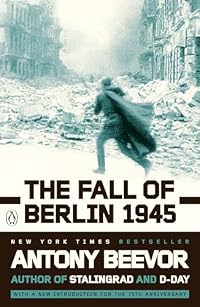
Berlin: The Downfall 1945
by Antony Beevor
On This Page
Description
The Red Army had much to avenge when it finally reached the frontiers of the Third Reich in January 1945. Frenzied by their terrible experiences with Wehrmacht and SS brutality, they wreaked havoc-tanks crushing refugee columns, mass rape, pillage, and unimaginable destruction. Hundreds of thousands of women are children froze to death or were massacred; more than seven million fled westward from the fury of the Red Army. It was the most terrifying example of fire and sword ever known. show more Antony Beevor has reconstructed the experiences of those millions caught up in the nightmare of the Third Reich's final collapse. The Fall of Berlin is a terrible story of pride, stupidity, fanaticism, revenge, and savagery, yet it is also one of astonishing endurance, self-sacrifice, and survival against all odds. show lessTags
Recommendations











Member Recommendations
Claire5555 Another great 2nd world war book
Claire5555 Yet another marvel of a book, five star book in my own opinion
The Wolf: How One German Raider Terrorized the Allies in the Most Epic Voyage of WWI by Richard Guilliatt
Claire5555 Excellent book well worth a read
Member Reviews
Well written and harrowing. It’s hard not to want to cry tears of anger and rage as well as sorrow at Nazi Germany, the eager complicity of a people in Nazi plans, and the unspeakable death, vile brutality, and destruction this caused. Berlin fell in just the way you’d expect a criminal and incompetent regime’s last stand to go, particularly a last stand against the murderous regime it angered and invaded and raped. It’s a sad read but an important one.
Ez a könyv nem annyira a hadászati kérdések miatt érdekes – hadtudományi szempontból ugyanis meglepően kevés információval bír egy szétesőben lévő, anyaghiánnyal küszködő, biciklis kiskamaszokkal és ötvenéves, fegyvertelen parasztokkal feldúsított kései Wehrmacht küzdelme minden idők talán legnagyobb és legjobban gépesített szövetséges hadserege ellen. Legfeljebb annyival, amennyi a sportszakmai jelentősége a kiöregedett nógrádi vasutasok focimeccsének a spanyol válogatottal. Lehetnek persze szép pillanataik a mozdonyvezetőknek és a krampácsolóknak is – mondjuk egy sistergős húszméteres bomba, ami eltalálja a labdaszedő srácot a kapu mögött –, de a kétszámjegyű vereség show more mégis borítékolható. Az is lyukra fut, aki ebben a könyvben a németek hősies küzdelmére akar példákat találni – a bátorság ugyanis nem önmagában való erény, némi józan belátás híján például igen-igen hasonlít az ostobaságra. Ráadásul ebben az esetben a hősiesség alighanem félelem is, félelem a vereségtől, a fogolyléttől, saját katonai rendőrségünktől vagy épp az elszámoltatástól, ilyen értelemben pedig alkalmasint nem sokkal több, mint eufemizmus a gyávaságra.
Ami ezt a könyvet érdekessé teszi, az az összeomlás pszichológiája – a civilek, a hadsereg, de legfőképpen a nácik esetében. A szürreális idiotizmus, ahogy Hitler és közvetlen környezete értelmezte ezeket az utolsó hónapokat. A náci „félisteneknek” ebben a végső periódusban már semmi, de semmi kapcsolata nem volt a valósággal, nem létező hadosztályoknak adtak egyre fantáziadúsabb elnevezéseket (Suleika! Harem! hát az Ezeregyéjszakában vagyunk?), Hitler pici lelkét pátyolgatták, és halálbüntetéssel fenyegették a magukat megadókat – miközben nekik alkalmasint már ott volt a belső zsebükben a hamis személyazonossági irat, amivel készültek megpattanni az ostromlott városból*. Mindehhez pedig asszisztált a porosz katonai drillen nevelkedett, és az SS által megfélemlített szakértő tábornokok kara, akik ugyan mind pontosan látták, hová vezet az út, mégsem voltak képesek semmit sem tenni ellene. Van egy kép e könyv fotómellékletében: Hitler arcán pajkos mosollyal egy 14? 15? éves srác fülét cibálja kedvesen – ezt a fiút vélhetően egy órán belül ugyanő odaküldte egy T-34-es lánctalpai alá. Szerintem mi sem illusztrálja jobban, hogy a legfelső vezetés számára a háború ekkor már nem volt több, mint kísérlet egy újabb, egy utolsó tömeggyilkosságra – csak ezúttal a németeket akarták kiirtani, hogy ha már nekik veszniük kell, hát vesszen a nemzet is, írmagja se maradjon**.
A kötet másik érdekes, a németektől független eleme a Berlinért folytatott versenyfutás nyugatiak és szovjetek között. Ehhez a témához Beevor több új adalékkal is szolgál, ami mindenképpen árnyalja a közszájon forgó változatokat. Ebben a játszmában Sztálin és Eisenhower tulajdonképpen teljesen más pályán mozogtak – előbbi számára Berlin a jól megérdemelt gesztenyepüré volt a lakoma végén, amiért megdolgozott és amit nem kívánt megosztani senkivel, utóbbi számára viszont a német főváros csak egy stratégiailag nem túl fontos földrajzi helynek minősült, amiért esze ágában sem volt kivéreztetni saját hadseregét. A briteknek persze számított, hogy Berlin, amit Európa kulcsának tekintettek, ne szovjet kézen legyen a béke pillanatában, de az amerikaiakat nem különösebben érdekelte a háború utáni kontinens hatalmi felosztása – vagy legalábbis kevésbé, mint a tény, hogy nekik még Hitler bukása után le kell játszaniuk egy másik meccset is Ázsiában. Úgyhogy érthetően nem vonzotta őket a gondolat, hogy összekülönbözzenek a jogos koncra áhítozó oroszokkal. Persze mindez ott és akkor még nem volt teljesen világos, nem csoda, ha Sztálin minden eszközzel igyekezett megtéveszteni szövetségeseit (sikerrel), akiket (magából kiindulva) alávaló cselszövőknek látott, akik bármelyik percben különbékét köthetnek a nácikkal, hogy ölükbe pottyanjon a főnyeremény. Nem így történt, de történhetett volna akár így is, mert ’45 tavaszán az amerikaiak valóban dinamikusabban nyomultak előre, mint Zsukov – naná, ki ne adta volna meg magát szívesebben az amcsiknak, mint a szovjeteknek. Hogy ekkor mi történt volna, az persze a történelmi utópiák tárgykörébe tartozik – ahogy az is, hogy ki nyerte volna meg Nyugat és Kelet apokaliptikus csatáját, ha sor kerül rá. Örüljünk inkább annak, hogy nem került.
* Nehéz válaszolni arra, hogy az ember az olyan fanatikusokat utálja-e jobban, mint a hat gyerekét halálba küldő Goebbelst, vagy az opportunistákat, akik az első ágyúdörgésre elásták a pártjelvényeiket és civil gúnyát öltöttek, hogy aztán később vezető pozíciókban tűnjenek fel az NSZK (vagy akár az NDK) bíróságain és rendőrségein… Az előbbieket legalább könnyű kiszűrni, viszont az utóbbiak időnként gyávaságból még jót is cselekedtek.
** Nyilván meg kell jegyezni, hogy ebben tökéletes partnerre leltek a szovjet hadseregben, akik maguk sem tudták még eldönteni, akarnak-e élő németet látni az általuk elfoglalt területen. show less
Ami ezt a könyvet érdekessé teszi, az az összeomlás pszichológiája – a civilek, a hadsereg, de legfőképpen a nácik esetében. A szürreális idiotizmus, ahogy Hitler és közvetlen környezete értelmezte ezeket az utolsó hónapokat. A náci „félisteneknek” ebben a végső periódusban már semmi, de semmi kapcsolata nem volt a valósággal, nem létező hadosztályoknak adtak egyre fantáziadúsabb elnevezéseket (Suleika! Harem! hát az Ezeregyéjszakában vagyunk?), Hitler pici lelkét pátyolgatták, és halálbüntetéssel fenyegették a magukat megadókat – miközben nekik alkalmasint már ott volt a belső zsebükben a hamis személyazonossági irat, amivel készültek megpattanni az ostromlott városból*. Mindehhez pedig asszisztált a porosz katonai drillen nevelkedett, és az SS által megfélemlített szakértő tábornokok kara, akik ugyan mind pontosan látták, hová vezet az út, mégsem voltak képesek semmit sem tenni ellene. Van egy kép e könyv fotómellékletében: Hitler arcán pajkos mosollyal egy 14? 15? éves srác fülét cibálja kedvesen – ezt a fiút vélhetően egy órán belül ugyanő odaküldte egy T-34-es lánctalpai alá. Szerintem mi sem illusztrálja jobban, hogy a legfelső vezetés számára a háború ekkor már nem volt több, mint kísérlet egy újabb, egy utolsó tömeggyilkosságra – csak ezúttal a németeket akarták kiirtani, hogy ha már nekik veszniük kell, hát vesszen a nemzet is, írmagja se maradjon**.
A kötet másik érdekes, a németektől független eleme a Berlinért folytatott versenyfutás nyugatiak és szovjetek között. Ehhez a témához Beevor több új adalékkal is szolgál, ami mindenképpen árnyalja a közszájon forgó változatokat. Ebben a játszmában Sztálin és Eisenhower tulajdonképpen teljesen más pályán mozogtak – előbbi számára Berlin a jól megérdemelt gesztenyepüré volt a lakoma végén, amiért megdolgozott és amit nem kívánt megosztani senkivel, utóbbi számára viszont a német főváros csak egy stratégiailag nem túl fontos földrajzi helynek minősült, amiért esze ágában sem volt kivéreztetni saját hadseregét. A briteknek persze számított, hogy Berlin, amit Európa kulcsának tekintettek, ne szovjet kézen legyen a béke pillanatában, de az amerikaiakat nem különösebben érdekelte a háború utáni kontinens hatalmi felosztása – vagy legalábbis kevésbé, mint a tény, hogy nekik még Hitler bukása után le kell játszaniuk egy másik meccset is Ázsiában. Úgyhogy érthetően nem vonzotta őket a gondolat, hogy összekülönbözzenek a jogos koncra áhítozó oroszokkal. Persze mindez ott és akkor még nem volt teljesen világos, nem csoda, ha Sztálin minden eszközzel igyekezett megtéveszteni szövetségeseit (sikerrel), akiket (magából kiindulva) alávaló cselszövőknek látott, akik bármelyik percben különbékét köthetnek a nácikkal, hogy ölükbe pottyanjon a főnyeremény. Nem így történt, de történhetett volna akár így is, mert ’45 tavaszán az amerikaiak valóban dinamikusabban nyomultak előre, mint Zsukov – naná, ki ne adta volna meg magát szívesebben az amcsiknak, mint a szovjeteknek. Hogy ekkor mi történt volna, az persze a történelmi utópiák tárgykörébe tartozik – ahogy az is, hogy ki nyerte volna meg Nyugat és Kelet apokaliptikus csatáját, ha sor kerül rá. Örüljünk inkább annak, hogy nem került.
* Nehéz válaszolni arra, hogy az ember az olyan fanatikusokat utálja-e jobban, mint a hat gyerekét halálba küldő Goebbelst, vagy az opportunistákat, akik az első ágyúdörgésre elásták a pártjelvényeiket és civil gúnyát öltöttek, hogy aztán később vezető pozíciókban tűnjenek fel az NSZK (vagy akár az NDK) bíróságain és rendőrségein… Az előbbieket legalább könnyű kiszűrni, viszont az utóbbiak időnként gyávaságból még jót is cselekedtek.
** Nyilván meg kell jegyezni, hogy ebben tökéletes partnerre leltek a szovjet hadseregben, akik maguk sem tudták még eldönteni, akarnak-e élő németet látni az általuk elfoglalt területen. show less
Not for the squeamish. Hitler sacrifices Berlin in the face of certain defeat. I read it to try to gain some insight into what my father-in-law's experience might have been like (he was 14 years old and just trying to survive). I think it's hard for Americans to understand suffering at these levels (and did all those women and children deserve it?). Obviously, Roosevelt blew it by not letting our troops liberate Berlin -- did he realize what would happen?
As expected from Beevor this is a superbly researched book which leaves no stone un-turned. It is a little dry in places but I didn't find this to be a problem given the serious nature of the subject. If it had been purely about the soldiers and commanders it would have been good, but what propels it to that 5th star for me is the fact that it also focuses on what happened to the civilians caught up in the downfall in Berlin, and in particular the women. What soldiers on all sides faced was bad, but even more horrific was the routine rape and abuse of pretty much every woman the soldiers came across regardless of age. This isn't an easy book to digest but delivers eveything it promises.
This is a thoroughly gripping account of the final few months of the Third Reich. It focuses in particular on the advances of the Red Army, which undoubtedly bore the major burden of bringing about the death throes of the Nazi regime, but many of whose members also committed atrocities against the civilian populations of Poland and Germany as they advanced westwards, including the rape of some 2 million women. In short it shows the horror and bestiality of the fighting on the Eastern Front, including the appalling and often unnecessary loss of life on both sides, even when the eventual outcome was assured. As well as the grand sweep of events, Beevor also mentions many small incidents involving individual German civilians or Russian show more soldiers, thus adding human colour to the grim military and political events. A tremendously dramatic and tragic piece of writing. show less
In two words: utterly compelling. Antony Beevor's widely praised account of the ultimate battle for the heart of the Nazi Reich, and the pure horror of it all, is a book worthy of high praise indeed. The scene is ably set in the opening chapters with the setting of the various battle orders, the intricacies of the political machinations in fearsome effect, and the descriptions of lives interrupted on the home fronts; Beevor expertly brings the reader with him into the new year of 1945 as the final battle for Europe's fate is about to play out. As the front moves ever nearer to the Reich's own frontiers the Soviet political officers and the commissars tell their charges that the Germans had -
"...sown the wind, and now they are harvesting show more the whirlwind."
The overwhelming sense is one of 'total war'. Nevertheless, his approach is one that manages to keep the facts clear and uncluttered, and the potentially complicated maneuverings of multiple military units are brought across to the reader without confusion. The book also succeeds in that it gives the reader a good impression of the human aspects of the conflict.
The research for this book must have been a labour of love of sorts, as the amount of detail imparted from such a wide variety of first-class primary sources is very impressive. From the archives of the former Soviet Union and the two Germanies, as well as those of British, US, French, Swedish and countless other origins, the author manages to convey with complete authenticity the experiences of those involved at every conceivable level of the 20th century's defining event.
The use of source material - a combination of diaries, letters to or from the front, memoirs written at a distance of years, interviews during PoW interrogations - is highly effective at getting across the sheer size and impact of the whole conflict in Europe. We hear the voices of individual 'normal' people (peasants, conscripts, the urban poor and the middle classes alike) as frequently as those of the generals, politicians, or the privileged few. Writers and journalists such as Vassily Grossman are often reporting from the front (or sometimes more interestingly from just behind the front). At once you are in the icy trenches or the firing positions with the Soviets' 1st Guards Tank Army, the next you are in the operations room of an opposing German Panzer division, or a retreating SS regiment.
The reader has the dubious privilege of being privy to the Machiavellian orchestrations of Stalin and Beria, as they play off the competing rivalries of Generals Zhukov and Koniyev against each other for both egotistical and self-serving strategic reasons; as well of course as the persistent mutual mistrusts of the Red Army's front line units with those of the party's NKVD political detachments. I had not previously been quite so aware either of quite how much contempt Stalin had for his leading generals, and how despicably he wouldn't hesitate to treat them when he considered it politically expedient to. Obviously he shares this odious trait (along with countless others) with his opposite number in Berlin.
Similarly, the chaos and mayhem afoot in the various German organisations: of the Reich, the Nazi Party, the SS, and the different branches of the armed forces becomes clear. The disorder and sense of an empire collapsing all around, while Hitler fiddles in his 'Fuhrerbunker' is at once both a fascinating and grimly captivating thing to behold. I found myself wondering quite what Uncle Dolfi (as the Goebbels children called their leader) thought to himself as he sat in his quarters, resting between blood vessel bursting fits of temper at the daily strategic conferences, staring at his favourite portrait of Frederick the Great...
Less frequently we are kept reminded that this is indeed a world at war, and the picture will momentarily broaden to include aspects of the various alliances and the varying degrees of cooperation or sometimes non-cooperation. The ever-present paranoia on the part of Stalin towards Roosevelt and particularly Churchill becomes an increasingly noticeable element in the story of the race to Berlin's conquest. Nevertheless, the story of the western allies' advance across the Rhine and into the heart of Germany is referenced when relevant to the narrative. The roots of the looming Cold War face-off between the western allies and the Soviets are clearly visible here. The grisly downfall unfolds in more or less chronological order as the chapters rotate from one aspect of the conflict to the next.
The now well documented horrors of the Nazi Holocaust are not a central theme in this book, as it is more a case of the different camps' liberations being acknowledged in the narrative as they occur during the course of the Germans' hasty and destructive withdrawal from the advancing armies. The book is certainly not for the fainthearted though as there are necessarily countless and almost relentless accounts of the many horrors conducted by all sides in this war - in particular the many atrocities towards the civilian populations by the Red Army. (The German forces had of course "sown their wind" as they Blitzkrieged their way across the continent between 1939 and 1942, to say nothing of their monstrous racial atrocities.) Beevor tackles the subject of rape by Soviet soldiers head on. He notes that the victims were not restricted to German women, but that many Soviet or Polish citizens, including former concentration and prison camp inmates (some Jewish survivors among them too), were also brutally attacked. He actually defines four distinct stages of this most awful of crimes: The first when the initial wave of advancing soldiers occupies a civilian area; the second when the vanguard moves on and the following wave of combat units arrives (often the most indiscriminate and horrific of the phases); the third and fourth stages as with the war's end, the horrors of survival for some women in post-Nazi Germany include committing themselves to the 'protection' of one particular Red Army soldier or other. Certainly not easy subject matter at all, and not without academic controversy either, but I think that Beevor covers the subject as sensitively as could be reasonably expected.
I listened to the audiobook edition, read superbly by British actor Sean Barrett. His voice is somewhere between Olivier (think BBC's 1970s "The World at War") and Burton's noble authority. Never a distraction, and often enhancing somehow the authenticity of the whole production. I loved the way he says the Russian and German generals' names, especially "Rokossovsky"! Also the subtle accenting he put on occasionally when quoting the slogans of advancing/retreating troops for example. I realised early on that I would need to get out a decent map of Germany to help me picture the movement of the various events as the Germans capitulated, though a quick check online tells me that the print edition has reasonably good maps of the key stages covered.
Maybe my 'review' should have ended after the first sentence, I'm not sure. But for anyone with an interest in the history of modern Europe, or in the dehumanisation that accompanies warfare - and the everyman's and everywoman's experience of that process, this book is a must. show less
"...sown the wind, and now they are harvesting show more the whirlwind."
The overwhelming sense is one of 'total war'. Nevertheless, his approach is one that manages to keep the facts clear and uncluttered, and the potentially complicated maneuverings of multiple military units are brought across to the reader without confusion. The book also succeeds in that it gives the reader a good impression of the human aspects of the conflict.
The research for this book must have been a labour of love of sorts, as the amount of detail imparted from such a wide variety of first-class primary sources is very impressive. From the archives of the former Soviet Union and the two Germanies, as well as those of British, US, French, Swedish and countless other origins, the author manages to convey with complete authenticity the experiences of those involved at every conceivable level of the 20th century's defining event.
The use of source material - a combination of diaries, letters to or from the front, memoirs written at a distance of years, interviews during PoW interrogations - is highly effective at getting across the sheer size and impact of the whole conflict in Europe. We hear the voices of individual 'normal' people (peasants, conscripts, the urban poor and the middle classes alike) as frequently as those of the generals, politicians, or the privileged few. Writers and journalists such as Vassily Grossman are often reporting from the front (or sometimes more interestingly from just behind the front). At once you are in the icy trenches or the firing positions with the Soviets' 1st Guards Tank Army, the next you are in the operations room of an opposing German Panzer division, or a retreating SS regiment.
The reader has the dubious privilege of being privy to the Machiavellian orchestrations of Stalin and Beria, as they play off the competing rivalries of Generals Zhukov and Koniyev against each other for both egotistical and self-serving strategic reasons; as well of course as the persistent mutual mistrusts of the Red Army's front line units with those of the party's NKVD political detachments. I had not previously been quite so aware either of quite how much contempt Stalin had for his leading generals, and how despicably he wouldn't hesitate to treat them when he considered it politically expedient to. Obviously he shares this odious trait (along with countless others) with his opposite number in Berlin.
Similarly, the chaos and mayhem afoot in the various German organisations: of the Reich, the Nazi Party, the SS, and the different branches of the armed forces becomes clear. The disorder and sense of an empire collapsing all around, while Hitler fiddles in his 'Fuhrerbunker' is at once both a fascinating and grimly captivating thing to behold. I found myself wondering quite what Uncle Dolfi (as the Goebbels children called their leader) thought to himself as he sat in his quarters, resting between blood vessel bursting fits of temper at the daily strategic conferences, staring at his favourite portrait of Frederick the Great...
Less frequently we are kept reminded that this is indeed a world at war, and the picture will momentarily broaden to include aspects of the various alliances and the varying degrees of cooperation or sometimes non-cooperation. The ever-present paranoia on the part of Stalin towards Roosevelt and particularly Churchill becomes an increasingly noticeable element in the story of the race to Berlin's conquest. Nevertheless, the story of the western allies' advance across the Rhine and into the heart of Germany is referenced when relevant to the narrative. The roots of the looming Cold War face-off between the western allies and the Soviets are clearly visible here. The grisly downfall unfolds in more or less chronological order as the chapters rotate from one aspect of the conflict to the next.
The now well documented horrors of the Nazi Holocaust are not a central theme in this book, as it is more a case of the different camps' liberations being acknowledged in the narrative as they occur during the course of the Germans' hasty and destructive withdrawal from the advancing armies. The book is certainly not for the fainthearted though as there are necessarily countless and almost relentless accounts of the many horrors conducted by all sides in this war - in particular the many atrocities towards the civilian populations by the Red Army. (The German forces had of course "sown their wind" as they Blitzkrieged their way across the continent between 1939 and 1942, to say nothing of their monstrous racial atrocities.) Beevor tackles the subject of rape by Soviet soldiers head on. He notes that the victims were not restricted to German women, but that many Soviet or Polish citizens, including former concentration and prison camp inmates (some Jewish survivors among them too), were also brutally attacked. He actually defines four distinct stages of this most awful of crimes: The first when the initial wave of advancing soldiers occupies a civilian area; the second when the vanguard moves on and the following wave of combat units arrives (often the most indiscriminate and horrific of the phases); the third and fourth stages as with the war's end, the horrors of survival for some women in post-Nazi Germany include committing themselves to the 'protection' of one particular Red Army soldier or other. Certainly not easy subject matter at all, and not without academic controversy either, but I think that Beevor covers the subject as sensitively as could be reasonably expected.
I listened to the audiobook edition, read superbly by British actor Sean Barrett. His voice is somewhere between Olivier (think BBC's 1970s "The World at War") and Burton's noble authority. Never a distraction, and often enhancing somehow the authenticity of the whole production. I loved the way he says the Russian and German generals' names, especially "Rokossovsky"! Also the subtle accenting he put on occasionally when quoting the slogans of advancing/retreating troops for example. I realised early on that I would need to get out a decent map of Germany to help me picture the movement of the various events as the Germans capitulated, though a quick check online tells me that the print edition has reasonably good maps of the key stages covered.
Maybe my 'review' should have ended after the first sentence, I'm not sure. But for anyone with an interest in the history of modern Europe, or in the dehumanisation that accompanies warfare - and the everyman's and everywoman's experience of that process, this book is a must. show less
Riveting combination of serious history writing and small details that make it all come alive. I've read Ian Kershaw's "The End" and Richard J. Evans books that cover the same period, so I wasn't expecting much initially. But Antony Beevor has combed through a multitude of sources (often private, such as diaries), and complements the usual heavy-handed military history style, in which batallions, squadrons and whole armies engage with tanks and howitzers, with gripping human-interest vignettes. He does not shy away from inserting his own opinions (on the perfidy of Stalin's Russia, for instance, or on how Hitler willingly sent another few hundred thousand people to their deaths in the last days of the Reich). A real page-turner.
Members
- Recently Added By
Published Reviews
ThingScore 75
On 1 February 1943, as the German Sixth Army surrendered to the Russians after a battle that had created a new nightmare of the horrors of modern warfare, a Soviet colonel gathered some bedraggled, starving German prisoners and, waving at the shattered ruins of Stalingrad, he shouted, 'That's how Berlin is going to look.' That decided Antony Beevor: that after his bestselling Stalingrad he had show more to write the story of the fall of Berlin. This brilliant storyteller has again delivered history with a thriller's pace show less
added by simon_carr
added by dmacd
Lists

Best Military History Books
123 works; 21 members

501 Must-Read Books
508 works; 72 members

Books Set in Germany
74 works; 11 members

Non-Fiction Worth Reading
1,015 works; 255 members

Books about World War II
241 works; 22 members

SantaThing 2014 Gifts
299 works; 17 members

r/AskHistorians' Recommended Books
1,068 works; 17 members

THE WAR ROOM
813 works; 24 members

Books Read in 2024
4,623 works; 126 members
Author Information

British historian Antony Beevor was born on December 14, 1946. He was educated at Winchester College and Sandhurst and studied under the well-known World War Two historian, John Keegan. Beevor was an officer with the 11th Hussars for five years before becoming a writer. His works have received awards including the Runciman Prize, the Samuel show more Johnson Prize, the Wolfson Prize for History, and the Hawthornden Prize for Literature. The French government made him a Chevalier de l'Ordre des Arts et des Lettres in 1997, and in 2008 the president of Estonia awarded him the Order of the Cross of Terra Mariana. In 1999 Beevor was elected a Fellow of the Royal Society of Literature. He received the 2014 Pritzker Military Museum and Library Literature Award for Lifetime Achievement in Military Writing. In 2015 he made The New Zealand Best Seller List with his title Ardennes 1944: Hitler's Last Gamble. (Bowker Author Biography) show less
Some Editions
Awards and Honors
Work Relationships
Is contained in
Common Knowledge
- Canonical title
- Berlin: The Downfall 1945
- Original title
- Berlin: The Downfall 1945
- Alternate titles
- The Fall of Berlin 1945 (US) (US); Berlin: The Downfall 1945 (UK) (UK)
- Original publication date
- 2002
- People/Characters
- Viktor Abakumov; Lavrenty Beria; Nikolai Berzarin; Martin Bormann; Eva Braun; Wilhelm Burgdorf (show all 41); Theodor Busse; Vasily Ivanovich Chuikov; Winston Churchill; Karl Dönitz; Ilya Ehrenburg; Dwight D. Eisenhower; Joseph Goebbels; Hermann Göring; Vasily Grossman; Heinz Guderian; Gotthardt Heinrici; Heinrich Himmler; Adolf Hitler; Alfred Jodl; Mikhail Efimovich Katukov; Wilhelm Keitel; Ivan Konev; Hans Krebs; Gustav Krukenberg; Dmitry Danilovich Lelyushenko; Helmuth Reymann; Konstanty Ksawerowicz Rokossowski; Franklin Delano Roosevelt; Pavel Semjonovich Rybalko; Yelena Rzhevskaya; Ferdinand Schörner; Ivan Aleksandrovich Serov; Konstantin Mikhailovich Simonov; Albert Speer; Joseph Stalin; Arthur Tedder; Helmuth Weidling; Walther Wenck; Georgi Zhukov; Joachim Ziegler
- Important places
- Berlin, Germany; Germany; USSR
- Important events
- World War II (1939 | 1945); Battle of Berlin
- First words
- "History always emphasizes terminal events", Albert Speer observed bitterly to his American interrogators just after the end of the war. (Preface)
Berliners, gaunt from short rations and stress, had little to celebrate at Christmas in 1944. - Quotations*
- Hitler se negó vehementemente a reconocer las consecuencias de sus propias acciones, y el pueblo alemán se dio cuenta demasiado tarde de que se hallaba atrapado en una horrible confusión de causas y efectos.
- Last words
- (Click to show. Warning: May contain spoilers.)The incompetence, the frenzied refusal to accept reality and the inhumanity of the Nazi regime were revealed all too clearly in its passing.
- Original language
- English
*Some information comes from Common Knowledge in other languages. Click "Edit" for more information.
Classifications
- Genres
- History, Nonfiction, General Nonfiction
- DDC/MDS
- 940.54213155 — History & geography History of Europe History of Europe 1918- Military history of World War II Campaigns and battles by theatre European theatre Germany & Central Europe Northeastern Germany Brandenburg and Berlin Berlin
- LCC
- D757.9 .B4 .B418 — History of Europe, Asia, Africa and Oceania History (General) World War II (1939-1945)
- BISAC
Statistics
- Members
- 3,478
- Popularity
- 4,766
- Reviews
- 62
- Rating
- (4.11)
- Languages
- 19 — Danish, Dutch, English, Estonian, Finnish, French, German, Greek, Hungarian, Italian, Norwegian (Bokmål), Norwegian, Polish, Portuguese, Romanian, Russian, Spanish, Swedish, Turkish
- Media
- Paper, Audiobook, Ebook
- ISBNs
- 93
- ASINs
- 22