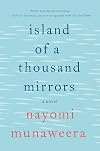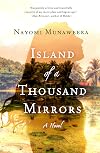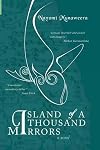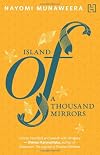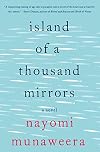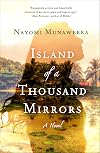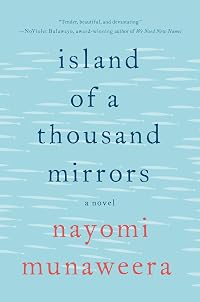
Island of a Thousand Mirrors
by Nayomi Munaweera
On This Page
Description
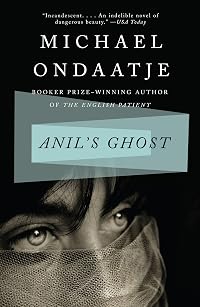
"Before violence tore apart the tapestry of Sri Lanka and turned its pristine beaches red, there were two families. Yasodhara tells the story of her own Sinhala family, rich in love, with everything they could ask for. As a child in idyllic Colombo, Yasodhara's and her siblings' lives are shaped by social hierarchies, their parents' ambitions, teenage love and, subtly, the differences between Tamil and Sinhala people; but the peace is shattered by the tragedies of war. Yasodhara's family show more escapes to Los Angeles. But Yasodhara's life has already become intertwined with a young Tamil girl's... Saraswathie is living in the active war zone of Sri Lanka, and hopes to become a teacher. But her dreams for the future are abruptly stamped out when she is arrested by a group of Sinhala soldiers and pulled into the very heart of the conflict that she has tried so hard to avoid - a conflict that, eventually, will connect her and Yasodhara in unexpected ways. In the tradition of Michael Ondatjee's Anil's Ghost and Arundhati Roy's The God of Small Things, Island of a Thousand Mirrors is an emotionally resonant saga of cultural heritage, heartbreaking conflict and deep family bonds. Narrated in two unforgettably authentic voices and spanning the entirety of the decades-long civil war, it offers an unparalleled portrait of a beautiful land during its most difficult moment by a spellbinding new literary talent who promises tremendous things to come"-- show lessTags
Recommendations









Member Recommendations
Member Reviews
“Sometimes I get this breathless feeling that the war is a living creature, something huge, with a pointed tongue and wicked claws. When the tanks rumble past in the far fields, I feel it breathe; when the air strikes start and the blood flows, I feel it lick its lips. I’ve grown up inside this war, so now I can’t imagine what it would be like to live outside it.”
This book is about Sri Lanka’s Civil War between the Sinhalese and Tamils that took place 1983 – 2009. It is told from the perspective of the eldest daughter of two families, one from each side. One family migrates to the US, but they keep abreast on current events, and the vast majority of the book is centered around Sri Lanka. The other family stays and tries to show more evade the hostilities but ends up immersed in it. The author provides enough historic content to give the reader the necessary background. It examines the question of what leads someone to become a martyr to the cause:
“What could have led her to this singularly terrible end? What secret wound bled until she chose this most public disassembly of herself? Just moments earlier she had been just another nameless woman in the teeming crowd; now, blown to bits, she was either martyr or mass murderer, according to one’s taste. Either way she had attained instant immortality. But what had led her to that moment? This is a question that haunts me.”
The writing is lyrically descriptive, featuring many cultural elements – food, clothing, customs, religions, and traditions. It contains vivid images of the seascape surrounding the island nation:
“Farther out beyond the reef, where the coral gives way to the true deep, at a certain time of day a tribe of flat silver fish gather in their thousands. To be there is to be surrounded by living shards of light. At a secret signal, all is chaos, a thousand mirrors shattering about him. Then the school speeds to sea and the boy is left in sedate water, a tug and pull of the body as comfortable as sitting in his father’s outspread sarong being sung to sleep.”
It portrays life before the civil war, and how it changed. It is a difficult read in that it describes brutal violence, rapes, burnings, and suicide bombings. Even with all this violent content, the author manages to convey hope for the future. show less
This book is about Sri Lanka’s Civil War between the Sinhalese and Tamils that took place 1983 – 2009. It is told from the perspective of the eldest daughter of two families, one from each side. One family migrates to the US, but they keep abreast on current events, and the vast majority of the book is centered around Sri Lanka. The other family stays and tries to show more evade the hostilities but ends up immersed in it. The author provides enough historic content to give the reader the necessary background. It examines the question of what leads someone to become a martyr to the cause:
“What could have led her to this singularly terrible end? What secret wound bled until she chose this most public disassembly of herself? Just moments earlier she had been just another nameless woman in the teeming crowd; now, blown to bits, she was either martyr or mass murderer, according to one’s taste. Either way she had attained instant immortality. But what had led her to that moment? This is a question that haunts me.”
The writing is lyrically descriptive, featuring many cultural elements – food, clothing, customs, religions, and traditions. It contains vivid images of the seascape surrounding the island nation:
“Farther out beyond the reef, where the coral gives way to the true deep, at a certain time of day a tribe of flat silver fish gather in their thousands. To be there is to be surrounded by living shards of light. At a secret signal, all is chaos, a thousand mirrors shattering about him. Then the school speeds to sea and the boy is left in sedate water, a tug and pull of the body as comfortable as sitting in his father’s outspread sarong being sung to sleep.”
It portrays life before the civil war, and how it changed. It is a difficult read in that it describes brutal violence, rapes, burnings, and suicide bombings. Even with all this violent content, the author manages to convey hope for the future. show less
“Sometimes I get this breathless feeling that the war is a living creature, something huge, with a pointed tongue and wicked claws. When the tanks rumble past in the far fields, I feel it breathe; when the air strikes start and the blood flows, I feel it lick its lips. I’ve grown up inside this war, so now I can’t imagine what it would be like to live outside it.”
This book is about Sri Lanka’s Civil War between the Sinhalese and Tamils that took place 1983 – 2009. It is told from the perspective of the eldest daughter of two families, one from each side. One family migrates to the US, but they keep abreast on current events, and the vast majority of the book is centered around Sri Lanka. The other family stays and tries to show more evade the hostilities but ends up immersed in it. The author provides enough historic content to give the reader the necessary background. It examines the question of what leads someone to become a martyr to the cause:
“What could have led her to this singularly terrible end? What secret wound bled until she chose this most public disassembly of herself? Just moments earlier she had been just another nameless woman in the teeming crowd; now, blown to bits, she was either martyr or mass murderer, according to one’s taste. Either way she had attained instant immortality. But what had led her to that moment? This is a question that haunts me.”
The writing is lyrically descriptive, featuring many cultural elements – food, clothing, customs, religions, and traditions. It contains vivid images of the seascape surrounding the island nation:
“Farther out beyond the reef, where the coral gives way to the true deep, at a certain time of day a tribe of flat silver fish gather in their thousands. To be there is to be surrounded by living shards of light. At a secret signal, all is chaos, a thousand mirrors shattering about him. Then the school speeds to sea and the boy is left in sedate water, a tug and pull of the body as comfortable as sitting in his father’s outspread sarong being sung to sleep.”
It portrays life before the civil war, and how it changed. It is a difficult read in that it describes brutal violence, rapes, burnings, and suicide bombings. Even with all this violent content, the author manages to convey hope for the future. show less
This book is about Sri Lanka’s Civil War between the Sinhalese and Tamils that took place 1983 – 2009. It is told from the perspective of the eldest daughter of two families, one from each side. One family migrates to the US, but they keep abreast on current events, and the vast majority of the book is centered around Sri Lanka. The other family stays and tries to show more evade the hostilities but ends up immersed in it. The author provides enough historic content to give the reader the necessary background. It examines the question of what leads someone to become a martyr to the cause:
“What could have led her to this singularly terrible end? What secret wound bled until she chose this most public disassembly of herself? Just moments earlier she had been just another nameless woman in the teeming crowd; now, blown to bits, she was either martyr or mass murderer, according to one’s taste. Either way she had attained instant immortality. But what had led her to that moment? This is a question that haunts me.”
The writing is lyrically descriptive, featuring many cultural elements – food, clothing, customs, religions, and traditions. It contains vivid images of the seascape surrounding the island nation:
“Farther out beyond the reef, where the coral gives way to the true deep, at a certain time of day a tribe of flat silver fish gather in their thousands. To be there is to be surrounded by living shards of light. At a secret signal, all is chaos, a thousand mirrors shattering about him. Then the school speeds to sea and the boy is left in sedate water, a tug and pull of the body as comfortable as sitting in his father’s outspread sarong being sung to sleep.”
It portrays life before the civil war, and how it changed. It is a difficult read in that it describes brutal violence, rapes, burnings, and suicide bombings. Even with all this violent content, the author manages to convey hope for the future. show less
Jasmine and Death: The Tragic Civil War of Sri Lanka Through the Eyes of Innocents
The evocative, powerful prose of author Nayomi Munaweera depicts the brutal senseless violence of the Sri Lankan Civil War through the eyes of innocent Tamil and Sinhalese families. These experiences of children, mothers, fathers, grandparents, sisters and lovers tell this tragic story of destruction and recovery.
Only 237 pages, this is an epic generational of the family of Yasodhara Rajasinghe, a Sinhalese girl, beginning at the time of British colonialism and ending with the killing of the leader of the Tamil Tigers and the aftermath of 80,000 lives taken by the Civil War. This contrasts with the unraveling of a Tamil family, living in the north. With show more an economy of words, Munaweera shows us the beauty of the island and its customs and culture so we can appreciate the losses. We see the flight of Tamils from Sri Lanka to refugee camps where they merely exist, and to the United States, with the transition from saris to blue jeans and American English.
Experiencing the strife on a personal level allows us to understand the ethnic struggle and the country’s suffering. The violence of the Sinhalese and Tamils devastates families. Children vanish to training camps and reappear as killing machines. Mobs slaughter loved ones. Centuries of irreplaceable history disappear in the riot that burned the books and ancient manuscripts of the Jaffna Library.
The scent of jasmine carries us through Sri Lanka’s history.
• The house of Yasodhara’s mother in Colombo has an inner courtyard with an enormous trailing jasmine. “When the sea breeze whispers, a snowy flurry of flowers sweeps into the house so that Visaka’s earliest and most tender memory is the combined scent of jasmine and sea salt.”
• At the wedding ceremony of Visaka’s arranged marriage, she rides in a car “adorned in jasmine.”
• When flying to America to escape the violence, Yasodhara says good-bye to “the scent of jasmine so potent, it catches the attention of traveling poets and writers.”
• When the two young girls of the northern Tamil family, Saraswathi and Luxshmi, encounter a mob that has disemboweled a man, a street vender gives the girls a string of Jasmine so that they “[h]ave something sweet to smell today.”
• When Saraswathi is beaten and raped by Sinhalese soldiers, her mother brings her strings of jasmine.
• When Yasodhara’s sister phones her in Los Angeles begging her to return to Sri Lanka, “for a moment her words hand in the air like a possibility, the sudden scent of jasmine and sea air swirling in the room.”
• Saraswathi, given up to the Tamil Tigers, lives in a training camp “fragrant with the scent of jasmine trailing off the thick garlands that bedeck the portraits of the martyrs.”
• The young Tamil Tiger girl suicide bomber carries a jasmine garland to drape around the neck of her target, allowing her to move close to him.
I highly recommend “Island of a Thousand Mirrors,” an important book. show less
The evocative, powerful prose of author Nayomi Munaweera depicts the brutal senseless violence of the Sri Lankan Civil War through the eyes of innocent Tamil and Sinhalese families. These experiences of children, mothers, fathers, grandparents, sisters and lovers tell this tragic story of destruction and recovery.
Only 237 pages, this is an epic generational of the family of Yasodhara Rajasinghe, a Sinhalese girl, beginning at the time of British colonialism and ending with the killing of the leader of the Tamil Tigers and the aftermath of 80,000 lives taken by the Civil War. This contrasts with the unraveling of a Tamil family, living in the north. With show more an economy of words, Munaweera shows us the beauty of the island and its customs and culture so we can appreciate the losses. We see the flight of Tamils from Sri Lanka to refugee camps where they merely exist, and to the United States, with the transition from saris to blue jeans and American English.
Experiencing the strife on a personal level allows us to understand the ethnic struggle and the country’s suffering. The violence of the Sinhalese and Tamils devastates families. Children vanish to training camps and reappear as killing machines. Mobs slaughter loved ones. Centuries of irreplaceable history disappear in the riot that burned the books and ancient manuscripts of the Jaffna Library.
The scent of jasmine carries us through Sri Lanka’s history.
• The house of Yasodhara’s mother in Colombo has an inner courtyard with an enormous trailing jasmine. “When the sea breeze whispers, a snowy flurry of flowers sweeps into the house so that Visaka’s earliest and most tender memory is the combined scent of jasmine and sea salt.”
• At the wedding ceremony of Visaka’s arranged marriage, she rides in a car “adorned in jasmine.”
• When flying to America to escape the violence, Yasodhara says good-bye to “the scent of jasmine so potent, it catches the attention of traveling poets and writers.”
• When the two young girls of the northern Tamil family, Saraswathi and Luxshmi, encounter a mob that has disemboweled a man, a street vender gives the girls a string of Jasmine so that they “[h]ave something sweet to smell today.”
• When Saraswathi is beaten and raped by Sinhalese soldiers, her mother brings her strings of jasmine.
• When Yasodhara’s sister phones her in Los Angeles begging her to return to Sri Lanka, “for a moment her words hand in the air like a possibility, the sudden scent of jasmine and sea air swirling in the room.”
• Saraswathi, given up to the Tamil Tigers, lives in a training camp “fragrant with the scent of jasmine trailing off the thick garlands that bedeck the portraits of the martyrs.”
• The young Tamil Tiger girl suicide bomber carries a jasmine garland to drape around the neck of her target, allowing her to move close to him.
I highly recommend “Island of a Thousand Mirrors,” an important book. show less
In her literary debut, Island of a Thousand Mirrors, author Nayomi Munaweera gives us a story of two women on opposing sides of the Sri Lankan Civil War, one a Sinhala, the other a Tamil.
The book opens with the story of her Sinhala parents’ peaceful childhood, their arranged marriage and the birth of their two daughters. Raised in Colombo, Yasodhara and her sisters were brought up along side a Tamil family whose son, Shiva was their closest playmate. When violence erupted their family emigrated to America while Shiva’s family escaped to England. The two sisters return to Sri Lanka as adults hoping to help young victims of the war, they meet up with Shiva, now a doctor, who has also come to help his native country. But their lives show more were already linked with a young Tamul girl’s, Saraswathie. She lives in the war zone and although she hoped to become a teacher, she is kidnapped by Sinhala soldiers who rape and terribly abuse her. She then is given over to the Tamil Tigers and is trained to become a killer and eventually a martyr for the Tamil cause.
The author does a masterful job of describing the island with it’s vibrant colors, exotic tastes, and lively sounds making the violence and anger of the Civil War all the more jarring and shocking. Island of a Thousand Mirrors is a painful read, all the more heartbreaking when you learn that a hundred thousand lives were lost in this war. show less
The book opens with the story of her Sinhala parents’ peaceful childhood, their arranged marriage and the birth of their two daughters. Raised in Colombo, Yasodhara and her sisters were brought up along side a Tamil family whose son, Shiva was their closest playmate. When violence erupted their family emigrated to America while Shiva’s family escaped to England. The two sisters return to Sri Lanka as adults hoping to help young victims of the war, they meet up with Shiva, now a doctor, who has also come to help his native country. But their lives show more were already linked with a young Tamul girl’s, Saraswathie. She lives in the war zone and although she hoped to become a teacher, she is kidnapped by Sinhala soldiers who rape and terribly abuse her. She then is given over to the Tamil Tigers and is trained to become a killer and eventually a martyr for the Tamil cause.
The author does a masterful job of describing the island with it’s vibrant colors, exotic tastes, and lively sounds making the violence and anger of the Civil War all the more jarring and shocking. Island of a Thousand Mirrors is a painful read, all the more heartbreaking when you learn that a hundred thousand lives were lost in this war. show less
Island of a Thousand Mirrors, published in the US in Sept. 2014, is the debut novel of Nayomi Munaweera, a Sri lankan native who now resides in the US. In 2013 it was long listed for the Man Asia Prize, won the Commonwealth Regional prize for Asia and was short listed for the DSC Prize for South Asian Literature in 2014. Quite Impressive for a first novel!
The background of the story is Sri Lanka's civil war (1983-2009) between the Tamil minority (Liberation Tigers of Tamil Eelam) and the majority Sinhalese (Sri Lankan military). The war resulted in 80,000 deaths.
Like all wars, there are no easy answers. A quote from one of the characters attempts to explain to American friends what is happening in Sri Lanka:
"There are no martyrs show more here. It is a war between equally corrupt forces. I see their eyes glaze over. I realize they do not desire a complicated answer. They want clear distinctions between the cowboys and the Indians, the corrupt administration and the valiant freedom fighters, the democratic government and the raging terrorists. They want moral certainty, a thing I cannot give them."
The main characters are 2 Sinhalese sisters (Yasodhara and Lanka), a Tamil boy (Shiva), whose family rented the upstairs of their house, and Saraswathi, a Tamil girl from the north of the island. We learn the stories of their families and how their lives become intertwined over the years. The brutality of the war is devastatingly depicted and I found that as the pace picked up in the last third of the book, I couldn't put it down. show less
The background of the story is Sri Lanka's civil war (1983-2009) between the Tamil minority (Liberation Tigers of Tamil Eelam) and the majority Sinhalese (Sri Lankan military). The war resulted in 80,000 deaths.
Like all wars, there are no easy answers. A quote from one of the characters attempts to explain to American friends what is happening in Sri Lanka:
"There are no martyrs show more here. It is a war between equally corrupt forces. I see their eyes glaze over. I realize they do not desire a complicated answer. They want clear distinctions between the cowboys and the Indians, the corrupt administration and the valiant freedom fighters, the democratic government and the raging terrorists. They want moral certainty, a thing I cannot give them."
The main characters are 2 Sinhalese sisters (Yasodhara and Lanka), a Tamil boy (Shiva), whose family rented the upstairs of their house, and Saraswathi, a Tamil girl from the north of the island. We learn the stories of their families and how their lives become intertwined over the years. The brutality of the war is devastatingly depicted and I found that as the pace picked up in the last third of the book, I couldn't put it down. show less
Some books, just by the nature of the subject and content are so incredibly hard to read. This was one such book. Portraying two families, caught up in the violence of Sri Lanka, one family leaves and goes to the United States, one family stays in what they consider their home.
Did not know very much about this subject before I started reading this book, but now know much more. That doesn't mean I understand it, I don;t think I will ever understand how one group of people can decide they are better than another, but it just keeps happening. The first part of the book is used to acquaint the reader with the beginning tensions in the country and to let the reader forge a personal relationship with some of the characters. The bewilderment show more of the family in the United States, their first glimpses of America and of course the culture shock and the struggle to fit in is brilliantly related. I really enjoyed that part and it rang so true.
The second part shows the full horror of the Tamil Tigers, and shows the violence against women, the hard cost to families and the deaths and cruelty of many. A very well written book about a hard subject. I applaud the authors unbiased writing and that she took the time to show the reader the full cost of these hostilities on regular families just trying to live normal lives. Bravo.
ARC from NetGalley. show less
Did not know very much about this subject before I started reading this book, but now know much more. That doesn't mean I understand it, I don;t think I will ever understand how one group of people can decide they are better than another, but it just keeps happening. The first part of the book is used to acquaint the reader with the beginning tensions in the country and to let the reader forge a personal relationship with some of the characters. The bewilderment show more of the family in the United States, their first glimpses of America and of course the culture shock and the struggle to fit in is brilliantly related. I really enjoyed that part and it rang so true.
The second part shows the full horror of the Tamil Tigers, and shows the violence against women, the hard cost to families and the deaths and cruelty of many. A very well written book about a hard subject. I applaud the authors unbiased writing and that she took the time to show the reader the full cost of these hostilities on regular families just trying to live normal lives. Bravo.
ARC from NetGalley. show less
ISLAND OF A THOUSAND MIRRORS by Nayomi Munaweera
I enjoyed the writing which was clear and moving. The descriptions of the island were wonderful, not just the physical beauty but the smells of food, people and nature. I felt like I really knew the characters. I hope the final edition has a “cast of characters” as it was difficult to keep the various families and generations straight, especially as they were seemingly unrelated as the narrative moved from generation to generation and Sinhala to Tamil and back again. I learned a vast amount about the Sri Lankan history of civil violence.
Book groups will find themselves discussing discrimination, arranged marriage, ethnic differences, education, parental desires for their children, the show more life of the immigrant in a new land, jealousy between siblings, soldier versus terrorist, the effect of violence on people and culture, and the sense of smell. Some groups may find the descriptions of sexuality (including violent rape) disturbing.
4 of 5 stars show less
I enjoyed the writing which was clear and moving. The descriptions of the island were wonderful, not just the physical beauty but the smells of food, people and nature. I felt like I really knew the characters. I hope the final edition has a “cast of characters” as it was difficult to keep the various families and generations straight, especially as they were seemingly unrelated as the narrative moved from generation to generation and Sinhala to Tamil and back again. I learned a vast amount about the Sri Lankan history of civil violence.
Book groups will find themselves discussing discrimination, arranged marriage, ethnic differences, education, parental desires for their children, the show more life of the immigrant in a new land, jealousy between siblings, soldier versus terrorist, the effect of violence on people and culture, and the sense of smell. Some groups may find the descriptions of sexuality (including violent rape) disturbing.
4 of 5 stars show less
Members
- Recently Added By
Published Reviews
It's hard to comprehend the toll Sri Lanka's civil war took on the South Asian country. The United Nations estimates that between 80,000 and 100,000 people lost their lives in the conflict — all on an island just slightly larger than West Virginia.
Ethnic tensions between two main ethnic groups in Sri Lanka — the majority Sinhalese and minority Tamils — simmered through the '60s and '70s. show more The civil war officially began in 1983 and continued until 2009 show less
Ethnic tensions between two main ethnic groups in Sri Lanka — the majority Sinhalese and minority Tamils — simmered through the '60s and '70s. show more The civil war officially began in 1983 and continued until 2009 show less
added by vancouverdeb
In one of the many startling scenes in “Island of a Thousand Mirrors,” Nayomi Munaweera’s first novel, a Sri Lankan girl riding the train to school is suddenly surrounded by a machete-wielding mob, who demand proof she isn’t Tamil. In her panic, she recites the Buddhist sutras “preaching unattachment, impermanence, the inevitability of death,” an unholy trinity that could apply to show more all civil wars. ... Still, Saraswathi’s voice never rings true; her experiences are heart-rending, but they seem to smother any glimpse of what distinguishes her from other girls weaponized by the Tamil Tigers. show less
added by vancouverdeb
Lists

Books Read in 2016
4,666 works; 197 members

IMPAC Dublin Literary Award 2014 longlist
150 works; 3 members
Talk Discussions
Past Discussions
island of a thousand mirrors by nayomi munaweera in Book talk (October 2015)
Author Information
2+ Works 473 Members
Awards and Honors
Common Knowledge
- Canonical title
- Island of a Thousand Mirrors
- Original publication date
- 2012 (Sri Lanka), 2014-09 (US) (Sri Lanka | US)
- People/Characters
- Yasodhara Rajasinghe; Lanka Rajasinghe; Nishan Rajasinghe; Viska Jayarathna Rajasinghe; Sylvia Sunethra; Saraswathi (show all 7); Luxshmi
- Important places
- Sri Lanka
- Important events
- Sri Lankan civil war
- Epigraph
- The struggle of man against power is the struggle of memory against forgetting. --MILAN KUNDERA, The Book of Laughter and Forgetting
- First words
- I lie in the cave of his body, fluid seeping between my legs. (Prologue)
- Last words
- (Click to show. Warning: May contain spoilers.)The waves lick away her footsteps, the sand retaining no record of what came before her.
Classifications
Statistics
- Members
- 317
- Popularity
- 100,628
- Reviews
- 20
- Rating
- (4.02)
- Languages
- Danish, English
- Media
- Paper, Audiobook, Ebook
- ISBNs
- 19
- ASINs
- 5