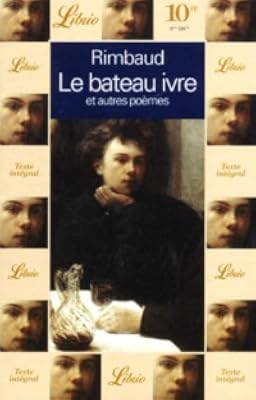
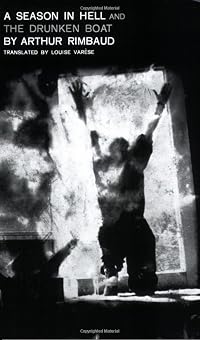
The Drunken Boat
by Arthur Rimbaud
On This Page
Description
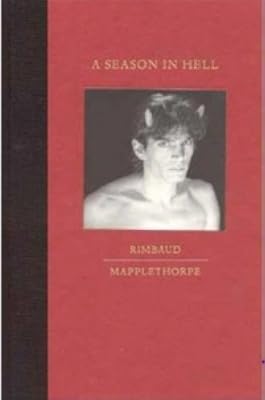
"Poet, prodigy, precursor, punk: the short, precocious, uncompromisingly rebellious career of the poet Arthur Rimbaud is one of the legends of modern literature. By the time he was twenty, Rimbaud had written a series of poems that are not only masterpieces in themselves but that forever transformed the idea of what poetry is. Without him, surrealism is inconceivable, and his influence is palpable in artists as diverse as Henry Miller, John Ashbery, Bob Dylan, and Patti Smith. In this show more essential volume, renowned translator Mark Polizzotti offers authoritative and inspired new versions of Rimbaud's major poems and letters, including generous selection of Illuminations and the entirety of his lacerating confession A Season in Hell - capturing as never before not only the meaning but also the daredevil attitudes and incantatory rhythms that make Rimbaud's works among the most perpetually modern of his or any other generation"-- show lessTags
Recommendations


















Member Reviews
" A noir, E blanc, I rouge, U vert, O bleu... " Ça sonne comme une comptine et c'est magique. Une fugue... Éclair de beauté et de malice que ce voleur de feu lance au ciel de la poésie ! Ivre de sensations, Rimbaud est comme ce bateau qui connaît l'éblouissement de " nuits sans fond " mais aussi la désillusion " d'aubes navrantes ". Voyant, il crée un monde où la Grande Ourse est une auberge, où les poteaux télégraphiques sont une lyre aux chants de fer... Révolté, il va, portant en lui " le sanglot des Infâmes, la clameur des Maudits " et le sourire tranquille du dormeur du val... Mais pour finir il s'évade, tout à la fois ange, mage et vagabond, laissant à vingt ans une oeuvre fulgurante dont les échos se prolongent show more aujourd'hui. show less
Jean Arthur Rimbaud, född 20 oktober 1854 i Charleville-Mézières, Ardennes, död 10 november 1891 i Marseille, var en fransk poet. Rimbaud anses som poet vara synnerligen nyskapande och originell. Han räknas till de mest inflytelserika dekadenterna och symbolisterna. Han skrev tidigt i tonåren revolutionerande och för den tiden moraliskt utmanande poesi, och har blivit ett ideal för många unga rebelliska poeter. Han slutade i princip att skriva poesi innan han fyllt tjugo, och försörjde sig efter det bland annat som lycksökare, handelsman och slavhandlare i Främre Orienten. Rimbaud är också känd för att ha haft ett stormigt homosexuellt förhållande med en annan fransk poet, Paul Verlaine. De båda poeterna skildras i show more filmen Total Eclipse från år 1995. (Källa: Svenska Wikipedia) show less
Mar 20, 2010Swedish
Le Bateau ivre est un poème d'Arthur Rimbaud, constitué de 25 quatrains d'alexandrins. Rimbaud a envoyé ce poème à Verlaine avant de le rejoindre à Paris. Une caricature d'André Gill dans l' Album zutique représente Rimbaud dans une frêle embarcation. Le premier groupe zutique qui comprenait André Gill et Arthur Rimbaud a transcrit poèmes et dessins de l' Album zutique de la mi-octobre 1871 à la mi-novembre 1871 à peine. Ainsi, selon toute vraisemblance, le poème Le Bateau ivre est antérieur à cette date-butoir pour l' Album zutique. De deux choses l'une. Ou Rimbaud a composé son poème peu avant sa montée à Paris autour du 15 septembre 1871, ou il l'a composé dès son arrivée à Paris. Pourquoi pas chez les Mauté show more eux-mêmes ? Delahaye a régulièrement essayé de se faire passer pour le premier témoin de la composition de poèmes par Rimbaud. Or il prétend que Le Bateau ivre a été composé expressément pour se présenter à Paris. Le témoignage semble pour une fois conserver sa vraisemblance malgré l'épreuve du temps, sauf sur un point. Le 30 septembre 1871, Rimbaud a probablement lu un ancien poème de 1870 Les Effarés. Verlaine a par ailleurs toujours cité Les Premières communions et Les Effarés comme les deux premiers poèmes qui lui furent envoyés par lettres. Qui plus est, personne ne s'est empressé de publier ce poème à l'époque, malgré la forte impression produite par Rimbaud lors de sa présentation par Verlaine au dîner des Vilains Bonshommes. Bref, Rimbaud n'a fait la publicité de son chef-d'œuvre qu'à un petit nombre de privilégiés. Verlaine le considérait comme son plus beau poème en vers connu, à défaut d'avoir retrouvé Les Veilleurs. show less
Dec 16, 2010French
Ratings
Members
- Recently Added By
Lists

Favourite Books
1,819 works; 316 members

Favourite Poems
34 works; 1 member
Author Information

461+ Works 10,541 Members
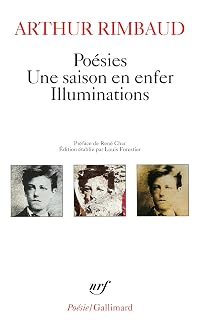
Arthur Rimbaud, 1854-1891 Arthur Rimbaud was born October 20, 1854. He was the son of an army captain who deserted his family when Arthur was six years old. He attended a provincial school in Charleville, a town in northeastern France, and was a brilliant student until the Franco-Prussian war. It was then Rimbaud turned rebel and fled his home. As show more a boy, Rimbaud wrote some of the most remarkable poetry of the 19th century. His rhythmic experiments in his prose poems "Illuminations" (1886; eng.trans.,1932) identified him as one of the creators of free verse. Synesthesia, (the description of one sense experience in terms of another), was popularized by his "Sonnet of the Vowels" (1871;Eng. Trans., 1966) where each vowel is assigned a color. After Rimbaud fled his home in July 1870, a year of drifting followed. During this time, he had sent some poems to Paul Verlaine. In 1871, he was invited to Paris where Verlaine rejected him as a drunk. In spite of that, he and Verlaine became lovers and the relationship continued sporadically over two years and formed the core of disillusionment in "A Season in Hell." After the affair ended, Rimbaud abandoned his writing. At the time he was not yet 20 years old. Rimbaud transformed himself becoming a trader and gunrunner in Africa. On November 10, 1891, he died in Marseille following the amputation of his cancerous right leg. (Bowker Author Biography) Arthur Rimbaud (1854-1891), poet and adventurer who gave up poetry at age 20, remains one of the most influential and iconic of modern writers. (Publisher Provided) show less
Some Editions
Awards and Honors
Notable Lists
Work Relationships
Is contained in
Has the adaptation
Was inspired by
Has as a student's study guide
Common Knowledge
- Canonical title
- The Drunken Boat
- Original title
- Le Bateau ivre
- Alternate titles
- The Drunken Boat
- Original publication date
- 1871
Classifications
Statistics
- Members
- 158
- Popularity
- 207,818
- Reviews
- 3
- Rating
- (4.38)
- Languages
- 11 — Dutch, English, French, German, Italian, Multiple languages, Norwegian (Nynorsk), Portuguese, Romanian, Russian, Spanish
- Media
- Paper, Audiobook, Ebook
- ISBNs
- 20
- ASINs
- 3