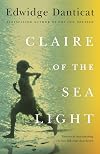
Claire of the Sea Light
by Edwidge Danticat
On This Page
Description
"The interconnected secrets of a coastal Haitian town are revealed when one little girl, the daughter of a fisherman, goes missing"--Tags
Recommendations








































Member Reviews
Claire of the Sea Light by Edwidge Danticat is a short but complex story that consists of a series of linked stories set in a small town in Haiti, as she explores the nature of grief and the various forms it takes. Death is the one constant in this book, even the mayor is the town’s undertaker. Claire Limye Lanme, meaning Claire of the Sea Light, was named for her mother, who died in childbirth. Her seventh birthday starts with a rogue wave claiming the life of a neighbour which sets the tone. Claire’s fisherman father feels that he won’t be able to raise Claire properly and decides to give her away to a wealthy shopkeeper whose own daughter died in an accident. As he makes this painful decision to part from his child, she show more vanishes.
The author explores the stories of various inhabitants of Ville Rose, from the shopkeeper who has lost both her husband and her daughter, to Bernard, a young radio writer who dreams of hosting a show about the gang members who rule his neighbourhood, and Louise, an on-air radio host who airs the town’s secrets all the while concealing her own ailment. These stories are put together like a puzzle and the reader is rewarded with an involving story of life in Haiti.
I was immediately caught by the question of whether Claire would return home and by the lyrical, haunting prose and richly described characters that the author has peopled her book with. Many of the characters are at a breaking point, wanting to change their lives but mostly unable to. Danticat vividly portrays how grief and pain are felt by everyone no matter their gender, age or social status. Claire of the Sea Light is a quiet novel, but it delivers a definite emotional impact. show less
The author explores the stories of various inhabitants of Ville Rose, from the shopkeeper who has lost both her husband and her daughter, to Bernard, a young radio writer who dreams of hosting a show about the gang members who rule his neighbourhood, and Louise, an on-air radio host who airs the town’s secrets all the while concealing her own ailment. These stories are put together like a puzzle and the reader is rewarded with an involving story of life in Haiti.
I was immediately caught by the question of whether Claire would return home and by the lyrical, haunting prose and richly described characters that the author has peopled her book with. Many of the characters are at a breaking point, wanting to change their lives but mostly unable to. Danticat vividly portrays how grief and pain are felt by everyone no matter their gender, age or social status. Claire of the Sea Light is a quiet novel, but it delivers a definite emotional impact. show less
This book is the story of a community and its inhabitants. Ville Rose, Haiti, is a small fictional town located about twenty miles from Port au Prince. It reads like a series of short stories, bookended by the tale of Claire and her father. Claire’s mother died when she was born. Her father is a poor fisherman who has asked the local fabric vendor to adopt his daughter. It is a story of community, class, and corruption.
Due to its beautiful title, I thought the book would be more about Claire, but she is only one of many characters. The other stories are only loosely connected, which makes the narrative feel fragmented. It is told in a non-linear manner. The writing is elegant. Danticat employs vivid images of darkness and light, life show more and death, and growth and decay, which are effective in conveying mood. I liked this book enough to read another of Danticat’s works. show less
Due to its beautiful title, I thought the book would be more about Claire, but she is only one of many characters. The other stories are only loosely connected, which makes the narrative feel fragmented. It is told in a non-linear manner. The writing is elegant. Danticat employs vivid images of darkness and light, life show more and death, and growth and decay, which are effective in conveying mood. I liked this book enough to read another of Danticat’s works. show less
Edwidge Danticat writes beautiful novels, steeped in the history and culture of Haiti. This novel is about a young girl whose mother dies giving birth to her and her father's struggle to raise her. He decides to give her to a local woman to raise on Claire's 7th birthday, and Claire runs away. As Danticat writes about Claire and her father, she tells stories about people in all walks of life in Haiti. The time swirls around the past and present.
I love Danticat's writing, but I got a little lost in this book as she starts new stories about so many people. I wasn't sure how it was all going to come together, but in the end it does come together. I preferred her first book, [The Farming of Bones], because I thought the plotting was show more better, but this one is good as well. show less
I love Danticat's writing, but I got a little lost in this book as she starts new stories about so many people. I wasn't sure how it was all going to come together, but in the end it does come together. I preferred her first book, [The Farming of Bones], because I thought the plotting was show more better, but this one is good as well. show less
Gostei demais como a Edwidge Dandicat construiu a narrativa de Clara da Luz do Mar, sem um protagonista específico, mas com diversas vozes que convergem e que vai e vem entre o tempo atual e o tempo passado, próprio como o balançar das ondas do mar. No começo você fica numa expectativa de que será o livro tão simples assim, sem nada muito rebuscado? Quando nos damos conta já fomos tragados pela sofisticação sutil da autora. E vale a pena, viu.
Edwidge Danticat is a Haitian born writer. I first fell in love with her as a teenager with her debut novel, Breath, Eyes, Memory, where she examined the psychological damage mothers do to their daughters in the name of love and guidance. Over the years Danticat’s novels and short stories have made readers fall in love with the people and language of Haiti.
Danticat’s stories are like onions and with each chapter you peel back a layer to reveal stories within the story. In Claire of the Sea Light, she unwraps the lives of the people and families living in a small seaside Haitian community.
Claire Limye Lanme or Claire of the Sea Light in English, is a revenan, a child who’s mother died giving birth to her. Her father has done the show more best he can with her, as a fisherman, but he wants her to have a mother, to raise her and give her better opportunities. He has spent the past 7 years of Claire’s life trying to lovingly give her away. We meet them when he has yet another opportunity to make this difficult decision.
However, the story is so much more than just Claire and her father. Danticat explores the interconnections of the community and how an individual’s decision influences the whole. She looks at what people sacrifice for each other or for themselves. She shows a people struggling to survive and thrive and how that can both make or break an individual.
I loved it. Danticat has a gift for words. Claire of the Sea Light is yet another fascinating exploration of Haitian life. She reveals the humanity of a people that are often only seen as victims and peasants. show less
Danticat’s stories are like onions and with each chapter you peel back a layer to reveal stories within the story. In Claire of the Sea Light, she unwraps the lives of the people and families living in a small seaside Haitian community.
Claire Limye Lanme or Claire of the Sea Light in English, is a revenan, a child who’s mother died giving birth to her. Her father has done the show more best he can with her, as a fisherman, but he wants her to have a mother, to raise her and give her better opportunities. He has spent the past 7 years of Claire’s life trying to lovingly give her away. We meet them when he has yet another opportunity to make this difficult decision.
However, the story is so much more than just Claire and her father. Danticat explores the interconnections of the community and how an individual’s decision influences the whole. She looks at what people sacrifice for each other or for themselves. She shows a people struggling to survive and thrive and how that can both make or break an individual.
I loved it. Danticat has a gift for words. Claire of the Sea Light is yet another fascinating exploration of Haitian life. She reveals the humanity of a people that are often only seen as victims and peasants. show less
This series of interlocking stories is set in Ville Rose, a small seaside town in Haiti. The title character, Claire Limyè Lanmè, serves as a focal point in that all the stories transect on her seventh birthday, but the book is really about the lives of various community members: a poor fisherman, a wealthy businesswoman, a schoolmaster and his wayward son, the hostess of a radio interview show, a would-be investigative radio journalist, and Claire. Multiple points of view are provided and narratives shift backwards and forwards over a decade.
A major theme is that of death and loss. Almost everyone is touched by death, whether natural, accidental or criminal, or loss through absence. Wives (Gaëlle, Josephine) lose husbands; husbands show more (Nozias, Max Sr., Albert) lose wives; children (Claire, Pamaxime) lose parents; parents (Gaëlle, Max Sr., Max Jr., Mr. and Mrs. Dorien) lose children. It is fitting therefore that the mayor is the town’s undertaker. It is the pain of loss, however, that binds them all together; Gaëlle realizes that “Her pain, her losses: these were what was keeping her in this town.”
Another major theme is love, particularly parental love. Various parents show love for their children in different ways. Nozias expresses his love for his daughter Claire by listing what he wants for her: “a lack of cruelty, a feeling of safety, but also love. Benevolence and sympathy too, but mostly love.” Some show their love by sending their children away. One character who is struggling with the idea of being a parent is told that “The worst possible case of unrequited love . . . was feeling rejected by a parent.”
Despite the brutal reality portrayed in the book, it is not without hope. The author suggests that there is hope in telling one’s story and in looking after one another. Both are alluded to in oft-repeated Creole phrases: “Di mwen” and “Fòk nou voye je youn sou lòt.”
The style of the book verges on magic realism and that is not a style I enjoy, but the presentation of the interior lives of characters is interesting. show less
A major theme is that of death and loss. Almost everyone is touched by death, whether natural, accidental or criminal, or loss through absence. Wives (Gaëlle, Josephine) lose husbands; husbands show more (Nozias, Max Sr., Albert) lose wives; children (Claire, Pamaxime) lose parents; parents (Gaëlle, Max Sr., Max Jr., Mr. and Mrs. Dorien) lose children. It is fitting therefore that the mayor is the town’s undertaker. It is the pain of loss, however, that binds them all together; Gaëlle realizes that “Her pain, her losses: these were what was keeping her in this town.”
Another major theme is love, particularly parental love. Various parents show love for their children in different ways. Nozias expresses his love for his daughter Claire by listing what he wants for her: “a lack of cruelty, a feeling of safety, but also love. Benevolence and sympathy too, but mostly love.” Some show their love by sending their children away. One character who is struggling with the idea of being a parent is told that “The worst possible case of unrequited love . . . was feeling rejected by a parent.”
Despite the brutal reality portrayed in the book, it is not without hope. The author suggests that there is hope in telling one’s story and in looking after one another. Both are alluded to in oft-repeated Creole phrases: “Di mwen” and “Fòk nou voye je youn sou lòt.”
The style of the book verges on magic realism and that is not a style I enjoy, but the presentation of the interior lives of characters is interesting. show less
Absolutely loved this! She tells the many different threads of lives in a Haitian community through the evening Claire goes missing in a way that made complete sense to me, despite all the different directions in went in. Her writing is beautiful and he story craft is as well. I was holding my breath til the ending worked itself out. I must read more by her.
Members
- Recently Added By
Published Reviews
added by doomjesse
Lists

Top Five Books of 2014
1,064 works; 398 members

Books Read in 2014
2,343 works; 86 members

2014 Notable Books for Adults
26 works; 5 members

Phi Beta Kappa reading list
260 works; 8 members

Around the World in 80 Books
79 works; 4 members

Books With Water Words in the Title
186 works; 12 members
Author Information

43+ Works 12,811 Members
Edwidge Danticat was born in Haiti in 1969 and came to America at age twelve to live with her parents in Brooklyn. She studied French literature at Barnard College and received her M.F.A. from Brown University. Her work has achieved both popular and critical acclaim. Breath, Eyes, Memory (1994), her first novel and master's thesis, garnered show more Danticat a Granta Regional Award for Best Young American Novelist and was chosen as an Oprah Book Club selection, a singular honor. Her collection of short stories Krik? Krak! (1995) was nominated for the National Book Award. Along with awards for fiction from Seventeen and Essence and the 1995 Pushcart Short Story Prize, Danticat was chosen by Harper's Bazaar as "one of 20 people in their twenties who will make a difference," and by the New York Times Magazine as one of "30 Under 30" people to watch. Her second novel, The Farming of Bones (1998), concerns a massacre in Haiti in 1937. (Bowker Author Biography) show less
Some Editions
Awards and Honors
Awards
Distinctions
Notable Lists
Series
Belongs to Publisher Series
Common Knowledge
- Canonical title
- Claire of the Sea Light
- Original publication date
- 2013
- People/Characters
- Claire Limye Lanme Faustin; Nozias Faustin; Claire Faustin; Albert Vincent; Maxime Ardin, Jr.; Maxime Ardin, Sr. (show all 10); Gaelle Cadet Lavaud; Louise George; Flore Voltaire; Bernard Dorien
- Important places
- Haiti; Ville Rose, Haiti
- Epigraph
- Tell me, dear beauty of the dusk,
When purple ribbons bind the hill,
Do dreams your secret wish fulfill,
Do prayers, like kernals from the husk
Come from your lips? Tell me if when
The ... (show all)mountains loom at night, giant shades
Of softer shadow, swift like blades
Of grass seeds come to flower. Then
Tell me if the night winds bend
Them towards me . . .
Jean Toomer, "Tell Me" - Dedication
- for my mother, Rose,
and my daughters, Mira and Leila - First words
- The morning Claire Limye Lanme Faustin turned seven, a freak wave, measuring between ten and twelve feet high, was in in the ocean ouside of Ville Rose.
- Last words
- (Click to show. Warning: May contain spoilers.)Before becoming Madame Gaelle's daughter, she had to go home, just one last time.
- Blurbers
- Patchett, Ann; Giovanni, Nikki
Classifications
Statistics
- Members
- 859
- Popularity
- 31,696
- Reviews
- 44
- Rating
- (3.79)
- Languages
- 6 — English, French, German, Portuguese (Portugal), Spanish, Swedish
- Media
- Paper, Audiobook, Ebook
- ISBNs
- 25
- ASINs
- 9