On This Page
Description
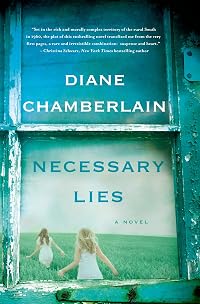
Bestselling author Diane Chamberlain delivers a breakout book about a small southern town fifty years ago, and the darkest—and most hopeful—places in the human heartAfter losing her parents, fifteen-year-old Ivy Hart is left to care for her grandmother, older sister and nephew as tenants on a small tobacco farm. As she struggles with her grandmother's aging, her sister's mental illness and her own epilepsy, she realizes they might need more than she can give.
When Jane Forrester takes a show more position as Grace County's newest social worker, she doesn't realize just how much her help is needed. She quickly becomes emotionally invested in her clients' lives, causing tension with her boss and her new husband. But as Jane is drawn in by the Hart women, she begins to discover the secrets of the small farm—secrets much darker than she would have guessed. Soon, she must decide whether to take drastic action to help them, or risk losing the battle against everything she believes is wrong.
Set in rural Grace County, North Carolina in a time of state-mandated sterilizations and racial tension, Necessary Lies tells the story of these two young women, seemingly worlds apart, but both haunted by tragedy. Jane and Ivy are thrown together and must ask themselves: how can you know what you believe is right, when everyone is telling you it's wrong?
. show less
Tags
Recommendations




Member Recommendations

susiesharp Kind of the other side of eugenics.
Member Reviews
I had no idea what this was really about when I received the review copy from the publisher. Then I found it on my "hafta read" pile for the Maine Reader's Choice Award panel. I hesitate to call it a delightful surprise since the subject matter, Eugenics, is one that is deeply controversial and ugly.
Evidently, in the US, several states had Eugenics programs in place allowing them to sterilize certain institutionalized citizens deemed unsuitable for procreating for a number of reasons, e.g., epilepsy, mental retardation, etc. In North Carolina, the setting of this story, social workers were allowed to recommend this procedure on clients who were members of the general population without their residing in an institution. Often they were show more simply poor, undereducated, and malnourished.
In the story, we follow Jane Forrester and Ivy Hart. Jane is an upper middle class college graduate, recently married to a pediatrician who does not want his wife to work. Jane has different ideas, wanting to have some sort of career before settling down to staying home to raise children. She is hired as a social worker in North Carolina in the early 1960's. Ivy Hart is one of her clients, a 15 year old girl who is trying hard to be a caregiver to a diabetic grandmother, a mother to her slightly retarded older sister and the sister's child "baby William" all the while trying to stay in high school and be the first in the family to graduate.
The poverty of the Hart family is thoroughly depressing and would crush the spirit of just about any normal person. Ivy, with encouragement from Jane, is determined NOT to allow herself to become pregnant, and at the same time is doing everything she can to be sure that her sister, who is known to be quite promiscuous, does not have another child. The social services department for whom Jane works, is determined to sterilize both girls.
Jane finds herself in the middle of a moral dilemma trying to help Ivy, obey her boss, and placate her husband while keeping him unaware of the specifics of her job. As the timeline becomes more critical, Jane is forced to make decisions that will have a definite impact not only on her clients, but also on her own future.
This is a true page turner. The characters are real, believable, and the story is horrifying in its implications. The author has done significant research to present us with an in-depth look at the unbelievable options that actually occurred in this country just 50 short years ago. It is a must read. show less
Evidently, in the US, several states had Eugenics programs in place allowing them to sterilize certain institutionalized citizens deemed unsuitable for procreating for a number of reasons, e.g., epilepsy, mental retardation, etc. In North Carolina, the setting of this story, social workers were allowed to recommend this procedure on clients who were members of the general population without their residing in an institution. Often they were show more simply poor, undereducated, and malnourished.
In the story, we follow Jane Forrester and Ivy Hart. Jane is an upper middle class college graduate, recently married to a pediatrician who does not want his wife to work. Jane has different ideas, wanting to have some sort of career before settling down to staying home to raise children. She is hired as a social worker in North Carolina in the early 1960's. Ivy Hart is one of her clients, a 15 year old girl who is trying hard to be a caregiver to a diabetic grandmother, a mother to her slightly retarded older sister and the sister's child "baby William" all the while trying to stay in high school and be the first in the family to graduate.
The poverty of the Hart family is thoroughly depressing and would crush the spirit of just about any normal person. Ivy, with encouragement from Jane, is determined NOT to allow herself to become pregnant, and at the same time is doing everything she can to be sure that her sister, who is known to be quite promiscuous, does not have another child. The social services department for whom Jane works, is determined to sterilize both girls.
Jane finds herself in the middle of a moral dilemma trying to help Ivy, obey her boss, and placate her husband while keeping him unaware of the specifics of her job. As the timeline becomes more critical, Jane is forced to make decisions that will have a definite impact not only on her clients, but also on her own future.
This is a true page turner. The characters are real, believable, and the story is horrifying in its implications. The author has done significant research to present us with an in-depth look at the unbelievable options that actually occurred in this country just 50 short years ago. It is a must read. show less
Jane Forrester just wants to help people. It's as simple as that. So she takes a job as a social worker, and while her husband isn't exactly on board with that idea, he allows it. It's the 1960's and it's just not proper for the wife of a physician to work, but Jane is strong-willed, independent, and unsatisfied with simply playing the role of a subservient housewife. As a social worker, she'll get to help people. She'll bring them much-needed supplies, much-needed money, much-needed assistance. Or so she thinks.
Assigned to a few families in rural North Carolina, her job is nothing like what she imagined, and the Hart family quickly sucks her in. Ivy Hart is practically running the family at fifteen years old. Her parents are gone. Her show more grandmother, Nonnie, is sick. Her older sister, Mary Ella, has some intellectual problems. And Mary Ella's son, Baby William, while well-loved, isn't well-cared for. Ivy, Mary Ella, and occasionally Nonnie work on a tobacco farm, barely earning enough to keep themselves fed, even with the extra assistance from the state. Jane gradually becomes more and more involved with this family, bending the rules and paying them extra attention.
When she finds out that a large part of her job is ordering the sterilization of at-risk children, such as Ivy, her world comes crumbling down around her. It seems so wrong to her, to sterilize these girls without their consent, without their knowledge - yet to her coworkers, it's common practice. As Jane protests more and more vigorously against the sterilization, she puts her job - and her marriage - at risk.
I was pulled into this novel from the very first sentence, and I was absolutely done for by the time Jane got her job as a social worker. I couldn't believe what I was reading about the eugenics program - in all the history classes I've taken, all the college courses I sat through, all the books I've read, I never once heard about this awful program. I had to research it myself, see if it was true, and the horrifying part is that it was. North Carolina had a particularly aggressive eugenics program, approving nearly all proposals involving the "mentally defective," "feebleminded," or those with epilepsy. Knowing that this book is based on real events is chilling.
If I could give this book more than five stars, I would. Not only is it incredibly well-written, it's such an important topic. Highly, highly recommended. show less
Assigned to a few families in rural North Carolina, her job is nothing like what she imagined, and the Hart family quickly sucks her in. Ivy Hart is practically running the family at fifteen years old. Her parents are gone. Her show more grandmother, Nonnie, is sick. Her older sister, Mary Ella, has some intellectual problems. And Mary Ella's son, Baby William, while well-loved, isn't well-cared for. Ivy, Mary Ella, and occasionally Nonnie work on a tobacco farm, barely earning enough to keep themselves fed, even with the extra assistance from the state. Jane gradually becomes more and more involved with this family, bending the rules and paying them extra attention.
When she finds out that a large part of her job is ordering the sterilization of at-risk children, such as Ivy, her world comes crumbling down around her. It seems so wrong to her, to sterilize these girls without their consent, without their knowledge - yet to her coworkers, it's common practice. As Jane protests more and more vigorously against the sterilization, she puts her job - and her marriage - at risk.
I was pulled into this novel from the very first sentence, and I was absolutely done for by the time Jane got her job as a social worker. I couldn't believe what I was reading about the eugenics program - in all the history classes I've taken, all the college courses I sat through, all the books I've read, I never once heard about this awful program. I had to research it myself, see if it was true, and the horrifying part is that it was. North Carolina had a particularly aggressive eugenics program, approving nearly all proposals involving the "mentally defective," "feebleminded," or those with epilepsy. Knowing that this book is based on real events is chilling.
If I could give this book more than five stars, I would. Not only is it incredibly well-written, it's such an important topic. Highly, highly recommended. show less
The plot is simple enough: Jane, a social worker, finds herself assigned the case of two parentless teenage girls working on a tobacco farm, one of them having had a child already when she was barely 14. As it takes place in the early 1960s in North Carolina, the story obviously echoes the zeitgeist of the time, from racism to sexism and from classism to, indeed, eugenics, as it will be Jane's job to make sure that one of the girls, like her sister had already, be sterilised by the State.
Reflecting the bigoted era of a time we surely would like to be long gone, 'Necessary Lies' can be a tough read. I personally was taken aback by how, in fact, it often unsettled me or made me angry e.g. the subservience of most women to their husbands show more (Jane included), the entitlement of individuals coming from privileged background having no understanding of poverty, a junk science ignorant of how environment impact people's development (and so lives' trajectories) yet entrusted to be the moral compass to improve society etc.
Having said that, what is striking about how the author unravel her plot is how un-preachy she is. It could have been so easy indeed to fall into the obvious claptrap of judging such era by our own standards (even if we're barely better), and so give in to self-righteous outrage. There is, on the contrary, absolutely none of that here. In fact, Jane, for all her understanding and bravery in going against the grain of the time, is not without her own idiosyncrasies; and it's made very clear that most characters who otherwise fully support the 'Eugenics Program' do so, not because they are intrinsically bad or immoral, but because they truly believe that theirs is the human, decent, and compassionate thing to do. Beware, then, of the road to Hell paved with good intents...
I personally loved this book. It can feel like dragging on towards the end, yet Diane Chamberlain's handling of such a complex, difficult topic, by skilfully finding the right balance between emotions and rationally exposing an otherwise still widely unknown part of history (let's remember that it's American eugenics which had inspired the Nazis, with whom eugenics thinkers had more than a link...) can only be described as being masterful.
What is especially arresting is how many layers can be peeled off while reading. For example (and it's one among many!), I found it revealing to see Jane, the social worker and doctor's wife, taking the pill to afford herself a career, yet those job it is to advocate for other, poor women and girls, to be sterilised for supposedly being 'promiscuous' (hence 'feebleminded'). Classist hypocrisy is far from being new...
A very, very good read. show less
Reflecting the bigoted era of a time we surely would like to be long gone, 'Necessary Lies' can be a tough read. I personally was taken aback by how, in fact, it often unsettled me or made me angry e.g. the subservience of most women to their husbands show more (Jane included), the entitlement of individuals coming from privileged background having no understanding of poverty, a junk science ignorant of how environment impact people's development (and so lives' trajectories) yet entrusted to be the moral compass to improve society etc.
Having said that, what is striking about how the author unravel her plot is how un-preachy she is. It could have been so easy indeed to fall into the obvious claptrap of judging such era by our own standards (even if we're barely better), and so give in to self-righteous outrage. There is, on the contrary, absolutely none of that here. In fact, Jane, for all her understanding and bravery in going against the grain of the time, is not without her own idiosyncrasies; and it's made very clear that most characters who otherwise fully support the 'Eugenics Program' do so, not because they are intrinsically bad or immoral, but because they truly believe that theirs is the human, decent, and compassionate thing to do. Beware, then, of the road to Hell paved with good intents...
I personally loved this book. It can feel like dragging on towards the end, yet Diane Chamberlain's handling of such a complex, difficult topic, by skilfully finding the right balance between emotions and rationally exposing an otherwise still widely unknown part of history (let's remember that it's American eugenics which had inspired the Nazis, with whom eugenics thinkers had more than a link...) can only be described as being masterful.
What is especially arresting is how many layers can be peeled off while reading. For example (and it's one among many!), I found it revealing to see Jane, the social worker and doctor's wife, taking the pill to afford herself a career, yet those job it is to advocate for other, poor women and girls, to be sterilised for supposedly being 'promiscuous' (hence 'feebleminded'). Classist hypocrisy is far from being new...
A very, very good read. show less
Ivy Hart is fifteen. Her parents are gone and she’s become the one looking after her grandmother, her older sister, and her nephew. Tenants on a small tobacco farm, their life is difficult and, although the women earn a pittance working in the tobacco field, the family survives only because of the welfare they receive.
Jane Forrester is a new social worker for Grace County; despite her newlywed husband’s objection to her job, she soon becomes emotionally invested in the lives of her clients, particularly the Hart women. The more Jane learns, the more difficult it becomes for her to turn her back on the things she believes to be wrong even as her supervisor, Charlotte, explains the necessity of the decisions she and the others in the show more agency make. Will Jane become a heroine for Ivy, or is she destined to be the enemy?
With well-drawn characters, the story delves into the issues of the time: discrimination, poverty, the marginalization of a segment of society. As the story unfolds, drawing readers into Ivy’s narrative and Jane’s story, tension builds around the seemingly-impossible and keeps the pages turning.
Historically accurate, the narrative is set in North Carolina in the 1960s and focuses on the eugenics program and its impact, particularly on the disenfranchised women sterilized without their consent. It’s a powerfully-told story, one that will stay with the reader long after reaching the final page.
Highly recommended. show less
Jane Forrester is a new social worker for Grace County; despite her newlywed husband’s objection to her job, she soon becomes emotionally invested in the lives of her clients, particularly the Hart women. The more Jane learns, the more difficult it becomes for her to turn her back on the things she believes to be wrong even as her supervisor, Charlotte, explains the necessity of the decisions she and the others in the show more agency make. Will Jane become a heroine for Ivy, or is she destined to be the enemy?
With well-drawn characters, the story delves into the issues of the time: discrimination, poverty, the marginalization of a segment of society. As the story unfolds, drawing readers into Ivy’s narrative and Jane’s story, tension builds around the seemingly-impossible and keeps the pages turning.
Historically accurate, the narrative is set in North Carolina in the 1960s and focuses on the eugenics program and its impact, particularly on the disenfranchised women sterilized without their consent. It’s a powerfully-told story, one that will stay with the reader long after reaching the final page.
Highly recommended. show less
The story of a small southern, North Carolina town fifty years ago, and the darkest–and most hopeful places in the human heart.
After losing her parents, fifteen-year-old Ivy Hart is left to care for her grandmother, older sister and nephew as tenants on a small tobacco farm. As she struggles with her grandmother’s aging, her sister’s mental illness and her own epilepsy, she realizes they might need more than she can give.
Jane Forrester takes the position as Grace County’s newest social worker, she doesn’t realize just how much her help is needed. It isn't a good thing, buts She quickly becomes emotionally invested in her clients’ lives, which of course causes tension with her boss as well as her new husband. As Jane is drawn show more in by the women of Hart County, she begins to discover there are secrets in the small farm town...secrets much darker than she would have ever guessed. She soon finds that she must decide whether to take some drastic actions in order to help them, or to risk losing the battle against everything she believes is wrong.
The story is set in the 1960's in rural Grace County, North Carolina. This was in the time when state-mandated sterilizations were taking place and racial tension were high. This book is the story of two young women who are at first, seemingly distant worlds apart, but both are haunted by tragedy. Jane and Ivy are now thrown together and must ask themselves: How can you know what you believe is right, when everyone is telling you it’s wrong?
This is an engaging and evocative story of a North Carolina state mandated program which was, believe it or not, still active in 1960. The vivid depictions of life and poverty on a tobacco farmland at that time are compelling and appear to be depicted quite realistically. You will learn more than you ever wanted to know about this sterilization program through these two well-drawn characters. Through Necessary Lies, Diane Chamberlain has written an unforgettable, thought-provoking story.
NOTE: I had to know a bit more about this North Caroline sterilization program, what seemed to me to have been an inhuman act that you would more expect to be taking place in Nazi Germany than in the United States of America. Here is what I found. I was appalled to say the least...especially when I have found out since that enough though this book was set in 1960, but this program had been going on in 32 of the states since 1913.
The North Carolina sterilization program was driven by the belief in eugenics, which was a pseudoscience that claimed to improve society by promoting the "better" traits of the human population. The program aimed to reduce the number of individuals with mental illnesses and disabilities, as well as to prevent the spread of poverty through controlled reproduction. The Eugenics Board of North Carolina was responsible for overseeing the sterilization process, which was often coercive and aimed at benefiting the public good. The program was characterized by its negative eugenics approach, which discouraged reproduction by individuals with genetic defects or "undesirable" traits. Those "undesirable traits" included color, sexual identity, parentage nationality, and the one that I somewhat understood...health issues.
The biggest question I had was WHO determines what those "undesirable traits are" and what exactly is the end result supposed to "improve"? Sorry, I got so caught up in the entire horrible idea of this program that I almost forgot the rest of the story:) show less
After losing her parents, fifteen-year-old Ivy Hart is left to care for her grandmother, older sister and nephew as tenants on a small tobacco farm. As she struggles with her grandmother’s aging, her sister’s mental illness and her own epilepsy, she realizes they might need more than she can give.
Jane Forrester takes the position as Grace County’s newest social worker, she doesn’t realize just how much her help is needed. It isn't a good thing, buts She quickly becomes emotionally invested in her clients’ lives, which of course causes tension with her boss as well as her new husband. As Jane is drawn show more in by the women of Hart County, she begins to discover there are secrets in the small farm town...secrets much darker than she would have ever guessed. She soon finds that she must decide whether to take some drastic actions in order to help them, or to risk losing the battle against everything she believes is wrong.
The story is set in the 1960's in rural Grace County, North Carolina. This was in the time when state-mandated sterilizations were taking place and racial tension were high. This book is the story of two young women who are at first, seemingly distant worlds apart, but both are haunted by tragedy. Jane and Ivy are now thrown together and must ask themselves: How can you know what you believe is right, when everyone is telling you it’s wrong?
This is an engaging and evocative story of a North Carolina state mandated program which was, believe it or not, still active in 1960. The vivid depictions of life and poverty on a tobacco farmland at that time are compelling and appear to be depicted quite realistically. You will learn more than you ever wanted to know about this sterilization program through these two well-drawn characters. Through Necessary Lies, Diane Chamberlain has written an unforgettable, thought-provoking story.
NOTE: I had to know a bit more about this North Caroline sterilization program, what seemed to me to have been an inhuman act that you would more expect to be taking place in Nazi Germany than in the United States of America. Here is what I found. I was appalled to say the least...especially when I have found out since that enough though this book was set in 1960, but this program had been going on in 32 of the states since 1913.
The North Carolina sterilization program was driven by the belief in eugenics, which was a pseudoscience that claimed to improve society by promoting the "better" traits of the human population. The program aimed to reduce the number of individuals with mental illnesses and disabilities, as well as to prevent the spread of poverty through controlled reproduction. The Eugenics Board of North Carolina was responsible for overseeing the sterilization process, which was often coercive and aimed at benefiting the public good. The program was characterized by its negative eugenics approach, which discouraged reproduction by individuals with genetic defects or "undesirable" traits. Those "undesirable traits" included color, sexual identity, parentage nationality, and the one that I somewhat understood...health issues.
The biggest question I had was WHO determines what those "undesirable traits are" and what exactly is the end result supposed to "improve"? Sorry, I got so caught up in the entire horrible idea of this program that I almost forgot the rest of the story:) show less
I'm surprised that the welfare dept. admitted it was a eugenics program. Bringing Ivy birth control tools is one thing, as is persuading young women on the rolls to get a tubal ligation, or young men to become "asexualized." But sterilizing Mary Ella against her knowledge is a whole 'nother. She's certainly not that feeble-minded. It comes down to choice. I happen to think that I should have been sterilized before I had any of my children (not that I don't love them now) but treating people like dogs--encouraged to breed if the father is a doctor, sterilized if they're poor--is so wrong that it dehumanizes everyone.
I'm grateful that Chamberlain didn't tell us the most awful stories. As she said in her notes, this could have been a book show more for voyeurs, a story that would make us feel so superior, so wise. Instead these people did act in good faith (mostly) and we're dangerously close to doing things now that will be seen as outrageous fifty years from now. We must remain vigilant.
Not a five star book. The characters often spoke too wisely, as the author was so earnest in getting the themes across to us. And I think the Gardiner subplot was egregious. But it's certainly an engaging read... I couldn't put it down and read it in one night when I was supposed to be sleeping. Made for book club (especially for this library book club in bible belt Missouri), lots to discuss. I imagine it would be a good movie, too.
The root theme is, of course, poverty. If Nonnie had enough money for healthier food, and if the girls didn't have to work so hard, and if Mary Ella had better prenatal care, they wouldn't be in such a mess. Nonnie is my age ferpeetsake! And yet we still don't fund social service programs to near the extent we fund one corner of the Pentagon!
The root cause of poverty is inadequate education. I won't open that can of worms here as there are so many ways to talk about what that means. But in the book it's glaringly ridiculous. Girls who get pregnant are kicked out of school. If the dad wants to stick around and help, welfare benefits are reduced below the woefully low levels the family already gets. And that has not changed much, I know.
I am glad the author reminded us that IQ tests are totally fallible, and especially back then had not a whole lot of relevant accuracy for the 'colored' or the poor or the rural folk. Nonetheless, Lita scored 115... imagine how smart she *really* is!
One thing Chamberlain did wrong imo was imply that breast-feeding can be difficult and a bottle is fine. It totally is not fine. Breast milk has the perfect nutrition for the baby. Nursing is usually ridiculously easy (no heating the bottle at the stove in the middle of the night!) and can be learned on the occasions it's not. It's healthier and cheaper for mom, too. And of course it's good for the parent-child bond. show less
I'm grateful that Chamberlain didn't tell us the most awful stories. As she said in her notes, this could have been a book show more for voyeurs, a story that would make us feel so superior, so wise. Instead these people did act in good faith (mostly) and we're dangerously close to doing things now that will be seen as outrageous fifty years from now. We must remain vigilant.
Not a five star book. The characters often spoke too wisely, as the author was so earnest in getting the themes across to us. And I think the Gardiner subplot was egregious. But it's certainly an engaging read... I couldn't put it down and read it in one night when I was supposed to be sleeping. Made for book club (especially for this library book club in bible belt Missouri), lots to discuss. I imagine it would be a good movie, too.
The root theme is, of course, poverty. If Nonnie had enough money for healthier food, and if the girls didn't have to work so hard, and if Mary Ella had better prenatal care, they wouldn't be in such a mess. Nonnie is my age ferpeetsake! And yet we still don't fund social service programs to near the extent we fund one corner of the Pentagon!
The root cause of poverty is inadequate education. I won't open that can of worms here as there are so many ways to talk about what that means. But in the book it's glaringly ridiculous. Girls who get pregnant are kicked out of school. If the dad wants to stick around and help, welfare benefits are reduced below the woefully low levels the family already gets. And that has not changed much, I know.
I am glad the author reminded us that IQ tests are totally fallible, and especially back then had not a whole lot of relevant accuracy for the 'colored' or the poor or the rural folk. Nonetheless, Lita scored 115... imagine how smart she *really* is!
One thing Chamberlain did wrong imo was imply that breast-feeding can be difficult and a bottle is fine. It totally is not fine. Breast milk has the perfect nutrition for the baby. Nursing is usually ridiculously easy (no heating the bottle at the stove in the middle of the night!) and can be learned on the occasions it's not. It's healthier and cheaper for mom, too. And of course it's good for the parent-child bond. show less
This was another case of going into a book completely blind, not even having read the synopsis of the book. I picked it because I had previously read a book by this author and it was available for check out. I wasn't expecting as dark and deep a story as this but was pleasantly surprised that it was as good as the other book I read by her. Whenever I hear people talk about the "good old days," I want to smack them over the head with books like this one where the reality of what was going on in the 50's and 60's was not happiness and sunshine for so many people. This book is about the forced sterilization of black women in the US and was as heartbreaking as it was infuriating. As you can imagine, there is a lot of misogyny, racism and show more overall lack of respect for lives that weren't white and financially sound. It was a disturbing read but a good one that I highly recommend. show less
Members
- Recently Added By
Lists

Top Five Books of 2013
1,562 works; 721 members

GAL Book Club
75 works; 3 members

1960s
281 works; 16 members

Books Read in 2015
3,299 works; 129 members

Teen Pregnancy
25 works; 3 members

Contemporary Fiction
7 works; 2 members

ALA The Reading List
490 works; 28 members
Author Information

42+ Works 13,416 Members
Diane Chamberlain is an American author of adult fiction. Prior to her writing career, she was a psychotherapist in private practice in Virginia, working primarily with adolescents. Among her works are: Secrets She Left Behind, The Lost Daughter, Before the Storm, The Bay at Midnight, The Lies We Told, The Midwife's Confession, and Necessary Lies. show more Diane's novel, The Secret Sister, became a New York Times bestseller in 2016. (Bowker Author Biography) show less

Diane Chamberlain is a LibraryThing Author, an author who lists their personal library on LibraryThing.
Awards and Honors
Awards
Distinctions
Notable Lists
Series

Common Knowledge
- Canonical title
- Necessary Lies
- Original publication date
- 2013
- People/Characters
- Ivy Hart; Jane Forrester; Mary Ella Hart; Gavin Parker; Henry Allen Gardiner; Davison Gardiner (show all 9); Robert Forrester; Brenna Parker; Charlotte Werkman
- Important places
- North Carolina, USA; Grace County, North Carolina, USA
- Dedication
- For women and men who had no choice.
- Blurbers
- Heather Gudenkauf; Dorothea Benton Frank; Elizabeth Flock; Katrina Kittle
Classifications
Statistics
- Members
- 1,099
- Popularity
- 23,201
- Reviews
- 78
- Rating
- (4.17)
- Languages
- English, German, Italian, Portuguese
- Media
- Paper, Audiobook, Ebook
- ISBNs
- 20
- UPCs
- 1
- ASINs
- 7