
Bringing Up Bébé: One American Mother Discovers the Wisdom of French Parenting
by Pamela Druckerman
On This Page
Description
"The secret behind France's astonishingly well-behaved children. When American journalist Pamela Druckerman has a baby in Paris, she doesn't aspire to become a "French parent." French parenting isn't a known thing, like French fashion or French cheese. Even French parents themselves insist they aren't doing anything special. Yet, the French children Druckerman knows sleep through the night at two or three months old while those of her American friends take a year or more. French kids eat show more well-rounded meals that are more likely to include braised leeks than chicken nuggets. And while her American friends spend their visits resolving spats between their kids, her French friends sip coffee while the kids play. Motherhood itself is a whole different experience in France. There's no role model, as there is in America, for the harried new mom with no life of her own. French mothers assume that even good parents aren't at the constant service of their children and that there's no need to feel guilty about this. They have an easy, calm authority with their kids that Druckerman can only envy. Of course, French parenting wouldn't be worth talking about if it produced robotic, joyless children. In fact, French kids are just as boisterous, curious, and creative as Americans. They're just far better behaved and more in command of themselves. While some American toddlers are getting Mandarin tutors and preliteracy training, French kids are-by design-toddling around and discovering the world at their own pace. With a notebook stashed in her diaper bag, Druckerman-a former reporter for the Wall Street Journal sets out to learn the secrets to raising a society of good little sleepers, gourmet eaters, and reasonably relaxed parents. She discovers that French parents are extremely strict about some things and strikingly permissive about others. And she realizes that to be a different kind of parent, you don't just need a different parenting philosophy. You need a very different view of what a child actually is. While finding her own firm "non", Druckerman discovers that children-including her own-are capable of feats she'd never imagined."--Provided by publisher. show lessTags
Recommendations






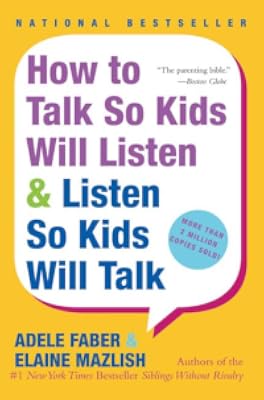
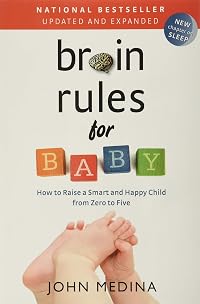
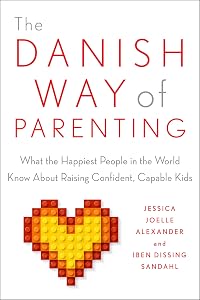
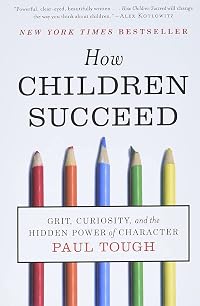





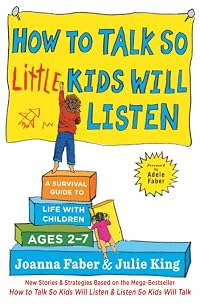

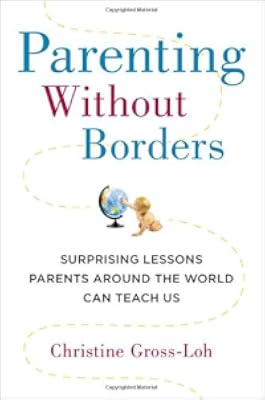

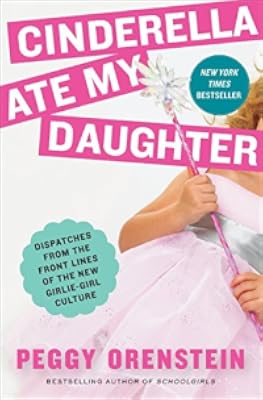


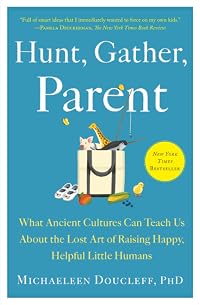









Member Recommendations

Member Reviews
Druckerman recounts her experiences being pregnant, giving birth, and raising kids as an American with a British husband in Paris.
I'm starting to dive into the wide world of parenting books with a little one on the way. I majored in French in college and have spent time in Paris, so this book appealed to me. Druckerman's stories and insights are well-composed and interesting and easy to read. As with any parenting book, I'm sure, there were things she talked about that really resonated with me, and other things that didn't. I'm definitely going to be trying a few of the French techniques and staples that Druckerman observed but of course every baby is different, so we'll have to see what sticks! 4 stars.
I'm starting to dive into the wide world of parenting books with a little one on the way. I majored in French in college and have spent time in Paris, so this book appealed to me. Druckerman's stories and insights are well-composed and interesting and easy to read. As with any parenting book, I'm sure, there were things she talked about that really resonated with me, and other things that didn't. I'm definitely going to be trying a few of the French techniques and staples that Druckerman observed but of course every baby is different, so we'll have to see what sticks! 4 stars.
narrated by Abby Craden
The backstory: I've been curious about Bringing Up Bebe since it first came out, but now that I'm pregnant (the nomadbaby is due August 9th), it seemed like a great time to finally read it. On the recommendation of Jen at Devourer of Books, I opted for the audio version.
The basics: Pamela Druckerman is a journalist and New Yorker who falls in love with a Brit and settles in Paris. Once they have a daughter, Bean, Druckerman begins to notice how different French children are than American children. They don't whine. They're not picky eaters. They sleep through the night earlier. yet when she asks French parents, they don't claim to do anything special or know what they're doing. In fact, compared to her U.S. show more friends who all espouse a variety of named parenting philosophies, the French parents insist that's just how children are.
My thoughts: One of my biggest fears about motherhood is exhaustion. I've always been a sleeper, and I don't function well on prolonged lack of sleep. Obviously, I'm aware that early motherhood will have me short on sleep, but I'm eager to find out anything that might help that period be as short as possible. In this sense, I enjoyed the first part of Bringing Up Bebe most because it focuses on the youngest children. My not-yet-born child does not yet whine in my fantasies, yet ini my head he does smile adorably in the middle-of-the-night when I wish I were sleeping.
Bringing Up Bebe begins with some background on Druckerman and her husband, which was interesting, but I was glad when she shifts the narrative to pregnancy. I didn't expect this book to include cultural differences about pregnancy, which I've read a lot about already. While I enjoyed her observations about pregnant French women, this section included the first red flags that Druckerman writes as a journalist who is not always willing to examine evidence or her own assumptions. There's nothing necessarily wrong with that stance, but throughout this book she vacillates between journalist and memoirist. This combination frustrated me as a reader at times, particularly because so many of her personal opinions she refuses to examine as a journalist are not ones I share.
Typically what I love about memoirs is having a glimpse into a person's real life. I liked that here, but I also realized for all the parts of this book I really enjoyed, I don't think Pamela Druckerman and I would be friends in real life. In fiction, I don't need my characters to be likeable as long as they're interesting and I understand their motivations. Listening to this book made me realize that preference extends to nonfiction too. Druckerman passes the interesting test--her life is fascinating, but her unwillingness to fully embrace this topic as a journalist frustrated me. For all the good observations (much more than half), there were several missed opportunities.
The verdict: There's a lot of wisdom and interesting observation about French parenting in Bringing Up Bebe. When Druckerman wrote as a journalist, I enjoyed this book much more than when she veered into more of a memoir style. There's a lot of good in this book, but I wished Druckerman would have pushed herself farther.
Audio thoughts: Abby Craden's narration was superb. Her French pronunciation (to my Anglophone ears) was accurate without being over-the-top. She read with emotion, and her voice reminds me of my favorite audiobook narrator, Cassandra Campbell. I'm glad I picked this one up on audio, as I fear Druckerman's opinions would have been more grating in print.
Rating: 4 out of 5 (4.5 out of 5 on audio) show less
The backstory: I've been curious about Bringing Up Bebe since it first came out, but now that I'm pregnant (the nomadbaby is due August 9th), it seemed like a great time to finally read it. On the recommendation of Jen at Devourer of Books, I opted for the audio version.
The basics: Pamela Druckerman is a journalist and New Yorker who falls in love with a Brit and settles in Paris. Once they have a daughter, Bean, Druckerman begins to notice how different French children are than American children. They don't whine. They're not picky eaters. They sleep through the night earlier. yet when she asks French parents, they don't claim to do anything special or know what they're doing. In fact, compared to her U.S. show more friends who all espouse a variety of named parenting philosophies, the French parents insist that's just how children are.
My thoughts: One of my biggest fears about motherhood is exhaustion. I've always been a sleeper, and I don't function well on prolonged lack of sleep. Obviously, I'm aware that early motherhood will have me short on sleep, but I'm eager to find out anything that might help that period be as short as possible. In this sense, I enjoyed the first part of Bringing Up Bebe most because it focuses on the youngest children. My not-yet-born child does not yet whine in my fantasies, yet ini my head he does smile adorably in the middle-of-the-night when I wish I were sleeping.
Bringing Up Bebe begins with some background on Druckerman and her husband, which was interesting, but I was glad when she shifts the narrative to pregnancy. I didn't expect this book to include cultural differences about pregnancy, which I've read a lot about already. While I enjoyed her observations about pregnant French women, this section included the first red flags that Druckerman writes as a journalist who is not always willing to examine evidence or her own assumptions. There's nothing necessarily wrong with that stance, but throughout this book she vacillates between journalist and memoirist. This combination frustrated me as a reader at times, particularly because so many of her personal opinions she refuses to examine as a journalist are not ones I share.
Typically what I love about memoirs is having a glimpse into a person's real life. I liked that here, but I also realized for all the parts of this book I really enjoyed, I don't think Pamela Druckerman and I would be friends in real life. In fiction, I don't need my characters to be likeable as long as they're interesting and I understand their motivations. Listening to this book made me realize that preference extends to nonfiction too. Druckerman passes the interesting test--her life is fascinating, but her unwillingness to fully embrace this topic as a journalist frustrated me. For all the good observations (much more than half), there were several missed opportunities.
The verdict: There's a lot of wisdom and interesting observation about French parenting in Bringing Up Bebe. When Druckerman wrote as a journalist, I enjoyed this book much more than when she veered into more of a memoir style. There's a lot of good in this book, but I wished Druckerman would have pushed herself farther.
Audio thoughts: Abby Craden's narration was superb. Her French pronunciation (to my Anglophone ears) was accurate without being over-the-top. She read with emotion, and her voice reminds me of my favorite audiobook narrator, Cassandra Campbell. I'm glad I picked this one up on audio, as I fear Druckerman's opinions would have been more grating in print.
Rating: 4 out of 5 (4.5 out of 5 on audio) show less
Rather than having many sets of competing and conflicting (and anxiety-inducing) parenting philosophies like in the U.S., parents in France seem to take a few basic things for granted. One of these things is that babies are people who are capable of learning things; another is that the baby must fit into the family, not be the center of it, so that adults still have "adult time." French parents also believe in the importance of teaching their kids to cope with frustration by having to wait for things; ultimately, this makes them "calmer and more resilient."
There is the idea of the "cadre," a strict framework within which children have a lot of freedom. Parents consider themselves to be teachers rather than police, and there is a word - show more "betise" - for minor acts of naughtiness that may be corrected but aren't deserving of punishment. French parents aim for "l'equilibre" (balance) but don't subsume their identities in their children, or feel as guilty as some American parents (particularly moms) do for working or taking time for themselves.
The chapters about sleeping and food provide an excellent guide that American parents can use just as well as French ones. The chapters about day care are less applicable, as there is no system in the U.S. that compares to the French creche (except the American military day care system). The U.S. doesn't even have a national standard for day care. Druckerman writes, "France has less feminist rhetoric, but it has many more institutions that enable women to work." show less
There is the idea of the "cadre," a strict framework within which children have a lot of freedom. Parents consider themselves to be teachers rather than police, and there is a word - show more "betise" - for minor acts of naughtiness that may be corrected but aren't deserving of punishment. French parents aim for "l'equilibre" (balance) but don't subsume their identities in their children, or feel as guilty as some American parents (particularly moms) do for working or taking time for themselves.
The chapters about sleeping and food provide an excellent guide that American parents can use just as well as French ones. The chapters about day care are less applicable, as there is no system in the U.S. that compares to the French creche (except the American military day care system). The U.S. doesn't even have a national standard for day care. Druckerman writes, "France has less feminist rhetoric, but it has many more institutions that enable women to work." show less
I feel like I had French parents. Actually, I grew up in Ohio, with parents who were an eclectic melange of would-be hippie born slightly too late, and stern Midwestern Germanicism. But somehow, at least according to Druckerman's assessment of French parenting, this appears to have given my mom a very French outlook.
Now all of a sudden I see why I felt out-of-sync sometimes with the preschool mom set. French mothers don't bring snacks to the park. They assume you'll eat at mealtimes. You don't have to eat all of your food, but you have to try a little of everything. They like activities, but they think a certain amount of boredom is good for a kid, and that, above all, parents need time to enjoy each other's company, and to do their show more own thing. These concepts seem like the stuff of my childhood, and I assumed, common sense. But Druckerman is right, they DO clash with the modern American way of parenting sometimes. And they shouldn't.
I loved this book. I loved watching Druckerman come of age as a parent. It was like having a secret window into what my mom must have done. It gives me hope for the future. show less
Now all of a sudden I see why I felt out-of-sync sometimes with the preschool mom set. French mothers don't bring snacks to the park. They assume you'll eat at mealtimes. You don't have to eat all of your food, but you have to try a little of everything. They like activities, but they think a certain amount of boredom is good for a kid, and that, above all, parents need time to enjoy each other's company, and to do their show more own thing. These concepts seem like the stuff of my childhood, and I assumed, common sense. But Druckerman is right, they DO clash with the modern American way of parenting sometimes. And they shouldn't.
I loved this book. I loved watching Druckerman come of age as a parent. It was like having a secret window into what my mom must have done. It gives me hope for the future. show less
Finally! An American book on parenting that makes sense! Like Dominique in the book, I am Druckerman's doppelganger: raised in France, I now live and raise my child in North America. Like her, I was torn between what culturally made sense to me and what I was observing around me. Despite getting influenced by my environment (incipient guilt, lack of authority), I mostly stuck to my French roots, namely when it came to having time to myself, encouraging autonomy and explaining the whys and importance of limits.
Reading Druckerman was both a cultural validation and a reminder that - for the most part - it is possible to have well-behaved children. Her sense of humour, curiosity and honesty made the read all the more compelling and show more entertaining, an all around delight both for information and pleasure.
I highly recommend this book for mothers-to-be and mothers of young children. show less
Reading Druckerman was both a cultural validation and a reminder that - for the most part - it is possible to have well-behaved children. Her sense of humour, curiosity and honesty made the read all the more compelling and show more entertaining, an all around delight both for information and pleasure.
I highly recommend this book for mothers-to-be and mothers of young children. show less
I’ve been gravitating toward parenting books ever since my daughter was born, and this one caught my eye immediately. The author hooked me from the beginning. Like her, I also found myself dying to know why French children are so much better behaved than North American kids. And while I can’t say I came away with any earth-shattering revelations, I greatly enjoyed the reading experience. Many of the techniques French parents use seem to come down to common sense: don’t hover, teach patience, live your own life, don’t let your entire world revolve around your children, maintain your authority in a loving way, and parent with confidence. French moms don’t believe in the myth of the perfect mom - they know she doesn’t exist. show more But they use the tools they have at their disposal to parent to the best of their abilities. And for them, that’s enough. Their children respect them and love them, but they also embrace independence very early on. They’re allowed to explore and learn and make mistakes. I found myself nodding along with much of the book, and I really enjoyed the conversational style in which it was written. This was as much an ex-pat memoir as it was a parenting manual, and I walked away after turning the last page feeling like I’d just had coffee with the author. Highly recommended! show less
I was curious about the buzz this one received and since I’m pregnant, it seemed to be the perfect time to check it out. I went into it assuming that Druckerman’s argument would be that everything French is better. I was prepared to take that with a grain of salt and move on. Instead I discovered that, although she was living in Paris, she wasn’t a huge fan of France or the French. That being said, she was in awe of French parenting and the seemingly effortless success they had raising their children.
Druckerman approaches the whole subject as a journalist, not as a mother desperate to figure out what works. I appreciated her factual approach. She included anecdotes about her own experiences, but relied more heavily on what she show more learned from other French mothers. I thought it was fascinating to learn what cultural differences are ingrained in French and American parents, respectively.
There is plenty that I know wouldn’t work with my particular style. The sheer pressure put on women to look perfect as quickly as possible after giving birth is a bit overwhelming, but there were plenty of other things to learn from. I loved seeing how the day cares in France, called a crèche, work. Where American day cares have a negative stigma attached, crèches are the opposite.
BOTTOM LINE: Interesting and informative. There are a few parenting styles that I hope I’ll keep in mind as I attempt to find what works best for my family. I particularly liked the French approach to encouraging your kids to eat a wide variety of food and sleeping through the night as early as possible. show less
Druckerman approaches the whole subject as a journalist, not as a mother desperate to figure out what works. I appreciated her factual approach. She included anecdotes about her own experiences, but relied more heavily on what she show more learned from other French mothers. I thought it was fascinating to learn what cultural differences are ingrained in French and American parents, respectively.
There is plenty that I know wouldn’t work with my particular style. The sheer pressure put on women to look perfect as quickly as possible after giving birth is a bit overwhelming, but there were plenty of other things to learn from. I loved seeing how the day cares in France, called a crèche, work. Where American day cares have a negative stigma attached, crèches are the opposite.
BOTTOM LINE: Interesting and informative. There are a few parenting styles that I hope I’ll keep in mind as I attempt to find what works best for my family. I particularly liked the French approach to encouraging your kids to eat a wide variety of food and sleeping through the night as early as possible. show less
Members
- Recently Added By
Published Reviews
ThingScore 25
Much of the so-called French child rearing wisdom compiled here is obvious. ... Ms. Druckerman is oddly unjournalistic here. "Bringing Up Bébé" is essentially a series of generalizations based on her American and French friends and her own experiences as a mother.
added by lquilter
Lists

Books Read in 2015
3,299 works; 126 members
Author Information

20 Works 1,818 Members
Awards and Honors
Distinctions
Notable Lists
Common Knowledge
- Alternate titles
- French Children Don’t Throw Food
- Original publication date
- 2012
- Important places
- Paris, France
- Epigraph
- Les petits poissons dans l'eau
Nagent aussi bien que les gros.
The little fish in the water
Swim as well as the big ones do.
-- French children's song - Dedication
- For Simon,
who makes everything matter - First words
- When my daughter is eighteen months old, my husband and I decide to take her on a little summer holiday.
- Last words
- (Click to show. Warning: May contain spoilers.)We even have coffee at the end of the meal.
- Blurbers
- Chua, Amy; Guiliano, Mireille
Classifications
- Genres
- Nonfiction, General Nonfiction, Biography & Memoir
- DDC/MDS
- 649.10944 — Applied science & technology Home economics & family management Child rearing; home care of people with illnesses and disabilities by family and friends Parenting Biography; History By Place Europe
- LCC
- HQ769 .D78 — Social sciences The family. Marriage, Women and Sexuality The Family. Marriage. Women The family. Marriage. Home Children. Child development
- BISAC
Statistics
- Members
- 1,272
- Popularity
- 19,328
- Reviews
- 48
- Rating
- (3.86)
- Languages
- 12 — Chinese, Czech, Dutch, English, Finnish, French, German, Polish, Portuguese, Russian, Spanish, Swedish
- Media
- Paper, Audiobook, Ebook
- ISBNs
- 33
- UPCs
- 1
- ASINs
- 9