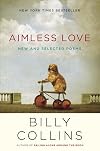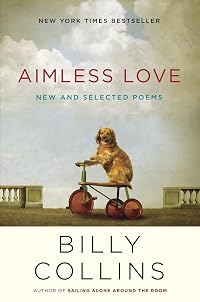
Aimless Love: New and Selected Poems
by Billy Collins
On This Page
Description
Presents a volume of more than fifty new poems accompanied by a generous gathering from the author's collections of the past decade, lending insight into his overall poetic achievements and his use of playful, ironic, and melodic language.Tags
Recommendations




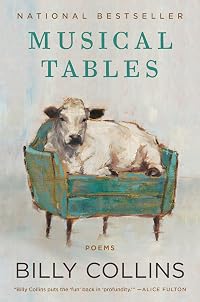
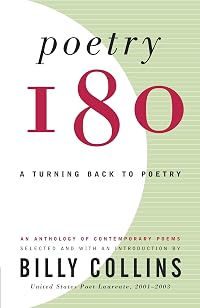
Member Reviews
Billy Collins is far and away my favorite poet. His simple language, profound insights, and humorous poems are my ideal, My goal is to write a poem which causes a reader to think, “that reminds me of Billy Collins.” Whenever Collins comes out with a new volume of poetry, I buy and devour a it as quickly as I can. Published this month, Aimless Love: New and Selected Poems is his tenth collection.
In this case, I immediately flipped to the last section containing the new poems. Fifty nuggets awaited my attention. My favorite is “Foundling.” “How unusual to be living a life of continual self-expression, / jotting down little things, / noticing a leaf being carried down a stream, / then wondering what will become of me, // and show more finally to work alone under a lamp / as if everything depended on this, / groping blindly down a page, like someone lost in a forest. // And to think it all began one night / on the steps of a nunnery / where I lay gazing up from a sewing basket, / which was doubling for a proper baby carrier, // staring into the turbulent winter sky, too young to wonder about anything / including my recent abandonment-- / but it was there that I committed // my first act of self-expression, / sticking out my infant tongue / and receiving in return (I can see it now) / a large, pristine snowflake much like any other” (175).
His nature poems also affect me deeply. In “Osprey,” Collins sketches a scene I have lived through myself many times. He writes, “Oh, large brown, thickly-feathered creature / with a distinctive white head, / you, perched on the top branch / of a tree near the lake shore, // as soon as I guide this boat back to the dock / and walk up the grassy path to the house, / before I unzip my windbreaker / and lift the binoculars from around my neck, // before I wash the gasoline from my hands, / before I tell anyone I am back, / and before I hang the ignition key on its nail, / or pour myself a drink-- // I’m thinking a vodka soda with lemon-- / I will look you up in my / illustrated guide to North American birds / and I promise I will learn what you are called” (208).
Collins has written a number of poems about writing and poetry, and this volume contains one about reading. The title is “Reader,” and he wrote: “Looker, gazer, skimmer, skipper, / thumb-licking page turner, peruser, / you getting your print-fix for the day, pencil chewer, not taker, marginalianist / with your checks and X’s / firs-timer or revisiter, / browser, speedster, English Major, / flight-ready girl, melancholy boy, / invisible companion, thief, blind date, perfect stranger-- // that is me rushing to the window / to see if it’s you passing under the shade trees / with a baby carriage or a dog on a leash, / me picking up the phone / to imagine your unimaginable number, me standing by a map of the world / wondering where you are-- / alone on a bench in a train station / or falling asleep, the book sliding to the floor?” (xix).
Aimless Love by Billy Collins is a wonderful way to introduce yourself to his work. I bet you will soon find a collection of all his volumes of poetry, silently standing guard amid the Cs on a bookshelf, patiently awaiting your call. 5 stars [NOTE: All quotes checked against published edition]
--Jim, 10/13/13 show less
In this case, I immediately flipped to the last section containing the new poems. Fifty nuggets awaited my attention. My favorite is “Foundling.” “How unusual to be living a life of continual self-expression, / jotting down little things, / noticing a leaf being carried down a stream, / then wondering what will become of me, // and show more finally to work alone under a lamp / as if everything depended on this, / groping blindly down a page, like someone lost in a forest. // And to think it all began one night / on the steps of a nunnery / where I lay gazing up from a sewing basket, / which was doubling for a proper baby carrier, // staring into the turbulent winter sky, too young to wonder about anything / including my recent abandonment-- / but it was there that I committed // my first act of self-expression, / sticking out my infant tongue / and receiving in return (I can see it now) / a large, pristine snowflake much like any other” (175).
His nature poems also affect me deeply. In “Osprey,” Collins sketches a scene I have lived through myself many times. He writes, “Oh, large brown, thickly-feathered creature / with a distinctive white head, / you, perched on the top branch / of a tree near the lake shore, // as soon as I guide this boat back to the dock / and walk up the grassy path to the house, / before I unzip my windbreaker / and lift the binoculars from around my neck, // before I wash the gasoline from my hands, / before I tell anyone I am back, / and before I hang the ignition key on its nail, / or pour myself a drink-- // I’m thinking a vodka soda with lemon-- / I will look you up in my / illustrated guide to North American birds / and I promise I will learn what you are called” (208).
Collins has written a number of poems about writing and poetry, and this volume contains one about reading. The title is “Reader,” and he wrote: “Looker, gazer, skimmer, skipper, / thumb-licking page turner, peruser, / you getting your print-fix for the day, pencil chewer, not taker, marginalianist / with your checks and X’s / firs-timer or revisiter, / browser, speedster, English Major, / flight-ready girl, melancholy boy, / invisible companion, thief, blind date, perfect stranger-- // that is me rushing to the window / to see if it’s you passing under the shade trees / with a baby carriage or a dog on a leash, / me picking up the phone / to imagine your unimaginable number, me standing by a map of the world / wondering where you are-- / alone on a bench in a train station / or falling asleep, the book sliding to the floor?” (xix).
Aimless Love by Billy Collins is a wonderful way to introduce yourself to his work. I bet you will soon find a collection of all his volumes of poetry, silently standing guard amid the Cs on a bookshelf, patiently awaiting your call. 5 stars [NOTE: All quotes checked against published edition]
--Jim, 10/13/13 show less
 This review was written for LibraryThing Early Reviewers.
Billy Collins' poems make for good company. How many poets can you say that about? He has a light, engaging touch even when taking on darker topics. You can share your favorites with friends and get a response other than, why in the world do you waste time reading poetry? As one critic said, when you look up the word "accessible", you find him grinning back at you.
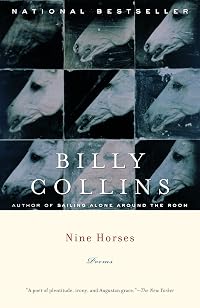
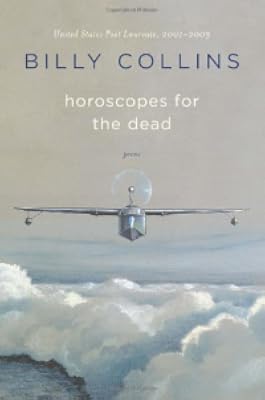
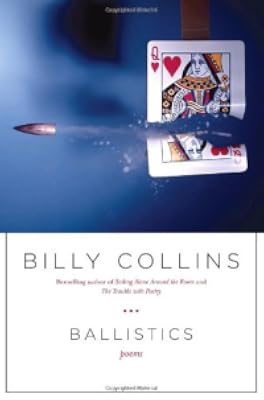
His newest collection, Aimless Love, combines new poems with selected ones from his Nine Horses, The Trouble With Poetry, Ballistics and Horoscopes For the Dead. They're all worthwhile reading, and I've already quoted some on my thread, e.g. Litany (making fun of poetic comparisons: "You are the white apron of the baker/and the marsh birds suddenly in flight. /However, you are show more not the wind in the orchard/the plums on the counter/ or the house of cards"), and No Time (where his father in the cemetery rises up from his grave "to give me that look/ of knowing disapproval/ while my mother calmly tells him to lie back down").
One of the most moving is Lanyard, about a gift he made for his mother:
The other day as I was ricocheting slowly
off the pale blue walls of this room,
bouncing from typewriter to piano,
from bookshelf to an envelope lying on floor,
I found myself in the L section of the dictionary
where my eyes fell upon the word "lanyard".
No cookie nibbled by a French novelist
could send me more suddenly into the past -
a past where I sat at a workbench at a camp
by a deep Adirondack lake
learning how to braid thin plastic straps
into a lanyard, a gift for my mother.
I had never seen anyone use a lanyard
or wear one, if that's what you did with them,
but that did not keep me from crossing
strand over strand, again and again
until I had made a boxy
red and white lanyard for my mother.
She gave me life and milk from her breasts,
And I gave her a lanyard.
She nursed me in many a sick room,
lifted teaspoons of medicine to my lips,
set cold face-cloths on my forehead,
and then led me out into the airy light
and taught me to walk and swim.
And, I, in turn, presented her with a lanyard.
Here are thousands of meals, she said,
and here is clothing and a good education.
And here is your lanyard, I replied,
which I made with a little help from a counselor.
Here is a breathing body and a beating heart,
strong legs, bones and teeth,
and two clear eyes to read the world, she whispered,
and here, I said, is the lanyard I made at camp.
And here, I wish to say to her now,
is a smaller gift - not the archaic truth
that you can never repay your mother,
but the rueful admission that when she took
the two-tone lanyard from my hands,
I was as sure as a boy could be
that this useless, worthless thing I wove
out of boredom would be enough to make us even.
* * * * *
Five stars. show less
His newest collection, Aimless Love, combines new poems with selected ones from his Nine Horses, The Trouble With Poetry, Ballistics and Horoscopes For the Dead. They're all worthwhile reading, and I've already quoted some on my thread, e.g. Litany (making fun of poetic comparisons: "You are the white apron of the baker/and the marsh birds suddenly in flight. /However, you are show more not the wind in the orchard/the plums on the counter/ or the house of cards"), and No Time (where his father in the cemetery rises up from his grave "to give me that look/ of knowing disapproval/ while my mother calmly tells him to lie back down").
One of the most moving is Lanyard, about a gift he made for his mother:
The other day as I was ricocheting slowly
off the pale blue walls of this room,
bouncing from typewriter to piano,
from bookshelf to an envelope lying on floor,
I found myself in the L section of the dictionary
where my eyes fell upon the word "lanyard".
No cookie nibbled by a French novelist
could send me more suddenly into the past -
a past where I sat at a workbench at a camp
by a deep Adirondack lake
learning how to braid thin plastic straps
into a lanyard, a gift for my mother.
I had never seen anyone use a lanyard
or wear one, if that's what you did with them,
but that did not keep me from crossing
strand over strand, again and again
until I had made a boxy
red and white lanyard for my mother.
She gave me life and milk from her breasts,
And I gave her a lanyard.
She nursed me in many a sick room,
lifted teaspoons of medicine to my lips,
set cold face-cloths on my forehead,
and then led me out into the airy light
and taught me to walk and swim.
And, I, in turn, presented her with a lanyard.
Here are thousands of meals, she said,
and here is clothing and a good education.
And here is your lanyard, I replied,
which I made with a little help from a counselor.
Here is a breathing body and a beating heart,
strong legs, bones and teeth,
and two clear eyes to read the world, she whispered,
and here, I said, is the lanyard I made at camp.
And here, I wish to say to her now,
is a smaller gift - not the archaic truth
that you can never repay your mother,
but the rueful admission that when she took
the two-tone lanyard from my hands,
I was as sure as a boy could be
that this useless, worthless thing I wove
out of boredom would be enough to make us even.
* * * * *
Five stars. show less
A good reader of poetry, Auden said, should like lists. Certainly a reader of Billy Collins had better like them: at the center of many of his best poems is a whimsical catalog. Homer had his ships, and Whitman the teeming multifariousness of a continent. Collins likes to turn out the pockets of his mind and show us its chimerical juxtapositions: prodigies and parenting (“at your age...Joan of Arc was leading the French army to victory,/ and Blaise Pascal had cleaned up his room”); married love and Michael Caine; and his lists, too, are more often of the improbable or impossible than the (even ostensibly) actual, “the animals/ who were forgotten by the Ark.”
So there are subjunctive lists: books that might be shot show more (“Ballistics”), possible poems (“The Suggestion Box”); and negative lists: a wry and witty variation on Lamb’s “Dream Children” (“they all made me as proud/ as I was on the day they failed to be born”); “Horoscopes for the Dead”; natural wonders he didn’t see (“The Sandhill Cranes of Nebraska”).
This apophatic method, even as it slyly reminds us of the compensatory powers of imagination, turns into a favorite game for Collins, which might be called Green Eggs and Ham for Grownups:
I have brought neither book nor newspaper
since reading material is considered cheating.
Eating alone, they say, means eating alone,
not in the company of Montaigne
or the ever-engaging Nancy Mitford.
(“Dining Alone”)
The negations ascend very aptly to self-parody in the mock-sonnet “Looking for a Friend in a Crowd of Arriving Passengers” (13 lines of “Not John Whalen” with a sting in the tail: “John Whalen.”)
That poem is pure joke, but Collins is also funny when he is not kidding, as in a very delicately handled poem about the asymmetry of love between parent and child (“The Lanyard”):
She gave me life and milk from her breasts,
and I gave her a lanyard.
She nursed me in many a sick room,
lifted teaspoons of medicine to my lips,
set cold face-cloths on my forehead,
and then led me out into the airy light
and taught me to walk and swim,
and I, in turn, presented her with a lanyard.
Here are thousands of meals, she said,
and here is clothing and a good education.
And here is your lanyard, I replied....
There is a good deal of stylistic courage, handsomely repaid in this poem, in the risk of such self-puncturing shifts in tone. Collins is in fact very often just a rhyming habit away from sounding like Ogden Nash, a line he shows us he is not afraid to cross in the delightful “Lesson for the Day,” in which he contemplates a possible sequel to Marianne Moore’s poem “To a Steam Roller”:
And no one wants to avoid seeing
a flattened Marianne Moore hanging out to dry
on a clothesline or propped up
as a display in a store window more than I. show less
So there are subjunctive lists: books that might be shot show more (“Ballistics”), possible poems (“The Suggestion Box”); and negative lists: a wry and witty variation on Lamb’s “Dream Children” (“they all made me as proud/ as I was on the day they failed to be born”); “Horoscopes for the Dead”; natural wonders he didn’t see (“The Sandhill Cranes of Nebraska”).
This apophatic method, even as it slyly reminds us of the compensatory powers of imagination, turns into a favorite game for Collins, which might be called Green Eggs and Ham for Grownups:
I have brought neither book nor newspaper
since reading material is considered cheating.
Eating alone, they say, means eating alone,
not in the company of Montaigne
or the ever-engaging Nancy Mitford.
(“Dining Alone”)
The negations ascend very aptly to self-parody in the mock-sonnet “Looking for a Friend in a Crowd of Arriving Passengers” (13 lines of “Not John Whalen” with a sting in the tail: “John Whalen.”)
That poem is pure joke, but Collins is also funny when he is not kidding, as in a very delicately handled poem about the asymmetry of love between parent and child (“The Lanyard”):
She gave me life and milk from her breasts,
and I gave her a lanyard.
She nursed me in many a sick room,
lifted teaspoons of medicine to my lips,
set cold face-cloths on my forehead,
and then led me out into the airy light
and taught me to walk and swim,
and I, in turn, presented her with a lanyard.
Here are thousands of meals, she said,
and here is clothing and a good education.
And here is your lanyard, I replied....
There is a good deal of stylistic courage, handsomely repaid in this poem, in the risk of such self-puncturing shifts in tone. Collins is in fact very often just a rhyming habit away from sounding like Ogden Nash, a line he shows us he is not afraid to cross in the delightful “Lesson for the Day,” in which he contemplates a possible sequel to Marianne Moore’s poem “To a Steam Roller”:
And no one wants to avoid seeing
a flattened Marianne Moore hanging out to dry
on a clothesline or propped up
as a display in a store window more than I. show less
This review was written for LibraryThing Early Reviewers.it is the poet's duty
to fall in love
at least once
every day
I wrote that in 1989, which feels like another lifetime. I have needed this book for a very long time, because I had forgotten how to love aimlessly--"No lust, no slam of the door".
Like Donald Hall, Collins shows us the beauty of the mundane. These carefully crafted verses don't feel like "poetry", which is the highest complement I can give them. I think I am going to love this book, the way I love the first drag on a cigarette or a well-spun curve-ball, and come back to it again and again.
to fall in love
at least once
every day
I wrote that in 1989, which feels like another lifetime. I have needed this book for a very long time, because I had forgotten how to love aimlessly--"No lust, no slam of the door".
Like Donald Hall, Collins shows us the beauty of the mundane. These carefully crafted verses don't feel like "poetry", which is the highest complement I can give them. I think I am going to love this book, the way I love the first drag on a cigarette or a well-spun curve-ball, and come back to it again and again.
This review was written for LibraryThing Early Reviewers.Divorce
Once, two spoons in bed,
now tined forks
across a granite table
and the knives they have hired.
Flock
"It has been calculated that each copy of the Gutenberg Bible … required the skins of 300 sheep. --from an article on printing"
I can see them squeezed into the holding pen
behind the stone building
where the printing press is housed,
all of them squirming around
to find a little room
and looking so much alike
it would be nearly impossible
to count them,
and there is no telling
which one will carry the news
that the Lord is a shepherd,
one of the few things they already know.
This is a compilation of nearly 150 poems, a third of them new and two-thirds pulled from four previous collections published in the 2000s.
It's my introduction to Collins show more and I'm hooked. His poems are tiny stories, about everything, with turns of phrase and bursts of imagination. He so exposes his self, and his inspiration is clearly in the details of life.
My favorites include “Istanbul” (I felt I was getting the Turkish bath); “The Lanyard” (a boy’s naïveté of what it takes to raise a child); and (from a dad) the scathing/loving “To My Favorite 17-Year-Old High-school Girl” (video).
My only hesitation is they’re so accessible that I feel guilty about their ease and wistful that their lack of complexity doesn’t leave me turning them over afterward in search of understanding. I was interested that he claims a poet writes “3 flawless poems in a lifetime if you’re lucky” and I wonder what makes a poem flawless. I marked so many poems in the section from The Trouble with Poetry that I think I must read that whole volume. I’ve also added to my wishlist A Coney Island of the Mind by Lawrence Ferlinghetti --
the bicycling poet of San Francisco
whose little amusement park of a book
I carried in a side pocket of my uniform
up and down the treacherous halls of high school. show less
Once, two spoons in bed,
now tined forks
across a granite table
and the knives they have hired.
Flock
"It has been calculated that each copy of the Gutenberg Bible … required the skins of 300 sheep. --from an article on printing"
I can see them squeezed into the holding pen
behind the stone building
where the printing press is housed,
all of them squirming around
to find a little room
and looking so much alike
it would be nearly impossible
to count them,
and there is no telling
which one will carry the news
that the Lord is a shepherd,
one of the few things they already know.
This is a compilation of nearly 150 poems, a third of them new and two-thirds pulled from four previous collections published in the 2000s.
It's my introduction to Collins show more and I'm hooked. His poems are tiny stories, about everything, with turns of phrase and bursts of imagination. He so exposes his self, and his inspiration is clearly in the details of life.
My favorites include “Istanbul” (I felt I was getting the Turkish bath); “The Lanyard” (a boy’s naïveté of what it takes to raise a child); and (from a dad) the scathing/loving “To My Favorite 17-Year-Old High-school Girl” (video).
My only hesitation is they’re so accessible that I feel guilty about their ease and wistful that their lack of complexity doesn’t leave me turning them over afterward in search of understanding. I was interested that he claims a poet writes “3 flawless poems in a lifetime if you’re lucky” and I wonder what makes a poem flawless. I marked so many poems in the section from The Trouble with Poetry that I think I must read that whole volume. I’ve also added to my wishlist A Coney Island of the Mind by Lawrence Ferlinghetti --
the bicycling poet of San Francisco
whose little amusement park of a book
I carried in a side pocket of my uniform
up and down the treacherous halls of high school. show less
This review was written for LibraryThing Early Reviewers.For many years, I have had the sort of relationship with poetry that I like to think is shared by many other people: I love poetry in theory, but in practice it is more than a little problematic. In my own case, most of the truly great poems I know, I have learnt through musical settings, not through my own explorations. And although I may love the particular poem by Blake, Tennyson, Hardy, Teasdale, Millay, or whomever, it has often happened that when I go to look up their other works, I get overwhelmed and discouraged by the sheer volume of printed poems.
It is easy to love a poem that has already been lauded, anthologized, quoted, and given the honor of a musical setting (or several). But if you want to find another poem to love, and show more you want to 'discover' it all by yourself, while wading through a brick of collected works, well, that is much more difficult.
I have found that a desire to know and love poetry is not enough to make all of the beautiful poems flock to my side and explain themselves to me. As with anything else, it takes time, and it takes thought. But thankfully, sometimes it just takes the right jumping-on point.
I feel like Billy Collins' poems live in a place that is a really good jumping-on point for anyone who wants to love poetry but isn't sure how. They are definitely serious 'literary' poems, that carry with them all the weight and respect that is their due. But they are also fun, funny, and even silly in their own way. When I read Billy Collins, I often feel that he's sharing a private joke with just me, or having a lark with a silly thing he just thought of. But then he will add something, or shift in some way just enough so that the silly thing is now also touching, and thoughtful, and maybe even heartbreaking.
Aimless Love contains a selection of new poems, but also selections from Collins' previous collections Nine Horses, The Trouble With Poetry, Ballistics, and Horoscopes for the Dead. I recommend Aimless Love highly to anyone who loves poetry or who wants to.
Here are a few of my favorites from this collection:
Nine Horses
Litany
The Lanyard
Tension
(detail)
Lakeside
My Hero
Lesson for the Day
The Suggestion Box
Central Park
American Airlines #371
"I Love You" show less
It is easy to love a poem that has already been lauded, anthologized, quoted, and given the honor of a musical setting (or several). But if you want to find another poem to love, and show more you want to 'discover' it all by yourself, while wading through a brick of collected works, well, that is much more difficult.
I have found that a desire to know and love poetry is not enough to make all of the beautiful poems flock to my side and explain themselves to me. As with anything else, it takes time, and it takes thought. But thankfully, sometimes it just takes the right jumping-on point.
I feel like Billy Collins' poems live in a place that is a really good jumping-on point for anyone who wants to love poetry but isn't sure how. They are definitely serious 'literary' poems, that carry with them all the weight and respect that is their due. But they are also fun, funny, and even silly in their own way. When I read Billy Collins, I often feel that he's sharing a private joke with just me, or having a lark with a silly thing he just thought of. But then he will add something, or shift in some way just enough so that the silly thing is now also touching, and thoughtful, and maybe even heartbreaking.
Aimless Love contains a selection of new poems, but also selections from Collins' previous collections Nine Horses, The Trouble With Poetry, Ballistics, and Horoscopes for the Dead. I recommend Aimless Love highly to anyone who loves poetry or who wants to.
Here are a few of my favorites from this collection:
Nine Horses
Litany
The Lanyard
Tension
(detail)
Lakeside
My Hero
Lesson for the Day
The Suggestion Box
Central Park
American Airlines #371
"I Love You" show less
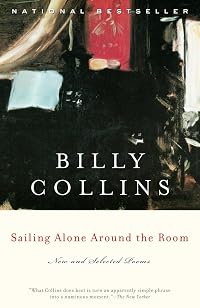
This review was written for LibraryThing Early Reviewers.AIMLESS LOVE is a delight. The first poem hooked me, with the reader getting a “print-fix for the day.” Of course, I’ve been a Billy Collins fan since I stumbled upon his SAILING ALONE AROUND THE ROOM (one of my all-time favorite books of poetry).
Collins has a way of connecting with people on a personal level. You’re tempted to think of it as poetry about ordinary things in plain language, but when you reread a poem, you’ll see that there are marvelous twists and ways of looking at things in an unusual way. There were some phrases that were poems all by themselves: “under the roof of a paragraph”; “the evening wedding of the knife and fork”; “the banging of the water hammer that will frighten the cold out of the show more room”; “sentinel thorns, whose employment it is to guard the rose”; “as the sun helps itself down the sky”… I could fill this review with his unique word play alone.
And so many pieces spoke to my poet’s heart. Are poets able to ever just look around without feeling the need to write about what we see? Does someone else always have the next great topic in mind that he or she is sure we should turn into a poem? “Villanelle” (one of the NEW in NEW AND SELECTED here) made me laugh as that form (dating back to the late 1500s) seems to be hot again these days and I’ve been avoiding trying my hand at one.
If you thumb through my copy of AIMLESS, you’ll see it splattered with underlined words and whole stanzas bracketed and highlighted lines and inked hearts on the ones I can’t get out of my head.
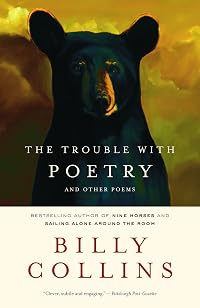
From “The Trouble with Poetry” (originally from his book of the same title):
the trouble with poetry is
that it encourages the writing of more poetry
I hope it does, Mr. Collins. I’m already looking forward to the next book. show less
Collins has a way of connecting with people on a personal level. You’re tempted to think of it as poetry about ordinary things in plain language, but when you reread a poem, you’ll see that there are marvelous twists and ways of looking at things in an unusual way. There were some phrases that were poems all by themselves: “under the roof of a paragraph”; “the evening wedding of the knife and fork”; “the banging of the water hammer that will frighten the cold out of the show more room”; “sentinel thorns, whose employment it is to guard the rose”; “as the sun helps itself down the sky”… I could fill this review with his unique word play alone.
And so many pieces spoke to my poet’s heart. Are poets able to ever just look around without feeling the need to write about what we see? Does someone else always have the next great topic in mind that he or she is sure we should turn into a poem? “Villanelle” (one of the NEW in NEW AND SELECTED here) made me laugh as that form (dating back to the late 1500s) seems to be hot again these days and I’ve been avoiding trying my hand at one.
If you thumb through my copy of AIMLESS, you’ll see it splattered with underlined words and whole stanzas bracketed and highlighted lines and inked hearts on the ones I can’t get out of my head.
From “The Trouble with Poetry” (originally from his book of the same title):
the trouble with poetry is
that it encourages the writing of more poetry
I hope it does, Mr. Collins. I’m already looking forward to the next book. show less
This review was written for LibraryThing Early Reviewers.Members
- Recently Added By
Lists

Top Five Books of 2013
1,562 works; 721 members

Poetry Corner
187 works; 15 members

Best Books Won from LibraryThing Early Reviewers
11 works; 3 members

Favourite Books
1,819 works; 316 members

Favorite Recent Poetry: 1980-2022
178 works; 70 members

Books We Discovered On LibraryThing
530 works; 130 members

Poetry volumes by single author
121 works; 8 members
Author Information

42+ Works 12,835 Members
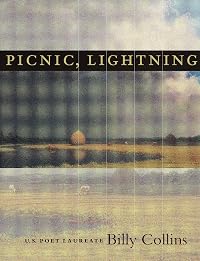
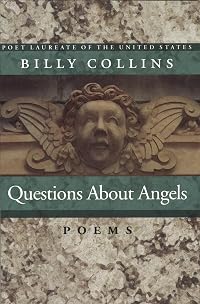
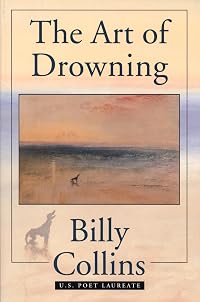
Billy Collins has published six collections of poetry, including Questions About Angels and The Art of Drowning, Picnic, Lightning, his latest, sold more than 25,000 copies in its first year. He teaches at Lehman College of the City University of New York and at Sarah Lawrence College. He was named U.S. Poet Laureate in June 2000. (Bowker Author show more Biography) Billy Collins was born in New York City in 1941. He earned a BA from the College of the Holy Cross, and both an MA and PhD from the University of California-Riverside. Collins conducted summer poetry workshops at University College Galway and is the Poet in Residence at Burren College of Art in Ireland. He is also a professor of English at Lehman College (CUNY). In 1992, Collins was chosen to be the Literary Lion of the New York Public Library. He was named U.S. Poet Laureate in 2001 and held the title until 2003. Collins then served as Poet Laureate for the State of New York from 2004 until 2006. His poetry has appeared in anthologies, textbooks and periodicals including Poetry, The American Poetry Review, The American scholar, Harper's, The Paris Review and The New Yorker. He is the author of six books of poetry including "The Art of Drowning." His poems have also been selected to appear in The Best American Poetry of 1992, 1993 and 1997. His works have won various awards including the Bess Hokin Prize, the Frederick Bock Prize, the Oscar Blumenthal Prize and the Levinson Prize, all awarded by Poetry. He has received fellowships from the New York Foundation for the Arts, the National Endowment for the Arts and the Guggenheim Foundation. His collection of poems entitled Aimless Love made numerous best-seller lists in 2013. (Bowker Author Biography) show less
Awards and Honors
Notable Lists
Common Knowledge
- Canonical title
- Aimless Love: New and Selected Poems
- Alternate titles
- Aimless Love: A Selection of Poems
- Original publication date
- 2013
Classifications
Statistics
- Members
- 830
- Popularity
- 33,144
- Reviews
- 55
- Rating
- (4.19)
- Languages
- English
- Media
- Paper, Audiobook, Ebook
- ISBNs
- 10
- ASINs
- 5