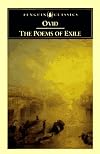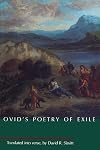
Tristia + Epistulae ex ponto + Ibis [in translation]
by Ovid
On This Page
Description
In the year A.D. 8, Emperor Augustus sentenced the elegant, brilliant, and sophisticated Roman poet Ovid to exile-permanently, as it turned out-at Tomis, modern Constantza, on the Romanian coast of the Black Sea. The real reason for the emperor's action has never come to light, and all of Ovid's subsequent efforts to secure either a reprieve or, at the very least, a transfer to a less dangerous place of exile failed. Two millennia later, the agonized, witty, vivid, nostalgic, and often slyly show more malicious poems he wrote at Tomis remain as fresh as the day they were written, a testament for exiles everywhere, in all ages. The two books of the Poems of Exile, the Lamentations (Tristia) and the Black Sea Letters (Epistulae ex Ponto), chronicle Ovid's impressions of Tomis-its appalling winters, bleak terrain, and sporadic raids by barbarous nomads-as well as his aching memories and ongoing appeals to his friends and his patient wife to intercede on his behalf. While pretending to have lost his old literary skills and even to be forgetting his Latin, in the Poems of Exile Ovid in fact displays all his virtuoso poetic talent, now concentrated on one objective: ending the exile. But his rhetorical message falls on obdurately deaf ears, and his appeals slowly lose hope. A superb literary artist to the end, Ovid offers an authentic, unforgettable panorama of the death-in-life he endured at Tomis. show lessTags
Recommendations

















Member Reviews
Why was Ovid banished to Tomis? No one really knows for sure. Augustus’ daughter Julia had already been banished for her over-the-top promiscuous lifestyle, and we know that Ovid’s poetry definitely promoted that sort of thing. He was even asked by the emperor to clean it up. Of course, he refused. Was his refusal perceived as treason? Did Augustus ultimately blame him for his daughter’s behavior? Or did it come out that he had been one of her paramours? Who knows.
Some have said that banishment from Rome during its flowering age was worse than being executed. At least when you’re dead, all of your trials and hardships are dead with you. But they are only intensified when you ponder that all of your friends and family are still show more in the bosom of Rome, enjoying all it has to offer, and you’re stuck in some faraway hell hole. It would seem Ovid was of this mind.
Tomis, modern day Constanţa, Romania, on the Black Sea coast, is now a resort. Look it up. It’s gorgeous! Nice beach, great weather, what’s not to like? But did Ovid see it like that? No, he hated it. And he despised the yokels he was now forced to live amongst. To him, they were little more than animals.
But to them, he was a celebrity. They felt honored that he was now living with them, practically worshipped him, and wanted nothing more than to cater to his every whim. Yet he barely tolerated them and ran them down every chance he could in his letters. They weren’t aware of his true feelings about them until someone happened to read one of his outgoing letters to his wife, where, as usual, he is running them down. Word quickly gets around about how he really feels about them, and from then on they want nothing to do with him. He then finds out what it really means to be banished.
The stereotypical Roman was supposed to be stoical, practical, tough, etc.. These letters reveal Ovid to be anything but. Instead of accepting his fate, and trying to make the best of his situation, Ovid whines and complains to no end. He begs his wife, who remained in Rome, to plead with Augustus for forgiveness. Did she? I doubt it. She was probably glad to be rid of him.
Although I did enjoy reading it (the dude could write, you know), I sometimes found myself shouting at him to just shut up and stop whining already. Just accept your fate and deal with it! You call yourself a roman?! You’re worthless and weak! It’s a pity that someone who possessed such poetic talent was ultimately reduced to being a pathetic, miserable little man. show less
Some have said that banishment from Rome during its flowering age was worse than being executed. At least when you’re dead, all of your trials and hardships are dead with you. But they are only intensified when you ponder that all of your friends and family are still show more in the bosom of Rome, enjoying all it has to offer, and you’re stuck in some faraway hell hole. It would seem Ovid was of this mind.
Tomis, modern day Constanţa, Romania, on the Black Sea coast, is now a resort. Look it up. It’s gorgeous! Nice beach, great weather, what’s not to like? But did Ovid see it like that? No, he hated it. And he despised the yokels he was now forced to live amongst. To him, they were little more than animals.
But to them, he was a celebrity. They felt honored that he was now living with them, practically worshipped him, and wanted nothing more than to cater to his every whim. Yet he barely tolerated them and ran them down every chance he could in his letters. They weren’t aware of his true feelings about them until someone happened to read one of his outgoing letters to his wife, where, as usual, he is running them down. Word quickly gets around about how he really feels about them, and from then on they want nothing to do with him. He then finds out what it really means to be banished.
The stereotypical Roman was supposed to be stoical, practical, tough, etc.. These letters reveal Ovid to be anything but. Instead of accepting his fate, and trying to make the best of his situation, Ovid whines and complains to no end. He begs his wife, who remained in Rome, to plead with Augustus for forgiveness. Did she? I doubt it. She was probably glad to be rid of him.
Although I did enjoy reading it (the dude could write, you know), I sometimes found myself shouting at him to just shut up and stop whining already. Just accept your fate and deal with it! You call yourself a roman?! You’re worthless and weak! It’s a pity that someone who possessed such poetic talent was ultimately reduced to being a pathetic, miserable little man. show less
It's true that these poems are repetitive, locked in a theme of "get me out of here." At the same time, they capture the obsessive nature of exile, how it blinds one to present surroundings and makes vivid a nostalgia for a different time and a different place. Ovid writes of Rome and mentions Tomis only in passing, exaggerating its faults. Everything here is repellent, all would be well if I could only return.
It is amazing that a poet writing 2000 years ago can so clearly capture these feelings, and how universal these feelings are. We all want to be at the center of where we feel our life should be lead, and it can twist the mind to be forced to live away from home.
It is amazing that a poet writing 2000 years ago can so clearly capture these feelings, and how universal these feelings are. We all want to be at the center of where we feel our life should be lead, and it can twist the mind to be forced to live away from home.
Ratings
Members
- Recently Added By
Lists

Writers at Risk
106 works; 17 members
Author Information

635+ Works 27,061 Members
Publius Ovidius Naso (20 March 43 BC--AD 17/18), known as Ovid. Born of an equestrian family in Sulmo, Ovid was educated in rhetoric in Rome but gave it up for poetry. He counted Horace and Propertius among his friends and wrote an elegy on the death of Tibullus. He became the leading poet of Rome but was banished in 8 A.D. by an edict of Augustus show more to remote Tomis on the Black Sea because of a poem and an indiscretion. Miserable in provincial exile, he died there ten years later. His brilliant, witty, fertile elegiac poems include Amores (Loves), Heroides (Heroines), and Ars Amatoris (The Art of Love), but he is perhaps best known for the Metamorphoses, a marvelously imaginative compendium of Greek mythology where every story alludes to a change in shape. Ovid was admired and imitated throughout the Middle Ages and Renaissance. Chaucer, Spenser, Shakespeare, and Jonson knew his works well. His mastery of form, gift for narration, and amusing urbanity are irresistible. (Bowker Author Biography) show less
Common Knowledge
- Canonical title
- Tristia + Epistulae ex ponto + Ibis [in translation]
- Alternate titles
- The poems of exile; Sorrow; Letters from the Black Sea
- People/Characters
- Publius Ovidius Naso; Aeolus
Classifications
Statistics
- Members
- 191
- Popularity
- 171,488
- Reviews
- 2
- Rating
- (3.93)
- Languages
- English
- Media
- Paper, Ebook
- ISBNs
- 5
- ASINs
- 1