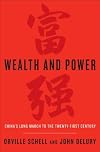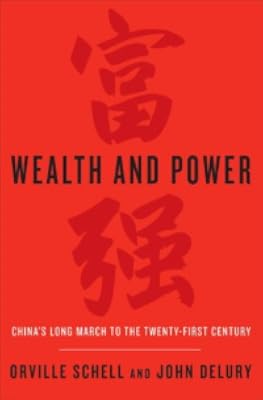
Wealth and Power: China's Long March to the Twenty-first Century
by Orville Schell
On This Page
Description
"Through a series of ... portraits of iconic modern Chinese leaders and thinkers, two of today's foremost specialists on China provide a panoramic narrative of this country's rise to preeminence that is at once analytical and personal. How did a nation, after a long and painful period of dynastic decline, intellectual upheaval, foreign occupation, civil war, and revolution, manage to burst forth onto the world stage with such an impressive run of hyperdevelopment and wealth show more creation--culminating in the extraordinary dynamism of China today?"--Dust jacket flap. show lessTags
Recommendations


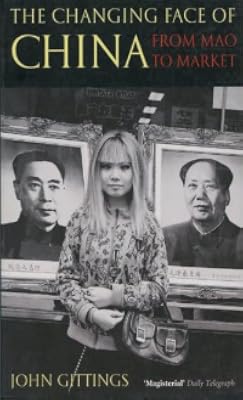

Member Reviews
It’s mildly sad that the signing of the Unequal Treaties at the end of the First Opium War in 1842 signaled China’s entrance into the modern era. China’s cultural heritage had been one of self-sufficiency, technological innovation, and dynastic coherence. Rebellion after rebellion ended the 365-year rule of the Qing dynasty. After that the fledgling Republic of China struggled to become the power it once was, at least in the eyes of the West. Oliver Schell’s and John Delury Wealth and Power trace the cultural, political, and social history of China through the last two centuries to show how the nation has come to the stature it has today.
The author’s interesting strategy for chronicling the expansive history of China is show more through the eyes of various scholars, generals, and political leaders. They start with government secretary and scholar Wei Yuan, who identified China’s interactions with the West as a threat and wrote extensively on the Opium Wars. Then Feng Guifen argues for synthesizing Confucianism with Western industrialization ideals in the late 19th century. After the fall of the Qing and the death of the Empress Dowager Cixi, there are predictable forays into the ideals of General Chiang Kai-shek (leader of China through World War II), Mao Zedong (communist revolutionary), and Deng Xiaoping, who tried to move the country towards a more moderate market economy. The history ends with the human rights activism of Nobel Peace Prize-winner Liu Xiaobo.
There is almost no way to write a short history of any part of China’s history. The philosophical and political schools and the traditions which inform them are myriad. Sufficed to say, this book does a very good job of balancing Eastern and Western perspectives. If you’re looking for a crash course in modern Chinese history, then this one is a good place to start. The organization is pretty decent, and the flow optimal. All in all, a very good book. show less
The author’s interesting strategy for chronicling the expansive history of China is show more through the eyes of various scholars, generals, and political leaders. They start with government secretary and scholar Wei Yuan, who identified China’s interactions with the West as a threat and wrote extensively on the Opium Wars. Then Feng Guifen argues for synthesizing Confucianism with Western industrialization ideals in the late 19th century. After the fall of the Qing and the death of the Empress Dowager Cixi, there are predictable forays into the ideals of General Chiang Kai-shek (leader of China through World War II), Mao Zedong (communist revolutionary), and Deng Xiaoping, who tried to move the country towards a more moderate market economy. The history ends with the human rights activism of Nobel Peace Prize-winner Liu Xiaobo.
There is almost no way to write a short history of any part of China’s history. The philosophical and political schools and the traditions which inform them are myriad. Sufficed to say, this book does a very good job of balancing Eastern and Western perspectives. If you’re looking for a crash course in modern Chinese history, then this one is a good place to start. The organization is pretty decent, and the flow optimal. All in all, a very good book. show less
This is an enlightening and engrossing book, focussed on key issues. In the past, why was it so hard for China to come to terms with modernity? In the present, why has acceptance finally come, under a post-Communist Communist leadership? And for the future, where will the ideas behind China's rise lead China -- and the rest of us? It is a book about this history of ideas and culture over the past few centuries, not a political history, but it casts a lot of light on past and present political developments.
Mssrs. Schell and Delury examine the process of intellectual and ideological evolution by looking at the lives and thoughts of eleven Chinese political figures, from Wei Yuan (who called for reform in the early 19th century), through show more Chiang and Mao, up to Deng and Zhu Rongi. In the process, they remind the reader of what happened as a weakening China was exposed to a rising West, and of the grim political history of the past hundred years.
They arrive at two key points, I think. First, China's long period of weakness vs. the West (and Japan) left a burning sense of shame and of resentment, which could only be assuaged by besting the West at its own game. This has produced a powerful nationalism which seems deeply imbued with anti-foreign feeling as a defining element in what it is to be Chinese. Second, the authors seem to me to argue that the only way that China could truly advance into the modern world was to break with traditional Chinese culture, and the only way of achieving that breakage was though massive destruction. That, I think, is what they mean when they attribute "creative destruction" to Mao -- a term of description, not approval.
In any event, I have read a lot about China over the years, and this is one of the best -- and most enlightening -- books that I have read on the topic. Moreover, it is enjoyable to read! show less
Mssrs. Schell and Delury examine the process of intellectual and ideological evolution by looking at the lives and thoughts of eleven Chinese political figures, from Wei Yuan (who called for reform in the early 19th century), through show more Chiang and Mao, up to Deng and Zhu Rongi. In the process, they remind the reader of what happened as a weakening China was exposed to a rising West, and of the grim political history of the past hundred years.
They arrive at two key points, I think. First, China's long period of weakness vs. the West (and Japan) left a burning sense of shame and of resentment, which could only be assuaged by besting the West at its own game. This has produced a powerful nationalism which seems deeply imbued with anti-foreign feeling as a defining element in what it is to be Chinese. Second, the authors seem to me to argue that the only way that China could truly advance into the modern world was to break with traditional Chinese culture, and the only way of achieving that breakage was though massive destruction. That, I think, is what they mean when they attribute "creative destruction" to Mao -- a term of description, not approval.
In any event, I have read a lot about China over the years, and this is one of the best -- and most enlightening -- books that I have read on the topic. Moreover, it is enjoyable to read! show less
Wealth and Power (2013) is an interesting, informative and sympathetic outline of the evolution of China over the last 175 years. It sketches the political lives of a number of Chinese leaders, politicians and influential political theorists. It required several massive and merciless upheavals and bold experimentation for China to overcome many centuries of ingrained feudal culture and lift China out of poverty and a dogged xenophobia to generate the wealth and power required to resist the foreign imperialism which had diminished its treasury and self-respect beginning with the Opium Wars in the middle of the 19th century.
Some of the most respected writers throughout this period argued that it is in the best interests of the people of show more China, once it had become wealthy and powerful, as it is today, to become democratic. Several of these brave voices died in prison, including Liu Xiaobo, who won the Nobel Prize for Peace in 2010 but died in a Chinese prison in 2017.
This book is easy to read. The reader may sympathize with the millions of suffering Chinese over this interesting* period and the 1.4 billion of today, except for the near-Orwellian** faux-Communist entrenched wealthy cabal currently hoarding power to the detriment of the country and thus of 18% of mankind.
* An old Chinese curse: May you live in interesting times.
** www.nytimes.com/2018/02/03/opinion/sunday/china-surveillance-state-uighurs.html?action=click&pgtype=Homepage&clickSource=story-heading&module=opinion-c-col-left-region®ion=opinion-c-col-left-region&WT.nav=opinion-c-col-left-region show less
Some of the most respected writers throughout this period argued that it is in the best interests of the people of show more China, once it had become wealthy and powerful, as it is today, to become democratic. Several of these brave voices died in prison, including Liu Xiaobo, who won the Nobel Prize for Peace in 2010 but died in a Chinese prison in 2017.
This book is easy to read. The reader may sympathize with the millions of suffering Chinese over this interesting* period and the 1.4 billion of today, except for the near-Orwellian** faux-Communist entrenched wealthy cabal currently hoarding power to the detriment of the country and thus of 18% of mankind.
* An old Chinese curse: May you live in interesting times.
** www.nytimes.com/2018/02/03/opinion/sunday/china-surveillance-state-uighurs.html?action=click&pgtype=Homepage&clickSource=story-heading&module=opinion-c-col-left-region®ion=opinion-c-col-left-region&WT.nav=opinion-c-col-left-region show less
Vignettes of a selection of 19 and 20C men (and one woman) who have transformed China in its search for global respect (and wealth and power, of course...which it seems to be how China thinks it will gain global respect). All the usual suspects are here -- Mao, Jiang Zemin, Chiang Kaishek, Sun Yatsen but with some surprise personalities and interesting details.
I'm surprised this book isn't better known, as it's a fantastic introduction to the development of China, both politically and philosophically, in the past 200 years. Strongly recommended for anyone who wants to better understand the roots of the modern Chinese miracle.
Must be first rate, definitive study/overview of China's coming back onto the world stage and the challenges that lie in that for the people of China as well as all the people of the world. The consensus model versus the authoritatian model. Just listened to an outstanding, open hearted prestetation of Schell to the Commonwealth Club, March 21, 2014.
Telling the history of China through the lives and ideas of several people key to its history. Fascinating and helpful
Members
- Recently Added By
Lists

The China Project Book List
100 works; 2 members
Author Information

25+ Works 1,094 Members
Orville Schell, dean of the Graduate School of Journalism, University of California, Berkeley, is the author of "Mandate of Heaven", "Discos & Democracy", "The China Reader", & twelve other books. His articles have appeared in The New Yorker, The New York Review of Books, & Newsweek, among others. He lives with his wife & children in the San show more Francisco Bay Area. (Bowker Author Biography) show less
Awards and Honors
Classifications
- Genres
- Nonfiction, History, General Nonfiction, Politics and Government, Biography & Memoir
- DDC/MDS
- 951.050922 — History & geography History of Asia East Asia: China, Taiwan, Hong Kong, Korea History 1949- (People's Republic, 20th century)
- LCC
- DS776 .S34 — History of Europe, Asia, Africa and Oceania Asia History of Asia China History
- BISAC
Statistics
- Members
- 209
- Popularity
- 155,997
- Reviews
- 8
- Rating
- (3.95)
- Languages
- English
- Media
- Paper, Ebook
- ISBNs
- 6
- ASINs
- 3