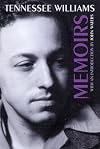
Memoirs
by Tennessee Williams
On This Page
Description
When Memoirs was first published in 1975, it created quite a bit of turbulence in the media-though long self-identified as a gay man, Williams's candor about his love life, sexual encounters, and drug use was found shocking in and of itself. As it turns out, Williams's look back at his life is not quite so scandalous as it once seemed; he recalls his childhood in Mississippi and St. Louis, his prolonged struggle as a "starving artist," the "overnight" success of The Glass Menagerie in 1945, show more the death of his long-time companion Frank Merlo in 1962, and his confinement to a psychiatric ward in 1969 and subsequent recovery from alcohol and drug addiction, all with the same directness, compassion, and insight that epitomize his plays. And, of course, Memoirs is filled with Williams's amazing friends from the worlds of stage, screen, and literature as he often hilariously, sometimes fondly-sometimes not-remembers them: Laurette Taylor, Gore Vidal, Truman Capote, Elia Kazan, Marlon Brando, Vivian Leigh, Carson McCullers, Anna Magnani, Greta Garbo, Elizabeth Taylor, and Tallulah Bankhead, to name a few. Contains mature themes. show lessTags
Recommendations


















Member Reviews
The Memoirs by Tennessee Williams were clearly written for publication by an author self-confident enough to write whatever he liked in whatever way he liked, seemingly with disdain for the reader or even the publisher. However, this makes the book very personal. The book is chronological, but not evenly spread out. Likewise, the book doesn't aim at accuracy or completeness. The Memoirs could be read as a supplement to a biography but aren't detailed enough to be read instead of a biography. Reading these Memoirs one gets the feeling the author enjoyed looking back on his life en enjoyed writing about it so openly and explicitely, which was possible in the early 1970s when the book was published. Here is a writer who enjoys telling his show more story, and so many of his romances and sexual escapades find their ways into the book, including his long-term relationship with Frank Merlo. On the other hand, the book is somewhat disappointing for readers who are expecting to read more about Williams career as a writer, his ideas and inspiration, literary friendships, etc., although it is worth mentioning that there is a lot about his friendship with Carson McCullers and readers interested in that author might need to refer to these pages. It is therefore questionable why Penguin Books published thje book as a Modern Classic, probably more as a tribute to the upcoming openly gay writing of the 1970s that the literary merits of the work. show less
Saw the play last night at 45 Downstairs. Hesitating between 3 and 4 stars. I'd like to see another production of it some time, which is not to say this was a bad one, but that I'd like a second opinion. In Melbourne it was put on as part of the Midsummer Festival: unfortunately it is therefore being marketed as a play about homosexuality, which it is not - or rather no more so than it is about mental illness, poverty, relations between men and women, the nature of art and the ways in which the people of New Orleans relate to their surroundings....
Not least, it is about whether the cook should spit in the gumbo as it is being prepared.
Not least, it is about whether the cook should spit in the gumbo as it is being prepared.
Saw the play last night at 45 Downstairs. Hesitating between 3 and 4 stars. I'd like to see another production of it some time, which is not to say this was a bad one, but that I'd like a second opinion. In Melbourne it was put on as part of the Midsummer Festival: unfortunately it is therefore being marketed as a play about homosexuality, which it is not - or rather no more so than it is about mental illness, poverty, relations between men and women, the nature of art and the ways in which the people of New Orleans relate to their surroundings....
Not least, it is about whether the cook should spit in the gumbo as it is being prepared.
Not least, it is about whether the cook should spit in the gumbo as it is being prepared.
I absolutely loved this memoir. The great thing about a memoir, you can talk about anything you want and anything you feel was important in your life. To Tennessee his personal life was what shaped him as a writer. I would cry when he talked about the mental illness his sister and mother had, and then I would laugh when he talked about all of the sexual positions he tried last night with the young prostitute. I definately have a deeper appreciation and understanding of his writing.
Since Williams' Memoirs are the first and only memoirs I have ever read, I don't know how they hold up as memoirs. However, I do know that I fully enjoyed reading them! The sordid tales of his life were beyond interesting to me. I especially enjoyed the one in which a stranger came up to him on the street and shouted, "Hey! You gave me crabs last night!" How wild!
While I did enjoy the stories and the book as a whole, it was a little hard to connect everything together sometimes. Often times, I would begin to see a timeline emerge and all of a sudden he would throw in a non sequitor from left field.
While I did enjoy the stories and the book as a whole, it was a little hard to connect everything together sometimes. Often times, I would begin to see a timeline emerge and all of a sudden he would throw in a non sequitor from left field.
Some detergent flowed through these pages, but it's still fun to see his perspective on what happened. Williams is an icon. He went where no [other] 'man' had gone before.
A tell-all book that doesn't.
Not even much insight in how and why he wrote his plays.
Pass on it.
Not even much insight in how and why he wrote his plays.
Pass on it.
Members
- Recently Added By
Author Information

332+ Works 31,926 Members
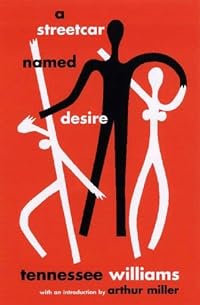
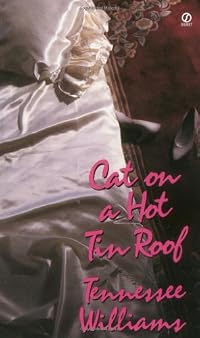
After O'Neill, Williams is perhaps the best dramatist the United States has yet produced. Born in his grandfather's rectory in Columbus, Mississippi, Williams and his family later moved to St. Louis. There Williams endured many bad years caused by the abuse of his father and his own anguish over his introverted sister, who was later permanently show more institutionalized. Williams attended the University of Missouri, and, after time out to clerk for a shoe company and for his own mental breakdown, also attended Washington University of St. Louis and the University of Iowa, from which he graduated in 1938. Williams began to write plays in 1935. During 1943 he spent six months as a contract screenwriter for MGM but produced only one script, The Gentleman Caller. When MGM rejected it, Williams turned it into his first major success, The Glass Menagerie (1945). In this intensely autobiographical play, Williams dramatizes the story of Amanda, who dreams of restoring her lost past by finding a gentleman caller for her crippled daughter, and of Amanda's son Tom, who longs to escape from the responsibility of supporting his mother and sister. After The Glass Menagerie,Williams wrote his masterpiece, A Streetcar Named Desire, (1947), along with a steady stream of other plays, among them such major works as Summer and Smoke(1948), Cat on a Hot Tin Roof (1954), and Suddenly Last Summer (1958). His plays celebrate the "fugitive kind," the sensitive outcasts whose outsider status allows them to perceive the horror of the world and who often give additional witness to that horror by becoming its victims. Stephen S. Stanton has summed up Williams's "virtues and strengths" as "a genius for portraiture, particularly of women, a sensitive ear for dialogue and the rhythms of natural speech, a comic talent often manifesting itself in "black comedy,' and a genuine theatrical flair exhibited in telling stage effects attained through lighting, costume, music, and movements." After The Night of the Iguana (1961), Williams continued to write profusely---and constantly to revise his work---but it became more difficult to get productions of his plays and, if they were produced, to win critical or popular acclaim for them. Williams won the Pulitzer Prize for drama for A Streetcar Named Desire and Cat on a Hot Tin Roof. He won the New York Drama Critics Circle Award for these two and for The Glass Menagerie and The Night of the Iguana. (Bowker Author Biography) show less
Some Editions
Awards and Honors
Distinctions
Series
Belongs to Publisher Series
Common Knowledge
- Canonical title
- Memoirs
- Original title
- Memoirs
- Original publication date
- 1975
- People/Characters
- Tennessee Williams; Anna Magnani; Marlon Brando; Leonard Bernstein; Ernest Hemingway; Vivien Leigh
- Important places
- Key West, Florida, USA; New Orleans, Louisiana, USA
Classifications
- Genres
- Biography & Memoir, LGBTQ+, Literature Studies and Criticism
- DDC/MDS
- 812.54 — Literature & rhetoric American literature in English American drama in English 20th Century 1945-1999
- LCC
- PS3545 .I5365 .Z52 — Language and Literature American literature American literature Individual authors 1900-1960
- BISAC
Statistics
- Members
- 541
- Popularity
- 54,724
- Reviews
- 9
- Rating
- (3.59)
- Languages
- 5 — English, French, German, Russian, Spanish
- Media
- Paper, Audiobook, Ebook
- ISBNs
- 20
- ASINs
- 11