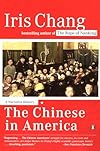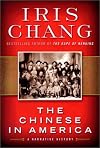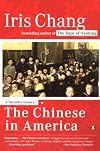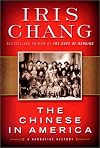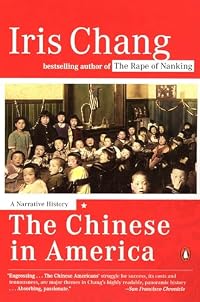
The Chinese in America: A Narrative History
by Iris Chang
On This Page
Description
Iris Chang, the daughter of second-wave Chinese immigrants, has written a narrative that encompasses the entire history of one of the fastest growing ethnic groups in the United States, an epic story that spans 150 years and continues to the present day. Chang takes a fresh look at what it means to be an American and draws a complex portrait of the many accomplishments of the Chinese in their adopted country, from building the transcontinental railroad to major scientific and technological show more advances. A sensitive, deeply moving story of individuals whose lives have shaped and been shaped by this history, The Chinese in America is a saga of raw human tenacity and a testament to the determination of a people to forge an identity and destiny in a strange land. show lessTags
Recommendations
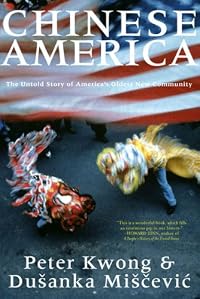
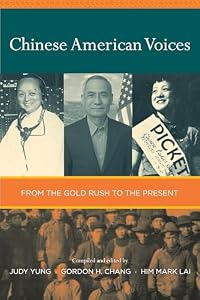

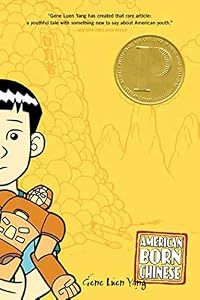
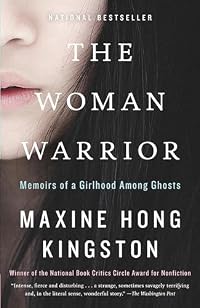
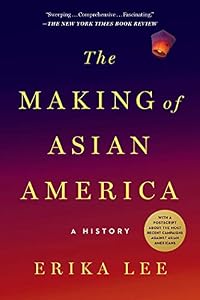
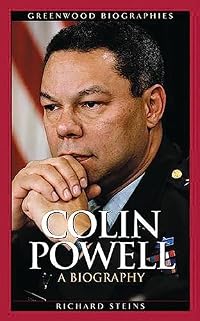






Member Reviews
68. The Chinese in America : A Narrative History (Audio) by Iris Chang, read by Jade Wu (2003, 16 hrs 40 mins, 512 pages in Paperback, Listened October 29 to November 19)
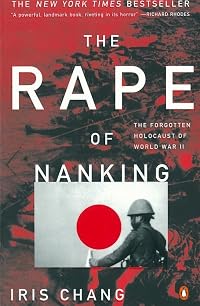
I feel guilty finding interest in Iris Chang, author of this book and The Rape of Nanking, because she committed suicide, and because there is both a book and a documentary about her life (The book is Finding Iris Chang by Paula Kamen.). I probably should have read The Rape of Nanking instead of this, but this was available in audio at my library...
As for the book itself, in some ways it's very good and important and in some ways I felt it was only OK. The reader, Jade Wu, was kind of dull, which didn't help.
Chang put together a big history of Chinese immigration to the show more US from the mid-19th century railroad workers, through to today's immigration of highly educated Chinese from the People's Republic of China. She fits every stage into the context of Chinese and American history of the times. And it's entertaining in that she has such a negative, but probably accurate view of US. From her perspective the US is a xenophobic madhouse looking for cheep labor to exploit without giving up it's white male European center of power.
And what comes across is a history of racist hatred and violence against innovative hardworking Chinese. The first Chinese were looking for gold in the 1849 California gold rush, until California law basically gave whites a free pass to take over Chinese owned prospects (and there were unpunished massacres). The next phase was the Chinese labor used to build the first railroad from California, across the western deserts and mountains, across the Rocky mountains to the plains - the hardest part of the railroad. There was a lot of dying. And upon completion all these Chinese were immediately laid off. Then there is a long stretch of Chinese labor in San Francisco and other China towns, almost exclusively men, as Chinese woman simply could not immigrate, even if their spouses were in the US. So, as China collapsed, there were whole areas around Guangdong of wives supported by their US husbands. In the US the Chinese men labored hard and long to make very little money and send it to China. But in China this little bit was a lot of money and supported large families. When funding was cut for various reasons, these families starved.
US xenophobia led to the Chinese Exclusion Act - laws that cut Chinese immigration to almost zero for the first 50 years or so of the 19th century. After Mao took over all of China, almost all Chinese immigration came from Taiwan - a country ruled by it's own control-freak government. Large numbers of Taiwanese strived to come to the US or elsewhere, and their ticket out was education. They had to be the top students to have a chance. So, for a generation the US saw a pool of remarkably intelligent Chinese from Taiwan, who were raised to be quiet, obedient and industrious. The combination of xenophobia and culture clash meant that these Chinese excelled far less than whites of equivalent education....but still they excelled. The latest wave of Chinese immigration comes from the PRC, and again they are generally highly educated and have become critical parts of certain parts of the US, such as in medicine where Chinese Americans make up a huge percentage.
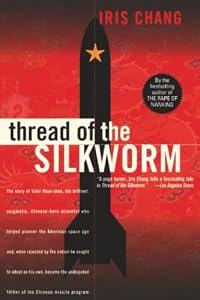
So now you don't need to read the book. Of course there is plenty I didn't cover. But, I was bothered by how simplistic this history was, without a lot of critical documentation, or doubt in the tone of the author. Focusing so much on the negative leaves a reader like me wondering how much of this history was an expression of frustration with US xenophobia (When the US overreacted to worries about potential Chinese spies in the defense technology groups, they chased away the best Chinese minds, including, in one case, a Nobel laureate quality scientist who was forced back to China where he helped develop China's missile technology. This was a big deal when Chang was writing). I'm not saying this all wasn't true, or that it isn't important. But I couldn't help but think there must be more to the story. And, sure, an author must limit their coverage, but they can still wave their hands at the complexities they don't cover. That kind of nuance was missing here.
So, I'm mixed on this and it was long, and the reader was dull. If the topic interests you, I think you will find value here.
2014
https://www.librarything.com/topic/179643#4944276 show less
I feel guilty finding interest in Iris Chang, author of this book and The Rape of Nanking, because she committed suicide, and because there is both a book and a documentary about her life (The book is Finding Iris Chang by Paula Kamen.). I probably should have read The Rape of Nanking instead of this, but this was available in audio at my library...
As for the book itself, in some ways it's very good and important and in some ways I felt it was only OK. The reader, Jade Wu, was kind of dull, which didn't help.
Chang put together a big history of Chinese immigration to the show more US from the mid-19th century railroad workers, through to today's immigration of highly educated Chinese from the People's Republic of China. She fits every stage into the context of Chinese and American history of the times. And it's entertaining in that she has such a negative, but probably accurate view of US. From her perspective the US is a xenophobic madhouse looking for cheep labor to exploit without giving up it's white male European center of power.
And what comes across is a history of racist hatred and violence against innovative hardworking Chinese. The first Chinese were looking for gold in the 1849 California gold rush, until California law basically gave whites a free pass to take over Chinese owned prospects (and there were unpunished massacres). The next phase was the Chinese labor used to build the first railroad from California, across the western deserts and mountains, across the Rocky mountains to the plains - the hardest part of the railroad. There was a lot of dying. And upon completion all these Chinese were immediately laid off. Then there is a long stretch of Chinese labor in San Francisco and other China towns, almost exclusively men, as Chinese woman simply could not immigrate, even if their spouses were in the US. So, as China collapsed, there were whole areas around Guangdong of wives supported by their US husbands. In the US the Chinese men labored hard and long to make very little money and send it to China. But in China this little bit was a lot of money and supported large families. When funding was cut for various reasons, these families starved.
US xenophobia led to the Chinese Exclusion Act - laws that cut Chinese immigration to almost zero for the first 50 years or so of the 19th century. After Mao took over all of China, almost all Chinese immigration came from Taiwan - a country ruled by it's own control-freak government. Large numbers of Taiwanese strived to come to the US or elsewhere, and their ticket out was education. They had to be the top students to have a chance. So, for a generation the US saw a pool of remarkably intelligent Chinese from Taiwan, who were raised to be quiet, obedient and industrious. The combination of xenophobia and culture clash meant that these Chinese excelled far less than whites of equivalent education....but still they excelled. The latest wave of Chinese immigration comes from the PRC, and again they are generally highly educated and have become critical parts of certain parts of the US, such as in medicine where Chinese Americans make up a huge percentage.
So now you don't need to read the book. Of course there is plenty I didn't cover. But, I was bothered by how simplistic this history was, without a lot of critical documentation, or doubt in the tone of the author. Focusing so much on the negative leaves a reader like me wondering how much of this history was an expression of frustration with US xenophobia (When the US overreacted to worries about potential Chinese spies in the defense technology groups, they chased away the best Chinese minds, including, in one case, a Nobel laureate quality scientist who was forced back to China where he helped develop China's missile technology. This was a big deal when Chang was writing). I'm not saying this all wasn't true, or that it isn't important. But I couldn't help but think there must be more to the story. And, sure, an author must limit their coverage, but they can still wave their hands at the complexities they don't cover. That kind of nuance was missing here.
So, I'm mixed on this and it was long, and the reader was dull. If the topic interests you, I think you will find value here.
2014
https://www.librarything.com/topic/179643#4944276 show less
The Chinese in America by Iris Chang This book begins at the time of the California gold rush and also begins with the government bailing out Wall Street, I kid you not.
It details the Chinese migration to the land of gold and what really awaited the Chinese.
Things like it was illegal for a Chinese to give evidence against a white man in a court of law. I kid you not.
Like Chinese being forbidden to own property in America until immediately after WWII. I kid you not.
Well written and deeply fascinating, a testament to the tenacity of the Chinese and the grossly undervalued appreciation of their contribution to America.
Another side of American History that probably no-one wants to talk about. I kid you not.
It details the Chinese migration to the land of gold and what really awaited the Chinese.
Things like it was illegal for a Chinese to give evidence against a white man in a court of law. I kid you not.
Like Chinese being forbidden to own property in America until immediately after WWII. I kid you not.
Well written and deeply fascinating, a testament to the tenacity of the Chinese and the grossly undervalued appreciation of their contribution to America.
Another side of American History that probably no-one wants to talk about. I kid you not.
I'll write a more indepth review when I reread this- read it in 8th grade as part of my National History Day project research. It's a very in depth, very good look at, well, the history of Chinese immigrants in America. Despite being legally excluded from immigrating, waves still made it over- including my maternal grandfather under a paper name and my paternal great-grandparents to the midwest.
Excellent. I had come to the United States in 1967, as a child, not realizing that only two year before my arrival was discrimination in immigration law signed away by Lyndon Johnson under the Hart-Celler Act. A must-read for all Chinese-Americans. Our ancestors suffered unbearable hardships so that we can stand on equal footing as full-fledged citizens of the United States. I mourned the day we lost Iris Chang.
Hm, reading (listening to) The Making of Asian America is making me think I should reread this one. Such a great book, and all praise to (and sadness for) Iris Chang.
Ratings
Members
- Recently Added By
Author Information

4 Works 4,682 Members
Iris Chang was born in China, but emigrated to the United States with her parents while she was still a child. She graduated from the University of Illinois at Urbana-Champaign, where her parents were professors, and received a masters degree from Johns Hopkins University. She is a freelance writer who regularly works with The Chicago Tribune, The show more New York Times, and the Associated Press Chang's books include Thread of the Silkworm and The Rape of Nanking: The Forgotten Holocaust of World War II. The Rape of Nanking, in particular, involved extensive research both in the United States and abroad. It recounts the Japanese rape and slaughter of the captive population of Nanking, China, in December, 1937 and the early part of 1938. Through the book and her lectures on the subject, Chang has been instrumental in helping the world remember the atrocities of Nanking. (Bowker Author Biography) show less
Some Editions
Awards and Honors
Distinctions
Common Knowledge
- Canonical title*
- 美國華人史:十九世紀至二十一世紀初,一百五十年華人史詩
- Original title
- The Chinese in America: A Narrative History
- Original publication date
- 2004
*Some information comes from Common Knowledge in other languages. Click "Edit" for more information.
Classifications
- Genres
- History, Nonfiction, General Nonfiction
- DDC/MDS
- 973.04951 — History & geography History of North America United States United States Ethnic And National Groups Other Groups Asian Americans Chinese Americans
- LCC
- E184 .C5 .C444 — History of the United States United States Elements in the population Afro-Americans
- BISAC
Statistics
- Members
- 544
- Popularity
- 54,324
- Reviews
- 5
- Rating
- (4.25)
- Languages
- Chinese, traditional, English
- Media
- Paper, Audiobook, Ebook
- ISBNs
- 9
- UPCs
- 1
- ASINs
- 3