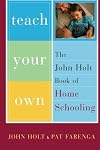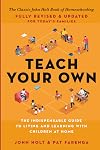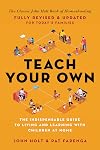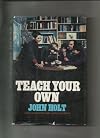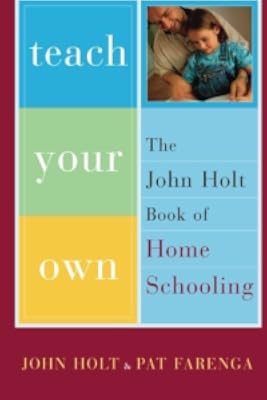
Teach Your Own: The John Holt Book of Homeschooling
by John Holt
On This Page
Description
The classic and indispensable work on teaching children at home, fully revised and updated for today's new generation of homeschooling parents During the coronavirus pandemic, the majority of American children had to learn from home, leaving many parents struggling to support their children's education and worrying about when and if it's the right time to send their children back to in-person learning. Outside of the pandemic, more than two million American children are being taught at home show more by their own parents. In this revised edition of the book that helped launch the whole movement, Pat Farenga refreshes John Holt's timeless and revolutionary understanding of the ways children come to understand the world, adding up-to-date advice such as homeschooling and technology. Chapters on living with children, "serious play," children and work, and learning difficulties will fascinate and encourage parents and help them enjoy each "homeschool" day. John Holt's warm understanding of children and his passionate belief in every child's ability to learn have made this book the bible of homeschooling families everywhere. No parent even considering homeschooling should be without this wise and unique reference. show lessTags
Recommendations







Member Reviews
This is John Holt's most direct coverage about "unschooling" - why to do it, how to do it, and how to deal with those who believe otherwise. After his death in 1985, Pat Farenga continued his message, including updates to this work, primarily to comment on modern issues and the latest political developments. This book will challenge traditional views in a persuasive no-nonsense way. I suspect it will also challenge most home school parents to consider more creative methods based on their children's natural curiosity.
I liked this book fairly well. I really appreciated how they did the updated edition. Originally Holt wrote this in the early 80s. For the 21st century update they kept Holt's words exactly as they were with the secondary author addi g his own in snippets clearly shown what was new. Some chapters included mostly new, like that on legal aspects of homeschooling, and some where completely untouched. Most had a paragraph or do of new material.
My only complaint was that I didn't feel live I learned a lot more than I had just having out with unschooled individuals. I was a little taken back by Holt's arguments about there not being learning disabilities, the update only slightly before in saying that things aren't exactly that there aren't show more but they don't have to be as dibilitating as the public school makes them out to be. Everything else seemed on point so it might just be a matter of semantics.
Probably very good fit those not yet familiar with unschoing/homeschooling with child directed education. Almost 20 years have passed since this update and a new update may be helpful, particularly I would like to see since input on how screen time effects unschooling. show less
My only complaint was that I didn't feel live I learned a lot more than I had just having out with unschooled individuals. I was a little taken back by Holt's arguments about there not being learning disabilities, the update only slightly before in saying that things aren't exactly that there aren't show more but they don't have to be as dibilitating as the public school makes them out to be. Everything else seemed on point so it might just be a matter of semantics.
Probably very good fit those not yet familiar with unschoing/homeschooling with child directed education. Almost 20 years have passed since this update and a new update may be helpful, particularly I would like to see since input on how screen time effects unschooling. show less
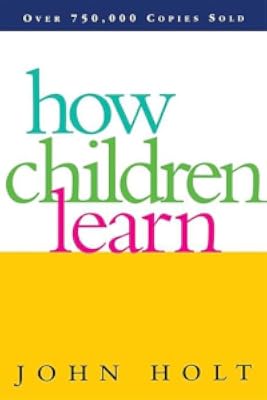
I've just discovered this maverick guy. What a trailblazer he was. I'm only sorry he died young and didn't stick around long enough to continue writing and publishing his magazine Growing Without Schooling. While I don't agree w/all his ideas, I do find many of them compelling. His analysis of how children learn and how the public school system discourages natural curiosity in favor of mass conformity makes so much sense! I recommend reading this one, as well as How Children Learn.
#67, 2006
Since I made the decision to pull my son out of school and start teaching him myself, I’ve been doing a lot of reading on the subject of homeschooling. This book was one I requested from my library, after seeing Holt recommended as one of the top authors/visionaries in the field.
It was a very interesting book. I was mostly looking for advice on how to get started (and there is a bit of that), but mostly, he discusses his vision of education, and what’s so very wrong with the way it’s being done by most school systems in the U.S. He touches on a lot of political issues regarding schooling, and has loads of anecdotal evidence (as well as results from more scientific studies) which suggest that homeschooling is an excellent show more alternative to keeping children in a school situation which is likely causing lasting harm to their ability and desire to learn and become happy, genuinely productive adults. So many of the things he discusses are things I remember from my own school experience – and also have witnessed in the short time my own son was at the public school: “Labeling” children, and then treating them as problems to be solved; an over-emphasis on test scores, which creates a culture of competition, rather than a place where students feel safe and comfortable and want to learn (I myself remember times when I crammed for a test, only hoping to retain the information long enough to get a good grade, and then be free to forget it again – that’s not any sort of “education” which has helped me in my adult life). Conversely, he says that the most relevant and lasting kinds of learning happen when people (children and adults both) are interested in what they’re doing, and have a love of learning. There is a lot more, and I can’t possibly cover it all in this review, so if this is of interest to you, I’d highly recommend finding a copy of this book and giving it a read-through.
The book was originally written 25 years ago, so some of the specific data and legal issues mentioned were out of date; this edition has been updated by another author (Holt himself died nearly 20 years ago), so it still contains information which is current and relevant to people reading the book today.
More than anything, this book helped give me more confidence that I can definitely do a good job at this – and that I can give him a far better education than he would receive at our local public school. It also gave me a lot of food for thought, not to mention information and “arguments” that I’ll be able to offer to those who question or criticize me for this decision.
Mostly so I’ll have it for future reference (since this is a library book), I thought I’d share my favourite quote:
“We can sum up very quickly what people need to teach their own children. First of all, they have to like them, enjoy their company, their physical presence, their energy, foolishness and passion. They have to enjoy all their talk and questions, and enjoy equally trying to answer those questions. They have to think of their children as friends, indeed very close friends, have to feel happier when they are near and miss them when they are away. They have to trust them as people, respect their fragile dignity, treat them with courtesy, take them seriously. They have to feel in their own hearts some of their children’s wonder, curiosity, and excitement about the world. And they have to have enough confidence in themselves, skepticism about experts, and willingness to be different from most people, to take on themselves the responsibility for their children’s learning.” show less
Since I made the decision to pull my son out of school and start teaching him myself, I’ve been doing a lot of reading on the subject of homeschooling. This book was one I requested from my library, after seeing Holt recommended as one of the top authors/visionaries in the field.
It was a very interesting book. I was mostly looking for advice on how to get started (and there is a bit of that), but mostly, he discusses his vision of education, and what’s so very wrong with the way it’s being done by most school systems in the U.S. He touches on a lot of political issues regarding schooling, and has loads of anecdotal evidence (as well as results from more scientific studies) which suggest that homeschooling is an excellent show more alternative to keeping children in a school situation which is likely causing lasting harm to their ability and desire to learn and become happy, genuinely productive adults. So many of the things he discusses are things I remember from my own school experience – and also have witnessed in the short time my own son was at the public school: “Labeling” children, and then treating them as problems to be solved; an over-emphasis on test scores, which creates a culture of competition, rather than a place where students feel safe and comfortable and want to learn (I myself remember times when I crammed for a test, only hoping to retain the information long enough to get a good grade, and then be free to forget it again – that’s not any sort of “education” which has helped me in my adult life). Conversely, he says that the most relevant and lasting kinds of learning happen when people (children and adults both) are interested in what they’re doing, and have a love of learning. There is a lot more, and I can’t possibly cover it all in this review, so if this is of interest to you, I’d highly recommend finding a copy of this book and giving it a read-through.
The book was originally written 25 years ago, so some of the specific data and legal issues mentioned were out of date; this edition has been updated by another author (Holt himself died nearly 20 years ago), so it still contains information which is current and relevant to people reading the book today.
More than anything, this book helped give me more confidence that I can definitely do a good job at this – and that I can give him a far better education than he would receive at our local public school. It also gave me a lot of food for thought, not to mention information and “arguments” that I’ll be able to offer to those who question or criticize me for this decision.
Mostly so I’ll have it for future reference (since this is a library book), I thought I’d share my favourite quote:
“We can sum up very quickly what people need to teach their own children. First of all, they have to like them, enjoy their company, their physical presence, their energy, foolishness and passion. They have to enjoy all their talk and questions, and enjoy equally trying to answer those questions. They have to think of their children as friends, indeed very close friends, have to feel happier when they are near and miss them when they are away. They have to trust them as people, respect their fragile dignity, treat them with courtesy, take them seriously. They have to feel in their own hearts some of their children’s wonder, curiosity, and excitement about the world. And they have to have enough confidence in themselves, skepticism about experts, and willingness to be different from most people, to take on themselves the responsibility for their children’s learning.” show less
A useful book that explains easier and cheaper ways of teaching your kids what takes the normal educational system too long and convoluted ways to do. Highly recommended for anyone who works with children or wants to teach them more effectively.
In this book, John Holt explains how learn not only through academics, but by living life. Even though this book is more for homeschoolers, the message is important for everyone.
very good, somewhat dated
Members
- Recently Added By
Lists

Alan Kay's Reading List
103 works; 3 members
Author Information

14 Works 3,639 Members
Classifications
Statistics
- Members
- 499
- Popularity
- 60,465
- Reviews
- 7
- Rating
- (4.20)
- Languages
- Chinese, English, Portuguese (Portugal)
- Media
- Paper, Audiobook, Ebook
- ISBNs
- 16
- ASINs
- 6