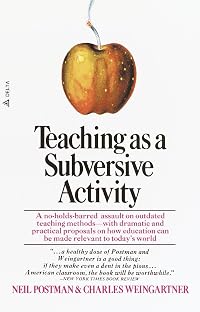
Teaching As a Subversive Activity
by Neil Postman (Author), Charles Weingartner (Author)
On This Page
Description
Education. Nonfiction. HTML:A no-holds-barred assault on outdated teaching methods—with dramatic and practical proposals on how education can be made relevant to today's world.Praise for Teaching As a Subversive Activity
“A healthy dose of Postman and Weingartner is a good thing: if they make even a dent in the pious . . . American classroom, the book will be worthwhile.”—New York Times Book Review
“Teaching and knowledge are subversive in that they necessarily substitute show more awareness for guesswork, and knowledge for experience. Experience is no use in the world of Apollo 8. It is simply necessary to know. However, it is also necessary to know the effect of Apollo 8 in creating a new Global Theatre in which student and teacher alike are looking for roles. Postman and Weingartner make excellent theatrical producers in the new Global Theatre.”—Marshall McLuhan
“It will take courage to read this book . . . but those who are asking honest questions—what’s wrong with the worlds in which we live, how do we build communication bridges cross the Generation Gap, what do they want from us?—these people will squirm in the discovery that the answers are really within themselves.”—Saturday Review
“Neil Postman and Charles Weingartner go beyond the now-familiar indictments of American education to propose basic ways of liberating both teachers and students from becoming personnel rather than people . . . the authors have created what may become a primer of ‘the new education’ Their book is intended for anyone, teacher or not, who is concerned with sanity and survival in a world of precipitously rapid change, and it’s worth your reading.”—Playboy
“This challenging, liberating book can unlock not only teachers but anyone for whom language and learning are not dead.”—Nat Hentoff. show less
Tags
Recommendations
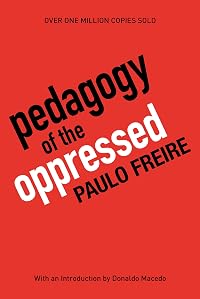
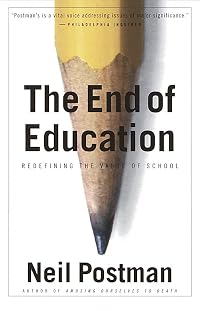
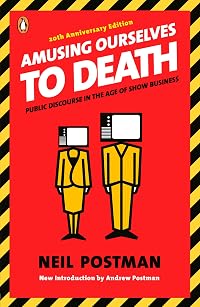
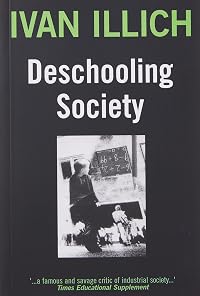
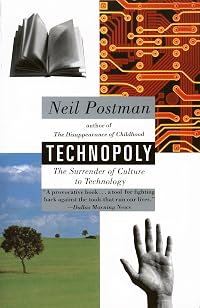
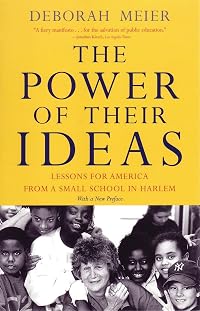
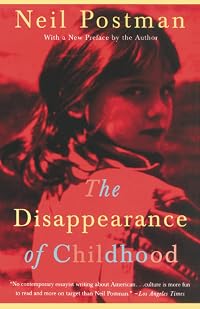
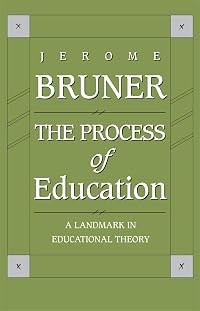














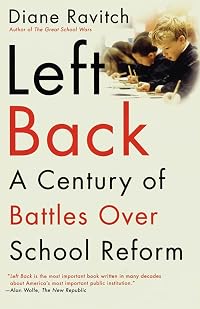
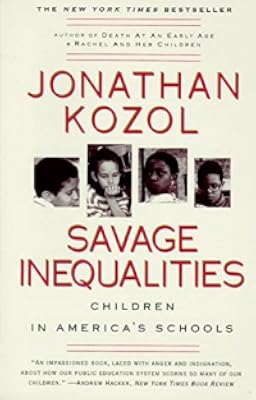
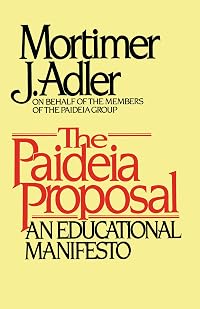
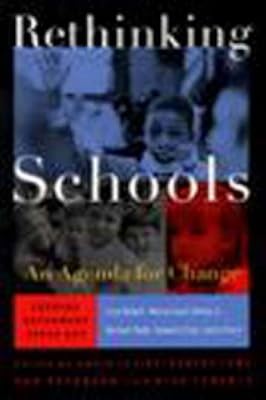



Member Recommendations

Member Reviews
A dud. Postman matured immensely between 1969 when this book was published and 1985, when "Amusing Ourselves to Death" was published. Even in 1967 he could still write a few isolated good paragraphs, though. A later book, "The End of Education", published in the '90s, is far more a typical Postman book.
Whoops! This book made me think about how I ought to have taught the last time I was employed to teach, so it wasn't a dead loss.
Whoops! This book made me think about how I ought to have taught the last time I was employed to teach, so it wasn't a dead loss.
Postman takes aim at education, proving that education has been terrible since the 60s and, from my experience, has possibly gotten worse. I wish I was still teaching so that I could implement his theories. Though the administrative authorities and boards would dislike it because it might make their jobs irrelevant.
So sensible it's still radical almost 40 years after publication, this is a provocative read for anyone interested or involved in education. The authors' model stresses the importance of children learning to think for themselves in a wide range of ways, instead of learning material by heart in a vacuum of context and meaning.
Reviewed by Mr. Janda (Social Studies)
Feel like things are going wrong in the world of public education? Want to create a revolution, or at least reform? Want some ideas for how to completely change things in your classroom? This book is a must-read. I read it for the first time almost 10 years ago and re-read it this summer. Amazing how much hasn’t changed.
Feel like things are going wrong in the world of public education? Want to create a revolution, or at least reform? Want some ideas for how to completely change things in your classroom? This book is a must-read. I read it for the first time almost 10 years ago and re-read it this summer. Amazing how much hasn’t changed.
A new educator must be centrally concerned with the hearts and minds of learners: teach them how to ask, and answer, questions they find important. That is what learning is for.
As a recruiting book, this does have the snappy title for the late 1960's. And, so far as i remember it...it does explain what does happen, for good or ill, in classrooms.
Required reading for Eckerd College freshmen entering 1975.
Members
- Recently Added By
Lists

Mind Expanding Books by hackerkid
581 works; 8 members
Author Information

Born in Brooklyn, New York, and educated at the State University of New York and Columbia University, Neil Postman is a communications theorist, educator, and writer who has been deeply involved with the issue of the impact of the media and advanced communications technology on American culture. In his many books, Postman has strongly opposed the show more idea that technology will "save" humanity. In fact, he has focused on the negative ways in which television and computers alter social behavior. In his book Technopoly, Postman argues that the uncontrolled growth of technology destroys humanity by creating a culture with no moral structure. Thus, technology can be a dangerous enemy as well as a good friend. Postman, who is married and has three children, currently is a professor of media ecology at New York University and editor of Et Cetera, the journal of general semantics. In addition to his books, he has contributed to various magazines and periodicals, including Atlantic and The Nation. He has also appeared on the television program Sunrise Semester. Postman is the holder of the Christian Lindback Award for Excellence in Teaching from New YorkUniversity. (Bowker Author Biography) show less
Common Knowledge
- Canonical title*
- Fragen und Lernen : die Schule als kritische Anstalt
- Original title
- Teaching as a subversive activity
- Epigraph
- Thank God there are no free schools or printing; ... for learning has brought disobedience and heresy into the world, and printing has divulged them. ... God kept us from both. — Sir William Berkeley, Governor of Virgin... (show all)ia, d. 1677
- Last words
- (Click to show. Warning: May contain spoilers.)The purpose is to help all students develop built-in, shockproof crap detectors as basic equipment in their survival kits.
- Blurbers
- McLuhan, Marshall; Hentoff, Nat
*Some information comes from Common Knowledge in other languages. Click "Edit" for more information.
Classifications
Statistics
- Members
- 827
- Popularity
- 33,251
- Reviews
- 7
- Rating
- (4.01)
- Languages
- 6 — Danish, English, German, Japanese, Spanish, Swedish
- Media
- Paper, Ebook
- ISBNs
- 13
- ASINs
- 11