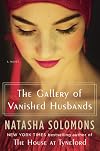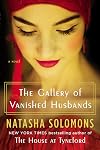
The Gallery of Vanished Husbands
by Natasha Solomons
On This Page
Description
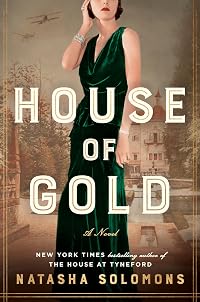
"A stunning new novel from the New York Times bestselling author of The House at Tyneford London, 1958. It's the eve of the sexual revolution, but in Juliet Montague's conservative Jewish community where only men can divorce women, she finds herself a living widow, invisible. Ever since her husband disappeared seven years ago, Juliet has been a hardworking single mother of two and unnaturally practical. But on her thirtieth birthday, that's all about to change. A wealthy young artist asks to show more paint her portrait, and Juliet, moved by the powerful desire to be seen, enters into the burgeoning art world of 1960s London, which will bring her fame, fortune, and a life-long love affair"-- show lessTags
Recommendations


















Member Reviews
How much of who you are is dictated by you and how much by your status within your community? We create tidy boxes in which to tuck people but we can just as easily be tucked into a box ourselves, and not necessarily one of our own choosing. In Natasha Solomons' novel, The Gallery of Vanished Husbands, main character Juliet Montague is boxed in by her community's strict rules and their perception of her but breaks free to create her own life and future.
When the novel opens in 1958 in London, Juliet is an "aguna," a woman who is neither a wife nor a widow but someone living in the limbo of in between. Her Hungarian-born husband George abandoned her and their young children, Frieda and Leonard, six years prior. And by law in her Jewish show more orthodox community, a wife cannot divorce a husband only a husband can divorce a wife. So she must spend her life waiting, still married to a man who disappeared without a word, taking the one possession she valued most, a portrait of Juliet when she was nine, and condemning her to a life as the focus of gossip and pity in the community. She has been treading water for a long time, following the rules, and going through the motions but on the dawn of Juliet's thirtieth birthday, her life is about to take a different turning. Juliet has finally managed to save enough money to buy a much needed refrigerator. Instead, on her way to make her purchase, she is completely captured by a painting set up on the street. She decides to buy it with her fridge money but the artist no longer wants to sell it to her, instead offering to paint her portrait for the same amount of money. Juliet, tired of being invisible, acquiesces.
Just choosing to be seen, really and truly seen, changes the entire trajectory of her life. This is her first step into the art world, into owning a successful gallery, in choosing to forge her own destiny, and in stepping away from the society that marginalized her, causing her to drift away from her faith and its practices. As Juliet, who has not only an appreciation for and attraction to art but an instinctive understanding of it, works hard following her dream, culminating in her opening of Wednesday's Gallery, she is the object of many artists, including her own son, having her portrait painted myriad times throughout her life. Each artist defines her in his own medium but the paintings are only each a piece of her, a fleeting moment out of her life, just as her abandonment by the mysterious George turns out to be just a moment as well.
The chapters are titled using the title of a different portrait of Julia and the year it was painted. The year corresponds to the time in Juliet's life covered by the chapter. Since the chapters jump years, the story has a slightly episodic feel to it although it manages to hang together well. The gaps in time also serve to highlight the large and small ways in which Juliet changes throughout the years, not only physically but emotionally, moving away from orthodox Judaism into the much looser and more accepting London art world, away from her solitary existence and into a mutually pleasing relationship, away from subsistence and into the power of self-determination. The narrative is slow paced and descriptive and Solomons has done a good job depicting the Jewish community of the time, their rules, and the reason Juliet rebelled against both rules and community. Once upon a time, Juliet Montague might have married her Romeo/George but it is only through losing him that she has the choice and the power to define herself and build the life she wants to have. A thoroughly interesting look at a culture, art, and identity. show less
When the novel opens in 1958 in London, Juliet is an "aguna," a woman who is neither a wife nor a widow but someone living in the limbo of in between. Her Hungarian-born husband George abandoned her and their young children, Frieda and Leonard, six years prior. And by law in her Jewish show more orthodox community, a wife cannot divorce a husband only a husband can divorce a wife. So she must spend her life waiting, still married to a man who disappeared without a word, taking the one possession she valued most, a portrait of Juliet when she was nine, and condemning her to a life as the focus of gossip and pity in the community. She has been treading water for a long time, following the rules, and going through the motions but on the dawn of Juliet's thirtieth birthday, her life is about to take a different turning. Juliet has finally managed to save enough money to buy a much needed refrigerator. Instead, on her way to make her purchase, she is completely captured by a painting set up on the street. She decides to buy it with her fridge money but the artist no longer wants to sell it to her, instead offering to paint her portrait for the same amount of money. Juliet, tired of being invisible, acquiesces.
Just choosing to be seen, really and truly seen, changes the entire trajectory of her life. This is her first step into the art world, into owning a successful gallery, in choosing to forge her own destiny, and in stepping away from the society that marginalized her, causing her to drift away from her faith and its practices. As Juliet, who has not only an appreciation for and attraction to art but an instinctive understanding of it, works hard following her dream, culminating in her opening of Wednesday's Gallery, she is the object of many artists, including her own son, having her portrait painted myriad times throughout her life. Each artist defines her in his own medium but the paintings are only each a piece of her, a fleeting moment out of her life, just as her abandonment by the mysterious George turns out to be just a moment as well.
The chapters are titled using the title of a different portrait of Julia and the year it was painted. The year corresponds to the time in Juliet's life covered by the chapter. Since the chapters jump years, the story has a slightly episodic feel to it although it manages to hang together well. The gaps in time also serve to highlight the large and small ways in which Juliet changes throughout the years, not only physically but emotionally, moving away from orthodox Judaism into the much looser and more accepting London art world, away from her solitary existence and into a mutually pleasing relationship, away from subsistence and into the power of self-determination. The narrative is slow paced and descriptive and Solomons has done a good job depicting the Jewish community of the time, their rules, and the reason Juliet rebelled against both rules and community. Once upon a time, Juliet Montague might have married her Romeo/George but it is only through losing him that she has the choice and the power to define herself and build the life she wants to have. A thoroughly interesting look at a culture, art, and identity. show less
 This review was written for LibraryThing Early Reviewers.
I was impressed with the thought that went into this novel. The title is great and the use of portrait titles and the artist for each chapter is ingenious. We follow the life of Juliet and the painting of her portrait by each of the painters throughout the book. Each section represents a different period in her life. We are shown how Juliet is tortured between being a good jewish widow and being herself. She wants to please her mother, but at the same time yearns to break free from the old traditions. When she tries to track down her missing husband, she finds that he committed bigamy. This changes her whole outlook. The book is more about Juliet finding herself. This was a fairly quick read for me, but it is not action packed. I give show more this book 3.5 out of 5 stars. show less
Juliet Montague is a young Jewish widow, whose husband, George, vanished seven years ago. She is the mother of two young children, a son Leonard, and a daughter, Frieda. In Jewish law only men can divorce women. Until George returns or dies or divorces Juliet, her life is in limbo. So, what happens if she wants to marry again? Unless George sends a bill of divorce, she is still married in the eyes of God. Juliet feels as if she is quietly disappearing piece by piece. Then her life changes. An artist asks to paint her portrait. Charles Fussell, a young wealthy painter, told her she had a good face. Not beautiful, but interesting. An the story unfolds -----
Juliet eventually becomes the owner of Wednesday's Art Gallery. She is the curator, show more owner, and navigator - she runs the gallery and chooses all the artists. Over the years, Juliet has her portrait painted many times. Each one of the portraits, all painted by different artists, caught a little piece of her - portraits of assorted Juliets - a kaleidoscope of portraits.
Many well developed characters are introduced throughout and one with whom Juliet has an affair over a period of many years. Juliet is a strong, charming character that you really get to know well. She has a penchant for choosing a good painting. She feels art has a use in helping us to see the world more clearly, it sharpens the perception.
The author definitely has a writing style of her own - her descriptive writing is absolutely some of the best I've ever read. She literally paints a picture with her words.
A few negatives - The tempo of the storyline simmered along at a very slow pace. There were times I trudged through, skimming over some passages. And, not much excitement - it was just luke-warm. The ending was tied up very neatly, but not really compelling - nothing that swept me away or evoked many emotions.
But, for those of you who want a good relaxed read, I would recommend this book. My rating is 3.5 stars.
I received an advanced uncorrected proof copy of this book from Goodreads as a first reads winner. show less
Juliet eventually becomes the owner of Wednesday's Art Gallery. She is the curator, show more owner, and navigator - she runs the gallery and chooses all the artists. Over the years, Juliet has her portrait painted many times. Each one of the portraits, all painted by different artists, caught a little piece of her - portraits of assorted Juliets - a kaleidoscope of portraits.
Many well developed characters are introduced throughout and one with whom Juliet has an affair over a period of many years. Juliet is a strong, charming character that you really get to know well. She has a penchant for choosing a good painting. She feels art has a use in helping us to see the world more clearly, it sharpens the perception.
The author definitely has a writing style of her own - her descriptive writing is absolutely some of the best I've ever read. She literally paints a picture with her words.
A few negatives - The tempo of the storyline simmered along at a very slow pace. There were times I trudged through, skimming over some passages. And, not much excitement - it was just luke-warm. The ending was tied up very neatly, but not really compelling - nothing that swept me away or evoked many emotions.
But, for those of you who want a good relaxed read, I would recommend this book. My rating is 3.5 stars.
I received an advanced uncorrected proof copy of this book from Goodreads as a first reads winner. show less
A charming mash-up of The Shell Seekers and The Innocents that I probably wouldn't have bought or downloaded but didn't mind borrowing from the library. Juliet Montague - ha, see what she did there - is an aguna, a Jewish woman who is neither widowed nor divorced but shamefully separated from her husband all the same. Set in the suburbs of London during the late 50s and 60s, Juliet is pitied and feared by her conservative parents and the small-minded, middle class community in which the family live. Raising two young children alone, Juliet's new life is kick-started by a chance meeting with a budding artist, who recognises Juliet's artistic eye and paints the first of many portraits. Vanished husband George still manages to shape show more Juliet's life in absentia, and her quest to free herself from her vows even leads the Montague family to America.
Even though nothing very much happens - a lot like Instructions for a Heatwave, add that one to the list too - I did feel like I came to 'know' if not like the characters. The Jewish community is painted in a very negative light, judging Juliet and forcing her to conform to a very narrow set of rules, and the story could have been set in any twentieth century decade, but Juliet, Leonard and Frieda remain in the foreground throughout. show less
Even though nothing very much happens - a lot like Instructions for a Heatwave, add that one to the list too - I did feel like I came to 'know' if not like the characters. The Jewish community is painted in a very negative light, judging Juliet and forcing her to conform to a very narrow set of rules, and the story could have been set in any twentieth century decade, but Juliet, Leonard and Frieda remain in the foreground throughout. show less
(19 November 2016, from Luci)
Set (or starting) in the 1960s, we follow the story of Juliet Montague, a woman both married and not married living in a conservative Jewish community which holds conforming in the highest regard. Her husband left here a few years ago, but having a husband who’s disappears brings with it an embarrassing and awkward half-status and Juliet feels half-alive as a consequence. Accidentally falling in with a group of artists, she forges her own way in life – daring to be different and even going on a road trip in the US. But can she ever really escape her origins? She remains slightly outside the riotous 60s life, allowing us to observe it from the outside and the inside, and her community, where she still show more returns to lay her head, sums her up thus: “She was polite but there was pertness in her gaze”.
This was a good read, but I felt that the author was maybe slightly too keen on her subject – unsurprisingly, if you look at the note about her inspiration for her book – she never really comes wholly alive for me, perhaps because she’s a representative cipher and nothing is really allowed to be negative about her. I also felt it suffered a bit in the latter stages from rushing to update us on all the characters. The different tracks of her children’s lives are interesting, as is her daughter’s rebellion in the only way she can find to shock her mother. And I do like the idea of all the portraits of this fairly ordinary woman lining her stairs. Another point in its favour is that it didn’t end as I started to fear it would. show less
Set (or starting) in the 1960s, we follow the story of Juliet Montague, a woman both married and not married living in a conservative Jewish community which holds conforming in the highest regard. Her husband left here a few years ago, but having a husband who’s disappears brings with it an embarrassing and awkward half-status and Juliet feels half-alive as a consequence. Accidentally falling in with a group of artists, she forges her own way in life – daring to be different and even going on a road trip in the US. But can she ever really escape her origins? She remains slightly outside the riotous 60s life, allowing us to observe it from the outside and the inside, and her community, where she still show more returns to lay her head, sums her up thus: “She was polite but there was pertness in her gaze”.
This was a good read, but I felt that the author was maybe slightly too keen on her subject – unsurprisingly, if you look at the note about her inspiration for her book – she never really comes wholly alive for me, perhaps because she’s a representative cipher and nothing is really allowed to be negative about her. I also felt it suffered a bit in the latter stages from rushing to update us on all the characters. The different tracks of her children’s lives are interesting, as is her daughter’s rebellion in the only way she can find to shock her mother. And I do like the idea of all the portraits of this fairly ordinary woman lining her stairs. Another point in its favour is that it didn’t end as I started to fear it would. show less
The book takes place in 1960s London. Juliet Montague is a mother of two who lives in a very conservative Jewish community. Her husband disappeared one day and since then, Juliet has felt she has also become invisible to those around her. Only men can divorce their Jewish wives at that time, so Juliet is unable to marry again and lives a sort of half life until she comes across a young artist who paints her portrait.
This becomes just one a series of portraits of Juliet painted throughout her lifetime. Juliet, eventually enters the art world of London as a gallery owner. She also begins a lifelong love affair with a reclusive artist. But until she finds her long lost husband, she is unable to fully life her life or feel that she show more belongs.
Although this book was slow paced, it was wonderfully written. As Juliet is on an emotional journey, I felt her yearning for more in life and attempting to break free of her confining conservative homelife.
I loved that each chapter is titled with the name of a portrait done of Juliet and the year it was painted. That chapter dealt with that period in Juliet's life. I enjoyed this book and would recommend it. I received a copy to review as part of the Librarything Early Reviewers. show less
This becomes just one a series of portraits of Juliet painted throughout her lifetime. Juliet, eventually enters the art world of London as a gallery owner. She also begins a lifelong love affair with a reclusive artist. But until she finds her long lost husband, she is unable to fully life her life or feel that she show more belongs.
Although this book was slow paced, it was wonderfully written. As Juliet is on an emotional journey, I felt her yearning for more in life and attempting to break free of her confining conservative homelife.
I loved that each chapter is titled with the name of a portrait done of Juliet and the year it was painted. That chapter dealt with that period in Juliet's life. I enjoyed this book and would recommend it. I received a copy to review as part of the Librarything Early Reviewers. show less
This review was written for LibraryThing Early Reviewers.This author has a nice style of writing which means subjects I would normally expect to be boring aren't. In this novel we meet Juliet who has been abandoned by her husband who disappeared without a trace one day, but who must still be quite a catch because it seems every artist in town is queueing up to paint her portrait. I liked the fifties/sixties vibe that ran through the novel, and the strong sense of Jewishness - and the sense that things that wouldn't be a problem nowadays (getting remarried or even having another relationship after your husband has absconded) certainly were then. There was a sense of restraint about the whole thing - in terms of the way the plot was resolved - that made it feel both realistic but maybe also a show more tad disappointing. show less
Members
- Recently Added By
Lists

jewish themed novels
25 works; 5 members
Author Information

9+ Works 2,887 Members
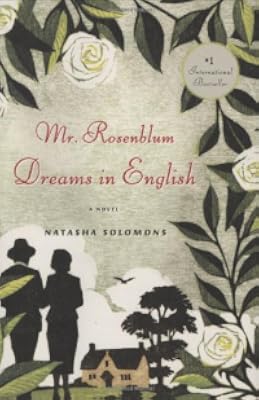
Natasha Solomons writes novels and screenplays. Her first book, Mr. Rosenblum's List was published in 2010. Her other books include The Novel in the Viola (also published as The House at Tyneford) and Mr. Rosenblum Dreams in English. She is finishing a PhD in eighteenth-century poetry. (Bowker Author Biography)
Common Knowledge
- Canonical title
- The Gallery of Vanished Husbands
- Epigraph
- "The map of a face expresses things from which geography might learn."
Patrick Hayman, A Painter's Notes (1959) - Dedication
- For my parents, Carol and Clive, with love.
And for Luke with thanks for delaying his arrival until the manuscript was (mostly) complete. - First words
- It was Juliet Montague's thirtieth birthday.
Classifications
Statistics
- Members
- 191
- Popularity
- 171,502
- Reviews
- 17
- Rating
- (3.48)
- Languages
- English, French, German
- Media
- Paper, Audiobook, Ebook
- ISBNs
- 18
- ASINs
- 7