On This Page
Description
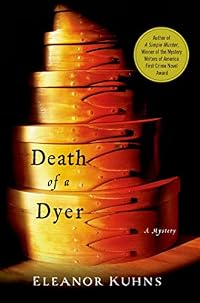
Will Rees feels at home. It's been a long time since he last felt this way—not since before his wife died more than five years ago and he took to the road as a traveling weaver. Now Rees is back on his farm, living with his teenaged son, David, and his housekeeper, Lydia—whose presence contributes more towards his happiness than he's ready to admit. But his domestic bliss is shattered the morning a visitor brings news of an old friend's murder.Nate Bowditch and Rees hadn't spoken in show more many long years, but as children they were closer than brothers, and Rees feels his loss acutely. Asked to look into the circumstances surrounding Nate's death, Rees simply can't refuse. At the Bowditch farmstead, Rees quickly discovers that everyone—from Nate's frosty wife to his missing son to the shy serving girl—is hiding something. But are any of them actually capable of murder? Or does the answer lie elsewhere, behind stones no one even knew needed un-turning?
Death of a Dyer once again proves Eleanor Kuhns' remarkable ability to spin a captivating story and capture the light and darker sides of human nature on the page.
. show less
Tags
Recommendations



















Member Reviews
I am not a fan of historical fiction, and I'm sad to say especially historical mysteries. One might think I would like these genres because I am naturally curious, love to learn, read fast, and love mysteries. But the very aspects of historical mysteries that probably appeal to many readers are the aspects that annoy me.
And that is the case here.
Will Rees is called upon by the wife of an old friend, Nate Bowditch, to solve his murder. More specifically, Molly Bowditch wants him to clear her son Richard, who is suspected of committing the crime. Will has had experience in solving crimes so is a good choice, except that he vows he will find and expose the murderer even if it is Richard.
Back on his own farm for the first time in a while, show more Rees is a weaver who normally travels to sell his goods. He is not a homebody and doesn't enjoy farming. He is living with his son and a housekeeper, Lydia, who means more to him than he wants to admit. His friend Nate had trained in weaving as well, when they grew up together, but turned instead to making and selling dyes. He was forever experimenting with various dyes made with plants and other materials available in the local area. He was generally well-thought-of and well-heeled, having done well for himself in the acquisition and sale of land.
There are many who might have killed him, but Richard rises to the top because he was seen running from the building where Nate was later found dead, and Richard had blood on his clothes. Then he disappeared. Rees is reluctant to consider the young man has a murderer and works to eliminate other suspects. In the process he discovers quite a web of deception, going back several years.
Now, as for my annoyance. Writers of historical mysteries have to find creative ways for their characters to discover the criminal, given that they did not have the resources or training now available to crime fighters. At times these methods just seem ridiculous, and other times it just seems fortuitous that the detective finds the villain. In this case, Rees takes off every morning for the various places where he might learn something about Nate and his life at the time of his death. Rees questions people and follows through to question more people. This seems reasonable enough. He also contends with the interests of Lydia, who is a forward-seeming woman. It is typical in these books that the women - the women to whom we are sympathetic - have modern viewpoints, are strong, secure women dealing with problematic laws and customs that degrade women. If they aren't this type woman, then they go all the way to the subservient, romantic type popular in romance novels. Either way it seems out of place.
I appreciated that this author did not try to sound like an 18th-century novelist, overly-wordy and full of euphemisms. I do not believe people actually talked the way they were often portrayed in those years. But I tired of the usual characters, well represented here. I also never developed much fondness for Rees, who seemed too quick to anger and to have no good reason to ignore his feelings for Lydia. show less
And that is the case here.
Will Rees is called upon by the wife of an old friend, Nate Bowditch, to solve his murder. More specifically, Molly Bowditch wants him to clear her son Richard, who is suspected of committing the crime. Will has had experience in solving crimes so is a good choice, except that he vows he will find and expose the murderer even if it is Richard.
Back on his own farm for the first time in a while, show more Rees is a weaver who normally travels to sell his goods. He is not a homebody and doesn't enjoy farming. He is living with his son and a housekeeper, Lydia, who means more to him than he wants to admit. His friend Nate had trained in weaving as well, when they grew up together, but turned instead to making and selling dyes. He was forever experimenting with various dyes made with plants and other materials available in the local area. He was generally well-thought-of and well-heeled, having done well for himself in the acquisition and sale of land.
There are many who might have killed him, but Richard rises to the top because he was seen running from the building where Nate was later found dead, and Richard had blood on his clothes. Then he disappeared. Rees is reluctant to consider the young man has a murderer and works to eliminate other suspects. In the process he discovers quite a web of deception, going back several years.
Now, as for my annoyance. Writers of historical mysteries have to find creative ways for their characters to discover the criminal, given that they did not have the resources or training now available to crime fighters. At times these methods just seem ridiculous, and other times it just seems fortuitous that the detective finds the villain. In this case, Rees takes off every morning for the various places where he might learn something about Nate and his life at the time of his death. Rees questions people and follows through to question more people. This seems reasonable enough. He also contends with the interests of Lydia, who is a forward-seeming woman. It is typical in these books that the women - the women to whom we are sympathetic - have modern viewpoints, are strong, secure women dealing with problematic laws and customs that degrade women. If they aren't this type woman, then they go all the way to the subservient, romantic type popular in romance novels. Either way it seems out of place.
I appreciated that this author did not try to sound like an 18th-century novelist, overly-wordy and full of euphemisms. I do not believe people actually talked the way they were often portrayed in those years. But I tired of the usual characters, well represented here. I also never developed much fondness for Rees, who seemed too quick to anger and to have no good reason to ignore his feelings for Lydia. show less
“Death of a Dyer” by Eleanor Kuhns
Set in 1796, Kuhns has done her research as this book is in keeping with the times.
Will Rees, a weaver by choice, a farmer by trade, and a widower who sets about solving crimes, centers his days on the murder of his childhood friend, Nate Bowditch. Rees hadn’t spoken with Nate for many years, since they were children themselves, but he still is affected deeply by Nate’s death. So when his assistance is requested to find out what happened to Nate, he’s unable to say no.
While trying to keep peace at his home with his son David and his housekeeper (or is she?) Lydia, Rees hunts down clues and questions those who he suspects to be involved in Nate’s murder. He begins at Nate’s farm and show more discovers that everything is not what it seems. Nate’s wife Molly is cold, the help is secretive, and Nate’s son Richard is missing. Richard ran after being accused of killing his father. It’s now Rees’s job to either prove Richard innocent or show his guilt.
Secrets kept for years are brought to light and people close to Nate and Rees are stunned by what is revealed. This is a very well-written and entertaining historical novel.
Reviewed by Starr Gardinier Reina, author of “The Other Side: Melinda’s Story” show less
Set in 1796, Kuhns has done her research as this book is in keeping with the times.
Will Rees, a weaver by choice, a farmer by trade, and a widower who sets about solving crimes, centers his days on the murder of his childhood friend, Nate Bowditch. Rees hadn’t spoken with Nate for many years, since they were children themselves, but he still is affected deeply by Nate’s death. So when his assistance is requested to find out what happened to Nate, he’s unable to say no.
While trying to keep peace at his home with his son David and his housekeeper (or is she?) Lydia, Rees hunts down clues and questions those who he suspects to be involved in Nate’s murder. He begins at Nate’s farm and show more discovers that everything is not what it seems. Nate’s wife Molly is cold, the help is secretive, and Nate’s son Richard is missing. Richard ran after being accused of killing his father. It’s now Rees’s job to either prove Richard innocent or show his guilt.
Secrets kept for years are brought to light and people close to Nate and Rees are stunned by what is revealed. This is a very well-written and entertaining historical novel.
Reviewed by Starr Gardinier Reina, author of “The Other Side: Melinda’s Story” show less
Ratings
Members
- Recently Added By
Author Information

15 Works 561 Members
Some Editions
Series

Common Knowledge
- Canonical title
- Death of a Dyer
- Original title
- Death of a Dyer
- Original publication date
- 2013-06-18
- People/Characters
- William Rees; Lydia Jane Farrell; David Rees; Nate Bowditch
- Important places
- Maine, USA
- Dedication
- To my husband
- First words
- "Dead?" Rees repeated, staring at George Potter in shock.
- Last words
- (Click to show. Warning: May contain spoilers.)Lydia broke into a run, hurrying to his side to offer her loving support.
Classifications
Statistics
- Members
- 71
- Popularity
- 440,796
- Reviews
- 2
- Rating
- (3.68)
- Languages
- English, Italian
- Media
- Paper, Audiobook, Ebook
- ISBNs
- 9
- ASINs
- 2