Tiger on a Tree
by Anushka Ravishankar
On This Page
Description
After trapping a tiger in a tree, a group of men must decide what to do with it.Tags
Recommendations













Member Reviews
Tiger Tiger on a tree Is it true? Can it be? Did he fly? Did he flee? Did he fall and hurt his knee? Did he cry? Did he plead? If you want to know: read The tale of a wild tiger cub who wanders into an Indian village, and the reactions he encounters. The art, verse and typography run and bounce off the page, drawing both the curious child and the quizzical adult into the lively world of the book.
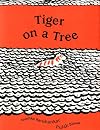
This is a circular story, beginning with the same words with which the story ends. While the words are few and the illustrations graphic and bold, a listener or reader might be delighted by the verse and the opportunities to actively read. The type works in tandem with the graphic illustrations to give another dimension of movement and volume to the illustrations. The tiger is timid and the people interested. Will they trap the tiger? Will they paint it electric blue? Will they keep it in a zoo? Old and young will delight in the outcome of this engaging and minimalist story.
To encourage writing I thought this verse could introduce the idea of simple rhymes and the ways in which they could guide dialogue or the storyline. For readers show more considering how to write their own story this could pose an intriguing challenge. Something out of place, or interacting in a new environment. What do people do when they encounter this new creature or thing? Is it resolved? Do the people agree? What happens in the end? I found the simple illustrations appealing for this challenge as well with the idea that simple, but empathetic illustrations with strong line work and graphic quality can go a long way. With only three colors the illustrator manages to convey the tigers timidity, fear, confusion, and eventual joy at being set free. show less
To encourage writing I thought this verse could introduce the idea of simple rhymes and the ways in which they could guide dialogue or the storyline. For readers show more considering how to write their own story this could pose an intriguing challenge. Something out of place, or interacting in a new environment. What do people do when they encounter this new creature or thing? Is it resolved? Do the people agree? What happens in the end? I found the simple illustrations appealing for this challenge as well with the idea that simple, but empathetic illustrations with strong line work and graphic quality can go a long way. With only three colors the illustrator manages to convey the tigers timidity, fear, confusion, and eventual joy at being set free. show less
I first discovered this author in Catch that Crocodile! While I admit the artwork isn't my favorite style, and my library patrons don't seem to be very interested in checking them out, when I've pulled the books and read them in storytime the kids love them.
Each of these stories has a strong rhyming pattern and include many opportunities to get the kids involved in the story, asking what happens next, trying to answer the questions asked by the text, etc. Elephants Never Forget also has excellent opportunities for practicing elephant toots and buffalo bellows. They each seem to follow a pattern of a misplaced animal - a crocodile in a village ditch, a tiger in a village tree, and an elephant among buffalos. The artwork is blocky and can show more be difficult to discern the actual pictures, although Elephants Never Forget, which is illustrated by Christine Pieper rather than Pulak Biswas, is more conventional. You may have to actively push these stories at patrons - but once they've tried them, they'll love them!
Verdict: I recommend Elephants Never Forget and Catch That Crocodile. Have a crocodile and/or elephant themed storytime and introduce your patrons to something different!
Catch that crocodile
ISBN: 978-8186211632; Published March 2008 by Tara; Borrowed from the library; Purchased for the library; Added to my personal wishlist
Elephants never forget
ISBN: 0618997849; Published March 2008 by Houghton Mifflin; Borrowed from the library; Added to my personal wishlist
Tiger on a tree
ISBN: 978-0374375553; Published March 2005 by Farrar Straus & Giroux; Borrowed from the library show less
Each of these stories has a strong rhyming pattern and include many opportunities to get the kids involved in the story, asking what happens next, trying to answer the questions asked by the text, etc. Elephants Never Forget also has excellent opportunities for practicing elephant toots and buffalo bellows. They each seem to follow a pattern of a misplaced animal - a crocodile in a village ditch, a tiger in a village tree, and an elephant among buffalos. The artwork is blocky and can show more be difficult to discern the actual pictures, although Elephants Never Forget, which is illustrated by Christine Pieper rather than Pulak Biswas, is more conventional. You may have to actively push these stories at patrons - but once they've tried them, they'll love them!
Verdict: I recommend Elephants Never Forget and Catch That Crocodile. Have a crocodile and/or elephant themed storytime and introduce your patrons to something different!
Catch that crocodile
ISBN: 978-8186211632; Published March 2008 by Tara; Borrowed from the library; Purchased for the library; Added to my personal wishlist
Elephants never forget
ISBN: 0618997849; Published March 2008 by Houghton Mifflin; Borrowed from the library; Added to my personal wishlist
Tiger on a tree
ISBN: 978-0374375553; Published March 2005 by Farrar Straus & Giroux; Borrowed from the library show less
When a tiger wanders into a populated area, the men who catch it then have to decide what to do. The pages are arranged so the reader or listeners can also discuss this and vote as the men do. This is a circular tale: the last line is the same as the first.
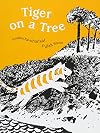
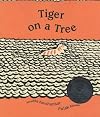
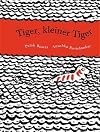
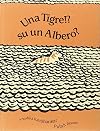
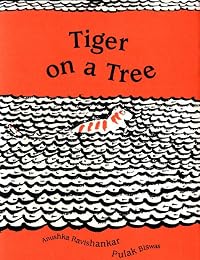
The art work seems to be woodcuts; everything is black except for the orange of the tiger's stripes, the sun, the ground, and the men's net. The text is curvy and rhymes.
The art work seems to be woodcuts; everything is black except for the orange of the tiger's stripes, the sun, the ground, and the men's net. The text is curvy and rhymes.
This was a perfect book for 2nd graders to read at the start of the year. They loved it.
Sparse, uninteresting text combined with unappealing, blurred illustrations make this book a real flop. There is no real plot or interest to be had anywhere in this tiny book.
This story was about a tiger that lives on a shore. First, the tiger decided to swim across the ocean from one shore to another shore. Then, the tiger decided to climb a tree. Next, a group of people caught the tiger and put him in a cage. At the end of the story the group of people decided to let the tiger go on the shore. This story teaches children to always be aware of tigers.
Members
- Recently Added By
Author Information
60 Works 861 Members
Some Editions
Awards and Honors
Distinctions
Common Knowledge
- Canonical title
- Tiger on a Tree
- Original publication date
- 1997
- Important places
- shore; tree
- First words
- Tiger, tiger on the shore
- Last words
- (Click to show. Warning: May contain spoilers.)Tiger, tiger on the shore
Classifications
Statistics
- Members
- 117
- Popularity
- 276,998
- Reviews
- 8
- Rating
- (3.44)
- Languages
- 5 — Dutch, English, French, German, Italian
- Media
- Paper
- ISBNs
- 8