On This Page
Description
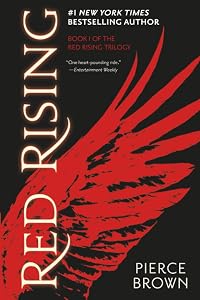
Darrow is a Red, a member of the lowest caste in the color-coded society of the future. Like his fellow Reds, he works all day, believing that he and his people are making the surface of Mars livable for future generations. Yet he spends his life willingly, knowing that his blood and sweat will one day result in a better world for his children. But Darrow and his kind have been betrayed. Soon he discovers that humanity reached the surface generations ago. Vast cities and sprawling parks show more spread across the planet. Darrow and Reds like him, are nothing more than slaves to a decadent ruling class. Inspired by a longing for justice, and driven by the memory of lost love, Darrow sacrifices everything to infiltrate the legendary Institute, a proving ground for the dominant Gold caste, where the next generation of humanity's overlords struggle for power. He will be forced to compete for his life and the very future of civilization against the best and most brutal of Society's ruling class. There, he will stop at nothing to bring down his enemies . . . even if it means he has to become one of them to do so. show lessTags
Recommendations


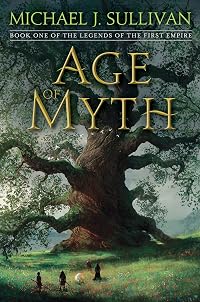

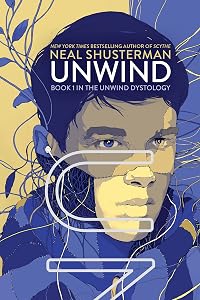
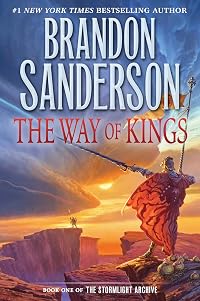
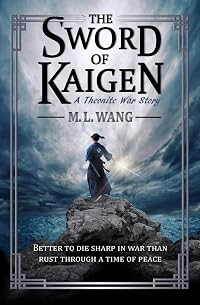
Member Recommendations
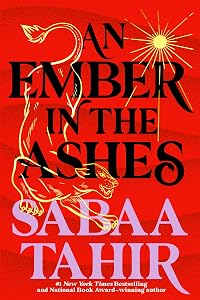
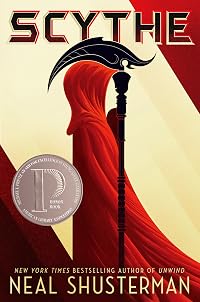
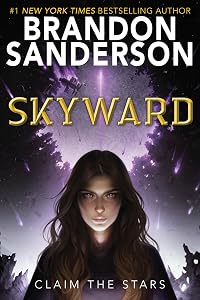
wifilibrarian Both feature themes of oppression, caste systems, large divides between have-nots and the haves. Televised young adults fighting.
83

anonymous user Action-filled fantasy page-turner, set in an African-inspired world.
Member Reviews
Love love love LOVED it!
(Full disclosure: I received a free ARC of this book for review through Library Thing’s Early Reviewer program. Also, trigger warning for rape.)
The first time I spotted a copy of Red Rising up for grabs on Library Thing, I dismissed it as yet another YA romance set against a gritty-yet-generic dystopian backdrop. The second time, I rolled my eyes at the seemingly endless comparisons to The Hunger Games – nowadays every young adult dystopia featuring a spunky heroine is THE NEXT THE HUNGER GAMES, it seems – but threw my hat in the ring anyway. (What can I say, my interest was piqued!) And when it arrived on my doorstep, I became convinced that no book could possibly live up to the hype generated in the press show more materials that came sandwiched in between the pages of the ARC.
I owe Pierce Brown a huge apology. I bloodydamn loved it, just as he promised I would!
In the distant future (we’re talking 700 years+, though Brown is light on the specifics), humanity has been divided into color-coded castes, each purposefully created to fulfill a different role in society: Yellows study medicine and science; Greens develop technology; Blues navigate the stars; Silvers count and manipulate currency; Coppers maintain the bureaucracy; Whites pass legislation and mete out justice; and Gray soldiers uphold the hierarchy. At the top of the pyramid stands the ruling class, the Golds. In the early days of space exploration, the wealthy Golds colonized Luna and, when it became the hub of space travel, they waged a war for independence against the countries and corporations of Earth (in a futuristic version of the American Rebellion). Luna triumphed over Earth in what became known as the Conquering, thus consolidating the Golds’ military and economic power.
“Every Color props up the Golds” – especially the Reds, whose responsibilities primarily include manual labor. At the bottom of the shitpile are the lowReds, who live and work under the surface of Mars, mining the planet for helium-3, a precious resource which is used to terraform other planets. These “pioneers” believe that they’re sacrificing their well-being, their happiness, their very lives, for the greater good: so that their children and grandchildren can one day live free on Mars. But they are slaves to a lie: Mars was settled some three hundred years previous. Rather than allow the lowReds to share in the fruits of their labor, the Golds and their allies decided to deep them in the dark, both literally and figuratively.
Darrow lives in Lykos, just one of hundreds of mining communities under Mars. At the tender age of 16, he’s already married, seen his father executed, and ascended to the celebrated role of Helldiver (though not necessarily in that order). It’s Darrow who drives the machine that digs into Mars’ surface in search of helium-3; his success which determines his clan’s food allotment for the quarter. (Though not really; the Laurel is not the only merit-based competition on Mars that’s fixed.) Content with his work and family, and too busy worrying about putting food on his wife’s plate to bother with politics, Darrow initially plays Katniss to his bride Eo’s Gale. “I live for the dream that my children will be free,” Eo proclaims in a much-quoted passage early in the book. Ultimately, she dies for this dream as well: while suffering a publicly televised lashing for sneaking into a surface Garden reserved for Golds, Eo sings the prohibited song, for which she is sentenced to die. With a few short verses, she’s transformed from Eo the lowRed into Persephone the martyr.
Overcome with grief, Darrow cuts Eo’s body from the gallows so that he can give her a proper burial – just one of many courtesies denied the lowRed miners. For this, he too is sentenced to hang. But with the help of his uncle Narol and the “terrorist” group the Sons of Ares, Darrow is rescued, resurrected, and recruited for the revolution. Through extensive plastic surgery, body modification, and alterations on the neural level, Darrow is remade (“carved”) into a Gold, complete with Golden hair, eyes, and skin; an impressively muscular physique; a skeleton of steel; and a Gold sigil on his hand. The High Golds are as lethal as they are beautiful. The changes are so profound that Darrow becomes a creature – both physically and sometimes even mentally – that he no longer recognizes. His mission: to gain admittance to The Institute, where the most prestigious and powerful of the Golds are educated. There he is to prove himself, with the goal of infiltrating Golden society; if he can become an apprentice to a Praetor or Imperator, Darrow – and the Sons of Ares – may one day have an entire fleet at their command.
Lest images of Hogwarts classrooms or Erudite scholars fill your head, this “school” is closer to The Hunger Games arena in form and function. Twelve hundred students, each drafted into one of twelve houses, compete on a real-world battleground for control of their house – and the other eleven houses as well. While outright murder is (mostly) discouraged, less than half of the students will survive the ordeal. Fittingly drafted into House Mars, Darrow quickly rises to a leadership role. However, he must navigate shifting alliances, deal with duplicitous classmates, and hold tight those secrets which threaten to undo him – all while outsmarting hostile Proctors and reconciling unexpected feelings of friendship and love for his sworn enemies, the Golden children.
Red Rising – the first in an expected trilogy – quickly became a new favorite. From the first few pages, I was captivated; by the time the war games began, I found Red Rising nearly impossible to put down.
Comparisons to Suzanne Collins’ masterpiece are not unwarranted; like The Hunger Games, Red Rising is a suspenseful and entertaining dystopia that also tackles some pretty hefty issues between scenes of bloodshed and violence. Lykos and District 12 are underdeveloped societies in a futuristic world: both are mining communities in which citizens mostly barter and trade for necessities like food and clothing. And yet advanced technology, particularly as it relates to industry, is not unheard of; the citizens are given the fancy tools to perform their jobs, but nothing more. Food is used as a means of controlling the population, and certain songs and dances are considered so subversive that to be caught referencing them is cause for death. Literary brothers Gale and Darrow both toil in the mines when they should be in school; mining accidents are common, and on Lykos, two clans are actually punished with reduced rations when they fail to meet their helium quotas due to an accident which claims the lives of many of their workers. Different classes/Districts/Colors are pitted against one another – through competition for food and resources, for example – by their real enemies, Panem/the Golds. Only when the slaves unite against their oppressors can freedom be won.
Violence as entertainment is also a shared characteristic of both trilogies. Just as all of Panem eagerly tunes in to The Hunger Games, the Proctors watch the battles at The Institute from their cozy perch on mount Olympus. Occasionally they float down in their gravBoots, picnics of quail eggs and other exploitative delicacies in tow, for a better view. Later, they edit the video down for the Drafters so that it reflects the narrative the Proctors wish to convey. Likewise, the adults interfere in what is supposed to be a fair fight, manipulating the game so that it results in a preferred outcome (though both Katniss and Darrow manage to disrupt the paradigm). Wealthy and powerful parents are able to buy success for their children – much as the children from favored Districts enter the arena with distinct advantages. Ultimately, both Proctors and Gamemakers become part of the “games” they created.
Red Rising even has a cave scene! (Thankfully it’s brief.)
This is in no way to imply that Red Rising is a Hunger Games clone. Pierce Brown has created a story that’s unique, exciting, and brims with masterful world building. The characters are multidimensional and utterly believably. Whereas Darrow at first sees the Golds as a homogenous entity, uniformly evil and comprised of interchangeable parts – he (and we) come to recognize them as individuals. Some are as cold and cruel as he imagined; others are unexpectedly kind, compassionate – even a little egalitarian, like dear Eo. Contrary to their leaders’ protestations, empathy isn’t just a “low color thing.” While all Golds benefit from unearned privilege, and to some degree harbor those prejudices passed down from generation to generation, they aren’t all enemies of equality. In the course of building his army, for example, Darrow discovers that the most effective way to earn allegiance isn’t by taking slaves, but by freeing them. The next generation of Golds are taught that “might makes right” – yet it’s clear that not all of them have fully internalized their parents’ messages.
The topic of rape comes up several times in the story, and I’m happy to say that it’s handled with care. Rape scenes are brief and non-graphic, yet Brown tackles rape culture head-on. On more than one occasion, the author stresses that rape isn’t about lust, but power: it can be used as a tool of war, a method of revenge, or a way of asserting control over another human being. Even while condemning rape in the games, Darrow acknowledges that his own, much idealized home is not blameless: men also rape women in Lykos, including the women they claim to love. Darrow’s strategy for punishing rape in his own rank and file is rather genius.
On the other hand, I find it odd that Reds are generally regarded as the lowest and most exploited class, even when compared to Pinks. Pinks serve the other classes – sometimes as masseurs or personal assistants, but most commonly as prostitutes (“pleasure slaves”). Because they’re given no more choice in the matter than members of other castes, Pinks are essentially sex slaves – their job is to acquiesce to rape on the daily. In some ways, one might argue that Reds have it better than some of the other “low” colors, particularly the Pinks. While it’s true that many of them will die in mining accidents or succumb to pitviper bites (and that the rapes of Red women mostly go unpunished; a Gold cannot even be said to have raped a Red), they’re allowed to live their lives in ways that Pinks are not (or don’t seem to be; we see very little of the Pinks in Red Rising): they can form families, have children, select their own sexual partners – all of which runs contrary to the duties of a Pink.
My only gripe – and it is a relatively minor one – is that Brown never fully explains how humanity came to be divided in such a way. The “forced Darwinism” involved in creating the different Colors is extensive, with fundamental differences manifesting at every level: physical, biological, psychological, neurological. While the Golds’ motivation is clear – creating a “perfect society” of which they are the pinnacle – it’s difficult to imagine how they forced billions of other humans to accept their vision. Perhaps this will be tackled in a later book?
Either way - and with the first book still several months away from release - I’m already dying to read the next installation in the series. THE ANTICIPATION.
http://www.easyvegan.info/2013/10/23/red-rising-by-pierce-brown/ show less
(Full disclosure: I received a free ARC of this book for review through Library Thing’s Early Reviewer program. Also, trigger warning for rape.)
The first time I spotted a copy of Red Rising up for grabs on Library Thing, I dismissed it as yet another YA romance set against a gritty-yet-generic dystopian backdrop. The second time, I rolled my eyes at the seemingly endless comparisons to The Hunger Games – nowadays every young adult dystopia featuring a spunky heroine is THE NEXT THE HUNGER GAMES, it seems – but threw my hat in the ring anyway. (What can I say, my interest was piqued!) And when it arrived on my doorstep, I became convinced that no book could possibly live up to the hype generated in the press show more materials that came sandwiched in between the pages of the ARC.
I owe Pierce Brown a huge apology. I bloodydamn loved it, just as he promised I would!
In the distant future (we’re talking 700 years+, though Brown is light on the specifics), humanity has been divided into color-coded castes, each purposefully created to fulfill a different role in society: Yellows study medicine and science; Greens develop technology; Blues navigate the stars; Silvers count and manipulate currency; Coppers maintain the bureaucracy; Whites pass legislation and mete out justice; and Gray soldiers uphold the hierarchy. At the top of the pyramid stands the ruling class, the Golds. In the early days of space exploration, the wealthy Golds colonized Luna and, when it became the hub of space travel, they waged a war for independence against the countries and corporations of Earth (in a futuristic version of the American Rebellion). Luna triumphed over Earth in what became known as the Conquering, thus consolidating the Golds’ military and economic power.
“Every Color props up the Golds” – especially the Reds, whose responsibilities primarily include manual labor. At the bottom of the shitpile are the lowReds, who live and work under the surface of Mars, mining the planet for helium-3, a precious resource which is used to terraform other planets. These “pioneers” believe that they’re sacrificing their well-being, their happiness, their very lives, for the greater good: so that their children and grandchildren can one day live free on Mars. But they are slaves to a lie: Mars was settled some three hundred years previous. Rather than allow the lowReds to share in the fruits of their labor, the Golds and their allies decided to deep them in the dark, both literally and figuratively.
Darrow lives in Lykos, just one of hundreds of mining communities under Mars. At the tender age of 16, he’s already married, seen his father executed, and ascended to the celebrated role of Helldiver (though not necessarily in that order). It’s Darrow who drives the machine that digs into Mars’ surface in search of helium-3; his success which determines his clan’s food allotment for the quarter. (Though not really; the Laurel is not the only merit-based competition on Mars that’s fixed.) Content with his work and family, and too busy worrying about putting food on his wife’s plate to bother with politics, Darrow initially plays Katniss to his bride Eo’s Gale. “I live for the dream that my children will be free,” Eo proclaims in a much-quoted passage early in the book. Ultimately, she dies for this dream as well: while suffering a publicly televised lashing for sneaking into a surface Garden reserved for Golds, Eo sings the prohibited song, for which she is sentenced to die. With a few short verses, she’s transformed from Eo the lowRed into Persephone the martyr.
Overcome with grief, Darrow cuts Eo’s body from the gallows so that he can give her a proper burial – just one of many courtesies denied the lowRed miners. For this, he too is sentenced to hang. But with the help of his uncle Narol and the “terrorist” group the Sons of Ares, Darrow is rescued, resurrected, and recruited for the revolution. Through extensive plastic surgery, body modification, and alterations on the neural level, Darrow is remade (“carved”) into a Gold, complete with Golden hair, eyes, and skin; an impressively muscular physique; a skeleton of steel; and a Gold sigil on his hand. The High Golds are as lethal as they are beautiful. The changes are so profound that Darrow becomes a creature – both physically and sometimes even mentally – that he no longer recognizes. His mission: to gain admittance to The Institute, where the most prestigious and powerful of the Golds are educated. There he is to prove himself, with the goal of infiltrating Golden society; if he can become an apprentice to a Praetor or Imperator, Darrow – and the Sons of Ares – may one day have an entire fleet at their command.
Lest images of Hogwarts classrooms or Erudite scholars fill your head, this “school” is closer to The Hunger Games arena in form and function. Twelve hundred students, each drafted into one of twelve houses, compete on a real-world battleground for control of their house – and the other eleven houses as well. While outright murder is (mostly) discouraged, less than half of the students will survive the ordeal. Fittingly drafted into House Mars, Darrow quickly rises to a leadership role. However, he must navigate shifting alliances, deal with duplicitous classmates, and hold tight those secrets which threaten to undo him – all while outsmarting hostile Proctors and reconciling unexpected feelings of friendship and love for his sworn enemies, the Golden children.
Red Rising – the first in an expected trilogy – quickly became a new favorite. From the first few pages, I was captivated; by the time the war games began, I found Red Rising nearly impossible to put down.
Comparisons to Suzanne Collins’ masterpiece are not unwarranted; like The Hunger Games, Red Rising is a suspenseful and entertaining dystopia that also tackles some pretty hefty issues between scenes of bloodshed and violence. Lykos and District 12 are underdeveloped societies in a futuristic world: both are mining communities in which citizens mostly barter and trade for necessities like food and clothing. And yet advanced technology, particularly as it relates to industry, is not unheard of; the citizens are given the fancy tools to perform their jobs, but nothing more. Food is used as a means of controlling the population, and certain songs and dances are considered so subversive that to be caught referencing them is cause for death. Literary brothers Gale and Darrow both toil in the mines when they should be in school; mining accidents are common, and on Lykos, two clans are actually punished with reduced rations when they fail to meet their helium quotas due to an accident which claims the lives of many of their workers. Different classes/Districts/Colors are pitted against one another – through competition for food and resources, for example – by their real enemies, Panem/the Golds. Only when the slaves unite against their oppressors can freedom be won.
Violence as entertainment is also a shared characteristic of both trilogies. Just as all of Panem eagerly tunes in to The Hunger Games, the Proctors watch the battles at The Institute from their cozy perch on mount Olympus. Occasionally they float down in their gravBoots, picnics of quail eggs and other exploitative delicacies in tow, for a better view. Later, they edit the video down for the Drafters so that it reflects the narrative the Proctors wish to convey. Likewise, the adults interfere in what is supposed to be a fair fight, manipulating the game so that it results in a preferred outcome (though both Katniss and Darrow manage to disrupt the paradigm). Wealthy and powerful parents are able to buy success for their children – much as the children from favored Districts enter the arena with distinct advantages. Ultimately, both Proctors and Gamemakers become part of the “games” they created.
Red Rising even has a cave scene! (Thankfully it’s brief.)
This is in no way to imply that Red Rising is a Hunger Games clone. Pierce Brown has created a story that’s unique, exciting, and brims with masterful world building. The characters are multidimensional and utterly believably. Whereas Darrow at first sees the Golds as a homogenous entity, uniformly evil and comprised of interchangeable parts – he (and we) come to recognize them as individuals. Some are as cold and cruel as he imagined; others are unexpectedly kind, compassionate – even a little egalitarian, like dear Eo. Contrary to their leaders’ protestations, empathy isn’t just a “low color thing.” While all Golds benefit from unearned privilege, and to some degree harbor those prejudices passed down from generation to generation, they aren’t all enemies of equality. In the course of building his army, for example, Darrow discovers that the most effective way to earn allegiance isn’t by taking slaves, but by freeing them. The next generation of Golds are taught that “might makes right” – yet it’s clear that not all of them have fully internalized their parents’ messages.
The topic of rape comes up several times in the story, and I’m happy to say that it’s handled with care. Rape scenes are brief and non-graphic, yet Brown tackles rape culture head-on. On more than one occasion, the author stresses that rape isn’t about lust, but power: it can be used as a tool of war, a method of revenge, or a way of asserting control over another human being. Even while condemning rape in the games, Darrow acknowledges that his own, much idealized home is not blameless: men also rape women in Lykos, including the women they claim to love. Darrow’s strategy for punishing rape in his own rank and file is rather genius.
On the other hand, I find it odd that Reds are generally regarded as the lowest and most exploited class, even when compared to Pinks. Pinks serve the other classes – sometimes as masseurs or personal assistants, but most commonly as prostitutes (“pleasure slaves”). Because they’re given no more choice in the matter than members of other castes, Pinks are essentially sex slaves – their job is to acquiesce to rape on the daily. In some ways, one might argue that Reds have it better than some of the other “low” colors, particularly the Pinks. While it’s true that many of them will die in mining accidents or succumb to pitviper bites (and that the rapes of Red women mostly go unpunished; a Gold cannot even be said to have raped a Red), they’re allowed to live their lives in ways that Pinks are not (or don’t seem to be; we see very little of the Pinks in Red Rising): they can form families, have children, select their own sexual partners – all of which runs contrary to the duties of a Pink.
My only gripe – and it is a relatively minor one – is that Brown never fully explains how humanity came to be divided in such a way. The “forced Darwinism” involved in creating the different Colors is extensive, with fundamental differences manifesting at every level: physical, biological, psychological, neurological. While the Golds’ motivation is clear – creating a “perfect society” of which they are the pinnacle – it’s difficult to imagine how they forced billions of other humans to accept their vision. Perhaps this will be tackled in a later book?
Either way - and with the first book still several months away from release - I’m already dying to read the next installation in the series. THE ANTICIPATION.
http://www.easyvegan.info/2013/10/23/red-rising-by-pierce-brown/ show less
 This review was written for LibraryThing Early Reviewers.
HOLY. DEAR. GOD.
I am a dystopian junkie. Hunger Games, Divergent, Battle Royale, A Brave New World, Life As We Knew It, Legend. I've read them all. Loved most of them. So I requested this book as an ARC, thinking it would be a fun read, a good way to spend down time on a trip I had coming up.
This book BLEW MY MIND. "Exciting new voice" is such a cliche, but I feel like I have to use it here. I hereby pledge to buy and read ANYTHING written by Pierce Brown for the rest of his career.
Darrow has a dangerous, adrenaline-fueled job underground on Mars, mining helium stores in order to make life on the surface livable for other pilgrims from Earth. He is a Red, the lowest class in society, but is content with his life, good at his job, and show more madly in love with his wife, Eo. Until she is executed by the ArchGovernor of Mars, and he goes in undercover as a Gold to exact his revenge.
This is being spun as the new Hunger Games. It isn't. This is Brave New World plus Lord of the Flies plus Hunger Games meets Greek and Roman mythology with a dash of Hogwarts thrown in. With all of these comparisons, one might suspect that this book might be a bit derivative. But it isn't. It's new and fresh. And breathtaking. Absolutely. Breathtaking.
So many characters to love. So much action to keep the plot moving. Truly, this is dystopian fiction in a way that I've never seen it done before. And I LOVED it!!
Can I give this eight stars or something?
No excuses. Everyone go buy this book. Pre-order it. Make sure you have it in your hand the day it comes out. Genius like this cries out to be rewarded. show less
I am a dystopian junkie. Hunger Games, Divergent, Battle Royale, A Brave New World, Life As We Knew It, Legend. I've read them all. Loved most of them. So I requested this book as an ARC, thinking it would be a fun read, a good way to spend down time on a trip I had coming up.
This book BLEW MY MIND. "Exciting new voice" is such a cliche, but I feel like I have to use it here. I hereby pledge to buy and read ANYTHING written by Pierce Brown for the rest of his career.
Darrow has a dangerous, adrenaline-fueled job underground on Mars, mining helium stores in order to make life on the surface livable for other pilgrims from Earth. He is a Red, the lowest class in society, but is content with his life, good at his job, and show more madly in love with his wife, Eo. Until she is executed by the ArchGovernor of Mars, and he goes in undercover as a Gold to exact his revenge.
This is being spun as the new Hunger Games. It isn't. This is Brave New World plus Lord of the Flies plus Hunger Games meets Greek and Roman mythology with a dash of Hogwarts thrown in. With all of these comparisons, one might suspect that this book might be a bit derivative. But it isn't. It's new and fresh. And breathtaking. Absolutely. Breathtaking.
So many characters to love. So much action to keep the plot moving. Truly, this is dystopian fiction in a way that I've never seen it done before. And I LOVED it!!
Can I give this eight stars or something?
No excuses. Everyone go buy this book. Pre-order it. Make sure you have it in your hand the day it comes out. Genius like this cries out to be rewarded. show less
This review was written for LibraryThing Early Reviewers.This is how you write a dystopian novel. No stupid unnecessary love triangles. No inane quests. No silly dialogue thrown in to add to the word count and fill in the pages. In short, this is one of the best books I've read in a long time.
There are going to be inevitable comparisons with The Hunger Games, but this novel stands on its own merit. I'm most amazed by the quality of the writing. The dialogue is spot on, the plot grabbed me within the first 50 pages and the pace is unrelenting. All the major characters are true to life and not just one-dimensional. And what a story! You'd be hard pressed to find a better tale from a veteran writer.
I won't spill the beans on the plot but I guarantee you it will appeal even to the most jaded of show more readers of this genre. There are revelations of many orders of magnitude and they never are forced or seem implausible. No doubt there are elements that have been done before, but rarely with such skill.
It's hard to believe that this is the author's first novel. You could have fooled me. Rarely do I go ape over a book but in this case I'm more than willing to make an exception. If you can read, pick this up. Yes the hype you heard is true, this book does kick ass. An emphatic 5 stars. show less
There are going to be inevitable comparisons with The Hunger Games, but this novel stands on its own merit. I'm most amazed by the quality of the writing. The dialogue is spot on, the plot grabbed me within the first 50 pages and the pace is unrelenting. All the major characters are true to life and not just one-dimensional. And what a story! You'd be hard pressed to find a better tale from a veteran writer.
I won't spill the beans on the plot but I guarantee you it will appeal even to the most jaded of show more readers of this genre. There are revelations of many orders of magnitude and they never are forced or seem implausible. No doubt there are elements that have been done before, but rarely with such skill.
It's hard to believe that this is the author's first novel. You could have fooled me. Rarely do I go ape over a book but in this case I'm more than willing to make an exception. If you can read, pick this up. Yes the hype you heard is true, this book does kick ass. An emphatic 5 stars. show less
This review was written for LibraryThing Early Reviewers.Warning: minor plot spoilers from the first several chapters of the book.
Red Rising, published in 2014 by Del Ray Books, is the first book in Pierce Brown's Red Rising trilogy. The series is set in a futuristic Society where humans have colonized many of the planets in the solar system and installed a strict social hierarchy. This hierarchy is based on one's “Color” — categories denoted by hair and eye color that determine one’s sole purpose in the Society.
There are the LowColors: Reds are menial laborers, Browns are servants, Obsidians are foot soldiers, and Pinks are pleasure slaves. Then the MidColors: Grays are police, Blues are astronavigators, Yellows are doctors, Greens are programmers, Purples are artists, and Oranges show more are mechanics. And lastly, the HighColors: Silvers are bankers, Whites are clergy members, Coppers are administrative workers, and Golds are the rulers of the Society.
Red Rising's plot follows a young man called Darrow. Born a Red on Mars, Darrow spent his entire adolescence underground, living and working in mines full of helium-3, a helium isotope the Society uses to terraform planets.
Darrow knows his life is hard -- perhaps even unfairly so -- but he is content. He believes he and his fellow Reds are pioneers on Mars, suffering to break in the planet so that the rest of humanity can follow and escape a dying Earth.
His best friend and new wife Eo is the firebrand in his life. She believes the system is rigged; she sees that the Golds treat Reds with unnecessary cruelty and that there are holes in the narrative the Reds of Mars have been fed. Darrow resists her revolutionary ideas; he feels helpless and does not want to rock the boat.
To prove her point to Darrow, Eo breaks the pair out of the mines into a garden on the surface of Mars -- a planet which, in truth, has already been terraformed and inhabited by the other Colors for many generations. This moment resembles scenes from the Garden of Eden in Genesis; the young woman who has already seen good and evil encourages the young man to lose his innocence. Then comes the fall from grace, as Eo and Darrow are discovered in the garden, and their lives fall apart.
Soon, Darrow is alone on death row for breaking the strict rules of the Society. But instead of being executed, he is kidnapped by the Sons of Ares, a rebel organization of Reds who fight the Golds' tyranny. They show Darrow the full extent of the Society's deception. The Reds are not pioneers; they, like the rest of the Colors, are slaves to the Golds.
The Sons convince Darrow to undergo a painful process called 'carving' -- a futuristic form of cosmetic surgery -- so he can pass as a Gold, join their training Institute, and eventually take the Golds down from the inside out.
Many have noted that Red Rising seems to draw a lot from several other works in the genre. The division of people into different groups all designed to serve the reigning group in a specific way is reminiscent of the Districts and the Capitol in Suzanne Collins's Hunger Games trilogy. The space setting, the brutal institute where kids are trained to be monsters, and the cold and calculated but morally-tortured main character all resemble Ender's experiences in Orson Scott Card's Ender's Game. The way the kids are sorted into houses before the competition echoes J.K. Rowling's Harry Potter series, and the way those houses are named after Roman gods and proctored by powerful men and women who use the names of those gods and watch their charges from 'Olympus' further echoes Rick Riordan's Percy Jackson and Heroes of Olympus series.
Perhaps Brown's clearest influence is still human history. Even though, in the Red Rising trilogy, we see characters of the same Color who seem to be of different races, the idea of one group conquering and enslaving others and using a trait like color to justify it all is sadly not a foreign one to any modern reader.
Like those of its influences, the plot of Red Rising follows Joseph Campbell's 'Hero's Journey' framework pretty reliably. In this context, I think the book's genre references and clichés are most bothersome in the first half of Act One, where Brown is building his set and putting his characters in place before calling 'Action!', per say.
Then we cross the First Threshold, and we never look back. Plot is unquestionably Brown's strong suit. This book grabs you. It makes you fidget nervously. It makes you hum and laugh and cry out loud. It makes you put it down and take a deep breath, then snatch it back up to find out what happens next.
In the end, though I might have liked Red Rising more if I thought it made less use of clichés or owed less to other fiction that came before it, I still believe that Brown wove those elements together into one hell of a book.
Note: This review has been cross-posted on WordPress and Goodreads. show less
Red Rising, published in 2014 by Del Ray Books, is the first book in Pierce Brown's Red Rising trilogy. The series is set in a futuristic Society where humans have colonized many of the planets in the solar system and installed a strict social hierarchy. This hierarchy is based on one's “Color” — categories denoted by hair and eye color that determine one’s sole purpose in the Society.
There are the LowColors: Reds are menial laborers, Browns are servants, Obsidians are foot soldiers, and Pinks are pleasure slaves. Then the MidColors: Grays are police, Blues are astronavigators, Yellows are doctors, Greens are programmers, Purples are artists, and Oranges show more are mechanics. And lastly, the HighColors: Silvers are bankers, Whites are clergy members, Coppers are administrative workers, and Golds are the rulers of the Society.
Red Rising's plot follows a young man called Darrow. Born a Red on Mars, Darrow spent his entire adolescence underground, living and working in mines full of helium-3, a helium isotope the Society uses to terraform planets.
Darrow knows his life is hard -- perhaps even unfairly so -- but he is content. He believes he and his fellow Reds are pioneers on Mars, suffering to break in the planet so that the rest of humanity can follow and escape a dying Earth.
His best friend and new wife Eo is the firebrand in his life. She believes the system is rigged; she sees that the Golds treat Reds with unnecessary cruelty and that there are holes in the narrative the Reds of Mars have been fed. Darrow resists her revolutionary ideas; he feels helpless and does not want to rock the boat.
To prove her point to Darrow, Eo breaks the pair out of the mines into a garden on the surface of Mars -- a planet which, in truth, has already been terraformed and inhabited by the other Colors for many generations. This moment resembles scenes from the Garden of Eden in Genesis; the young woman who has already seen good and evil encourages the young man to lose his innocence. Then comes the fall from grace, as Eo and Darrow are discovered in the garden, and their lives fall apart.
Soon, Darrow is alone on death row for breaking the strict rules of the Society. But instead of being executed, he is kidnapped by the Sons of Ares, a rebel organization of Reds who fight the Golds' tyranny. They show Darrow the full extent of the Society's deception. The Reds are not pioneers; they, like the rest of the Colors, are slaves to the Golds.
The Sons convince Darrow to undergo a painful process called 'carving' -- a futuristic form of cosmetic surgery -- so he can pass as a Gold, join their training Institute, and eventually take the Golds down from the inside out.
Many have noted that Red Rising seems to draw a lot from several other works in the genre. The division of people into different groups all designed to serve the reigning group in a specific way is reminiscent of the Districts and the Capitol in Suzanne Collins's Hunger Games trilogy. The space setting, the brutal institute where kids are trained to be monsters, and the cold and calculated but morally-tortured main character all resemble Ender's experiences in Orson Scott Card's Ender's Game. The way the kids are sorted into houses before the competition echoes J.K. Rowling's Harry Potter series, and the way those houses are named after Roman gods and proctored by powerful men and women who use the names of those gods and watch their charges from 'Olympus' further echoes Rick Riordan's Percy Jackson and Heroes of Olympus series.
Perhaps Brown's clearest influence is still human history. Even though, in the Red Rising trilogy, we see characters of the same Color who seem to be of different races, the idea of one group conquering and enslaving others and using a trait like color to justify it all is sadly not a foreign one to any modern reader.
Like those of its influences, the plot of Red Rising follows Joseph Campbell's 'Hero's Journey' framework pretty reliably. In this context, I think the book's genre references and clichés are most bothersome in the first half of Act One, where Brown is building his set and putting his characters in place before calling 'Action!', per say.
Then we cross the First Threshold, and we never look back. Plot is unquestionably Brown's strong suit. This book grabs you. It makes you fidget nervously. It makes you hum and laugh and cry out loud. It makes you put it down and take a deep breath, then snatch it back up to find out what happens next.
In the end, though I might have liked Red Rising more if I thought it made less use of clichés or owed less to other fiction that came before it, I still believe that Brown wove those elements together into one hell of a book.
Note: This review has been cross-posted on WordPress and Goodreads. show less
Whoa, where do I start? My head is still reeling with all the things I have to say about Red Rising. Now let's just hope I can consolidate them all into a coherent review without having it devolve into unrestrained, mindless gushing. In any case, I expect this book will be wildly popular -- though only time will tell, of course. Nonetheless, 2014 appears to be off to a great start with debuts like this one from Pierce Brown.
Meet Darrow, a miner on Mars. His people, the Reds, occupy the lowest rungs of society. And like all Reds, Darrow is resigned to a life of hard labor, of digging under the planet's surface for the rest of his days. He thought it was for a noble cause, that his hard work will provide future generations a safe place to show more call home. Except, as it turns out, it was all a lie. Mars had been habitable for generations, and the decadent Golds have been maintaining this charade all along to uphold their hierarchical system of castes and slaves.
Let me just get it out of the way now and say that comparisons to The Hunger Games will be inevitable. You have a dystopian society featuring a main protagonist who rises from the poorest, most downtrodden and oppressed section of it, hoping to destroy the system from within. But before that can happen, he has to go through a transformation to help him fit in with his enemies. You have a competition in which the hero must come out on top at all costs. The war games involved are observed by many, in this case the Proctors of the Institute as well as thousands of Aureates and important Golds who follow the results eagerly, hoping to find their future apprentices amongst the competitors.
But now that that's taken care of, I can also tell you all the ways it was different. First and foremost, the world of Red Rising is hands down in a league of its own. The descriptions of the society and its people and its cultures all overwhelmed me. I credit much of this to Pierce Brown's writing, which is just gorgeous. How does he do it? How does he paint the picture of a life as a Red with so much suffering, hardship, and horrors and yet still manages to fill it with so much beauty? The first chapters were simply astounding, introducing you to Darrow, who comes across as much older than his sixteen years thanks to the experiences he's had as Helldiver, the most dangerous position on a drilling team. His people value song and dance, because even in the darkness there is a kind of hope in expression through music. It's all so lovely, just absolutely surprising and heart-breaking.
Oops, I'm treading dangerously into gushing-territory now, aren't I? Thing is, so much of my thoughts for what I read is tied up in emotion, and no question about it, this one gave me all the feels. There's a keen bite to the story, which will rub your emotions raw if you're not expecting it. Even knowing beforehand that some terrible event is going to set Darrow off on his mission for justice, I was not prepared for the number Red Rising did on my poor, battered emotions. I'm not typically one to give in to tears while reading, but when I saw that we weren't even fifty pages in yet and I felt like bawling my eyes out, I knew at that very moment I was holding a truly remarkable book in my hands.
It only gets better. That darkness and poignancy lasts for the whole book, even when the focus shifts to the games at the Institute. Saying that all hell breaks loose at this point would be a gross understatement -- but in a good way. Oh, in the best way. I expect this is where most people will draw parallels to The Hunger Games, but interestingly enough, my own mind went straight to Age of Empires. No doubt it's the gamer side of me coming through, for I could not read about the characters gathering resources, dividing their forces up for different tasks, commanding armies and conquering other Houses' bases and their Fog of War maps without reminiscing about some of my favorite real-time strategy games with fondness.
Seeing as how the game at the Institute makes up the bulk of this novel, this book would have been anywhere near as addicting or intense for me if not for the descriptions of the tactics and strategies involved. And yet, it is still a very human story; Pierce Brown takes the reader straight down to the trenches where we experience everything from terror and triumph as the competitors fight tooth and nail to try and conquer each other. One could hardly miss the symbolism behind it, a decadent pantheon watching on with amusement as the puny mortals below go at each other like depraved animals.
Ultimately, comparisons will probably abound no matter what. But none of them will change the fact that Red Rising is a very special book, filled with beautiful and terrible things in equal measure. It definitely has what it takes to shine on its own, and I cannot recommend it highly enough. show less
Meet Darrow, a miner on Mars. His people, the Reds, occupy the lowest rungs of society. And like all Reds, Darrow is resigned to a life of hard labor, of digging under the planet's surface for the rest of his days. He thought it was for a noble cause, that his hard work will provide future generations a safe place to show more call home. Except, as it turns out, it was all a lie. Mars had been habitable for generations, and the decadent Golds have been maintaining this charade all along to uphold their hierarchical system of castes and slaves.
Let me just get it out of the way now and say that comparisons to The Hunger Games will be inevitable. You have a dystopian society featuring a main protagonist who rises from the poorest, most downtrodden and oppressed section of it, hoping to destroy the system from within. But before that can happen, he has to go through a transformation to help him fit in with his enemies. You have a competition in which the hero must come out on top at all costs. The war games involved are observed by many, in this case the Proctors of the Institute as well as thousands of Aureates and important Golds who follow the results eagerly, hoping to find their future apprentices amongst the competitors.
But now that that's taken care of, I can also tell you all the ways it was different. First and foremost, the world of Red Rising is hands down in a league of its own. The descriptions of the society and its people and its cultures all overwhelmed me. I credit much of this to Pierce Brown's writing, which is just gorgeous. How does he do it? How does he paint the picture of a life as a Red with so much suffering, hardship, and horrors and yet still manages to fill it with so much beauty? The first chapters were simply astounding, introducing you to Darrow, who comes across as much older than his sixteen years thanks to the experiences he's had as Helldiver, the most dangerous position on a drilling team. His people value song and dance, because even in the darkness there is a kind of hope in expression through music. It's all so lovely, just absolutely surprising and heart-breaking.
Oops, I'm treading dangerously into gushing-territory now, aren't I? Thing is, so much of my thoughts for what I read is tied up in emotion, and no question about it, this one gave me all the feels. There's a keen bite to the story, which will rub your emotions raw if you're not expecting it. Even knowing beforehand that some terrible event is going to set Darrow off on his mission for justice, I was not prepared for the number Red Rising did on my poor, battered emotions. I'm not typically one to give in to tears while reading, but when I saw that we weren't even fifty pages in yet and I felt like bawling my eyes out, I knew at that very moment I was holding a truly remarkable book in my hands.
It only gets better. That darkness and poignancy lasts for the whole book, even when the focus shifts to the games at the Institute. Saying that all hell breaks loose at this point would be a gross understatement -- but in a good way. Oh, in the best way. I expect this is where most people will draw parallels to The Hunger Games, but interestingly enough, my own mind went straight to Age of Empires. No doubt it's the gamer side of me coming through, for I could not read about the characters gathering resources, dividing their forces up for different tasks, commanding armies and conquering other Houses' bases and their Fog of War maps without reminiscing about some of my favorite real-time strategy games with fondness.
Seeing as how the game at the Institute makes up the bulk of this novel, this book would have been anywhere near as addicting or intense for me if not for the descriptions of the tactics and strategies involved. And yet, it is still a very human story; Pierce Brown takes the reader straight down to the trenches where we experience everything from terror and triumph as the competitors fight tooth and nail to try and conquer each other. One could hardly miss the symbolism behind it, a decadent pantheon watching on with amusement as the puny mortals below go at each other like depraved animals.
Ultimately, comparisons will probably abound no matter what. But none of them will change the fact that Red Rising is a very special book, filled with beautiful and terrible things in equal measure. It definitely has what it takes to shine on its own, and I cannot recommend it highly enough. show less
This review was written for LibraryThing Early Reviewers.It's hard to believe that I almost didn't read this series. The opening line is one of the best I've read, and the first 50 pages has readers calling for justice. It does slow down around the midway point, feeling very Lord of the Flies, until secrets shake up the savagery and the depths of political corruption are exposed. A true underdog story with a cunning hero who keeps readers guessing. When conflicts continue to rise, however, he may end up wondering just how far can one can go before they become the thing they hate. Stellar.
I won this as an ARC. I got it in the mail yesterday and started it today. And let me tell you this was nothing like Hunger Games or any other "dystopian" I've read. It was so much more and it was Bloodybrilliant!. The character development for all of them was amazing.
The main character Darrow, has a lot going on in that you feel as though you, the reader are holding your breath or taking one with him through all his ups and downs or life. It was quite exhilarating.
Eo quaint dreaming little Eo. how I just wanted to curl in a ball and cry. It was insane how I cared for her that much when it felt like the book just started.
Roque was another favorite...maybe had to do with his weird poet moments and his soft heart. To me he just seemed to show more nice to be a gold.
Cassius man the boy had me feeling love hate and everything in the kitchen potion moods. In the end strong disliking probably won me over as my final thoughts.
Same with Antonia, I didn't have much of a solid feeling for her either. Disdain maybe? She just screamed "I'm a conniving twit don't like me" lol
Sevro "like some sort of hairy demonchild on hallucinogens."
probably my favorite description of Sevro. He was my ultimate favorite side character and nothing could change that. Hell I'm pretty sure if he was some off the wall villain I'd still think he was awesome that's how much I loved his crazyass.
Mustang was probably the smartest of the bunch. Eh maybe not more like the most likely to handle Darrow. I felt better once those two "hit it off"
And then there was Pax how his big ass fit in my heart with the idea of a giant bear you just want to be around.
Enough of my fangirling of characters >. show less
The main character Darrow, has a lot going on in that you feel as though you, the reader are holding your breath or taking one with him through all his ups and downs or life. It was quite exhilarating.
Eo quaint dreaming little Eo. how I just wanted to curl in a ball and cry. It was insane how I cared for her that much when it felt like the book just started.
Roque was another favorite...maybe had to do with his weird poet moments and his soft heart. To me he just seemed to show more nice to be a gold.
Cassius man the boy had me feeling love hate and everything in the kitchen potion moods. In the end strong disliking probably won me over as my final thoughts.
Same with Antonia, I didn't have much of a solid feeling for her either. Disdain maybe? She just screamed "I'm a conniving twit don't like me" lol
Sevro "like some sort of hairy demonchild on hallucinogens."
probably my favorite description of Sevro. He was my ultimate favorite side character and nothing could change that. Hell I'm pretty sure if he was some off the wall villain I'd still think he was awesome that's how much I loved his crazyass.
Mustang was probably the smartest of the bunch. Eh maybe not more like the most likely to handle Darrow. I felt better once those two "hit it off"
And then there was Pax how his big ass fit in my heart with the idea of a giant bear you just want to be around.
Enough of my fangirling of characters >. show less
Members
- Recently Added By
Lists

Best Science Fiction Novels
816 works; 430 members

Top Five Books of 2014
1,064 works; 398 members

Pleasant Surprises: Books That Exceeded Our Expectations
418 works; 143 members

Mel's 2016 List
7 works; 1 member

Unbound Worlds 100 Best SF Books
100 works; 8 members

Top Five Books of 2018
802 works; 265 members
For me to read
20 works; 1 member

Speculative Fiction to Read
706 works; 32 members

Post Apocalyptic Novels
41 works; 1 member

Books Read in 2025
4,128 works; 98 members

Books Read in 2026
2,061 works; 68 members

Books Read in 2024
4,727 works; 128 members

High Priority
29 works; 1 member

Books Read in 2023
5,638 works; 147 members

2016 Hugo Eligible Novels
90 works; 32 members

Recommended Science-Fiction Books
40 works; 3 members

Overdue Podcast
808 works; 9 members

Unshelved Book Clubs
579 works; 5 members

infjsarah's wishlist
408 works; 2 members

Read in 2014
334 works; 11 members
The Worst Bestsellers Podcast
296 works; 5 members

Books Read in 2017
4,249 works; 130 members
First Novels
373 works; 16 members

To Read
617 works; 7 members

Books Read in 2016
4,666 works; 199 members
Amazon's 100 Science Fiction & Fantasy Books to Read in a Lifetime
87 works; 23 members

SantaThing 2014 Gifts
299 works; 17 members

Children's and YA Dystopias
123 works; 11 members
Books Read in 2014
2,343 works; 89 members
Favorite Science Fiction
456 works; 218 members
Author Information

72+ Works 29,674 Members
Pierce Brown worked as a manager of social media at a startup tech company, on the Disney lot at ABC Studios, as an NBC page, and as an aide on a U.S. Senate campaign. He is the author of the Red Rising Trilogy. Morning Star, Book 3 of the Red Rising Trilogy, made the New York Times ebook bestseller list in 2016. (Bowker Author Biography)
Some Editions
Awards and Honors
Awards
Distinctions
Series

Work Relationships
Has the adaptation
Has as a study
Common Knowledge
- Canonical title
- Red Rising
- Original title
- Red Rising
- Original publication date
- 2014-01-28
- People/Characters
- Darrow au Andromedus; Eo of Lykos; Dancer; Nero au Augustus (ArchGovernor); Virginia au Augustus (Mustang); Cassius au Bellona (show all 30); Julian au Bellona; Fitchner au Barca; Sevro (Goblin); Narol of Lykos; Barlow of Lykos; Kieran of Lykos; Loran of Lykos; Ugly Dan; Dago of Lykos; Octavia au Luna; Deanna of Lykos; Timony cu Podginus; Harmony; Mickey; Evey; Matteo; Bondilus cu Tancrus; Roque au Fabii; Antonia au Severus-Julii; Vixus au Sarna; Pax au Telemanus; Tactus au Rath; Lilath au Faran; Adrius au Augustus ("Jackal")
- Important places
- Mars; Lykos, Mars; Agea, Mars; The Institute, Mars
- Dedication
- To Father, who taught me to walk
- First words
- I would have lived in peace.
- Quotations
- I was forged in the bowels of this hard world.
Then you must live for more.
"So this kid is what? A predestined Alexander? A Caesar? A Genghis? A Wiggin?" I ask. "This is slagging nonsense." - Last words
- (Click to show. Warning: May contain spoilers.)Rise.
- Blurbers
- Brooks, Terry; Sigler, Scott
- Original language
- English
Classifications
Statistics
- Members
- 12,031
- Popularity
- 727
- Reviews
- 495
- Rating
- (3.98)
- Languages
- 14 — Chinese, Dutch, English, Estonian, French, German, Hungarian, Polish, Portuguese, Romanian, Croatian, Spanish, Swedish, Turkish
- Media
- Paper, Audiobook, Ebook
- ISBNs
- 72
- ASINs
- 20
