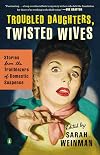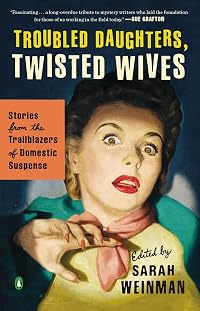
Troubled Daughters, Twisted Wives: Stories from the Trailblazers of Domestic Suspense
by Sarah Weinman (Editor)
On This Page
Description
A salute to the real femmes fatales of the domestic suspense genre, and the deceitful children, deranged husbands, vengeful friends, and murderous wives they unleashed. Sarah Weinman, one of today's preeminent authorities of crime fiction, brings together fourteen chilling stories by women who -- from the 1940s through the mid-1970s -- took a scalpel to contemporary society and sliced away to revel its dark essence.Tags
Recommendations








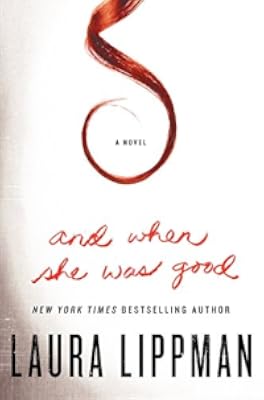
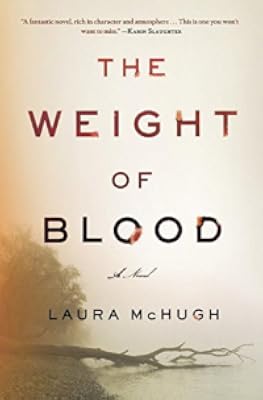
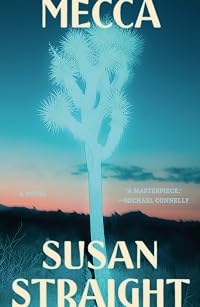
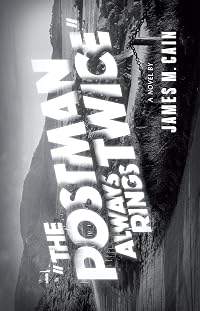
Member Reviews
Troubled Daughters, Twisted Wives is a wonderful collection of fourteen short stories, all written by women, featuring women protagonists and with a delicious darkness oozing from each story. Authors Shirley Jackson, Charlotte Johnson, Vera Caspary and many others contribute to the high quality of these stories. These authors who mostly wrote between 1940 and 1970, were the ones who helped pave the way for women crime authors of today.
Wives, mothers and daughters all play a part in these stories of domestic suspense. Struggling with a toxic situation, very few of these women are victims, most are the catalysts who know what they are doing and do it well. The decidedly creepy way that some of these women handle difficult situations show more certainly kept the pages turning.
Sarah Weinman who is responsible for this collection, offers a short bio on each author and although I had heard of most, there were a few that were new to me. I now have a lengthy list of authors whose books I will be searching for. Of course not every story in the collection was memorable, there were a few that fell flat but overall this is a very worthy collection and well worth the time spent reading. show less
Wives, mothers and daughters all play a part in these stories of domestic suspense. Struggling with a toxic situation, very few of these women are victims, most are the catalysts who know what they are doing and do it well. The decidedly creepy way that some of these women handle difficult situations show more certainly kept the pages turning.
Sarah Weinman who is responsible for this collection, offers a short bio on each author and although I had heard of most, there were a few that were new to me. I now have a lengthy list of authors whose books I will be searching for. Of course not every story in the collection was memorable, there were a few that fell flat but overall this is a very worthy collection and well worth the time spent reading. show less
This is an excellent collection of short stories by women writing dark suspense fiction toward the middle of the twentieth century. Including fourteen stories, this collection--well-curated by editor Sarah Weinman--is neither too short nor too long. While all of the stories aptly fit the theme and have an appropriately noirish mood, each one stands out as a unique and compelling work. I savored these stories like a box of fine chocolates. Some of the authors, such as Patricia Highsmith and Shirley Jackson, will already be familiar to many readers, but this collection presents a terrific opportunity for discovering new writers. While Weinman laments in the introduction that many of these writers, popular and lauded in their day, have show more been forgotten over time, a perusal of Amazon reveals that many of their longer works have been revived in electronic form for the Kindle--at reasonable prices, too. I foresee many hours of happy reading time ahead, inspired by the authors included in this terrific collection. show less
This is one of the books that got me through last week. (The other is Ellen Forney's graphic novel Marbles, which I haven't had the guts to review yet because what do I say? Thank you for saving my life when you didn't even know me?)
Anyway. I happened to have this collection from the library, and I opened it up and dove in. It was such a relief to read something that wasn't work-related, or even Goodreads-related. It wasn't going to push me into wild-eyed research mode. It was just a good book and I was just there to remember what reading for pure pleasure felt like.
(insert "aaaaaahhhhhhh" emoticon, gif, or internet meme here)
I needed that so much.
I needed to put everything else aside and read a superb collection of short stories.
My show more family kept a tactful, quiet distance as I absorbed this book. I don't know how else to describe it. I settled at our tiny kitchen table with a mug of tea and no particular place to go and lost myself in story after story.
I remembered what it was like not to care what the clock said and not to know anything more about a book other than that it had been given to me as a gift and I was there to accept it.
I don't think I've experienced such blissful reading since I was ten years old and every day was lit by the warm glow of the Narnia books I'd received for my birthday.
But that's more a review of my state of mind and less a guide for anyone considering reading this collection. Fortunately, this book's subtitle -- Stories from the Trailblazers of Domestic Suspense -- tell you most of what you need to hear in that respect. At least if you know what "domestic suspense" is, and I admit it's not a genre I know much about. I just liked the title and the fact that there was a Shirley Jackson story, even if it was one I'd already read.
So far as I can tell, a domestic suspense story is a psychological thriller that doesn't feature a professional detective to sort things out. Civilians – mostly but not all women, at least in this collection – are on their own when it comes to figuring out what the scary hell is going on.
In a few of the stories, the protagonist (and the reader, of course) has reason to wonder if anything scary really happened at all. "The Splintered Monday" by Charlotte Armstrong, for instance, features an elderly woman whose suspicions are raised by nothing more than a few fond family members being slightly kinder than usual. This woman doesn't know what exactly she suspects. She just feels sure that something must be up.
In Joyce Harrington's "The Purple Shroud," on the other hand, reader and protagonist know exactly what's going on. A long-suffering wife is patient witness yet again to her husband's yearly infidelity at the artist's colony they visit every summer. We know what he's doing, and we know with whom. But what oh what is his wife up to?
All of the stories are well-written. Some are humorous, some ominous; a few manage to be both. One featured a touch of the supernatural that I found unnecessary and disappointing, since the mundane twist toward the end was quite disturbing enough. One hid Chekhov's gun behind an actual gun and offered a surprise ending so wonderfully gruesome I cheered out loud, thrilled to be duped.
I quoted several times in my updates from the British writer Celia Fremlin's "A Case of Maximum Need," the last story in the collection and arguably the most startling and powerful piece in the bunch. I'm shocked that Fremlin is not better known – in America, at least, her books are pretty much out of print. I ordered used copies of a few of her novels, and can't wait for them to arrive. Fremlin's brilliantly mordant wit is right up there with Muriel Spark's – why isn't she better known?
Anyway. I think this book is an outstanding collection no matter what your frame of mind – and I recommend it to anyone who likes their winter-cozy reading with a side of spooky. show less
Anyway. I happened to have this collection from the library, and I opened it up and dove in. It was such a relief to read something that wasn't work-related, or even Goodreads-related. It wasn't going to push me into wild-eyed research mode. It was just a good book and I was just there to remember what reading for pure pleasure felt like.
(insert "aaaaaahhhhhhh" emoticon, gif, or internet meme here)
I needed that so much.
I needed to put everything else aside and read a superb collection of short stories.
My show more family kept a tactful, quiet distance as I absorbed this book. I don't know how else to describe it. I settled at our tiny kitchen table with a mug of tea and no particular place to go and lost myself in story after story.
I remembered what it was like not to care what the clock said and not to know anything more about a book other than that it had been given to me as a gift and I was there to accept it.
I don't think I've experienced such blissful reading since I was ten years old and every day was lit by the warm glow of the Narnia books I'd received for my birthday.
But that's more a review of my state of mind and less a guide for anyone considering reading this collection. Fortunately, this book's subtitle -- Stories from the Trailblazers of Domestic Suspense -- tell you most of what you need to hear in that respect. At least if you know what "domestic suspense" is, and I admit it's not a genre I know much about. I just liked the title and the fact that there was a Shirley Jackson story, even if it was one I'd already read.
So far as I can tell, a domestic suspense story is a psychological thriller that doesn't feature a professional detective to sort things out. Civilians – mostly but not all women, at least in this collection – are on their own when it comes to figuring out what the scary hell is going on.
In a few of the stories, the protagonist (and the reader, of course) has reason to wonder if anything scary really happened at all. "The Splintered Monday" by Charlotte Armstrong, for instance, features an elderly woman whose suspicions are raised by nothing more than a few fond family members being slightly kinder than usual. This woman doesn't know what exactly she suspects. She just feels sure that something must be up.
In Joyce Harrington's "The Purple Shroud," on the other hand, reader and protagonist know exactly what's going on. A long-suffering wife is patient witness yet again to her husband's yearly infidelity at the artist's colony they visit every summer. We know what he's doing, and we know with whom. But what oh what is his wife up to?
All of the stories are well-written. Some are humorous, some ominous; a few manage to be both. One featured a touch of the supernatural that I found unnecessary and disappointing, since the mundane twist toward the end was quite disturbing enough. One hid Chekhov's gun behind an actual gun and offered a surprise ending so wonderfully gruesome I cheered out loud, thrilled to be duped.
I quoted several times in my updates from the British writer Celia Fremlin's "A Case of Maximum Need," the last story in the collection and arguably the most startling and powerful piece in the bunch. I'm shocked that Fremlin is not better known – in America, at least, her books are pretty much out of print. I ordered used copies of a few of her novels, and can't wait for them to arrive. Fremlin's brilliantly mordant wit is right up there with Muriel Spark's – why isn't she better known?
Anyway. I think this book is an outstanding collection no matter what your frame of mind – and I recommend it to anyone who likes their winter-cozy reading with a side of spooky. show less
This is a collection of stories edited by Sarah Weinman and written by the first female mystery authors writing for the pulp magazines from the early 1940s to the mid-1970s. Usually anthologies are a mixed bag, where a successful collection holds a few memorable gems and not to many lackluster entries. Here, every story has been carefully chosen and is the best of a very good author's output. Some of the authors included are Shirley Jackson, Patricia Highsmith, Vera Caspary and Dorothy B. Hughes. But Weinman also included authors who have been forgotten and the quality of these stories is also excellent. There's no question that, even back in the heyday of Dashiell Hammett and Ross MacDonald, these women authors could more than hold show more their own. I enjoyed finding new authors to hunt down and being reminded of old favorites. If you like noir, I highly recommend this collection. show less
As others have said, this collection of 14 stories is meant to shed light on a largely forgotten literary genre, so-called "domestic mysteries" - stories that draw their suspense from the uniquely strained and fraught interactions that occur within families. No gumshoes (a la Hammett), no feisty elderly detectives (a la Christie) - instead, Weinman's female authors gives us mentally disturbed nannies (Patricia Highsmith's "The Heroine"), desperate widows (Nedra Tyre's "A Nice Place to Stay"), and spoiled daughters (Shirley Jackson's "Louisa, Please Come Home"); women tormented by greed (Miriam Allen Deford's "Mortmain"), by jealousy (Vera Caspary's "Sugar and Spice"), and by Terrible Secrets (Barbara Callahan's "Lavendar Lady"); show more competent women gone wrong (Helen Nielsen's "Don't Sit Under the Apple Tree"; Joyce Harrington's "The Purple Shroud"), competent women sacrificing themselves for their families (Elisabeth Sanxay Holding's "The Stranger in the Car"), and competent women forced to sacrifice their families (Charlotte Armstrong's "The Splintered Monday"); lucky women (Dorothy Hughes's "Everybody Needs a Mink"), devious spinsters (Celia Fremlin's "A Case of Maximum Need"), and creepy children (Dorothy Davis's "Lost Generation"; Margaret Millar's "The People Across the Canyon").
As others have noted in their reviews, Weinman's introductions to each story do achieve the dubious distinction of simultaneously adding little useful info about the authors while incorporating spoilers that manage to rob many of the stories of their surprise. I'm inclined to forgive her the former, because - unlike their male colleagues - many of these women lived their lives in domestic rather than public arenas, making it hard to ferret out revealing biographical detail. However, there's really no excuse for the spoilers. If it's not too late, you may wish to give these introductions a miss.
Some of the stories are more imaginative then others, some more suspenseful than others, but all are competently written and diverting in their "domestic" way. While they may not exude melodramatic pulpiness, they are nevertheless chilling, perhaps precisely because the crimes they describe are domestic, and therefore feel a little more "close to home" than most of us would prefer our crime fiction to be. show less
As others have noted in their reviews, Weinman's introductions to each story do achieve the dubious distinction of simultaneously adding little useful info about the authors while incorporating spoilers that manage to rob many of the stories of their surprise. I'm inclined to forgive her the former, because - unlike their male colleagues - many of these women lived their lives in domestic rather than public arenas, making it hard to ferret out revealing biographical detail. However, there's really no excuse for the spoilers. If it's not too late, you may wish to give these introductions a miss.
Some of the stories are more imaginative then others, some more suspenseful than others, but all are competently written and diverting in their "domestic" way. While they may not exude melodramatic pulpiness, they are nevertheless chilling, perhaps precisely because the crimes they describe are domestic, and therefore feel a little more "close to home" than most of us would prefer our crime fiction to be. show less
This anthology collects fourteen stories by women writers from the mid-20th century, writers hailed as the forebears of the many women writing mysteries today. Of course, there were many women writing mysteries back in the 30s, 40s, and 50s also, but these authors were among the first women writing for the pulp mystery magazines. Most of the stories were at a minimum entertaining and often creepy and scary.
Some of the writers are better known, like Patricia Highsmith, Shirley Jackson, and Dorothy B. Hughes (with a somewhat odd tale), but others were new to me. I was particularly glad to make the acquaintance of Nedra Tyre (with the creepy and pointed "A Nice Place to Stay"), Helen Nielsen (there's quite a twist in "Don't Sit Under the show more Apple Tree") and Elisabeth Sanxay Holding and Charlotte Armstrong, in both of whose stories the reader suspects more than at least some of the characters. I enjoyed several of the other stories too, but of course no reader likes every story in an anthology. This was a fun read. show less
Some of the writers are better known, like Patricia Highsmith, Shirley Jackson, and Dorothy B. Hughes (with a somewhat odd tale), but others were new to me. I was particularly glad to make the acquaintance of Nedra Tyre (with the creepy and pointed "A Nice Place to Stay"), Helen Nielsen (there's quite a twist in "Don't Sit Under the show more Apple Tree") and Elisabeth Sanxay Holding and Charlotte Armstrong, in both of whose stories the reader suspects more than at least some of the characters. I enjoyed several of the other stories too, but of course no reader likes every story in an anthology. This was a fun read. show less
Sarah Weinman has put together a nice collection of 14 true crime short stories. All written by women from the 1940's to the 1970's. A well written introduction explaining her interest in women writers and why she chose these stories. I actually enjoyed each story!
Members
- Recently Added By
Lists

Best Noir Fiction
160 works; 14 members

Female Protagonist
1,056 works; 57 members

The Hermenautic Bookshelf
111 works; 7 members

Domestic Suspense Reading List
10 works; 1 member

Books Read in 2016
4,666 works; 199 members

Short Story Collections and Anthologies
261 works; 42 members

Books With Family Relationships in the Title
44 works; 4 members
Author Information

Sarah Weinman is the author of The Real Lolita: A Lost Girl, an Unthinkable Crime, and a Scandalous Masterpiece. She writes the crime column for the New York Times Book Review and lives in New York City.
All Editions
Awards and Honors
Awards
Work Relationships
Common Knowledge
- Canonical title
- Troubled Daughters, Twisted Wives: Stories from the Trailblazers of Domestic Suspense
- Original publication date
- 2013
- Dedication
- To my mother, Judith, and my father, Jack (1936-2012)
- First words
- Introduction
As we speak, the current crop of crime writers who excite and inspire me the most are women. - Blurbers
- Grafton, Sue; Scottoline, Lisa; Paretsky, Sara; O'Connell, Carol; Abbott, Megan
- Disambiguation notice
- Stories included:
The Heroine by Patricia Highsmith
A Nice Place to Stay by Nedra Tyre
Louisa, Please Come Home by Shirley Jackson
Lavender Lady by Barbara Callahan
Sugar and Spice by Vera Caspary
Don't ... (show all)Sit Under the Apple Tree by Helen Nielsen
Everybody Needs a Mink by Dorothy B. Hughes
The Purple Shroud by Joyce Harrington
The Stranger in the Car by Elisabeth Sanxay Holding
The Splintered Monday by Charlotte Armstrong
Lost Generation by Dorothy Salisbury Davis
The People Across the Canyon by Margaret Millar
Mortmain by Miriam Allen Deford
A Case of Maximum Need by Celia Fremlin
Classifications
- Genres
- Fiction and Literature, Mystery
- DDC/MDS
- 813.01089287 — Literature & rhetoric American literature in English American fiction in English By type Short fiction
- LCC
- PS647 .W6 .T67 — Language and Literature American literature American literature Collections of American literature Prose (General)
- BISAC
Statistics
- Members
- 186
- Popularity
- 176,113
- Reviews
- 11
- Rating
- (3.95)
- Languages
- English
- Media
- Paper, Ebook
- ISBNs
- 2
- ASINs
- 3