On This Page
Description
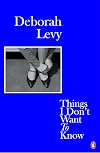
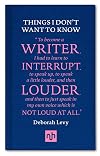
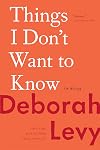
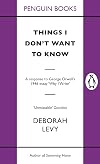
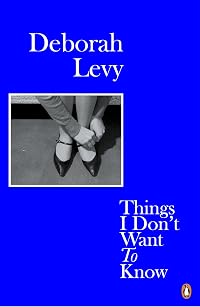
Things I Don't Want to Know is a unique response to George Orwell from one of our most vital contemporary writers. Taking Orwell's famous list of motives for writing as the jumping-off point for a sequence of thrilling reflections on the writing life, this is a perfect companion not just to Orwell's essay, but also to Levy's own, essential oeuvre.Tags
Recommendations







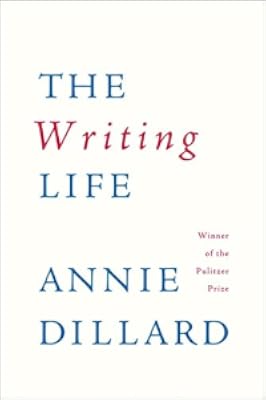
Member Recommendations

Member Reviews
Sigh. Deborah Levy is one of those writers who makes me green with envy. She's just so damn smart.
This is the first of her three-part memoir on writing and womanhood, and it's slim but perfectly formed. Arriving at a remote hotel in Majorca in the middle of a snowstorm, Levy, at a dark point in her life, has an unexpected dinner conversation which forces her to reluctantly look back at her turbulent childhood in South Africa and how it continues to shape her as a woman.
The prose is simply perfect, every sentence exquisitely crafted:
"Some mothers go mad because the world that made them feel worthless is the same world with which their children fall in love. The suburb of femininity is not a good place to live. Nor is it wise to seek show more refuge inside our children because children are always keen to make their way into the world to meet someone else. Yes, there had been many times I called my daughters back to zip up their coats. All the same, I knew they would rather be cold and free."
Ah, those last few sentences are so, so clever. I've photographed the page and sent it out en masse to my friends who are mothers.
4.5 stars - what a talent. show less
This is the first of her three-part memoir on writing and womanhood, and it's slim but perfectly formed. Arriving at a remote hotel in Majorca in the middle of a snowstorm, Levy, at a dark point in her life, has an unexpected dinner conversation which forces her to reluctantly look back at her turbulent childhood in South Africa and how it continues to shape her as a woman.
The prose is simply perfect, every sentence exquisitely crafted:
"Some mothers go mad because the world that made them feel worthless is the same world with which their children fall in love. The suburb of femininity is not a good place to live. Nor is it wise to seek show more refuge inside our children because children are always keen to make their way into the world to meet someone else. Yes, there had been many times I called my daughters back to zip up their coats. All the same, I knew they would rather be cold and free."
Ah, those last few sentences are so, so clever. I've photographed the page and sent it out en masse to my friends who are mothers.
4.5 stars - what a talent. show less
If you appreciate [a:Deborah Levy|147246|Deborah Levy|https://images.gr-assets.com/authors/1591038543p2/147246.jpg]'s meandering style and discerning philosophical associations, as I do, you will like this first volume of her memoir trilogy. The books are slim nuggets, perfect for the pocket, and a quick read. The story begins in Majorca on holiday, alternates between recollections of her childhood in Apartheid South Africa when her father is jailed for his politics, fleeing to England as a child, and her parents' separation shadowed by her own marriage end. She questions the way men and women coexist and the possibility, for a woman, of life as an artist.
I was frustrated by Political Purpose,the opening chapter of Deborah Levy’s four-part memoir which some call “a feminist response to Orwell’s ‘Why I Write’.” I found it hard going, pretentious, and opaque. Could you just get to the point, I wondered. Well, Levy does eventually manage to do that—sort of. One spring, she writes, “life was very hard”, and its difficulty was often most apparent to her when she was ascending on an escalator. Something about being moved passively upwards would cause her to cry, almost to the point of sobbing. A good part of her trouble was related to her having been submerged in the role of mother for years. Motherhood is a qualitatively different role from fatherhood, she writes, and it is show more not uncommon for women to cancel their own desires. According to Marguerite Duras, whom Levy quotes, being a mother “means that a woman gives her body over to her child, her children . . . they devour her, hit her, sleep on her.” Women become “shadows of their former selves,” metamorphosing into hormonally programmed creatures whose breast milk flows at their babies’ cries. Such women become people who no longer understand themselves.
In an effort to come to terms with what was happening inside, Levy removed herself from the domestic scene, traveling to an out-of-the-way pensione in Palma, Majorca, a place where she’d found solace in the past. In the humble little hotel run by Maria, a woman who’d managed to avoid the traditional roles of a wife and mother, Levy could rest, reflect, and take stock.
In the second, strongest and richest section of her memoir, Historical Impulse, Levy looks back on her South African childhood. She identifies an early awareness of the deep inequities within that society and her discovery of the power of the written word to bring to the surface the things she might not want to know.
In 1964 when Levy was five years old, her father was picked up one night by the special branch of the security police. Both of Levy’s parents were members of the African National Congress, the banned political organization that was fighting for equal human rights for Africans, Coloureds, and Indians. For the five years her father was incarcerated, Levy was expected to be brave. Knowing she was not to mention his whereabouts, she made up stories about his being in England. Mostly, though, she did not talk. It was an effort to get any words out; the volume of her voice had somehow been turned way down. At school, her “nonsense” (not speaking audibly) and her refusal to fill her notebook pages as directed inflamed her Afrikaner teacher, who evidently perceived those acts as political resistance. The woman sent the girl to the head-master’s office where she was slapped, ostensibly for her failure to comply, but actually for being the Jewish daughter of a political prisoner, a man who dared to challenge the racist status quo.
Levy writes a compelling account of subsequently being sent to Durban to stay with her godmother, Dory, and her family, where the young girl’s understanding of the society into which she had been born would only grow. In Durban, the now seven or eight- year-old Deborah was befriended by Dory’s spirited teenaged daughter. Melissa not only encouraged the child to speak up, but the teenager defied racist policies by having an Indian boyfriend. Not surprisingly (given her father’s incarceration), Levy became preoccupied with freeing her godmother’s caged budgie At this time, too, her father wrote to her from prison, encouraging her to say her thoughts out loud, not just in her head. This was the point at which Levy discovered that her real voice was most likely to emerge through writing. The experiences that troubled her, the things she really didn’t want to know would come out with biro and paper.
There are some other striking details provided in this section of the memoir. As a child who was aware she must be stoical in facing her father’s imprisonment, Deborah saw in her plastic Barbie doll a kind of model for the way a girl should be. “Untouched by anything horrible that happened in the world,” Barbie was calm, pretty, and plastic. Levy wished that she too could be plastic with painted-on blue eyes “that held no secrets.”
From early childhood, Levy was acutely aware of the racism of the society into which she’d been born. She had heard all about the Sharpeville Massacre that happened a year after her birth. She was also an early reader and had no trouble decoding the signs restricting parks and beaches to whites. She loved the family’s Zulu servant, “Maria” (Zama), and was sensitive as to the toll that the political situation had taken on the woman. Maria was separated her from her family in the townships, including her daughter Thandiwe (“Doreen”), who was the same age as Deborah. All African house staff (and their offspring) were given easily pronounced English names, further removing them from their African identities—from themselves.
Overall, I found Things I Don’t Want to Know an uneven work. The second chapter alone is worth the price of admission, but I was less impressed by the other sections. The third section focuses on Levy’s teenaged years when the family lived “in exile” in England, her parents having separated, and Levy indulged in writerly pretensions. Occasionally humorous, the chapter, with its slapstick elements, didn’t quite work for me.
As for the fourth and final chapter: Levy returns to the Majorcan setting, which she’s used as a framing device. The reader learns that Maria, the hotel keeper, also apparently unsatisfied with her lot—perhaps because of restrictions imposed by her brother, who has part ownership of the hotel and controls the finances—is fleeing the place she so lovingly tended. Again, as in the first chapter, the prose is somewhat unfocused and a bit precious There are some strained metaphors, including one involving a window opening like an orange. If this was a memoir intended to communicate why Levy writes, I think it missed the mark. Overall it feels somehow incomplete, the work of someone trying to find herself, which perhaps is the point. It is more a book about being “on the run from the lies concealed in the language of politics, from myths about our character and our purpose in life.” show less
In an effort to come to terms with what was happening inside, Levy removed herself from the domestic scene, traveling to an out-of-the-way pensione in Palma, Majorca, a place where she’d found solace in the past. In the humble little hotel run by Maria, a woman who’d managed to avoid the traditional roles of a wife and mother, Levy could rest, reflect, and take stock.
In the second, strongest and richest section of her memoir, Historical Impulse, Levy looks back on her South African childhood. She identifies an early awareness of the deep inequities within that society and her discovery of the power of the written word to bring to the surface the things she might not want to know.
In 1964 when Levy was five years old, her father was picked up one night by the special branch of the security police. Both of Levy’s parents were members of the African National Congress, the banned political organization that was fighting for equal human rights for Africans, Coloureds, and Indians. For the five years her father was incarcerated, Levy was expected to be brave. Knowing she was not to mention his whereabouts, she made up stories about his being in England. Mostly, though, she did not talk. It was an effort to get any words out; the volume of her voice had somehow been turned way down. At school, her “nonsense” (not speaking audibly) and her refusal to fill her notebook pages as directed inflamed her Afrikaner teacher, who evidently perceived those acts as political resistance. The woman sent the girl to the head-master’s office where she was slapped, ostensibly for her failure to comply, but actually for being the Jewish daughter of a political prisoner, a man who dared to challenge the racist status quo.
Levy writes a compelling account of subsequently being sent to Durban to stay with her godmother, Dory, and her family, where the young girl’s understanding of the society into which she had been born would only grow. In Durban, the now seven or eight- year-old Deborah was befriended by Dory’s spirited teenaged daughter. Melissa not only encouraged the child to speak up, but the teenager defied racist policies by having an Indian boyfriend. Not surprisingly (given her father’s incarceration), Levy became preoccupied with freeing her godmother’s caged budgie At this time, too, her father wrote to her from prison, encouraging her to say her thoughts out loud, not just in her head. This was the point at which Levy discovered that her real voice was most likely to emerge through writing. The experiences that troubled her, the things she really didn’t want to know would come out with biro and paper.
There are some other striking details provided in this section of the memoir. As a child who was aware she must be stoical in facing her father’s imprisonment, Deborah saw in her plastic Barbie doll a kind of model for the way a girl should be. “Untouched by anything horrible that happened in the world,” Barbie was calm, pretty, and plastic. Levy wished that she too could be plastic with painted-on blue eyes “that held no secrets.”
From early childhood, Levy was acutely aware of the racism of the society into which she’d been born. She had heard all about the Sharpeville Massacre that happened a year after her birth. She was also an early reader and had no trouble decoding the signs restricting parks and beaches to whites. She loved the family’s Zulu servant, “Maria” (Zama), and was sensitive as to the toll that the political situation had taken on the woman. Maria was separated her from her family in the townships, including her daughter Thandiwe (“Doreen”), who was the same age as Deborah. All African house staff (and their offspring) were given easily pronounced English names, further removing them from their African identities—from themselves.
Overall, I found Things I Don’t Want to Know an uneven work. The second chapter alone is worth the price of admission, but I was less impressed by the other sections. The third section focuses on Levy’s teenaged years when the family lived “in exile” in England, her parents having separated, and Levy indulged in writerly pretensions. Occasionally humorous, the chapter, with its slapstick elements, didn’t quite work for me.
As for the fourth and final chapter: Levy returns to the Majorcan setting, which she’s used as a framing device. The reader learns that Maria, the hotel keeper, also apparently unsatisfied with her lot—perhaps because of restrictions imposed by her brother, who has part ownership of the hotel and controls the finances—is fleeing the place she so lovingly tended. Again, as in the first chapter, the prose is somewhat unfocused and a bit precious There are some strained metaphors, including one involving a window opening like an orange. If this was a memoir intended to communicate why Levy writes, I think it missed the mark. Overall it feels somehow incomplete, the work of someone trying to find herself, which perhaps is the point. It is more a book about being “on the run from the lies concealed in the language of politics, from myths about our character and our purpose in life.” show less
"What do we do with knowledge that we cannot bear to live with? What do we do with the things we do not want to know? {…} A female writer cannot afford to feel her life too clearly. If she does, She will write in a rage when she should write calmly. She will write foolishly where she should write wisely. She will write of herself where she should write of her characters. --A Room of One’s Own, Virginia Woolf"
This is one of those vignette-ish little memoirs on how life inspired the writer within, published only by writers of a certain renown (I wish for more). It’s Levy's feminist response to George Orwell’s Why I Write (onto the wishlist). She writes beautifully about her not-beautiful childhood in South Africa during apartheid, show more teen years in England, a depressed midlife. I loved this and long to read more by her. show less
This is one of those vignette-ish little memoirs on how life inspired the writer within, published only by writers of a certain renown (I wish for more). It’s Levy's feminist response to George Orwell’s Why I Write (onto the wishlist). She writes beautifully about her not-beautiful childhood in South Africa during apartheid, show more teen years in England, a depressed midlife. I loved this and long to read more by her. show less
4. Things I Don't Want to Know: On Writing by Deborah Levy
reader: Henrietta Meire
OPD: 2013
format: 3:29 audible audiobook (108 pages in paperback)
acquired: free on audible listened: Jan 30 – Feb 6
rating: 4
genre/style: memoir theme: random audio
locations: South Africa in the 1960’s, and England in the 1970’s
about the author: British novelist born in Johannesburg, South Africa in 1959
I love Deborah Levy. She's always a little absurd and it's always entertaining. This is her first of several memoirs, covering mainly her time in South Africa while her father was imprisoned for about five years for speaking against Apartheid, and then some of her time in England, where the family fled, and where she adjusts and wants to be a writer, but show more seems to only be writing the word "England" on napkins at greasy spoons...since she can't find Parisian writing cafes.
The nature of the book gives us a childhood view of South Africa's issues, and a chance to highlight the really absurd stuff without judgement. She faces antisemitism from her Catholic teachers, and she hides her ability to read from them, acquiescing to lessons on the alphabet. But as much as her tone is playful, she seems careful not to take all this too far. Entertaining book without enough closure. I definitely want to read or listen to the next one.
---
Audio note: The audio reader didn't work for me. I found her overly loud and tonally exaggerated, and it really put me off. I'm a little forgiving because this was free on audible. But even though Levy's second memoir is also free on audible, it has the same reader. I'll pass on that option and get a print copy.
2025
https://www.librarything.com/topic/367331#8764290 show less
reader: Henrietta Meire
OPD: 2013
format: 3:29 audible audiobook (108 pages in paperback)
acquired: free on audible listened: Jan 30 – Feb 6
rating: 4
genre/style: memoir theme: random audio
locations: South Africa in the 1960’s, and England in the 1970’s
about the author: British novelist born in Johannesburg, South Africa in 1959
I love Deborah Levy. She's always a little absurd and it's always entertaining. This is her first of several memoirs, covering mainly her time in South Africa while her father was imprisoned for about five years for speaking against Apartheid, and then some of her time in England, where the family fled, and where she adjusts and wants to be a writer, but show more seems to only be writing the word "England" on napkins at greasy spoons...since she can't find Parisian writing cafes.
The nature of the book gives us a childhood view of South Africa's issues, and a chance to highlight the really absurd stuff without judgement. She faces antisemitism from her Catholic teachers, and she hides her ability to read from them, acquiescing to lessons on the alphabet. But as much as her tone is playful, she seems careful not to take all this too far. Entertaining book without enough closure. I definitely want to read or listen to the next one.
---
Audio note: The audio reader didn't work for me. I found her overly loud and tonally exaggerated, and it really put me off. I'm a little forgiving because this was free on audible. But even though Levy's second memoir is also free on audible, it has the same reader. I'll pass on that option and get a print copy.
2025
https://www.librarything.com/topic/367331#8764290 show less
For some reason, I remembered the way I used to eat oranges as a child in Johannesburg. First I had to find one that would fit into the palm of my hand. So I searched the sack in the pantry for a small one because the small ones were juiciest. Then I rolled the orange under my bare foot to make it soft. It took a long time and the point was to get the fruit to yield its juice and not split. This had to be sensed entirely through the sole of the foot. My legs were brown and strong. I felt so powerful when I figured out how to use my strength on something as small as an orange. When it was ready i made a hole in the peel with my thumb and sucked out the juice. This strange memory reminded me of a poem by Appollinaire. I had written this show more down in the “Polish Notebook”, twenty years ago,
‘The window opens like an orange.’
The memories here are focussed and spare, but as you can see, the writing can be rich and vivid.
They operate in four time zones. The first, follows a five-year-old self at the time her father was sent to prison in 1960s apartheid South Africa for working with the ANC (African National Congress with Nelson Mandela, though she doesn’t trade on that connection). Five years later as a ten-year-old before and her father returns from prison. During those years we see a girl who doesn’t speak, or speaks softly. Before her father returns, she’ s sent to live with her aunt and attends a local convent school. The nuns seem able to bring forth her speech. But she’s not suited to convent rules and is sent home to her mother.
The family then migrate to England, the third time zone takes place when the fifteen-year-old goes to her local greasy spoon because she can sit there and order cooked meals hang with the workers, which is the closest she can find to Left Bank Cafes she believes nurtures writers. But all she can write at this stage is variations on her new home – the word England – on paper napkins.
The fourth is an older woman writer returning to her favourite Spanish holiday location to finish writing her novel. She has become the writer. But she is answering George Orwell’s question from the essay “Why Write?” I find these concept themed books as Holden Caufield would say “phoney”. It’s always better to read the original work, which I will do again, rather than reheated ideas.
There is a need to see the apartheid childhood in the context of the unfairness of racial colonial rule. She spares little sympathy for the white world, but it is clear, she was too young to recall much. But what she recalled has no Vaseline lens soft focus.
I’m not a fan of memoirs. I only read this because it was short, I liked Deborah Levy’s novel The Man Who Saw Everything and plan to read Swimming Home soon, and I was scrapping around for something to read. Not much of it wasn't really compelling, although it didn't have to be. Except it did produce some fine prose. And maybe that’s all we need. show less
‘The window opens like an orange.’
The memories here are focussed and spare, but as you can see, the writing can be rich and vivid.
They operate in four time zones. The first, follows a five-year-old self at the time her father was sent to prison in 1960s apartheid South Africa for working with the ANC (African National Congress with Nelson Mandela, though she doesn’t trade on that connection). Five years later as a ten-year-old before and her father returns from prison. During those years we see a girl who doesn’t speak, or speaks softly. Before her father returns, she’ s sent to live with her aunt and attends a local convent school. The nuns seem able to bring forth her speech. But she’s not suited to convent rules and is sent home to her mother.
The family then migrate to England, the third time zone takes place when the fifteen-year-old goes to her local greasy spoon because she can sit there and order cooked meals hang with the workers, which is the closest she can find to Left Bank Cafes she believes nurtures writers. But all she can write at this stage is variations on her new home – the word England – on paper napkins.
The fourth is an older woman writer returning to her favourite Spanish holiday location to finish writing her novel. She has become the writer. But she is answering George Orwell’s question from the essay “Why Write?” I find these concept themed books as Holden Caufield would say “phoney”. It’s always better to read the original work, which I will do again, rather than reheated ideas.
There is a need to see the apartheid childhood in the context of the unfairness of racial colonial rule. She spares little sympathy for the white world, but it is clear, she was too young to recall much. But what she recalled has no Vaseline lens soft focus.
I’m not a fan of memoirs. I only read this because it was short, I liked Deborah Levy’s novel The Man Who Saw Everything and plan to read Swimming Home soon, and I was scrapping around for something to read. Not much of it wasn't really compelling, although it didn't have to be. Except it did produce some fine prose. And maybe that’s all we need. show less
This was my first Deborah Levy book. I read it in one sitting - with delight. I liked her intelligence, honesty, sense of the absurd, and also the way she made me laugh out loud. It was until I got to the end that I found out that Virginia Woolf had prompted the notion of being 'at war with one's lot'. What a wonderful premise for a book. Now looking forward to 'The Cost of Living', the second in her trilogy. Keen to see how her war turns out. It's a deceptively simple book brimming with wit, wisdom and wonder.
Members
- Recently Added By
Lists

Books Read in 2021
5,361 works; 114 members

Books Read in 2022
5,168 works; 114 members

Writing
81 works; 1 member
Author Information

38+ Works 5,373 Members
Some Editions
Awards and Honors
Awards
Series

Work Relationships
Is a reply to
Common Knowledge
- Canonical title*
- Ce que je ne veux pas savoir : Une réponse au "Pourquoi j'écris" de George Orwell (1946) (1946)
- Original title
- Things I Don’t Want to Know
- Original publication date
- 2013
- Important places*
- Johannesburg, Südafrika; Großbritannien
- Quotations*
- Las mujeres son las arquitectas del hogar para que otros sean felices en él. ------ No alcanzaba a oírla, pero sabía que sus palabras tenían que ver con decir las cosas en voz alta, admitir las cosas que dese... (show all)aba, estar en el mundo y no dejarme vencer por él.
-------- No quiero saber nada del resto de recuerdos de Sudáfrica. Cuando llegué al Reino Unido, lo que quería eran recuerdos nuevos.
*Some information comes from Common Knowledge in other languages. Click "Edit" for more information.
Classifications
- Genre
- Biography & Memoir
- DDC/MDS
- 828.914 — Literature & rhetoric English & Old English literatures English miscellaneous writings English miscellaneous writings 1900- English miscellaneous writings 1900-1999 English miscellaneous writings 1945-1999
- LCC
- PR6062 .E9255 .Z46 — Language and Literature English English Literature 1961-2000
- BISAC
Statistics
- Members
- 564
- Popularity
- 52,419
- Reviews
- 22
- Rating
- (3.91)
- Languages
- 9 — Danish, Dutch, English, Finnish, French, German, Italian, Portuguese (Portugal), Spanish
- Media
- Paper, Audiobook, Ebook
- ISBNs
- 26
- ASINs
- 9