The Painted Bed: Poems
by Donald Hall
On This Page
Description
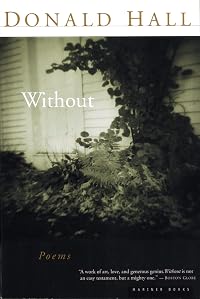
Donald Hall's fourteenth collection opens with an epigraph from the Urdu poet Faiz: "The true subject of poetry is the loss of the beloved." In that poetic tradition, as in THE PAINTED BED, the beloved might be a person or something else - life itself, or the disappearing countryside. Hall's new poems further the themes of love, death, and mourning so powerfully introduced in his WITHOUT (1998), but from the distance of passed time. A long poem, "Daylilies on the Hill 1975 - 1989," moves show more back to the happy repossession of the poet's old family house and its history - a structure that "persisted against assaults" as its generations of residents could not. These poems are by turns furious and resigned, spirited and despairing - "mania is melancholy reversed," as Hall writes in another long poem, "Kill the Day." In this book's fourth and final section, "Ardor," the poet moves toward acceptance of new life in old age; eros reemerges. show lessTags
Recommendations




























Member Reviews
The Painted Bed is Hall's second book (2002) dealing with the death of his wife, fellow poet Jane Kenyon. In this book, he writes about his grief and anger in the 2-3 years after her death, concluding in an awkward last section about finally making new attempts at sex and attraction. But the majority of the book is about loss in general, the loss of Jane but also other losses he has witnessed in the place and house he has known all his life.
The third section of the book is one poem, "Daylilies on the Hill 1975-1989," that reads like an elegy to the lifestyle of the rural northeast. The dates, however, correspond to Hall's and Kenyon's years there before cancer entered their lives (Hall had his battle before Jane had hers). It's a poem show more worth rereading for other associations. The poem ends with the rending of old elms to make way for a cancer-like modern housing development.
Most of the poems in this volume are free verse. However, in the section "Her Garden," all of the poems are in rhymed stanzas. Most of them I was not enamored with, yet it contains two of the most touching poems in the book for me, "Hiding," and "The Wish." The last I find beautiful and haunting and quote it here in full:
I keep her weary ghost inside me.
"Oh let me go," I hear her crying.
"Deep in your dark you want to hide me
And so perpetually my dying.
I can't undo
The grief that you
Weep by the stone where I am lying.
Oh, let me go."
By work and women half distracted,
I endure the day and sleep at night
To watch her dying reenacted
When the cold dawn descends like twilight.
How can I let
This dream forget
Her white withdrawal from my sight,
And let her go?
Her body as I watch grows smaller;
Her face recedes, her kiss is colder.
Watching her disappear, I call her,
"Come back!" as I grow old and older.
While somewhere deep
in the catch of sleep
I hear her cry, as I reach to hold her,
"Oh, let me go!"
I find this a marvelous echo of Thomas Hardy's "The Voice," (http://www.portablepoetry.com/poems/thomas_hardy/the_voice.html) the last two lines of which are the epigraph for the section "Her Garden" in which "The Wish" appears.
One aspect of this book overall that I enjoyed, and which I feel provides a unity that otherwise would not be there, is the recurrence of their dog Gus. Sometimes he is comic but more often he's an example of innocence and a call to the living world. Part of the awkwardness of the last section, "Ardor," is that Gus doesn't make an appearance in any of the poems.
The New York Times Book Review is quoted on the cover as saying The Painted Bed is a "Job-like comedy," a rather bizarre way to describe this book. If anything is comic, it is the last section, but after the previous sections in which we are wound up in genuine grief and the hard work of letting go, it feels more like a desecration. It seems to be solely about a desire for sex as opposed to a desire for union and there is no reflection attending the desire, just a catalog of encounters. I think the poems there should have waited for another book.
I admit I was hesitant about reading this book because of its subject matter, but I didn't find it depressing. It's about the deadening static of grief but it's also about a search and a struggle for what to keep and what to relinquish. The narrative arc is light, interrupted by remembrance, but it's there, an almost involuntary movement forward. For that reason, I recommend reading it from cover to cover. Don't stop. Push through and observe just as Hall had to. show less
The third section of the book is one poem, "Daylilies on the Hill 1975-1989," that reads like an elegy to the lifestyle of the rural northeast. The dates, however, correspond to Hall's and Kenyon's years there before cancer entered their lives (Hall had his battle before Jane had hers). It's a poem show more worth rereading for other associations. The poem ends with the rending of old elms to make way for a cancer-like modern housing development.
Most of the poems in this volume are free verse. However, in the section "Her Garden," all of the poems are in rhymed stanzas. Most of them I was not enamored with, yet it contains two of the most touching poems in the book for me, "Hiding," and "The Wish." The last I find beautiful and haunting and quote it here in full:
I keep her weary ghost inside me.
"Oh let me go," I hear her crying.
"Deep in your dark you want to hide me
And so perpetually my dying.
I can't undo
The grief that you
Weep by the stone where I am lying.
Oh, let me go."
By work and women half distracted,
I endure the day and sleep at night
To watch her dying reenacted
When the cold dawn descends like twilight.
How can I let
This dream forget
Her white withdrawal from my sight,
And let her go?
Her body as I watch grows smaller;
Her face recedes, her kiss is colder.
Watching her disappear, I call her,
"Come back!" as I grow old and older.
While somewhere deep
in the catch of sleep
I hear her cry, as I reach to hold her,
"Oh, let me go!"
I find this a marvelous echo of Thomas Hardy's "The Voice," (http://www.portablepoetry.com/poems/thomas_hardy/the_voice.html) the last two lines of which are the epigraph for the section "Her Garden" in which "The Wish" appears.
One aspect of this book overall that I enjoyed, and which I feel provides a unity that otherwise would not be there, is the recurrence of their dog Gus. Sometimes he is comic but more often he's an example of innocence and a call to the living world. Part of the awkwardness of the last section, "Ardor," is that Gus doesn't make an appearance in any of the poems.
The New York Times Book Review is quoted on the cover as saying The Painted Bed is a "Job-like comedy," a rather bizarre way to describe this book. If anything is comic, it is the last section, but after the previous sections in which we are wound up in genuine grief and the hard work of letting go, it feels more like a desecration. It seems to be solely about a desire for sex as opposed to a desire for union and there is no reflection attending the desire, just a catalog of encounters. I think the poems there should have waited for another book.
I admit I was hesitant about reading this book because of its subject matter, but I didn't find it depressing. It's about the deadening static of grief but it's also about a search and a struggle for what to keep and what to relinquish. The narrative arc is light, interrupted by remembrance, but it's there, an almost involuntary movement forward. For that reason, I recommend reading it from cover to cover. Don't stop. Push through and observe just as Hall had to. show less
This is the continuation of the story. Here's a poem from this collection:
In June's high light she stood at the sink
With a glass of wine
And listened for the bobolink
And crushed garlic in late sunshine.
I watched her cooking, from my chair.
She pressed her lips
Together, reached for kitchenware,
And tasted sauce from fingertips.
"It's ready now. Come on," she said.
"You light the candle."
We ate, and talked, and went to bed,
And slept. It was a miracle.
In June's high light she stood at the sink
With a glass of wine
And listened for the bobolink
And crushed garlic in late sunshine.
I watched her cooking, from my chair.
She pressed her lips
Together, reached for kitchenware,
And tasted sauce from fingertips.
"It's ready now. Come on," she said.
"You light the candle."
We ate, and talked, and went to bed,
And slept. It was a miracle.
Ratings
Members
- Recently Added By
Author Information

102+ Works 12,614 Members
Donald Andrew Hall Jr. was born in New Haven, Connecticut on September 20, 1928. He received a bachelor's degree from Harvard University in 1951. His first collection of poetry, Exiles and Marriages, was published in 1955. His other collections included Without, The Museum of Clear Ideas, and The Painted Bed. He received several awards including show more the National Book Critics Circle Award for The One Day, the Lenore Marshall Poetry Prize for The Happy Man, the Poetry Society of America's Robert Frost Silver medal, and the Ruth Lilly Prize for poetry. He served as poetry editor of The Paris Review from 1953 to 1962 and was the United States poet laureate for 2006-2007. He was also a memoirist, an essayist, and the author of textbooks and children's books. His memoirs were entitled Life Work and Unpacking the Boxes. His children's book, Ox-Cart Man illustrated by Barbara Cooney, won the Caldecott Medal. He received a National Medal of Arts in 2011. He died on June 23, 2018 at the age of 89. (Bowker Author Biography) show less
Awards and Honors
Distinctions
Common Knowledge
- Original publication date
- 2002
Classifications
Statistics
- Members
- 147
- Popularity
- 222,628
- Reviews
- 2
- Rating
- (3.76)
- Languages
- English
- Media
- Paper, Ebook
- ISBNs
- 3
- UPCs
- 2
- ASINs
- 1