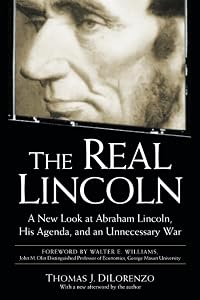
The Real Lincoln: a New Look at Abraham Lincoln, His Agenda, and an Unnecessary War
by Thomas DiLorenzo
On This Page
Description
Most Americans consider Abraham Lincoln to be the greatest president in history. His legend as the Great Emancipator has grown to mythic proportions as hundreds of books, a national holiday, and a monument in Washington, D.C., extol his heroism and martyrdom. But what if most everything you knew about Lincoln were false? What if, instead of an American hero who sought to free the slaves, Lincoln were in fact a calculating politician who waged the bloodiest war in American history in order to show more build an empire that rivaled Great Britain's? In The Real Lincoln, author Thomas J. DiLorenzo uncovers a side of Lincoln not told in many history books and overshadowed by the immense Lincoln legend. Through extensive research and meticulous documentation, DiLorenzo portrays the sixteenth president as a man who devoted his political career to revolutionizing the American form of government from one that was very limited in scope and highly decentralized-as the Founding Fathers intended-to a highly centralized, activist state. Standing in his way, however, was the South, with its independent states, its resistance to the national government, and its reliance on unfettered free trade. show lessTags
Recommendations








Member Reviews
Around 15 years ago, I read The Real Lincoln book without knowing anything about the author; and at the time I accepted its contents at face value. In the ensuing years, as I think of the book periodically, I've grown annoyed at the author's blatant bias and political agenda and his lack of candor about it, and have avoided reading any other works by the author. This crude polemic, for better nor worse, was the first push toward my mature skepticism of Lincoln--not since childhood have I been naive enough to uncritically accept the whitewashed depiction given in the kiddie books. But I know this twerp simply writes from another extreme; if their side is the cult of Lincoln, his side is the cult of libertarian partisans of the South.
My show more kingdom for an evenhanded, relatively unbiased analysis of Lincoln, the Whig Party (which Lincoln belonged to for most of his career before the Whigs broke up and he joined their successor, the Republicans), Lincoln's prosecution of the war, and the political results. show less
My show more kingdom for an evenhanded, relatively unbiased analysis of Lincoln, the Whig Party (which Lincoln belonged to for most of his career before the Whigs broke up and he joined their successor, the Republicans), Lincoln's prosecution of the war, and the political results. show less
Admittedly there are many sides of the Lincoln debate, but my own personal beliefs mirror much of what DiLorenzo is talking about in this book. This book shows that slavery was not the only, nor the main reason for the war, and how the freedom of Blacks was the only good thing that came out of it (and that was unintentional as far as Lincoln was concerned). He is able to point out that slavery could have been ended easier, cheaper, and with no bloodshed, just as many other countries had done before the US Civil War, but Lincoln refused to take this route. Also in Lincoln's own words, and by his own actions he has no desire that the black race could or would ever live in harmony with whites. (If this is in doubt, all one really has to do show more is read Lincoln's correspondence, the Imancipation Proclamation, Lincoln/Douglas debates, Lincoln's first inagural address, Fugitive Slave Act which Lincoln endorsed, ad infinitum) So then if slavery is not the issue what is? DiLorenzo then pulls out the big guns focusing on Lincoln's real goal of a central government that would be in control of the states instead of being subservient to them. DiLorenzo then focuses on how Lincoln trashed the Constitution by invoking powers that were not given to him according to the Constitution. Many people shudder to learn (and sometimes refuse to believe) that Lincoln had citizens arrested for voicing opinions against his administration, closed down newspapers for being critical of his policies, suspended habeus corpus, blackmailed and allowed himself to be bribed on a grand scale, launched a military invasion without consent of congress, etc. etc.. All of this to further the goal of his political dream. Another main question he probes is whether the states had the right to leave the union. If you think of the union as a voluntary pact between the states then you would have to conclude that they had the right to do so, and should not have been forced at gunpoint to stay (thus ending the voluntary part, and ending the idea that the states should govern themselves). There are far too many good points in this book for me to be able to list them all. show less
I bought this used so that the author would not get a dime from me. Obviously written by a southern right-winger, this book is a joke. I see that lots of readers have rated this a '5'... they must all be the author's sock puppets. DiLorenzo creates so many straw men that he could furnish the entire midwest with scarecrows for the next 100 years. He continuously writes about how 'Lincoln started the war', and how Lincoln 'cleverly got the south the fire the first shot'.
DiLorenzo seems to conveniently forget LOTS of facts. He mentions Lincoln's letter to Greeley (where Lincoln states that to save the Union he would free all the slaves, none of the slaves, or free some and not others) and suggests that the Emancipation Proclamation was show more written after that letter. In fact, the letter was written *after* he wrote the Proclamation.
Worst of all, DiLorenzo seems to claim that Lincoln intended for the Emancipation Proclamation to instigate a slave revolt that would result in the slaughter of all the women tending the farms while their husbands were away at war. The exact opposite was true. Lincoln even put in the proclamation his hope that the freed slaves would remain law-abiding. DiLorenzo just can't seem to come up with ANY OTHER alternative explanation for why Lincoln would issue the proclamation other than that the slaves would revolt. Hmmmm. Perhaps if the slaves were no longer tending the farms then the soldiers would HAVE TO STOP FIGHTING AND GO HOME?? Ya think? That, indeed, was Lincoln's basic thinking behind the proclamation... free the slaves where they were essentially helping the Confederacy, thereby forcing young southern white men to do anything but be soldiers. That is why the proclamation was a *military necessity*.
And where does DiLorenzo get off saying that Lincoln was a dictator? Geez, Jeff Davis wielded FAR MORE dictatorial powers than Lincoln ever dreamed of. I guess that was ok.
The most amazing thing about the book is that the author seems to think that the central government should not have any power at all. States Rights and all that. I guess he doesn't like all those interstates, bridges, etc that facilitate capitalism that the author likes so much. Guess he doesn't like the military that protects this country. What an idiot.
DiLorenzo also seems to think that the Civil War wasn't about slavery. Something to do with 'states rights'. Anyone who seriously proposes that the Civil War had nothing to do with slavery does not deserve to be taken seriously themselves. While many *northerners* undoubtedly did not fight for slavery, the *south* most assuredly was fighting to retain slavery. The words 'states rights' and 'slavery' are essentially interchangeable. In 1860, 'states rights' were meaningless unless they included the right to keep slaves.
Another gripe I have is his seeming indifference to slavery. "It would have died out anyway." Shorter DiLorenzo to the slaves: "sorry about your luck". He states many times that Lincoln never tried to pay off the slave owners to avoid a costly war (that the south started). Well, dude, Lincoln DID try that (starting with Delaware), and they said 'nope... we'll keep our slaves thank you very much'.
Well, I could go on and on... The author clearly has an agenda, and that is to smear Lincoln. The facts be damned. This book is actually worth reading... if only to get a glimpse into the mind of someone who knows nothing about Lincoln, yet writes a book about him. This book reminds me greatly of a book about evolution written by Jehova's Witnesses that I bought many years ago: there was a lie, distortion or misleading statement on every single page. This book is pure garbage. show less
DiLorenzo seems to conveniently forget LOTS of facts. He mentions Lincoln's letter to Greeley (where Lincoln states that to save the Union he would free all the slaves, none of the slaves, or free some and not others) and suggests that the Emancipation Proclamation was show more written after that letter. In fact, the letter was written *after* he wrote the Proclamation.
Worst of all, DiLorenzo seems to claim that Lincoln intended for the Emancipation Proclamation to instigate a slave revolt that would result in the slaughter of all the women tending the farms while their husbands were away at war. The exact opposite was true. Lincoln even put in the proclamation his hope that the freed slaves would remain law-abiding. DiLorenzo just can't seem to come up with ANY OTHER alternative explanation for why Lincoln would issue the proclamation other than that the slaves would revolt. Hmmmm. Perhaps if the slaves were no longer tending the farms then the soldiers would HAVE TO STOP FIGHTING AND GO HOME?? Ya think? That, indeed, was Lincoln's basic thinking behind the proclamation... free the slaves where they were essentially helping the Confederacy, thereby forcing young southern white men to do anything but be soldiers. That is why the proclamation was a *military necessity*.
And where does DiLorenzo get off saying that Lincoln was a dictator? Geez, Jeff Davis wielded FAR MORE dictatorial powers than Lincoln ever dreamed of. I guess that was ok.
The most amazing thing about the book is that the author seems to think that the central government should not have any power at all. States Rights and all that. I guess he doesn't like all those interstates, bridges, etc that facilitate capitalism that the author likes so much. Guess he doesn't like the military that protects this country. What an idiot.
DiLorenzo also seems to think that the Civil War wasn't about slavery. Something to do with 'states rights'. Anyone who seriously proposes that the Civil War had nothing to do with slavery does not deserve to be taken seriously themselves. While many *northerners* undoubtedly did not fight for slavery, the *south* most assuredly was fighting to retain slavery. The words 'states rights' and 'slavery' are essentially interchangeable. In 1860, 'states rights' were meaningless unless they included the right to keep slaves.
Another gripe I have is his seeming indifference to slavery. "It would have died out anyway." Shorter DiLorenzo to the slaves: "sorry about your luck". He states many times that Lincoln never tried to pay off the slave owners to avoid a costly war (that the south started). Well, dude, Lincoln DID try that (starting with Delaware), and they said 'nope... we'll keep our slaves thank you very much'.
Well, I could go on and on... The author clearly has an agenda, and that is to smear Lincoln. The facts be damned. This book is actually worth reading... if only to get a glimpse into the mind of someone who knows nothing about Lincoln, yet writes a book about him. This book reminds me greatly of a book about evolution written by Jehova's Witnesses that I bought many years ago: there was a lie, distortion or misleading statement on every single page. This book is pure garbage. show less
Excellent, well-documented, thorough treatment of a very unpopular subject - the destruction by Abraham Lincoln of America as a federal republic. The author goes about a hundred pages too far, sometimes less is more, but nevertheless the evidence exists everywhere you look today.
Probably the sum total of the book can be summed up by a quote that appears on page 278, attributed to abolitionist Lysander Spooner,
All these cries of having "abolished slavery," of having "saved the country," of having "preserved the union," of establishing a "government of consent," and of "maintaining the national honor" are all gross, shameless, transparent cheats - so transparent that they ought to deceive no one.
Probably the sum total of the book can be summed up by a quote that appears on page 278, attributed to abolitionist Lysander Spooner,
All these cries of having "abolished slavery," of having "saved the country," of having "preserved the union," of establishing a "government of consent," and of "maintaining the national honor" are all gross, shameless, transparent cheats - so transparent that they ought to deceive no one.
This blasts the bottom out from the myth we've all been taught. How can we continue teaching this lie and the precepts for which it paved a path? I also note many of the same points I encountered in "The South Was Right," though they are made with a better, more disciplined argument.
This well reseached and documented book helps to get through the hype of Lincoln as God to the factual Lincoln as man material. What did he say, what did he write, what did he actually believe is often quite different than the legend that has arisen around him. Despite personal prejudices of readers, all that admire or despise Lincoln should read this book so that they have a more even and rounded sense of the society in which he lived shaping the things he believed, did, and said. The man is far more interesting than the myth, and perhaps more falliable. Like most people that were made into popular legends, the legend often lost sight of the real person.
This analytical study questions the motives and practices of the legendary and somewhat mythical president. Reading this volume caused this Illinois son to reconsider many of my opinions. The book brought to mind that powerful leaders often dominate the media and public opinion; their influence and supporters can often "rewrite history." Read more at a World Net Daily article http://www.wnd.com/news/article.asp?ARTICLE_ID=27225 (lj)
Members
- Recently Added By
Author Information

16 Works 1,429 Members
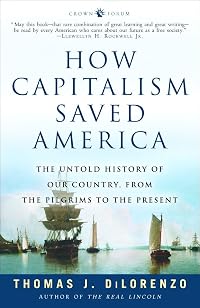
Thomas J. DiLorenzo is the author of The Real Lincoln, How Capitalism Saved America, and Lincoln Unmasked.
Common Knowledge
- Canonical title
- The Real Lincoln: a New Look at Abraham Lincoln, His Agenda, and an Unnecessary War
- Original publication date
- 2002
- People/Characters
- Abraham Lincoln; Henry Clay; John Charles Frémont; Horace Greeley; Daniel Webster; Henry C. Carey (show all 26); DeWitt Clinton; Alexander Hamilton; Aaron Burr; William Lloyd Garrison; Robert Toombs; Roger B. Taney; William Seward; Benjamin Butler; Clement L. Vallandigham; Edmund Wilson; Francis Lieber; George B. McClellan; William Tecumseh Sherman; Philip Sheridan; Ulysses S. Grant; William Archibold Dunning; Jefferson Davis; James J. Hill; Robert E. Lee; Lysander Spooner
- Important places
- USA
- Important events
- American Civil War (1861 | 1865)
- First words
- More words have probably been written about Abraham Lincoln than about any other American political figure.
- Last words
- (Click to show. Warning: May contain spoilers.)Lincoln's war had let the genie of centralization out of the bottle, never to be returned.
- Blurbers
- Sobran, Joseph (commentator and nationally syndicated columnist) (commentator and nationally syndicated columnist); Livingston, Donald (professor of philosophy ∙ Emory University) (professor of philosophy ∙ Emory University); Wilson, Clyde (professor of history ∙ University of South Carolina ∙ and editor ∙ The John C. Calhoun Papers) (professor of history ∙ University of South Carolina ∙ and editor ∙ The John C. Calhoun Papers)
Classifications
- Genres
- History, Nonfiction, General Nonfiction, Biography & Memoir
- DDC/MDS
- 973.7092 — History & geography History of North America United States Civil War Era (1857-1865) Civil War
- LCC
- E456 .D55 — History of the United States United States Civil War period, 1861-1865 Lincoln's administrations, 1861-April 15, 1865
- BISAC
Statistics
- Members
- 588
- Popularity
- 49,794
- Reviews
- 8
- Rating
- (4.05)
- Languages
- English
- Media
- Paper, Audiobook, Ebook
- ISBNs
- 6
- ASINs
- 2