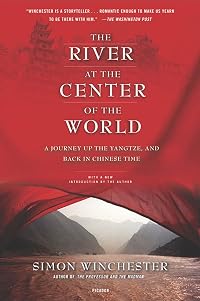
The River at the Center of the World: A Journey Up the Yangtze, and Back in Chinese Time
by Simon Winchester
On This Page
Description
Rising in the mountains of the Tibetan border, the Yangtze River, the symbolic heart of China, pierces 3,900 miles of rugged country before debouching into the oily swells of the East China Sea. Connecting China's heartland cities with the volatile coastal giant, Shanghai, it has also historically connected China to the outside world through its nearly one thousand miles of navigable waters. To travel those waters is to travel back in history, to sense the soul of China, and Simon Winchester show more takes us along with him as he encounters the essence of China--its history and politics, its geography and climate as well as engage in its culture, and its people in remote and almost inaccessible places. The River at the Center of the World is travel writing at its best: lively, informative, and thoroughly enchanting.A stunning tour of China, its people, and its history. Chosen as one of the best travel books of 1996 by the New York Times Book Review. show lessTags
Recommendations
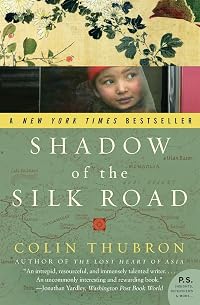
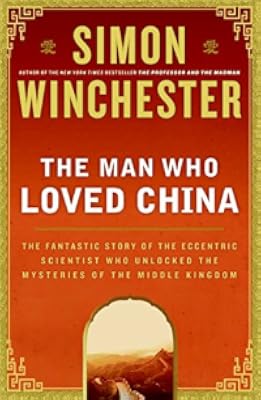
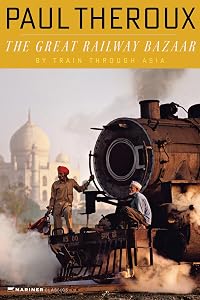

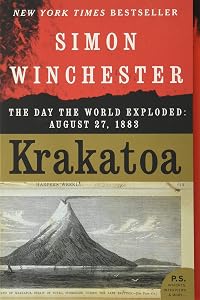









Member Recommendations

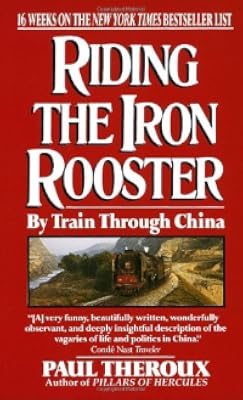
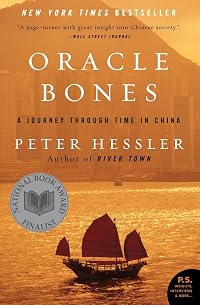
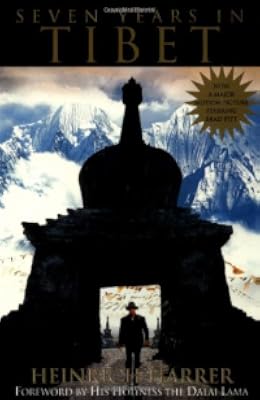
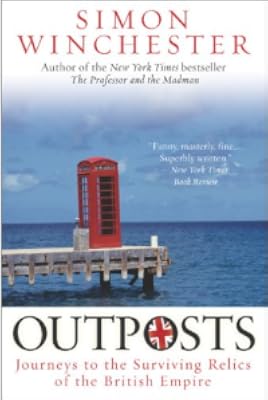
rakerman Ronald Wright's Cut Stones and Crossroads takes a similar trip through Peruvian history (the Incas specifically).

Member Reviews
A wonderful book about a great river that packs many motifs into a great travel narrative. Starting in booming Shangai, we witness a newly liberated China which sheds the shackles of both colonialism and communism, only to colonize the poor Tibetans. Another classic motif is the river as a source of life and terror. Throughout history, mankind struggled to control the river, which often led and leads to ecological disasters and human folly. A third motif is the river's function of linking formerly isolated parts to the wider world, often with disastrous consequences to the hitherto unconnected. It is also a tale of (often British) explorers and navigators who devoted their lives in developing the Yangtze, a contribution the Chinese only show more grudgingly acknowledge (The often boorish and racist behavior of the British colonials certainly did not help their case.).
Finally, it is a personal travel journey of a British Don Quixote and a female Chinese Sancho Panza reluctantly following his mad whims, fighting the windmills of Chinese bureaucracy. A similar journey up the Rhine or the Danube would hold much less drama, as there would be no officials to bribe and little transportation challenges involved. A highly developed tourist infrastructure as well as the ubiquitous Chinese restaurants eliminate further obstacles to a Chinese Winchester. Hopefully, this Chinese Winchester would not follow his example of throwing himself at any Brit he meets. The clinginess of Winchester is really an obnoxious habit in his explorations. If the Westerner happens to be a Scotsman equipped with an alcoholic beverage, it will take almost physical force to send Winchester onwards.
Overall, highly recommended. I only wished he would have stopped at the Red Cliff and discussed the Three Kingdoms. show less
Finally, it is a personal travel journey of a British Don Quixote and a female Chinese Sancho Panza reluctantly following his mad whims, fighting the windmills of Chinese bureaucracy. A similar journey up the Rhine or the Danube would hold much less drama, as there would be no officials to bribe and little transportation challenges involved. A highly developed tourist infrastructure as well as the ubiquitous Chinese restaurants eliminate further obstacles to a Chinese Winchester. Hopefully, this Chinese Winchester would not follow his example of throwing himself at any Brit he meets. The clinginess of Winchester is really an obnoxious habit in his explorations. If the Westerner happens to be a Scotsman equipped with an alcoholic beverage, it will take almost physical force to send Winchester onwards.
Overall, highly recommended. I only wished he would have stopped at the Red Cliff and discussed the Three Kingdoms. show less
Simon Winchester travels up the Yangtze and uses his trek to write about Chinese history and its various Yangtze-based focal points. A bit uneven (rather like the river, perhaps?), but overall I was intrigued by Winchester's tale. His visit to a Tea Research Institute was very amusing, and his interactions with his interpreter formed a noteworthy subtext to the journey.
A bit glib in places, and there were elements of over-generalization at various points. But Winchester manages to convey at least some of the conundrums of modern China.
A bit glib in places, and there were elements of over-generalization at various points. But Winchester manages to convey at least some of the conundrums of modern China.
WInchester has a gift for interspersing the story of his own experiences with a powerful retelling of centuries of history. Witty and erudite, the book gave me a powerful picture of what China is like and how it got that way. Winchester is unmistakably British, so you get the teeniest scosh of xenophobia with your cultural appreciation session, but that's what makes it so entertaining and readable. Winchester clearly loves China, and made me love it too.
I don't know why or how I got this book. It was enjoyable. Winchester indulges some nostalgia for the British Empire which he imports but it is difficult to live by since the British were so horrendous to China. His love of the river, and his amusing descriptions of China's urban degradation balanced by his preference for the natural make it a compelling story. Pretty delightful
Actually finished reading in 2009. Two things stay with me about this book: One, I loved the linkage of history and the trip up river. Fabulous. I learned so much in so few pages.
Two, the Chinese mindset as demonstrated by (?Lucy? Can’t remember, nor be bothered to go fact-check. Sorry.) the female tour guide. At the beginning of the voyage up the Yangtze, she angrily points out the buildings left behind by the white devils of years gone by. She says they are a big joke and deserve the righteous anger of the Chinese people, who continue to be very mad about all the occupation and oppression. Even though the railroads they built turned out to be quite handy for Chinese commerce.
Then she refuses to meet with the Tibetans, way up river. show more She stays sulking at the hotel, convinced that all that China has done is honorable and for their own good, and no, they don't get a say about it and furthermore they shouldn't be so ungrateful, so she can't approve of them. I guess they deserve no face time from her. She's proud of being just as bad as the vanished white devils she's so angry about.
Yuck. I really hate to say this, and please forgive me, but this is what can sort of make them bad neighbors here in California sometimes. Nobody can be as cuttingly rude as a people whose culture has deep traditions about manners and "face." I know. I've tried to rent beautiful apartments from Chinese landlords and it was very sad to know my application was going directly to the round file. Ouch. We were sorry we had bothered them, and also that we wouldn’t be going for any strolls around that neighborhood.
The part at the end about forgetting the prayer chop to press into the river's headwaters made me very sad, too. It seemed so harsh, I almost wish the author had not included this part of his story. I wanted to hike up my local mountain when the rains and the winter creek were running, so I could at least do that instead. But I did not, because that would have taken time away from my reading.
Otherwise this book brought me such vivid imagery of a geography, history and culture largely unfamiliar to me and I'm so glad I got to read it and to understand the nation of China a little better than I had before. This was one of the books I picked up at random at the thrift and it is one of the few that stays on my shelves (I've shelved it next to "River Horse" by Charles Least Heat Moon). If I ever should travel the world, I will want to include some of the wonders of the Yangtze River Valley. show less
Two, the Chinese mindset as demonstrated by (?Lucy? Can’t remember, nor be bothered to go fact-check. Sorry.) the female tour guide. At the beginning of the voyage up the Yangtze, she angrily points out the buildings left behind by the white devils of years gone by. She says they are a big joke and deserve the righteous anger of the Chinese people, who continue to be very mad about all the occupation and oppression. Even though the railroads they built turned out to be quite handy for Chinese commerce.
Then she refuses to meet with the Tibetans, way up river. show more She stays sulking at the hotel, convinced that all that China has done is honorable and for their own good, and no, they don't get a say about it and furthermore they shouldn't be so ungrateful, so she can't approve of them. I guess they deserve no face time from her. She's proud of being just as bad as the vanished white devils she's so angry about.
Yuck. I really hate to say this, and please forgive me, but this is what can sort of make them bad neighbors here in California sometimes. Nobody can be as cuttingly rude as a people whose culture has deep traditions about manners and "face." I know. I've tried to rent beautiful apartments from Chinese landlords and it was very sad to know my application was going directly to the round file. Ouch. We were sorry we had bothered them, and also that we wouldn’t be going for any strolls around that neighborhood.
The part at the end about forgetting the prayer chop to press into the river's headwaters made me very sad, too. It seemed so harsh, I almost wish the author had not included this part of his story. I wanted to hike up my local mountain when the rains and the winter creek were running, so I could at least do that instead. But I did not, because that would have taken time away from my reading.
Otherwise this book brought me such vivid imagery of a geography, history and culture largely unfamiliar to me and I'm so glad I got to read it and to understand the nation of China a little better than I had before. This was one of the books I picked up at random at the thrift and it is one of the few that stays on my shelves (I've shelved it next to "River Horse" by Charles Least Heat Moon). If I ever should travel the world, I will want to include some of the wonders of the Yangtze River Valley. show less
At over 3900 miles long the Yangtze is the river that divides China. South of the river is the rice growing part of China, and north of it wheat is grown. But this divide also brings together the nation, as it supports millions of people livelihoods, and hold the keys to some of China's earliest archaeology and history.
Starting at the mouth of the river in the city of Shanghai, Winchester, and his companion Lily, travel through a series of landscapes that are stark, polluted, varied and at times utterly beautiful. Traveling by boat on the river for a lots of the journey, he describes the people that he meets, the landscapes he sees, and writes about the changes that this river will suffer at the hand of man.
He is not scared to write show more critically of the Chinese government, in particular about the horrendous treatment of the Tibetan people when he reaches the headwaters of the river. But throughout the book he tells of the people that make this country unique and such a rich assault on the senses. show less
Starting at the mouth of the river in the city of Shanghai, Winchester, and his companion Lily, travel through a series of landscapes that are stark, polluted, varied and at times utterly beautiful. Traveling by boat on the river for a lots of the journey, he describes the people that he meets, the landscapes he sees, and writes about the changes that this river will suffer at the hand of man.
He is not scared to write show more critically of the Chinese government, in particular about the horrendous treatment of the Tibetan people when he reaches the headwaters of the river. But throughout the book he tells of the people that make this country unique and such a rich assault on the senses. show less
Written in 1995-1996, some of the material is obviously dated; however, the trip to the source(s) of the Yangtze as well as back in time was fascinating. I learned more about the ethnic minorities in China. The history of western nations meddling in Chinese affairs was enlightening; I knew some of it but Winchester expanded my awareness.
Members
- Recently Added By
Lists

Best of Travel Narratives
142 works; 28 members

Recommend the 20 best books you've read in the last five years
2,168 works; 608 members

Best of Travel Narratives (Rivers)
22 works; 1 member
Author Information

53+ Works 38,695 Members
Simon Winchester was born in London, England on September 28, 1944. He read geology at St. Catherine's College, Oxford. After graduation in 1966, he joined a Canadian mining company and worked as field geologist in Uganda. The following year he decided to become a journalist. His first reporting job was for The Journal, Newcastle upon Tyne. In show more 1969, he joined The Guardian and was named Britain's Journalist of the Year in 1971. He also worked for the Daily Mail and the Sunday Times before becoming a freelancer. He is the author of numerous books including In Holy Terror, The River at the Center of the World, The Alice Behind Wonderland, The Professor and the Madman: A Tale of Murder, Insanity, the Making of the Oxford English Dictionary, and.Exactly: How Precision Engineers Created the Modern World. In 2006, he was made an Officer of the Order of the British Empire for services to journalism and literature. (Bowker Author Biography) show less
Awards and Honors
Awards
Distinctions
Series
Belongs to Publisher Series
Work Relationships
Common Knowledge
- Important places
- Yangtze River, China
- Epigraph
- Looking at the old river from the opposite banks of a yellow ribbon
Like reading an ancient scroll--- pictographs of man's flailing against the eddies of oft told histories.... LI BAI, TANG DYNASTY, 8TH CENTURY - Dedication
- This book is dedicated to Lucy and David Tang--- a small token of a great delight
- Original language
- English
Classifications
- Genres
- Travel, Nonfiction, General Nonfiction
- DDC/MDS
- 915.120459 — History & geography Geography & travel Geography of and travel in Asia China and adjacent areas Southeastern China and adjacent areas; Yangtze River
- LCC
- DS793 .Y3 .W56 — History of Europe, Asia, Africa and Oceania Asia History of Asia China Local history and description
- BISAC
Statistics
- Members
- 810
- Popularity
- 34,331
- Reviews
- 16
- Rating
- (3.77)
- Languages
- Dutch, English, German, Italian
- Media
- Paper, Ebook
- ISBNs
- 17
- ASINs
- 4