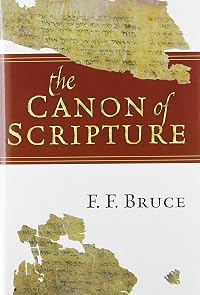
The Canon of Scripture
by F. F. Bruce
On This Page
Description
How did the books of the Bible come to be recognized as Holy Scripture? Who decided what shape the canon should take? What criteria influenced these decisions? After nearly nineteen centuries the canon of Scripture still remains an issue of debate. Protestants, Catholics, and the Orthodox all have slightly differing collections of documents in their Bibles. And many Christians today, while confessing the authority of all of Scripture, tend to rely on only a few books and particular themes show more while ignoring the rest. Research into second-century Gnostic texts have led some to argue that politics played a significant role in the formation of the Christian canon. Assessing the influence of ancient communities and a variety of disputes on the final shaping of the canon call for ongoing study. In this significant historical study, F. F. Bruce brings the wisdom of a lifetime of reflection and biblical interpretation to bear in answering the questions and clearing away the confusion surrounding the Christian canon of Scripture. Adept in both Old and New Testament studies, he brings a rare comprehensive perspective to his task. show lessTags
Recommendations


Member Reviews
Mais um livro sobre o Cânon? Esta pergunta pode ser feita – e com razão, mas a resposta dada pelo próprio autor, F. F. Bruce, é extremamente agradável. Aliás, o próprio Bruce antecipa-se ao leitor fazendo a pergunta já no seu prefácio. E,já na introdução, o leitor tem um vislumbre de que está diante de uma obra necessária. Isso porque Bruce elaborou seu livro sob a perspectiva da liturgia, com muita informação sobre este aspecto. Por ser um erudito no Novo Testamento, é compreensível e até desejável que o autor dê maior atenção a esta porção das Escrituras.
A obra considera as importantes discussões sobre a lei e os profetas do Antigo Testamento, antecipando o cenário para discussões e considerações show more posteriores em cenários como a Igreja Primitiva em sua pluralidade de interpretações, nas tradições orientais e latinas, a própria tradição judaica, nos pais e, posteriomente, na Reforma Protestante. Mas isso ainda é pouco. F. F. Bruce não se esquiva de dar uma resposta satisfatória ao criticismo (que merece um capítulo). Por outro lado, inova ao considerar as diferentes tradições de nossos dias, isso sem falar na riqueza de citações de autores e obras, mostrando porque é um dos especialistas mais aclamados no estudo das Escrituras nos últimos anos.
Completa a importância e relevânica da obra a sua linguagem clara, direta, fluída, própria de um destacado professor que pretende ser compreendido pelo leigo sem deixar de impressionar o acadêmico, acrescentando considerações aprofundadas sobre problemas complexos. Em resumo, fica mais que justificada a publicação de um novo livro sobre o assunto – ainda mais porque O Cânon das Escrituras não é, nem de longe, um livro qualquer. Por que ler este livro: O doutor F. F. Bruce, falecido em 1990, foi uma das maiores autoridades no estudo das Escrituras, notadamente do Novo Testamento. Isso já seria argumento suficiente para ler um autor que tem, ainda, pouco material traduzido para a língua portuguesa. show less
A obra considera as importantes discussões sobre a lei e os profetas do Antigo Testamento, antecipando o cenário para discussões e considerações show more posteriores em cenários como a Igreja Primitiva em sua pluralidade de interpretações, nas tradições orientais e latinas, a própria tradição judaica, nos pais e, posteriomente, na Reforma Protestante. Mas isso ainda é pouco. F. F. Bruce não se esquiva de dar uma resposta satisfatória ao criticismo (que merece um capítulo). Por outro lado, inova ao considerar as diferentes tradições de nossos dias, isso sem falar na riqueza de citações de autores e obras, mostrando porque é um dos especialistas mais aclamados no estudo das Escrituras nos últimos anos.
Completa a importância e relevânica da obra a sua linguagem clara, direta, fluída, própria de um destacado professor que pretende ser compreendido pelo leigo sem deixar de impressionar o acadêmico, acrescentando considerações aprofundadas sobre problemas complexos. Em resumo, fica mais que justificada a publicação de um novo livro sobre o assunto – ainda mais porque O Cânon das Escrituras não é, nem de longe, um livro qualquer. Por que ler este livro: O doutor F. F. Bruce, falecido em 1990, foi uma das maiores autoridades no estudo das Escrituras, notadamente do Novo Testamento. Isso já seria argumento suficiente para ler um autor que tem, ainda, pouco material traduzido para a língua portuguesa. show less
A most excellent discussion of the historical formation and acceptance of the canon of both testaments. Very well written and very enjoyable to read.
This definitely helped me understand better the history and criteria of the canon. The big question it raises for me derives from the potential extension of the apocypha to other deuterocanonical works ruled out early on. Most clearly didn't fit. But did some? I also realized how much of the New Testament is based on Paul, which is peculiar in contrast to Peter's important role in circumspect writings. Most of the canon has been consistent since the 4th or 5th century. The contributors to what we know include: Origen, Jerome, Augustine, Clement. Several early commentators clearly took ideas in their own directions, often influenced heavily by gnosticism and some Greek philosophy (Plato). The 4th session of the Council of Trent in 1546 show more delivered the 1st ecumenical ruling in support of the current canon (though apparently leaving open the deuterocanonicity of the apocrypha). show less
This is from my Discerning Reader review: http://discerningreader.com/book-reviews/the-canon-of-scripture
Christians adhere to a set number of books that constitute the Bible. The Old Testament, also known as the Hebrew bible, consists of thirty-nine books, and the New Testament consists of twenty-seven. Together, all sixty-six books of both testaments are collated into what is called “the canon of Scripture.” The word "canon" comes from the Greek word kanōn and simply means “rule” or “standard.” The canon of Scripture is what determines the Christian’s rule or standard for life and faith.
Since the inception of the church the canon of Scripture has been in dispute. Certain books like The Shepherd of Hermas, though show more considered useful, was eventually not accepted as biblically authoritative. Other books, like the Gnostic documents, were rejected out of hand as being incoherent to a Judeo-Christian worldview.
Challenges against the canon of Scripture continue into this century. Take, for an example, the recent spate of books by Dan Brown that argue for the inclusion of the recently found Gnostic library into the Christian scriptures. Thus it is necessary for Christians to understand the process of canonization and the rationale for why some books are included in the canon and others are not. Enter Frederick Fyvie Bruce.
The late F. F. Bruce (1910-1990) was a well-respected historian both in Christian and non-Christian circles. He taught at the University of Manchester as the Rylands Professor of Biblical Criticism and Exegesis for almost twenty years. A prolific writer, Bruce penned books and articles on a wide range of subjects from Christian theology, to New Testament commentary, to the Dead Sea Scrolls and Christian origins. Bruce was one of the most influential scholars in biblical studies of the twentieth century. Therefore what he has to say about the canon is significant. In The Canon of Scripture Christians are reminded of the embarrassment of riches that they possess in terms of proving the historical reliability of the Old and New Testaments. Anyone who comes away from reading this book, if read thoughtfully, will be well versed in why we possess the Bible that we have today and why it is trustworthy.
The book is divided into four simple sections: Introduction; Old Testament; New Testament and Conclusion. Bruce begins by explaining the key terminology related to our understanding of the Bible’s construction. He explains the background of words like canon and testament and shows how Christians used the Bible throughout the church’s history. This opening chapter serves as a springboard to the rest of the book.
The second section, on the Old Testament, deals with questions surrounding the documents that are included in it and how they were chosen or recognized. Bruce answers challenges posed against the authenticity of the Old Testament and explains why books like those of the Apocrypha should not be included. He explains the significance of the Dead Sea Scrolls to the affirmation of the Old Testament and how the Greek Old Testament – the Septuagint (LXX) – was written. Questions of why the Hebrew canon differs in number from the current Christian canon are answered. Bruce also explains how the Old Testament was used by new covenant Christians, from the biblical and patristic eras down to the Reformation.
Sadly, Christians today are little aware of the significance of the Old Testament. Reading this section of Bruce’s work is valuable because it reminds us that the Old Testament is important for our understanding of Christianity as a whole and that what we have in our possession is the historically reliable, written revelation of God.
In the third section Bruce does much the same with the New Testament as he did with the Old. However, here he spends much more time on historical analysis of the period after the writing of the New Testament, specifically dealing with the patristic authors up to the time of Augustine, explaining their views on the New Testament’s historicity and authority. He goes into great detail regarding the issue of the Gnostic writings and the orthodox responses to them, proving why these documents are rightly excluded from the canon on historical grounds.
Bruce concludes the book in the fourth section by explaining the criteria used for recognizing the canon – although he only deals with the New Testament and not the Old (which he addresses earlier in the second section). For the New Testament documents to be included in the canon the following criteria had to be met: they had to have the stamp of apostolic authority, had to be of an early date, had to contain orthodox theology, and had to be recognized both by local Christian congregations and the church as a whole as authoritative. Bruce offers an explanation of the doctrine of inspiration (that the documents are inspired by God) and how that relates to questions of canonicity. He also answers the common question, “What if a lost document from the apostolic age were to be discovered, which could establish a title to apostolic authority comparable to that of the New Testament writings?” His basic answer is that such a document could not be included in the canon because it does not meet the aforementioned criteria of catholicity (universal acceptance of the church). This is wise reasoning.
Appended to the book are two lectures. The first is derived from the Ethel M. Wood Lecture of 1974 on the “secret” gospel of Mark and the second is drawn from the Peake Memorial Lecture of 1976 on the primary and plenary sense of scripture. The former challenges the arguments of Morton Smith, who argues that Mark wrote another gospel that should be considered authoritative. The latter explains the difference between the primary sense of the text (the direct meaning of the author) and the plenary sense (how the text is understood in its fullest possible meaning within the rest of revelation). Both are illuminating discussions, but are rather specific to their field and only relate to the question of canonicity in a peripheral sense.
All in all, Bruce’s work on the canon is incredibly important. Christians practice an historical religion grounded in texts that come by inspiration of God and the pen of man. By recognizing the sheer volume of historical data that point to the reliability of the bible, we should be thankful to God that he has left us with such confirmation. It is greatly re-affirming to our faith that the bible proves itself and is attested to by historical evidence. This, alongside all of Bruce’s writings, should be read by all Christians, whether scholar, pastor or layperson. Any of the challenges brought today against the bible are easily answered just from having read this book. It is easy to understand why it was the recipient of both the Readers’ Choice Award and the Critics’ Choice for Theology and Doctrine by Christianity Today magazine in 1990. show less
Christians adhere to a set number of books that constitute the Bible. The Old Testament, also known as the Hebrew bible, consists of thirty-nine books, and the New Testament consists of twenty-seven. Together, all sixty-six books of both testaments are collated into what is called “the canon of Scripture.” The word "canon" comes from the Greek word kanōn and simply means “rule” or “standard.” The canon of Scripture is what determines the Christian’s rule or standard for life and faith.
Since the inception of the church the canon of Scripture has been in dispute. Certain books like The Shepherd of Hermas, though show more considered useful, was eventually not accepted as biblically authoritative. Other books, like the Gnostic documents, were rejected out of hand as being incoherent to a Judeo-Christian worldview.
Challenges against the canon of Scripture continue into this century. Take, for an example, the recent spate of books by Dan Brown that argue for the inclusion of the recently found Gnostic library into the Christian scriptures. Thus it is necessary for Christians to understand the process of canonization and the rationale for why some books are included in the canon and others are not. Enter Frederick Fyvie Bruce.
The late F. F. Bruce (1910-1990) was a well-respected historian both in Christian and non-Christian circles. He taught at the University of Manchester as the Rylands Professor of Biblical Criticism and Exegesis for almost twenty years. A prolific writer, Bruce penned books and articles on a wide range of subjects from Christian theology, to New Testament commentary, to the Dead Sea Scrolls and Christian origins. Bruce was one of the most influential scholars in biblical studies of the twentieth century. Therefore what he has to say about the canon is significant. In The Canon of Scripture Christians are reminded of the embarrassment of riches that they possess in terms of proving the historical reliability of the Old and New Testaments. Anyone who comes away from reading this book, if read thoughtfully, will be well versed in why we possess the Bible that we have today and why it is trustworthy.
The book is divided into four simple sections: Introduction; Old Testament; New Testament and Conclusion. Bruce begins by explaining the key terminology related to our understanding of the Bible’s construction. He explains the background of words like canon and testament and shows how Christians used the Bible throughout the church’s history. This opening chapter serves as a springboard to the rest of the book.
The second section, on the Old Testament, deals with questions surrounding the documents that are included in it and how they were chosen or recognized. Bruce answers challenges posed against the authenticity of the Old Testament and explains why books like those of the Apocrypha should not be included. He explains the significance of the Dead Sea Scrolls to the affirmation of the Old Testament and how the Greek Old Testament – the Septuagint (LXX) – was written. Questions of why the Hebrew canon differs in number from the current Christian canon are answered. Bruce also explains how the Old Testament was used by new covenant Christians, from the biblical and patristic eras down to the Reformation.
Sadly, Christians today are little aware of the significance of the Old Testament. Reading this section of Bruce’s work is valuable because it reminds us that the Old Testament is important for our understanding of Christianity as a whole and that what we have in our possession is the historically reliable, written revelation of God.
In the third section Bruce does much the same with the New Testament as he did with the Old. However, here he spends much more time on historical analysis of the period after the writing of the New Testament, specifically dealing with the patristic authors up to the time of Augustine, explaining their views on the New Testament’s historicity and authority. He goes into great detail regarding the issue of the Gnostic writings and the orthodox responses to them, proving why these documents are rightly excluded from the canon on historical grounds.
Bruce concludes the book in the fourth section by explaining the criteria used for recognizing the canon – although he only deals with the New Testament and not the Old (which he addresses earlier in the second section). For the New Testament documents to be included in the canon the following criteria had to be met: they had to have the stamp of apostolic authority, had to be of an early date, had to contain orthodox theology, and had to be recognized both by local Christian congregations and the church as a whole as authoritative. Bruce offers an explanation of the doctrine of inspiration (that the documents are inspired by God) and how that relates to questions of canonicity. He also answers the common question, “What if a lost document from the apostolic age were to be discovered, which could establish a title to apostolic authority comparable to that of the New Testament writings?” His basic answer is that such a document could not be included in the canon because it does not meet the aforementioned criteria of catholicity (universal acceptance of the church). This is wise reasoning.
Appended to the book are two lectures. The first is derived from the Ethel M. Wood Lecture of 1974 on the “secret” gospel of Mark and the second is drawn from the Peake Memorial Lecture of 1976 on the primary and plenary sense of scripture. The former challenges the arguments of Morton Smith, who argues that Mark wrote another gospel that should be considered authoritative. The latter explains the difference between the primary sense of the text (the direct meaning of the author) and the plenary sense (how the text is understood in its fullest possible meaning within the rest of revelation). Both are illuminating discussions, but are rather specific to their field and only relate to the question of canonicity in a peripheral sense.
All in all, Bruce’s work on the canon is incredibly important. Christians practice an historical religion grounded in texts that come by inspiration of God and the pen of man. By recognizing the sheer volume of historical data that point to the reliability of the bible, we should be thankful to God that he has left us with such confirmation. It is greatly re-affirming to our faith that the bible proves itself and is attested to by historical evidence. This, alongside all of Bruce’s writings, should be read by all Christians, whether scholar, pastor or layperson. Any of the challenges brought today against the bible are easily answered just from having read this book. It is easy to understand why it was the recipient of both the Readers’ Choice Award and the Critics’ Choice for Theology and Doctrine by Christianity Today magazine in 1990. show less
This is an important, useful and informative book.
Reviewer: Didaskalex "Eusebius Alexandrinus" (Kellia on Calvary, Carolina, USA) - See all my reviews
The Canon of Scripture:
The dean of evangelical biblical scholars did a great service when he decided to get this work out of his system since he made a very successful attempt indeed to communicate the state of knowledge (Preface) on this tricky and sensitive subject. This book stands my Criterion: If I only have one book on the subject, I would buy this book. This book is methodical, written basically to Seminarians, still tickles your curious bone, but don't get tricked by the smoothness of his elaboration, being a master exegetist and lecturer in biblical criticism.
Preface & Chapter one:
Read the condensed preface attentively, it show more highlights Prof. Bruce strategy where he left more controversial issues on the OT canon to R. Beckwith and J. Barton. The short chapter defines terms that became the vocabulary of the subject, their meaning and roots. People of the Book conveys his cultural standing, but he avoids elaborating on the concept of the two testaments but will not but mention Jeremiah 31:31, and later mentions Origen as the First to use and propagate this Alexandrine terminology (p. 192 : on First Principles 4.1.1)
TaNaKh and the Wider Canon
Bruce who said will shy from OT canon, masterfully instructs you in his own way, starting from the authority of OT for a Christian: Jesus appeal to TaNaKh going from the threefold division to the closing of the Hebrew canon in Jabneh. Now, with a firm foot, he delves into the Alexandrine wider Canon starting with Septuagint origin, order of books, and adoption as Ancient Churches OT, through NT evidence, but does not give the citations and allusions to Apocryphal books (K. & B. Aland: The text of the NT, Eerdmans, 1979) that he mentions (p. 51)
OT Christian Canon: Prevalence of Alexandria
The Rylands chair for two decades starts to preach how one Church was the light for all others. He starts by stating authority of the early Uncials, Alexandrinus, Sinaiticus, and Vaticanus are all fruits of the Alexandrine Scriptorium, and are the most reliable (with the exception of Ehrman). Along side other easterners, elaborates on Origen, and Athanasius, the first to use the term: Canon in relation to scripture.
From Tertullian to KJAV
The canon in the West: Tertullian, Jerome, Augustine,to the reformation: Luther, Erasmus, and Tyndale through Trentine Council to KJAV. Very interesting is his review of 17th and 18th centuries accomodation of canon, and Biblical societies.
New Testament
If I would propose any clarification to this enjoyable treatise, it would be to copy the names and order of the bible in Orthodox, Catholic, and protestant traditions from a good study Bible, say the Harper Collins NRSV, with Apocrypha. Although differences exist in OT books, NT books are the exact 27 books.Only that the order of books in a genuine Orthodox Bible follows the Order of St. Athanasius in his Pascal letter of 367, the Catholic Epistles precede the Pauline letters.
Hebrews and Apocalypse
The authority of Dionysius the Great, on the Apocalypse of John, followed by all the Orientals (p. 213)in spite of their Canonical diversity was never challenged by Athanasius letter. He persauded the Romans to accept the book of Hebrews, next only to John's Bible in the Alexandrine NT theological structure of both the Didaskalia and Catechetical School, compromising for the Apocalypse, then considered a liturgical text in the East.
Great Chapters to enjoy
The Alexandrian Fathers*
NT canon in the Age of printing
Criteria of Canonicity
A Canon within the Canon**
Canon ,Criticism and interpretation show less
The Canon of Scripture:
The dean of evangelical biblical scholars did a great service when he decided to get this work out of his system since he made a very successful attempt indeed to communicate the state of knowledge (Preface) on this tricky and sensitive subject. This book stands my Criterion: If I only have one book on the subject, I would buy this book. This book is methodical, written basically to Seminarians, still tickles your curious bone, but don't get tricked by the smoothness of his elaboration, being a master exegetist and lecturer in biblical criticism.
Preface & Chapter one:
Read the condensed preface attentively, it show more highlights Prof. Bruce strategy where he left more controversial issues on the OT canon to R. Beckwith and J. Barton. The short chapter defines terms that became the vocabulary of the subject, their meaning and roots. People of the Book conveys his cultural standing, but he avoids elaborating on the concept of the two testaments but will not but mention Jeremiah 31:31, and later mentions Origen as the First to use and propagate this Alexandrine terminology (p. 192 : on First Principles 4.1.1)
TaNaKh and the Wider Canon
Bruce who said will shy from OT canon, masterfully instructs you in his own way, starting from the authority of OT for a Christian: Jesus appeal to TaNaKh going from the threefold division to the closing of the Hebrew canon in Jabneh. Now, with a firm foot, he delves into the Alexandrine wider Canon starting with Septuagint origin, order of books, and adoption as Ancient Churches OT, through NT evidence, but does not give the citations and allusions to Apocryphal books (K. & B. Aland: The text of the NT, Eerdmans, 1979) that he mentions (p. 51)
OT Christian Canon: Prevalence of Alexandria
The Rylands chair for two decades starts to preach how one Church was the light for all others. He starts by stating authority of the early Uncials, Alexandrinus, Sinaiticus, and Vaticanus are all fruits of the Alexandrine Scriptorium, and are the most reliable (with the exception of Ehrman). Along side other easterners, elaborates on Origen, and Athanasius, the first to use the term: Canon in relation to scripture.
From Tertullian to KJAV
The canon in the West: Tertullian, Jerome, Augustine,to the reformation: Luther, Erasmus, and Tyndale through Trentine Council to KJAV. Very interesting is his review of 17th and 18th centuries accomodation of canon, and Biblical societies.
New Testament
If I would propose any clarification to this enjoyable treatise, it would be to copy the names and order of the bible in Orthodox, Catholic, and protestant traditions from a good study Bible, say the Harper Collins NRSV, with Apocrypha. Although differences exist in OT books, NT books are the exact 27 books.Only that the order of books in a genuine Orthodox Bible follows the Order of St. Athanasius in his Pascal letter of 367, the Catholic Epistles precede the Pauline letters.
Hebrews and Apocalypse
The authority of Dionysius the Great, on the Apocalypse of John, followed by all the Orientals (p. 213)in spite of their Canonical diversity was never challenged by Athanasius letter. He persauded the Romans to accept the book of Hebrews, next only to John's Bible in the Alexandrine NT theological structure of both the Didaskalia and Catechetical School, compromising for the Apocalypse, then considered a liturgical text in the East.
Great Chapters to enjoy
The Alexandrian Fathers*
NT canon in the Age of printing
Criteria of Canonicity
A Canon within the Canon**
Canon ,Criticism and interpretation show less
Winner of two 1990 Christianity Today Awards: Readers' Choice (1st place; theology & doctrine) and Critics' Choice (1st place; theology & doctrine). A 1989 ECPA Gold Medallion Award winner! How did the books of the Bible come to be recognized as Holy Scripture? Who decided what shape the canon should take? What criteria influenced these decisions? After nearly nineteen centuries the canon of Scripture still remains an issue of debate. Protestants, Catholics and the Orthodox all have slightly differing collections of documents in their Bibles. Martin Luther, one of the early leaders of the Reformation, questioned the inclusion of the book of James in the canon. And many Christians today, while confessing the authority of all of show more Scripture, tend to rely on only a few books and particular themes while ignoring the rest. Scholars have raised many other questions as well. Research into second-century Gnostic texts have led some to argue that politics played a significant role in the formation of the Christian canon. Assessing the influence of ancient communities and a variety of disputes on the final shaping of the canon call for ongoing study. In this significant historical study, F. F. Bruce brings the wisdom of a lifetime of reflection and biblical interpretation to bear in answering the questions and clearing away the confusion surrounding the Christian canon of Scripture. Adept in both Old and New Testament studies, he brings a rare comprehensive perspective to his task. Though some issues have shifted since the original publication of this book, it still remains a significant landmark and touchstone for further studies. show less
Members
- Recently Added By
Lists

Mike's Theology Books
74 works; 2 members

STR's Recommended Reading List
34 works; 2 members
Recommendations by Stand To Reason
34 works; 1 member
Author Information

269+ Works 30,873 Members
F. F. Bruce (1910-1990) was Rylands Professor of Biblical Criticism and Exegesis at the University of Manchester, England.
Common Knowledge
- Original publication date
- 1988
Classifications
Statistics
- Members
- 1,412
- Popularity
- 16,795
- Reviews
- 9
- Rating
- (4.16)
- Languages
- Chinese, English, Portuguese, Spanish
- Media
- Paper, Audiobook, Ebook
- ISBNs
- 12
- ASINs
- 10