On This Page
Description
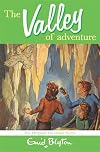
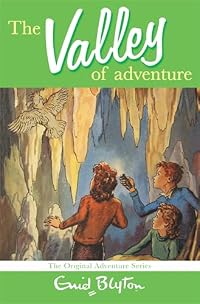
Nothing could be more exciting than a daring night flight on Bill's plane. But Philip, Dinah, Lucy-Ann, Jack, and Kiki the parrot soon find themselves flying straight into a truly amazing adventure. Who are the two strange pilots, and what is the secret treasure hidden in the lonely and mysterious valley where the children land?Tags
Recommendations




Member Reviews
I've first read this as a child and don't know how often I actually re-read this. Often. Very often, I guess. It is my favourite book of Enid Blyton's, including some of the most appealing settings I've ever read about. Seriously, reading the summary, this book sounds weird. But reading the book, suddenly the summary sounds weird, not truly captivating the book's essence, the magnificience of how Enid Blyton managed to paint those characters and create a plot around them.
It has been a while since my last read, but I remember having a little trouble with the resolution of the storyline, so I decided to rate it with four stars. It is still a book to be recommended.
It has been a while since my last read, but I remember having a little trouble with the resolution of the storyline, so I decided to rate it with four stars. It is still a book to be recommended.
I continue to be surprised by the Adventure series, the plots of which all seem to be longer and more involved than any other Blyton books I've read. The children certainly travel further than the Famous five ever do - this time they end up in Austria. But everything else is just the same - it is, for example, reassuringly possible to tell whether someone is good or bad just by looking at them.
It is also fascinatingly possible to see evidence of the classism Blyton is always criticised for. Towards the end, the children are looked after by an elderly couple, who are always referred to as "the old people" and who are frequently talked about instead of to, as though the couple weren't actually present. It feels quite uncomfortable to read show more actually.
The strangest thing is the reference to the war. Blyton is known to be one of the children's authors who continued to write as though the war didn't exist. This novel, published in 1947, does in fact talk about the war in the past tense, although, strangely, as something that happened to other countries. The children appear to know there was a war (though they speak about it as though about something a long time ago) but don't seem to know much about it or feel that it had anything to do with them. Absolutely fascinating really. I wonder what it would have been like to read this book in England back in the latter 40s. I suppose that children young enough to read it then would have been too young to be really seriously involved in the war when it was on, but I would imagine they would certainly remember it. And rationing would most certainly not be a distant memory but a current reality for them!
Despite the greater complexity, I still can't take to the Adventure series as I do to the Five. But it really is interesting to see a series handled differently. I wonder what's next? show less
It is also fascinatingly possible to see evidence of the classism Blyton is always criticised for. Towards the end, the children are looked after by an elderly couple, who are always referred to as "the old people" and who are frequently talked about instead of to, as though the couple weren't actually present. It feels quite uncomfortable to read show more actually.
The strangest thing is the reference to the war. Blyton is known to be one of the children's authors who continued to write as though the war didn't exist. This novel, published in 1947, does in fact talk about the war in the past tense, although, strangely, as something that happened to other countries. The children appear to know there was a war (though they speak about it as though about something a long time ago) but don't seem to know much about it or feel that it had anything to do with them. Absolutely fascinating really. I wonder what it would have been like to read this book in England back in the latter 40s. I suppose that children young enough to read it then would have been too young to be really seriously involved in the war when it was on, but I would imagine they would certainly remember it. And rationing would most certainly not be a distant memory but a current reality for them!
Despite the greater complexity, I still can't take to the Adventure series as I do to the Five. But it really is interesting to see a series handled differently. I wonder what's next? show less
The sexism didn't bother me as much as the bit at the end where Philip rather high-handedly tells the policeman to stop asking questions and go after the bad guys. It made me think of the bit in Terry Pratchett where Commander Vimes, a policeman, thinks how much he hates to be called "my man" in a particular kind of neighing voice. Still, the delight of reading an Enid Blyton always outweighs any of the negatives. Cool stuff includes a cave behind a waterfall and a collection of looted Nazi treasure.
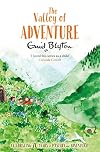
The third Adventure book puts the children in a particularly thrilling situation. About to go on a trip with Bill, they get by mistake into the plane a group of crooks are using, and are taken to an isolated and uninhabited valley in the Alps, with breathtaking scenery and ruins of burned old buildings. There's just no apparent way to leave the valley, and the bad guys are after some kind of treasure hidden during the war. The children have to hide from them, obtain food and shelter and try to escape the valley.
The story really captures the imagination of children and of anyone who can suspend disbelief and just enjoy the innocent adventure.
The story really captures the imagination of children and of anyone who can suspend disbelief and just enjoy the innocent adventure.
Oh how I've missed this series. I think this was my favourite series by Enid Blyton, and it is much more successful than the 'famous five'.
Nice and safe adventures with stupid, witless crooks, lots of food (there is always lots of food in Enid Blyton books!) and sleeping on "soft and springy moss".
Of course there is the somewhat annoying issue of the sexism in the books, which comes to light in the boys doing all the dangerous thingswhile the girls stay to "keep watch" on the cave, but it is simply a thing you have to deal with when reading Enid Blyton.
6.3.07
Nice and safe adventures with stupid, witless crooks, lots of food (there is always lots of food in Enid Blyton books!) and sleeping on "soft and springy moss".
Of course there is the somewhat annoying issue of the sexism in the books, which comes to light in the boys doing all the dangerous thingswhile the girls stay to "keep watch" on the cave, but it is simply a thing you have to deal with when reading Enid Blyton.
6.3.07
Another fun adventure! Once I started this one I couldn't put it down. I was so curious what was going to happen next :-) So much fun!
Adrianne
Adrianne
Novels/novelettes
Members
- Recently Added By
Lists

Children's Chapter Books from 1940s, ...
77 works; 4 members

Blue Pyramid 1,276 Best Books of All Time
1,248 works; 32 members

Books Read in 2016
4,666 works; 197 members

Books Read in 2020
4,379 works; 124 members
Author Information

2,528+ Works 111,086 Members
Enid Blyton, 1897 - November 28, 1968 Enid Blyton was born in London in 1897. She was educated in a private school and thought that she would become a musician until she realized that writing was her passion. She attended Ipswich High School where she trained to become a kindergarten teacher and eventually opened her own school for infants. show more Blyton's first poem was published in 1917, entitled "Have You-" which appeared in Nash's Magazine. In 1922, her first book of verses was published, entitled "Child Whispers." In 1926 she accepted a position editing the children's magazine "Sunny Stories" as well as writing the column "Teachers World." Blyton's first full length children's book was published din 1938 and was titled "The Secret Island." After working on the column for years, Blyton quit "Teachers World" in 1945 and also ended her stint as editor of "Sunny Stories" seven years later. In 1953 she started her own children's magazine called "The Edith Blyton Magazine" which featured stories about her characters and news on the clubs formed around them. Her most famous stories were those of the "Famous Five" The Magazine closed in 1959. In the 50's and 60's Blyton was criticized for the language in her book, for being to simple, but some 300 are still in print today. Blyton has published over 600 books in the course of her career. Enid Blyton died in her sleep on November 28, 1968. She was 71 years old. show less
Series

Work Relationships
Is contained in
Has the adaptation
Common Knowledge
- Canonical title
- The Valley of Adventure
- Original title
- The Valley of Adventure
- Original publication date
- 1947
- People/Characters
- Philip Mannering; Dinah Mannering; Jack Trent; Lucy-Ann Trent; Kiki (parrot); Bill Cunningham (Bill Smugs) (show all 9); Alison Mannering (Aunt Allie); Otto Engler; Julius Muller
- Important places
- Austria; Gairdon, Scotland, UK (fictional)
- Related movies
- The Enid Blyton Adventure Series (1996 | IMDb)
- First words
- Kiki the parrot was annoyed. She had been left all alone for a day, and she talked angrily to herself.
- Last words
- (Click to show. Warning: May contain spoilers.)"What a pity, what a pity, what a pity!" said Kiki at once. "Cluck-luck-luck! Pop goes Martha!"
- Original language*
- Englisch
*Some information comes from Common Knowledge in other languages. Click "Edit" for more information.
Classifications
- Genres
- Children's Books, Fiction and Literature
- DDC/MDS
- 823.912 — Literature & rhetoric English & Old English literatures English fiction 1900- 1901-1999 1901-1945
- LCC
- PZ7 .B629 .V — Language and Literature Fiction and juvenile belles lettres Fiction and juvenile belles lettres Juvenile belles lettres
- BISAC
Statistics
- Members
- 862
- Popularity
- 31,421
- Reviews
- 9
- Rating
- (3.99)
- Languages
- 12 — Danish, Dutch, English, Finnish, French, German, Icelandic, Latvian, Norwegian (Bokmål), Portuguese, Spanish, Swedish
- Media
- Paper, Audiobook, Ebook
- ISBNs
- 44
- ASINs
- 23