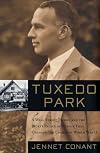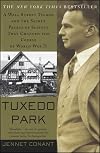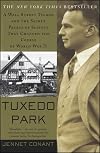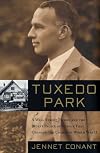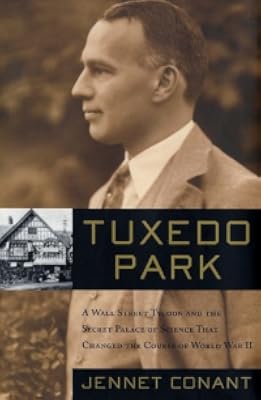
Tuxedo Park : A Wall Street Tycoon and the Secret Palace of Science That Changed the Course of World War II
by Jennet Conant
On This Page
Description
The untold story of an eccentric Wall Street tycoon and the circle of scientific geniuses he assembled before World War II to develop the science for radar and the atomic bomb. Together they changed the course of history. Legendary financier, philanthropist, and society figure Alfred Lee Loomis gathered the most visionary scientific minds of the twentieth century-Albert Einstein, Werner Heisenberg, Niels Bohr, Enrico Fermi, and others-at his state-of-the-art laboratory in Tuxedo Park, New show more York, in the late 1930s. He established a top-secret defense laboratory at MIT and personally bankrolled pioneering research into new, high-powered radar detection systems that helped defeat the German Air Force and U-boats. With Ernest Lawrence, the Nobel Prize-winning physicist, he pushed Franklin Delano Roosevelt to fund research in nuclear fission, which led to the development of the atomic bomb. Jennet Conant, the granddaughter of James Bryant Conant, one of the leading scientific advisers of World War II, enjoyed unprecedented access to Loomis' papers, as well as to people intimately involved in his life and work. She pierces through Loomis' obsessive secrecy and illuminates his role in assuring the Allied victory. show lessTags
Recommendations



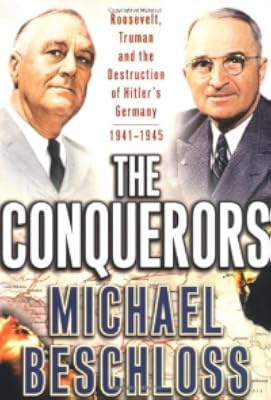
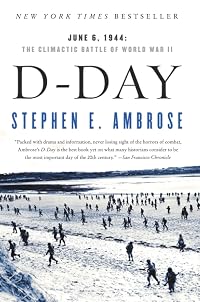
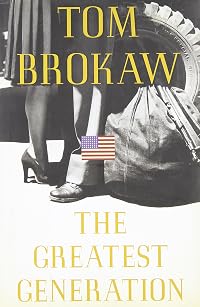


Member Recommendations
Member Reviews
He's a Wall Street tycoon, a brilliant scientific mind, and an inventor of devices and instruments used by the military to defeat the forces of evil.
No, he's not Tony Stark; he's Alfred Lee Loomis, and his work helped bring down the Nazis and win World War II. And yet, you're unlikely to find a lot of information on Loomis in the history books. A businessman turned scientist, he was one step up from a dilettante among scientists, possessing the abilities to understand and to cultivate scientific research in his top of the line, skunk-works lab that he built on his property in the decades preceding World War II. His rise was remarkable for the seeming ease with which he accomplished every task before him.
Prior to the war, Loomis built a show more fortune as a Wall Street investor selling bonds for the incipient utilities industry. As the market began to bubble, Loomis recognized the signs of instability, and divested his holdings in utilities. Then as the crash of 1929 rolled the country, he earned even more through careful investing, growing his fortune at a time when others were ruined. By the time the 1930s were closing, Loomis had been able to leave business with a fortune that put him in the upper echelons of society in America, while at the same time allowing him to pursue his true interest, scientific research. As World War II began, and the Nazi menace spread, Loomis joined a nationwide network of scientists working to develop technologies that would help defeat Germany and its allies.
Loomis' story is remarkable, but in many ways felt lacking largely because of the lack of tension or obstacle. Written by a descendent, Tuxedo Park (the location of the laboratory Loomis built) feels like a long Wall Street Journal article, where quotations are given with the expectation that they will appear in the press and facts are presented dispassionately. In short, the story lacks narrative, a sense of progress. Loomis appears on the scene--whatever the scene may be-- and sua sponte achieves his aims. As one friend suggested while discussing the book, there's not many obstacles that can't be overcome, apparently, if you're both brilliant and filthy stinking rich. Especially rich.
And yet, wealth is no excuse for a flat story. Theodore Roosevelt and Winston Churchill also came from means, rising from wealthy families, but both would overcome great obstacles during their life to create biographies that beg to be told. If Loomis has that story, I found this one to be lacking in that regards. While I'm glad to have learned a new chapter of the World War II saga, I don't know that I would have missed not reading it. show less
No, he's not Tony Stark; he's Alfred Lee Loomis, and his work helped bring down the Nazis and win World War II. And yet, you're unlikely to find a lot of information on Loomis in the history books. A businessman turned scientist, he was one step up from a dilettante among scientists, possessing the abilities to understand and to cultivate scientific research in his top of the line, skunk-works lab that he built on his property in the decades preceding World War II. His rise was remarkable for the seeming ease with which he accomplished every task before him.
Prior to the war, Loomis built a show more fortune as a Wall Street investor selling bonds for the incipient utilities industry. As the market began to bubble, Loomis recognized the signs of instability, and divested his holdings in utilities. Then as the crash of 1929 rolled the country, he earned even more through careful investing, growing his fortune at a time when others were ruined. By the time the 1930s were closing, Loomis had been able to leave business with a fortune that put him in the upper echelons of society in America, while at the same time allowing him to pursue his true interest, scientific research. As World War II began, and the Nazi menace spread, Loomis joined a nationwide network of scientists working to develop technologies that would help defeat Germany and its allies.
Loomis' story is remarkable, but in many ways felt lacking largely because of the lack of tension or obstacle. Written by a descendent, Tuxedo Park (the location of the laboratory Loomis built) feels like a long Wall Street Journal article, where quotations are given with the expectation that they will appear in the press and facts are presented dispassionately. In short, the story lacks narrative, a sense of progress. Loomis appears on the scene--whatever the scene may be-- and sua sponte achieves his aims. As one friend suggested while discussing the book, there's not many obstacles that can't be overcome, apparently, if you're both brilliant and filthy stinking rich. Especially rich.
And yet, wealth is no excuse for a flat story. Theodore Roosevelt and Winston Churchill also came from means, rising from wealthy families, but both would overcome great obstacles during their life to create biographies that beg to be told. If Loomis has that story, I found this one to be lacking in that regards. While I'm glad to have learned a new chapter of the World War II saga, I don't know that I would have missed not reading it. show less
This is a fascinating topic for a book. Ms. Conant makes the case that Alfred Loomis is an under-rated figure in history. It is hard to argue with the evidence she provides. Certainly this must have been a tough topic since Loomis was skilled at working in the background and avoiding the spotlight. But her storytelling is flawed, and it drags considerably in the middle of the book. She will spend pages on the background of an interesting person then only de them in a short passage of the narrative then never mention them again.
On a personal note, I love this period of history and crave books about the remarkable transformation of the USA from isolationist to military power, but this book was a chore to read. Hopefully another, better show more book will be written on this topic. show less
On a personal note, I love this period of history and crave books about the remarkable transformation of the USA from isolationist to military power, but this book was a chore to read. Hopefully another, better show more book will be written on this topic. show less
Tuxedo Park is primarily a biography of Alfred Loomis. He is one of those characters of history who was better known at the time, and deserves to be better known to history than he is. The book covers his dual careers on Wall Street and as a scientist. (He was good at both.) Loomis was very wealthy, and in the 1930s he operated his home as a private science laboratory. He had a significant role in the Radiation Lab at MIT, which developed and refined radar into an effective weapon during World War II. Loomis invented and had the patent for Loran (the long-range navigation system predecessor to GPS). On the plus side, the author had some family connections to the events in the book, which obviously inspired the book, and opened doors to show more her research. On the minus side, the narrative is a bit flat and tedious after a while. Parts of the book seem a rote recitation of chronology. The book lacks technical detail which I would have found interesting, but it is accessible to general readers, and has a lot of general human interest, including a lot of famous people. Loomis knew everybody in science and government, it seems. Given how interesting the topic is, and the author's inside access, this book is very disappointing. show less
The Manhattan Project became world famous. The Tizard Mission faded into obscurity. Only the Rad Lab veterans knew better, knew that if radar had not kept the Germans from defeating England, the war might have been over before America entered the contest. Everyone who had worked at the laboratory understood the decisive role their deadly devices had played in speeding the day of victory, and it was reflected in a remark by DuBridge that became something of an unofficial slogan, their badge of honor: “Radar won the war; the atom bomb ended it.”
This is the story of Alfred Loomis, Sr. who's scientific leanings and immense wealth brought about the strategic and critical application of radar to the Allied effort in WW II. Loomis also had show more a hand in fostering U-235 processing and other A-bomb presurors. This is also the story of nerds-meets-tycoons in Loomis' Tuxedo Park research facility. There is a lot of the intertwined personal lives and tragic turns some marriages took.
It seems the spark for this was some fictionalized writings from participants, including the author's grandfather. From the what-happened-to... listings in the Epilogue:
James Conant and Oppenheimer fought hard to prevent the building of the hydrogen bomb, and Conant’s feelings for Lawrence and Loomis were never the same after the loyalty hearings. As he said in his testimony, if opposition to the H-bomb made Oppenheimer a security risk, “it would apply to me, because I opposed it—as strongly as anybody else.” He left Harvard after twenty years as university president—as he wrote Kistiakowsky, “long enough to serve a sentence for youthful indiscretion”—to become high commissioner of Germany. He went on to become a leading educator and wrote widely on the need for better public education and testing “to break down social barriers.” Conant died in February 1978 and was cremated and buried in his wife’s family plot in Mount Auburn Cemetery in Cambridge, Massachusetts, where Bill Richards was also laid to rest. His son, Ted Conant, took custody of Richards’ roman à clef and the confiscated short story about the uranium bomb, which he eventually passed on to his daughter.show less
interesting survey of the topic. HInted at more personal stories that were not developed. Found the parts about the EEG particularly interesting, but the radar and microwave research are sure to appeal even more to those with a bent towards Physics or engineering
This is a fascinating biography of Alfred Loomis. It goes into a fair amount of detail on the technical aspects of his work, which might leave some feeling a bit overwhelmed. However, the story of his involvement in critical research during WWII is well worth the effort.
5665. Tuxedo Park A Wall Street Tycoon and the Secret Palace of Science That Changed the Course of World War II, by Jennet Conant (read 20 Dec 2019) This book was published in 2002 . I had it and it is essentially a biography of Alfred Loomis, of whom I had never heard. But I decided to read it since I had it on my 'shelves'. Loomis, after making much money on Wall Street, had a place in Tuxedo Park, New York (about 45 miles northwest of New York City) where he invited scientists to work in his well-equipped laboratory. Work related to the development of radar and of the atomic bomb was done there amd Loomis encouraged and financed the work. The book did not always entrance me and only after I had finished it did I come to have a better show more opinion of the book. Brian Lamb interviewed the author on 25 Apr 2002 and his interview is on the computer and I watched it after I read the book and was impressed by the author and her knowledge and the work she did to write the book. She is a granddaughter of James Conant , who was president of Harvard for twenty years and worked in connection with the production of the atomic bomb. So I have come to be more impressed by the book on reflection than I was while reading it and anyone interested in the development of radar or the atomic bomb will find the book informative and of interest. show less
Members
- Recently Added By
Lists

Dishonourable Mentions of 2013
189 works; 62 members
Author Information

7 Works 2,803 Members
Jennet Conant is the New York Times best-selling author of several books, including Tuxedo Park, 109 East Palace, The Irregulars, and the critically acclaimed Man of the Hour. She lives in Sag Harbor, New York, with her husband, son, and two golden retrievers.
Awards and Honors
Common Knowledge
- People/Characters
- Alfred Lee Loomis; Henry Stimson; Ernest Lawrence; Landon Thorne; Manette Hobart; Vannevar Bush (show all 7); Ellen Farnsworth
- Important places
- Hilton Head Island, South Carolina, USA; New York, USA; New York, New York, USA; South Carolina, USA; Tuxedo Park, New York, New York, USA
- Important events
- Great Depression; World War II (1939 | 1945); Manhattan Project
Classifications
Statistics
- Members
- 788
- Popularity
- 35,548
- Reviews
- 9
- Rating
- (3.59)
- Languages
- English
- Media
- Paper, Audiobook, Ebook
- ISBNs
- 7
- ASINs
- 6