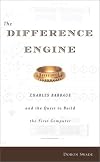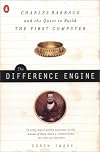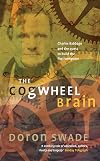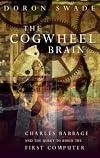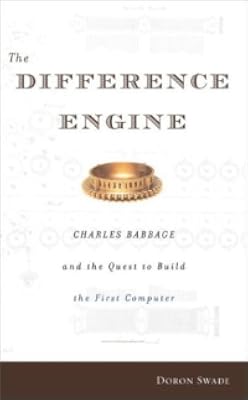
The Difference Engine: Charles Babbage and the Quest to Build the First Computer
by Doron Swade
On This Page
Description
In 1821, 30-year-old inventor and mathematician Charles Babbage was poring over a set of printed mathematical tables with his friend, the astronomer John Herschel. Finding error after error in the manually evaluated results, Babbage made an exclamation, the consequences of which would not only dominate the remaining 50 years of his life, but also lay the foundations for the modern computer industry: 'I wish to God these calculations had been executed by steam!' A few days later, he set down show more a plan to build a machine that would carry out complex mathematical calculations without human intervention and, at least in theory, without human errors. The only technology to which he had access for solving the problem was the cogwheel escapement found inside clocks. Babbage saw that a machine constructed out of hundreds of escapements, cunningly and precisely linked, might be able to handle calculations mechanically. The story of his lifelong bid to construct such a machine is a triumph of human ingenuity, will and imagination. show lessTags
Recommendations
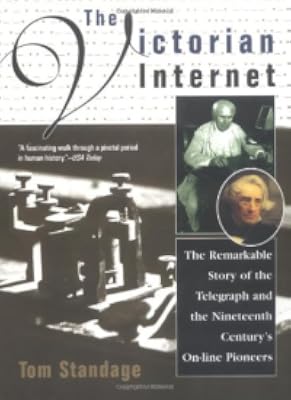
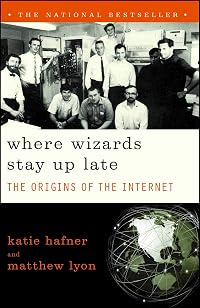
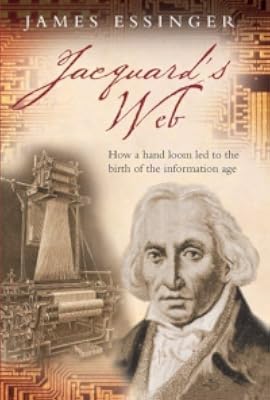



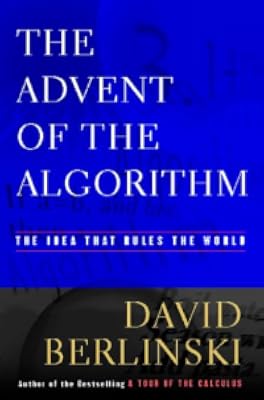
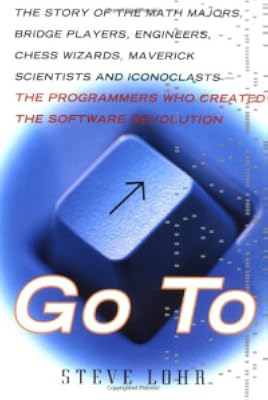
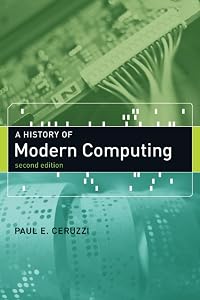
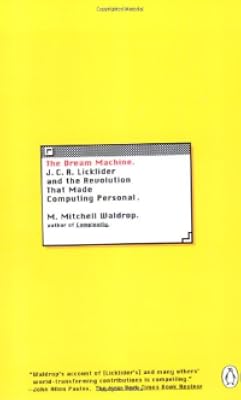







Member Recommendations
Decoding the Heavens: A 2,000-Year-Old Computer—and the Century-Long Search to Discover Its Secrets by Jo Marchant
lorax Mechanical calculating machines ahead of their time, with gears! The devices hold similar fascination for people interested in the history of technology.
63


Member Reviews
This is 2/3 a biography of Charles Babbage and his efforts to produce a calculating machine, and 1/3 a dry discussion of the author's inclusion in an effort to build the machine (which never got fully built in Babbage's day). This can be pretty safely skipped if you're just interested in Babbage, the machine did work in the end.
Impressively readable account of Babbage's life, engines, and contributions to computing. The subject is handled objectively, not falling for the flat assertion that Babbage was the "father of computing" (and incidentally prompting a reappraisal of the role of Ada Lovelace); that said, the book still sets forth the tremendous (if isolated) contributions Babbage made to the idea of mechanised logic. The account of the construction of a Babbage difference engine at the
Science Museum is also fascinating, and makes me regret the loss of ICL.
Science Museum is also fascinating, and makes me regret the loss of ICL.
A very well done account of Charles Babbage's attempts to design and build his Difference and Analytical Engines, followed by Swade's narration of the Science Museum's efforts to build an actual working model based on Babbage's designs. A good read filled with interesting details about Babbage's efforts and the practical difficulties of converting them from paper into reality.
The Difference Engine as designed and partially built in the 1830’s was a mechanical device of some 4000 moving parts that could perform automated mathematical functions (logarithmic, trigonometric and polynomial). The brain child of mathematician/inventor Charles Babbage, the machine was never completed during his lifetime. However in the late 1980’s a working model was produced to celebrate Babbage’s work—remaining largely loyal to the original design and production abilities of the 19th century craftsmen. This book details both the original genius of Babbage’s life and work as well the recreation of it over 150 years later. Unfortunately, the modern part of the book and the building of the machine is more compelling than show more the Babbage part. The author was involved in that part himself, and that closeness to the story gives the tale more life. The detailing of Babbage’s life shifts gears, often awkwardly, between being straight bio and workshop treatise. There is a level of reality created by going back and forth from Babbage’s funding problems and frustrations and his work in the shop, but I felt it diminished the work in the shop greater than necessary. I would have appreciated more effort explaining the theories and processes involved in the ground breaking work and less on what an irritation Babbage could be to those around him. The idea of someone attempting to build a computer in the early part of the 19th century is fascinating (as anyone interested in the creative genre of steampunk already knows), and this book does percolate on occasion but not nearly as often as I wanted. The parallel frustrations of Babbage in the 1830’s and the author in the 1980’s at attempting to get their machines built was interesting too but by the time the machine was built, I was ready to move on. show less
Hounded to death by organ grinders? Failed to build the engines that may have changed the world? Bunch of weird British engineer=historians try to build a maybe impossible machine from antique plans to prove you right by your 200th birthday? Awesome. Stole my title though...
Although some of the prose was a bit dry, Swade managed to make the case the Babbage was not just some eccentric genius that everyone else willfully ignored. Lack of money was definitely a major reason why the difference engine wasn't completed, but Swade shows other reasons that may have contributed. Babbage was complex, surprisingly sociable, stubborn, and outspoken. His personality and views may have rubbed others, particularly influential others, in the wrong direction. The Difference Engine isn't exactly light reading, but it will be definitely of interest to those who want to look beyond the current fad for Babbage inspired steampunk aesthetic. (more)
Very enjoyable popular accound of Charles Babbage's attempts to build a calculating machine in the early 19th century, and then the Science Museum of London's attempt to build one based on his drawings.
Members
- Recently Added By
Author Information

10 Works 675 Members
Doron Swade, an engineer, technology historian, & leading authority on Charles Babbage, is assistant director & head of collections at London's Science Museum. He is also the mastermind of a six-year project to construct a Babbage calculating engine from original nineteenth-century designs. He lives in Kingston-on-Thames, Surrey, England. (Bowker show more Author Biography) show less
Awards and Honors
Distinctions
Common Knowledge
- Original title
- The Cogwheel Brain: Charles Babbage and the Quest to Build the First Computer
- Alternate titles
- The Difference Engine: Charles Babbage and the Quest to Build the First Computer
- Original publication date
- 2000
- People/Characters
- Charles Babbage
- First words
- A carriage clatters to a halt outside N0. 5 Devonshire Street, London
- Disambiguation notice
- Originally published in Great Britain as The Cogwheel Brain
Classifications
- Genres
- History, Nonfiction, Technology, Science & Nature, General Nonfiction, Biography & Memoir
- DDC/MDS
- 681.145 — Applied science & technology Manufacture for specific uses Precision instruments and other devices Instruments for measuring time, counting and calculating machines and instruments Counting and calculating machines and instruments Calculators
- LCC
- QA75 .S954 — Science Mathematics Mathematics Instruments and machines Calculating machines Electronic computers. Computer science
- BISAC
Statistics
- Members
- 567
- Popularity
- 52,347
- Reviews
- 12
- Rating
- (3.59)
- Languages
- English
- Media
- Paper
- ISBNs
- 5
- ASINs
- 1