
James Essinger
Author of Ada's Algorithm: How Lord Byron's Daughter Ada Lovelace Launched the Digital Age
About the Author
James Essinger is the author of Jaquard's Web, one of The Economist's five best popular science books of 2004, and Spellbound, about the origin and mystery of the spelling of English. He lives in Canterbury, England.
Image credit: James Essinger
Works by James Essinger
Ada's Algorithm: How Lord Byron's Daughter Ada Lovelace Launched the Digital Age (2012) 308 copies, 11 reviews
Jacquard's Web: How a Hand-Loom Led to the Birth of the Information Age (2004) 212 copies, 3 reviews
Spellbound: The Surprising Origins and Astonishing Secrets of English Spelling (2006) 136 copies, 4 reviews
Breakthrough Consulting: So You Want to Be a Consultant? Turn Your Expertise into a Successful Consulting Business (2000) 10 copies
Tagged
Common Knowledge
- Birthdate
- 1957-09-05
- Gender
- male
- Education
- University of Oxford (Lincoln College)
- Agent
- Sheila Ableman
- Nationality
- UK
- Birthplace
- Leicester, UK
- Places of residence
- Canterbury, England, UK
- Map Location
- UK
Members
Reviews
Ada's Algorithm: How Lord Byron's Daughter Ada Lovelace Launched the Digital Age through the Poetry of Numbers by James Essinger

Ada Lovelace, together with Charles Babbage, were early 19th century pioneers of the ideas behind what became the computer revolution a century after they lived. The author's central thesis is that Ada's contribution was neglected at the time, and to a large extent subsequently, due to her sex. I felt he slightly spoiled his own argument during the early parts of the book by talking very little about Ada and initially focusing, inevitably, on the notorious life of her more famous father, show more Lord Byron. Ada is a marginal figure in the narrative here, and only when her collaboration with Babbage comes to the fore, does Ada's role become clear.
Their roles were different. Babbage had the mechanical expertise, albeit that his Analytical Engine was never completed, due to lack of funds and the effective absence of a working precision machine industry for much of his life. He also lacked the people handling skills necessary to influence the course of events in his favour; he had a disastrous meeting with Prime Minister Sir Robert Peel in 1842 which, had he succeeded in convincing the latter of the economic benefits that could accrue from his machine, could have changed the future of technology over the next century, albeit that such intriguing "what ifs" are ultimately unprovable.
Ada was the one who had the vision of what the Analytical Engine might achieve, not only in crude mechanical terms, but in terms of a conceptual leap ("he [Babbage] saw machines essentially as mechanised servants of mankind rather than as a new area of discovery with its own mysteries. His scientific imagination was ultimately more prosaic and less incandescent than hers"). Drawing on the example of what had been achieved with a portrait woven on a French loom using a system of cards to control the threads, Ada conceptualised a clear distinction between data (the pattern of the woven portrait) and processing (how the principles behind the application of the cards could be replicated for other forms of information). In the author's words this is "a distinction we tend to take for granted today, but which – like so much of her thinking about computers – was in her own day not only revolutionary but truly visionary". She was effectively inventing the "science of operations", or what we would now call computing, a system that could be applied to any process involving the manipulation of information.
For all her vision, Ada Lovelace still struggled to be taken entirely seriously by her contemporaries, even by Babbage. Sadly, she had very little time to make further efforts in this regard, tragically dying of uterine cancer at the age of just 36 after two years of suffering and pain. Her doctors despaired of being able to do anything to relieve her condition, one offering the truly bleak prognosis that "The duty of the physician is thus a very sad one; as the highest success which he can hope to attain is to secure not recovery, but euthanasia".
As I said earlier, I thought the author initially failed to make the case for Ada Lovelace's significance, though this improved during the narrative. But the book did contain quite a number of typos and mistakes, including one bizarre one where Ada is described as paying a visit to Walter Scott in 1850 - 18 years after his death. Overall, not as good a read as it might have been. show less
Their roles were different. Babbage had the mechanical expertise, albeit that his Analytical Engine was never completed, due to lack of funds and the effective absence of a working precision machine industry for much of his life. He also lacked the people handling skills necessary to influence the course of events in his favour; he had a disastrous meeting with Prime Minister Sir Robert Peel in 1842 which, had he succeeded in convincing the latter of the economic benefits that could accrue from his machine, could have changed the future of technology over the next century, albeit that such intriguing "what ifs" are ultimately unprovable.
Ada was the one who had the vision of what the Analytical Engine might achieve, not only in crude mechanical terms, but in terms of a conceptual leap ("he [Babbage] saw machines essentially as mechanised servants of mankind rather than as a new area of discovery with its own mysteries. His scientific imagination was ultimately more prosaic and less incandescent than hers"). Drawing on the example of what had been achieved with a portrait woven on a French loom using a system of cards to control the threads, Ada conceptualised a clear distinction between data (the pattern of the woven portrait) and processing (how the principles behind the application of the cards could be replicated for other forms of information). In the author's words this is "a distinction we tend to take for granted today, but which – like so much of her thinking about computers – was in her own day not only revolutionary but truly visionary". She was effectively inventing the "science of operations", or what we would now call computing, a system that could be applied to any process involving the manipulation of information.
For all her vision, Ada Lovelace still struggled to be taken entirely seriously by her contemporaries, even by Babbage. Sadly, she had very little time to make further efforts in this regard, tragically dying of uterine cancer at the age of just 36 after two years of suffering and pain. Her doctors despaired of being able to do anything to relieve her condition, one offering the truly bleak prognosis that "The duty of the physician is thus a very sad one; as the highest success which he can hope to attain is to secure not recovery, but euthanasia".
As I said earlier, I thought the author initially failed to make the case for Ada Lovelace's significance, though this improved during the narrative. But the book did contain quite a number of typos and mistakes, including one bizarre one where Ada is described as paying a visit to Walter Scott in 1850 - 18 years after his death. Overall, not as good a read as it might have been. show less
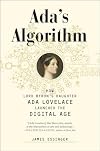
So I'm on Storygraph now as well as Goodreads (and LibraryThing--I'm a little bit nuts) and my stats told me that I hadn't read anything but fiction so far this year. Since I'm always agonizing about how to decide what to read next, I figured it was time to fix that.
Through no fault of Essinger's, I couldn't help but be a bit disappointed with Ada's Algorithm. People seem to have a horrible habit of burning the effects of the departed. Instances that stand out in my memory include Art show more Speigelman's father burning his wife's diaries, as related in Maus; the family of Lady Mary Wortley Montagu, who championed small pox inoculation to England (see the excellent The Speckled Monster for her story), burning her letters and journals; one of my own relatives burning her husband's career-spanning film archive from the first decades of television; and another relative's plan to burn all family letters from WWII. Ada Lovelace was no exception: upon her death, her mother burned all of her correspondence that she felt displayed the family in too negative a light; it's likely that the only reason as much of her work survived as it did is that Ada's mother, Annabella, Lady Byron, was herself a bit of a math nerd, so she recognized the value of Ada's work with Charles Babbage. Essinger reminds us a couple of times that we have more surviving letters from the year she and Babbage were working on their Analytical Machine than from any other year of her life for this reason.
If you're looking for a full, rich depiction of who Ada was as a person, well, if it could even exist after so much of her life was reduced to ash, this isn't the place to find it: Essinger is upfront (literally in the preface, but also in his occasional lapses into first person) that he is here with an agenda. Many women in science have had their contributions overlooked and dismissed, but Ada has even been called crazy. Most of the blame for this likely rests on the Victorian painkillers she took while dying of uterine cancer; writing about math and science under the influence of laudanum and cannabis are apparently grounds to have your entire intellect dismissed. I suspect that her playful side may have been a source of dismissal as well, as it's all to easy to imagine some stuffy old academic dude seeing a woman describe herself as a fairy and recount childhood dreams of mechanical flight, rolling his eyes, and looking away from anything else she might have to say.
Does Essinger succeed in his mission to rehabilitate Ada's reputation as the woman who wrote the first computer program? I'm...not quite sure. He makes a very convincing case to someone (me) who hasn't read anything else about her. But it's impossible to set aside two facts:
(1) her contribution, remarkable as it was in its foresight of the modern age, resides only in Notes appended to a single article written by someone else (which she translated) and consists mostly of theoretical applications; and,
(2) though remarkable, her speculations about the potential power and influence of an Analytical Engine does not seem to have had any impact in or have been of interest to the contemporary scientific community.
Perhaps Essinger simply didn't write enough about what Ada and Babbage's contemporaries thought of their work after it was published, focusing as he does on convincing us of her work's worth. He places so much emphasis on Ada's Notes that the book's most substantial chapter, which describes them, quotes directly from them directly at great length with, in my opinion, not quite enough helpful interpretation of the dense, 19th-century scientific language and grammar. The final chapter describing Ada's legacy--which is basically entirely tied up with Babbage's--talks about how even Babbage was largely forgotten until the invention of the first computer in the 1940s, 100 years later. So while it's true that Ada's vision of what a computer could be was attributed to Babbage, even Babbage didn't make the splash that the Curies or Watson and Crick did in their fields. Essinger may successfully argue that Ada's ideas were groundbreaking and ahead of their time, but even to someone who hoped to be convinced (me), the idea that she was a revolutionary who "launched the digital age" just doesn't hold up.
A quote from Slate on the back of my edition says, "We need [Ada] as a symbol...of all women who have contributed to the progress of science and technology, and of all the women who might have contributed if given the chance." With so little of her life's work left, and so little of it to begin with, given her early death, I'm not sure whether Essinger's book manages to elevate Ada much beyond just that: a symbol of what what we lost for thousands of years by undervaluing half our species.
So if we know so little about Ada and only one fat chapter is devoted to her article, what else is in this 250-ish page book? If you're only here for the programming (like Areg was when he got the book), you might be a bit bored in the first half. If you have a wide-ranging interest in history, there's plenty to enjoy. Here's one thing that I posted on Facebook that's totally irrelevant but still interesting:
So I'm reading a book called "Ada's Algorithm" and it said that her father, Lord Byron, had a "club foot" but that this wasn't much remarked upon because so many people in the upper class had something genetically off, whether it manifested mentally or physically, because...Regency high society consisted of about 5,000 people, which meant most of them were related to each other somehow. For context, the Amish population of Lancaster County is about 30,000. Yeah. So remember THAT the next time you're watching Bridgerton: historically, all these folks were probably related. Suddenly, it makes so much sense why Gothic and Victorian literature is full of visible disabilities and madness...
There's plenty for Essinger to tell us about Ada's notorious father, George, Lord Byron--a notorious, equal-opportunity rake who had a lengthy affair with his half-sister, lived large and accumulated massive debts, drove his wife away after little more than a year when separation was scandalous, ran off to the continent to escape his debts and live even freer, and, oh yeah, was one of the most famous poets of the age. Ada's mother gets relatively short shrift, with Essinger focusing on her emotional coldness, hypochondria, and manipulations of her daughter's life, but she was also a staunch abolitionist and amateur mathematician. Babbage was quite a character, always coming up with a new idea that rendered his previous one obsolete, and was the subject of one of Charles Dickens' thinly disguised satires. Also on the periphery of Ada's story are Charles Dickens himself, who read to Ada on her deathbed; a remarkable mathematician who likely has whole books dedicated to her, Mary Somerville, for whom the first Oxford College for women was named; and Ada's own husband, who was apparently obsessed with building tunnels on his property (okay, maybe I'm the only one who finds that intriguing...).
Finally, though the thought didn't quite fit further up in my review, I don't want to close without mentioning the what-might-have-been that Essinger relates. Anyone can lament the loss of an intellectual powerhouse before they reach 40; but Essinger suggests that losing Ada also meant losing Babbage. One of their surviving letters includes an offer to act as Babbage's "agent", of a sort, using her connections and calmer personality on Babbage's behalf to help him obtain funding and support for his Analytical Engine while he focused on the practical construction. For an emotional man like Babbage (his disastrous meeting with Prime Minister Sir Robert Peel is a case study in why the argument that women were too emotional for science but men weren't was absurd), a buffer and who understood his vision as well as he did, who had the social skills to champion it and the intellectual vision to focus its development and expand its application, could have been what he needed to actually build his machine: "She would have been better suited to direct his engineers and even his financial affairs with greater charm, clarity and effectiveness" (p. 232-233). But Babbage turned her down. Perhaps his pride got in the way. Perhaps, despite their deep friendship, which many consider borderline romantic, and their close collaborative intellectual partnership, he still didn't see a woman up to the task he'd set himself.
Quote Roundup
p. 33) Lady Byron had left the strange, wayward, selfish, and fundamentally unhappy man she had mistakenly married. And now she found herself in a life she had never planned. Her entire upbringing and attitude to life had been focused on her at some point becoming a wife and a mother.
p. 114) Quick note about footnotes here: There are at least two where Essinger credits one of his researchers with discovering hitherto unknown or forgotten dates of births, deaths, and marriages. He describes Babbage as "generous with his credits" (p. 116), always attributing ideas to their originators, and Essinger seems to have followed suit, which is lovely to see.
p. 141) The idea of the Analytical Engine as a kind of Jacquard loom that wove calculations had a deep and persisting appeal to Ada. ... [Babbage] saw the world, and mechanisms, in a much more literal, factual and - indeed - analytical way than she did. For Ada, inventing metaphors for understanding science was second nature. Babbage hardly ever did this. But the real point - and this explains why Ada's contribution to the idea of the Analytical Engine is so important - is that the brilliance of the conception of the Analytical Engine requires both a scientific and emotive perceptions if it is to be fully understood and expressed. For Ada, Jacquard's loom was a conceptual gateway for developing that emotional understanding.
I think I just resent the use of the world "emotional" because it has historically been used to dismiss women and their ideas. I'd rather think of Ada's contribution as more metaphorical or imaginative, her ability to communicate about and make connections between what exists already and what could exist one day.
p. 150) Babbage recounts in his memoirs a conversation with Ada in which he asks why she chose to translate someone else's article about his machine rather than write one of her own, and she replies that it hadn't occurred to her. As with the quote above about Annabella finding herself in an unexpected position in life, Essinger argues that Ada finds Babbage's confidence in her abilities unexpected. Despite her confidence in her social spheres, and even her acquaintance with Mary Somerville, she "had been told from early youth not to think too much of herself...lest it encourage the wilful parts of her personality. ... [But] in science, her confidence melted away and she saw her role as that of the hand-maiden to others."
p. 191) There is no written evidence surviving that Babbage truly understood what Ada had written about the Analytical Engine. In reading her Notes, he may have focused merely on the complex mathematical material (and attributed - or blamed - what he saw as the more discursive ideas on her 'fairy' imagination).
If there's a tragedy in Ada and Babbage's friendship, it's this: that her ideas and legacy depended so much on him. If he had not encouraged her to write, if he had taken credit for her ideas, if he had understood the value of her imagination and her offer to explain and promote his work...well, at least in the last case, the world might be very different. But because he was unable to completing his Analytical Engine--by failure to focus, to describe its importance, to receive funding--Ada, too, was unable to contribute more. Even the most remarkable women in history were so often dependent on the few men who would support them. If that's not an argument for allyship, I don't know what is. show less
Through no fault of Essinger's, I couldn't help but be a bit disappointed with Ada's Algorithm. People seem to have a horrible habit of burning the effects of the departed. Instances that stand out in my memory include Art show more Speigelman's father burning his wife's diaries, as related in Maus; the family of Lady Mary Wortley Montagu, who championed small pox inoculation to England (see the excellent The Speckled Monster for her story), burning her letters and journals; one of my own relatives burning her husband's career-spanning film archive from the first decades of television; and another relative's plan to burn all family letters from WWII. Ada Lovelace was no exception: upon her death, her mother burned all of her correspondence that she felt displayed the family in too negative a light; it's likely that the only reason as much of her work survived as it did is that Ada's mother, Annabella, Lady Byron, was herself a bit of a math nerd, so she recognized the value of Ada's work with Charles Babbage. Essinger reminds us a couple of times that we have more surviving letters from the year she and Babbage were working on their Analytical Machine than from any other year of her life for this reason.
If you're looking for a full, rich depiction of who Ada was as a person, well, if it could even exist after so much of her life was reduced to ash, this isn't the place to find it: Essinger is upfront (literally in the preface, but also in his occasional lapses into first person) that he is here with an agenda. Many women in science have had their contributions overlooked and dismissed, but Ada has even been called crazy. Most of the blame for this likely rests on the Victorian painkillers she took while dying of uterine cancer; writing about math and science under the influence of laudanum and cannabis are apparently grounds to have your entire intellect dismissed. I suspect that her playful side may have been a source of dismissal as well, as it's all to easy to imagine some stuffy old academic dude seeing a woman describe herself as a fairy and recount childhood dreams of mechanical flight, rolling his eyes, and looking away from anything else she might have to say.
Does Essinger succeed in his mission to rehabilitate Ada's reputation as the woman who wrote the first computer program? I'm...not quite sure. He makes a very convincing case to someone (me) who hasn't read anything else about her. But it's impossible to set aside two facts:
(1) her contribution, remarkable as it was in its foresight of the modern age, resides only in Notes appended to a single article written by someone else (which she translated) and consists mostly of theoretical applications; and,
(2) though remarkable, her speculations about the potential power and influence of an Analytical Engine does not seem to have had any impact in or have been of interest to the contemporary scientific community.
Perhaps Essinger simply didn't write enough about what Ada and Babbage's contemporaries thought of their work after it was published, focusing as he does on convincing us of her work's worth. He places so much emphasis on Ada's Notes that the book's most substantial chapter, which describes them, quotes directly from them directly at great length with, in my opinion, not quite enough helpful interpretation of the dense, 19th-century scientific language and grammar. The final chapter describing Ada's legacy--which is basically entirely tied up with Babbage's--talks about how even Babbage was largely forgotten until the invention of the first computer in the 1940s, 100 years later. So while it's true that Ada's vision of what a computer could be was attributed to Babbage, even Babbage didn't make the splash that the Curies or Watson and Crick did in their fields. Essinger may successfully argue that Ada's ideas were groundbreaking and ahead of their time, but even to someone who hoped to be convinced (me), the idea that she was a revolutionary who "launched the digital age" just doesn't hold up.
A quote from Slate on the back of my edition says, "We need [Ada] as a symbol...of all women who have contributed to the progress of science and technology, and of all the women who might have contributed if given the chance." With so little of her life's work left, and so little of it to begin with, given her early death, I'm not sure whether Essinger's book manages to elevate Ada much beyond just that: a symbol of what what we lost for thousands of years by undervaluing half our species.
So if we know so little about Ada and only one fat chapter is devoted to her article, what else is in this 250-ish page book? If you're only here for the programming (like Areg was when he got the book), you might be a bit bored in the first half. If you have a wide-ranging interest in history, there's plenty to enjoy. Here's one thing that I posted on Facebook that's totally irrelevant but still interesting:
So I'm reading a book called "Ada's Algorithm" and it said that her father, Lord Byron, had a "club foot" but that this wasn't much remarked upon because so many people in the upper class had something genetically off, whether it manifested mentally or physically, because...Regency high society consisted of about 5,000 people, which meant most of them were related to each other somehow. For context, the Amish population of Lancaster County is about 30,000. Yeah. So remember THAT the next time you're watching Bridgerton: historically, all these folks were probably related. Suddenly, it makes so much sense why Gothic and Victorian literature is full of visible disabilities and madness...
There's plenty for Essinger to tell us about Ada's notorious father, George, Lord Byron--a notorious, equal-opportunity rake who had a lengthy affair with his half-sister, lived large and accumulated massive debts, drove his wife away after little more than a year when separation was scandalous, ran off to the continent to escape his debts and live even freer, and, oh yeah, was one of the most famous poets of the age. Ada's mother gets relatively short shrift, with Essinger focusing on her emotional coldness, hypochondria, and manipulations of her daughter's life, but she was also a staunch abolitionist and amateur mathematician. Babbage was quite a character, always coming up with a new idea that rendered his previous one obsolete, and was the subject of one of Charles Dickens' thinly disguised satires. Also on the periphery of Ada's story are Charles Dickens himself, who read to Ada on her deathbed; a remarkable mathematician who likely has whole books dedicated to her, Mary Somerville, for whom the first Oxford College for women was named; and Ada's own husband, who was apparently obsessed with building tunnels on his property (okay, maybe I'm the only one who finds that intriguing...).
Finally, though the thought didn't quite fit further up in my review, I don't want to close without mentioning the what-might-have-been that Essinger relates. Anyone can lament the loss of an intellectual powerhouse before they reach 40; but Essinger suggests that losing Ada also meant losing Babbage. One of their surviving letters includes an offer to act as Babbage's "agent", of a sort, using her connections and calmer personality on Babbage's behalf to help him obtain funding and support for his Analytical Engine while he focused on the practical construction. For an emotional man like Babbage (his disastrous meeting with Prime Minister Sir Robert Peel is a case study in why the argument that women were too emotional for science but men weren't was absurd), a buffer and who understood his vision as well as he did, who had the social skills to champion it and the intellectual vision to focus its development and expand its application, could have been what he needed to actually build his machine: "She would have been better suited to direct his engineers and even his financial affairs with greater charm, clarity and effectiveness" (p. 232-233). But Babbage turned her down. Perhaps his pride got in the way. Perhaps, despite their deep friendship, which many consider borderline romantic, and their close collaborative intellectual partnership, he still didn't see a woman up to the task he'd set himself.
Quote Roundup
p. 33) Lady Byron had left the strange, wayward, selfish, and fundamentally unhappy man she had mistakenly married. And now she found herself in a life she had never planned. Her entire upbringing and attitude to life had been focused on her at some point becoming a wife and a mother.
p. 114) Quick note about footnotes here: There are at least two where Essinger credits one of his researchers with discovering hitherto unknown or forgotten dates of births, deaths, and marriages. He describes Babbage as "generous with his credits" (p. 116), always attributing ideas to their originators, and Essinger seems to have followed suit, which is lovely to see.
p. 141) The idea of the Analytical Engine as a kind of Jacquard loom that wove calculations had a deep and persisting appeal to Ada. ... [Babbage] saw the world, and mechanisms, in a much more literal, factual and - indeed - analytical way than she did. For Ada, inventing metaphors for understanding science was second nature. Babbage hardly ever did this. But the real point - and this explains why Ada's contribution to the idea of the Analytical Engine is so important - is that the brilliance of the conception of the Analytical Engine requires both a scientific and emotive perceptions if it is to be fully understood and expressed. For Ada, Jacquard's loom was a conceptual gateway for developing that emotional understanding.
I think I just resent the use of the world "emotional" because it has historically been used to dismiss women and their ideas. I'd rather think of Ada's contribution as more metaphorical or imaginative, her ability to communicate about and make connections between what exists already and what could exist one day.
p. 150) Babbage recounts in his memoirs a conversation with Ada in which he asks why she chose to translate someone else's article about his machine rather than write one of her own, and she replies that it hadn't occurred to her. As with the quote above about Annabella finding herself in an unexpected position in life, Essinger argues that Ada finds Babbage's confidence in her abilities unexpected. Despite her confidence in her social spheres, and even her acquaintance with Mary Somerville, she "had been told from early youth not to think too much of herself...lest it encourage the wilful parts of her personality. ... [But] in science, her confidence melted away and she saw her role as that of the hand-maiden to others."
p. 191) There is no written evidence surviving that Babbage truly understood what Ada had written about the Analytical Engine. In reading her Notes, he may have focused merely on the complex mathematical material (and attributed - or blamed - what he saw as the more discursive ideas on her 'fairy' imagination).
If there's a tragedy in Ada and Babbage's friendship, it's this: that her ideas and legacy depended so much on him. If he had not encouraged her to write, if he had taken credit for her ideas, if he had understood the value of her imagination and her offer to explain and promote his work...well, at least in the last case, the world might be very different. But because he was unable to completing his Analytical Engine--by failure to focus, to describe its importance, to receive funding--Ada, too, was unable to contribute more. Even the most remarkable women in history were so often dependent on the few men who would support them. If that's not an argument for allyship, I don't know what is. show less
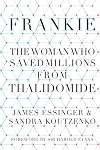
Dr. Frances Oldham "Frankie" Kelsey was a pharmacologist and physician who for many years worked in the New Drug Division of the US Food & Drug Administration. Born in Canada in 1914, she was graduating from college in the midst of the Great Depression, and getting a master's degree seemed a better choice than standing in bread lines. A year later, she faced the same choice, and went on to get her Ph.D. in pharmacology--and in the process connected with a professor who encouraged her, show more pointed her in new directions, and crucially, when the time came, connected her with an opportunity in the US. That embarked her on a path that led to her meeting her husband, Fremont Ellis Kelsey, also a Ph.D. in pharmacology, getting her M.D., and ultimately becoming a medical officer at the FDA.
So why do we care about a "faceless bureaucrat"?
Because Frankie Kelsey is the "faceless bureaucrat who looked at the NDA (New Drug Application) for thalidomide, and started asking questions and insisting on real answers.
Thalidomide was developed in the 1950s in West Germany, and marketed as a sedative and morning sickness preventative for pregnant women, and advertised as completely safe, virtually no side effects. It's true that, unlike other sleeping pills on the market at the time, you effectively couldn't fatally overdose on it. It could cause peripheral neuritis in some cases, but the company assured everyone it cleared up completely when use of thalidomide ended.
No one looked at effects on unborn babies. It was assumed, despite the fact that fetal alcohol syndrome had been known for decades, that drugs wouldn't cross the placental barrier, so they couldn't affect the unborn baby.
In 1960, Frankie Kelsey was assigned to review the NDA for thalidomide when Wm. S. Merrell Corporation applied to market it in the USA. By that time, it was approved in not only West Germany, but the UK, much of Europe, Canada, Australia, parts of Africa, Japan. Merrell expected their application to sail through.
Kelsey asked for studies showing that the peripheral neuritis cleared up after thalidomide use ended. She asked for animal studies. She asked for the US clinical studies--and when Merrell gave her what they had, she said she wanted real studies, not testimonials.
No one had bothered to do the controlled clinical studies that are required and expected today.
There had been some animal studies involving pregnant rats, but not intentionally and systematically looking for effects on the fetus. The data they had said it was safe, but they didn't have much data. As it turned out, thalidomide turns out to be a case where animal studies wouldn't have been as useful as hoped, because thalidomide affects primates really differently than most other animals. (For instance, it doesn't even have much of a sedative effect on rats, which should have been a clue that maybe rats in this case weren't the useful model they are for many other drugs.)
And there was no systematic collection of data on results in patients given thalidomide either in the countries where it was licensed, or in the "investigational" use of it in the US.
Dr. Kelsey didn't initially have any reason to suspect it would cause serious birth defects; she just knew that the data provided didn't remotely establish safety. And she did not see it as her job to rubber stamp the application merely because it had been approved elsewhere. It was her job to be sure it was safe, so she kept asking for the data that would show that.
Merrell tried to pressure her, calling her and calling her bosses. They provided German papers, with translations--but one of her colleagues in the department had worked in West Germany for several years and read German fluently. The translations weren't accurate.
As it became clearer and clearer that the peripheral neuritis really didn't always clear up when use of the drug stopped, she started to be concerned about possible effects on the unborn baby.
And as she held up the application for months, doctors in the UK and Australia started reporting on normally extremely rare birth defects, failure of the arm and bone legs to form and grow, appearing in unexpectedly high numbers in babies born to women who had nothing in common except having used thalidomide in the early stages of their pregnancies.
Frankie Kelsey prevented thalidomide from being widely released in the US before clinical experience in the countries where it had been released proved it should never be released, at least for its proposed uses. I say "at least for its proposed uses," because in fact years later it became clear that thalidomide's terrible effects in fact had real clinical promise in treating some forms of leprosy as well as some forms of cancer. As a medical librarian, I was shocked when I first started seen reports of it being in use again, but in specific circumstances with those conditions, it can be extremely beneficial. Yet even in those cases, it has to be handled extremely carefully, because it remains extremely dangerous to unborn babies.
Frankie Kelsey was a hero, and was widely recognized as such at the time. Today, I think most people have no idea who she was, nor do they know what thalidomide is unless they are or know someone who is one of the small category of patients who do actually benefit from it. She ought to be remembered, and this book is an excellent, engaging, very readable account of her life and her most notable professional contribution to the well-being and safety of Americans using medications for their health.
I received a free electronic galley of this book from the publisher, and am reviewing it voluntarily. show less
So why do we care about a "faceless bureaucrat"?
Because Frankie Kelsey is the "faceless bureaucrat who looked at the NDA (New Drug Application) for thalidomide, and started asking questions and insisting on real answers.
Thalidomide was developed in the 1950s in West Germany, and marketed as a sedative and morning sickness preventative for pregnant women, and advertised as completely safe, virtually no side effects. It's true that, unlike other sleeping pills on the market at the time, you effectively couldn't fatally overdose on it. It could cause peripheral neuritis in some cases, but the company assured everyone it cleared up completely when use of thalidomide ended.
No one looked at effects on unborn babies. It was assumed, despite the fact that fetal alcohol syndrome had been known for decades, that drugs wouldn't cross the placental barrier, so they couldn't affect the unborn baby.
In 1960, Frankie Kelsey was assigned to review the NDA for thalidomide when Wm. S. Merrell Corporation applied to market it in the USA. By that time, it was approved in not only West Germany, but the UK, much of Europe, Canada, Australia, parts of Africa, Japan. Merrell expected their application to sail through.
Kelsey asked for studies showing that the peripheral neuritis cleared up after thalidomide use ended. She asked for animal studies. She asked for the US clinical studies--and when Merrell gave her what they had, she said she wanted real studies, not testimonials.
No one had bothered to do the controlled clinical studies that are required and expected today.
There had been some animal studies involving pregnant rats, but not intentionally and systematically looking for effects on the fetus. The data they had said it was safe, but they didn't have much data. As it turned out, thalidomide turns out to be a case where animal studies wouldn't have been as useful as hoped, because thalidomide affects primates really differently than most other animals. (For instance, it doesn't even have much of a sedative effect on rats, which should have been a clue that maybe rats in this case weren't the useful model they are for many other drugs.)
And there was no systematic collection of data on results in patients given thalidomide either in the countries where it was licensed, or in the "investigational" use of it in the US.
Dr. Kelsey didn't initially have any reason to suspect it would cause serious birth defects; she just knew that the data provided didn't remotely establish safety. And she did not see it as her job to rubber stamp the application merely because it had been approved elsewhere. It was her job to be sure it was safe, so she kept asking for the data that would show that.
Merrell tried to pressure her, calling her and calling her bosses. They provided German papers, with translations--but one of her colleagues in the department had worked in West Germany for several years and read German fluently. The translations weren't accurate.
As it became clearer and clearer that the peripheral neuritis really didn't always clear up when use of the drug stopped, she started to be concerned about possible effects on the unborn baby.
And as she held up the application for months, doctors in the UK and Australia started reporting on normally extremely rare birth defects, failure of the arm and bone legs to form and grow, appearing in unexpectedly high numbers in babies born to women who had nothing in common except having used thalidomide in the early stages of their pregnancies.
Frankie Kelsey prevented thalidomide from being widely released in the US before clinical experience in the countries where it had been released proved it should never be released, at least for its proposed uses. I say "at least for its proposed uses," because in fact years later it became clear that thalidomide's terrible effects in fact had real clinical promise in treating some forms of leprosy as well as some forms of cancer. As a medical librarian, I was shocked when I first started seen reports of it being in use again, but in specific circumstances with those conditions, it can be extremely beneficial. Yet even in those cases, it has to be handled extremely carefully, because it remains extremely dangerous to unborn babies.
Frankie Kelsey was a hero, and was widely recognized as such at the time. Today, I think most people have no idea who she was, nor do they know what thalidomide is unless they are or know someone who is one of the small category of patients who do actually benefit from it. She ought to be remembered, and this book is an excellent, engaging, very readable account of her life and her most notable professional contribution to the well-being and safety of Americans using medications for their health.
I received a free electronic galley of this book from the publisher, and am reviewing it voluntarily. show less
The short version of this review is if you're looking for a book about Ada, this is not it.
My biggest frustration with this book is that it is so padded with additional information. It would be one thing if it was other side tid bits about Ada's life that did not necessarily pertain to her contributions that this book claims to be about, but it isn't. There is too much side tracks on people and events that have nothing to do with Ada. The first few chapters go into Lord Byron when he wasn't show more even involved in her life, and could have been significantly reduced to a few paragraphs to get the same idea across. Babbage I can understand a little more, but even then there were times I was wondering why the author decided to focus on him at some points of the book. There were also periods where the author would go on tangents on other figures that Ada interacted with. While yes these people were in her life, they held no relevance to Ada's work. Honestly, why is Charles Dickens talked about so much??
Whole letters are sited so often that eventually I started to just skim them because it felt like they were being used to make the book longer. Sometimes they were interesting, but again more often than not I was wondering what the point of having this entire letter was. The letters combined with the many irrelevant tangents made this book a slog.
The kicker in all of this is it takes more than half the book to get to the point the author finally talks about Ada's work. Except when he gets to the portion of her notes that talk about her algorithm, the author quickly sums up that yes, Note G is where her algorithm resides and moves on without ever talking more in depth about it. So you slog through all these side stories that don't matter and the background of Babbage's machine just to have the author not even talk about what it is laid out in the title of the book. It is incredibly disappointing and frustrating. At that point I was close to the end anyways and finished the book out of spite more than anything.
There are probably much better informed, and better written, sources on Ada and her work. Save yourself the trouble of this book, because it talks about everything except Ada. show less
My biggest frustration with this book is that it is so padded with additional information. It would be one thing if it was other side tid bits about Ada's life that did not necessarily pertain to her contributions that this book claims to be about, but it isn't. There is too much side tracks on people and events that have nothing to do with Ada. The first few chapters go into Lord Byron when he wasn't show more even involved in her life, and could have been significantly reduced to a few paragraphs to get the same idea across. Babbage I can understand a little more, but even then there were times I was wondering why the author decided to focus on him at some points of the book. There were also periods where the author would go on tangents on other figures that Ada interacted with. While yes these people were in her life, they held no relevance to Ada's work. Honestly, why is Charles Dickens talked about so much??
Whole letters are sited so often that eventually I started to just skim them because it felt like they were being used to make the book longer. Sometimes they were interesting, but again more often than not I was wondering what the point of having this entire letter was. The letters combined with the many irrelevant tangents made this book a slog.
The kicker in all of this is it takes more than half the book to get to the point the author finally talks about Ada's work. Except when he gets to the portion of her notes that talk about her algorithm, the author quickly sums up that yes, Note G is where her algorithm resides and moves on without ever talking more in depth about it. So you slog through all these side stories that don't matter and the background of Babbage's machine just to have the author not even talk about what it is laid out in the title of the book. It is incredibly disappointing and frustrating. At that point I was close to the end anyways and finished the book out of spite more than anything.
There are probably much better informed, and better written, sources on Ada and her work. Save yourself the trouble of this book, because it talks about everything except Ada. show less
Lists
Awards

You May Also Like


Statistics
- Works
- 23
- Members
- 722
- Popularity
- #35,165
- Rating
- 3.1
- Reviews
- 22
- ISBNs
- 46
- Languages
- 4
- Favorited
- 1