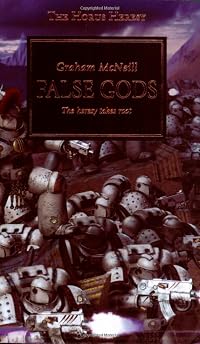
False Gods
by Graham McNeill
The Horus Heresy Novels (2), The Horus Heresy (II), Warhammer 40,000 (fiction)
On This Page
Description
The Great Crusade that has taken humanity into the stars continues. The Emperor of mankind has handed the reins of command to his favoured son, the Warmaster Horus. Yet all is not well in the armies of the Imperium. Horus is still battling against the jealousy and resentment of his brother primarchs and, when he is injured in combat on the planet Davin, he must also battle his inner daemons. With all the temptations that Chaos has to offer, can the weakened Horus resist?.
Tags
Recommendations




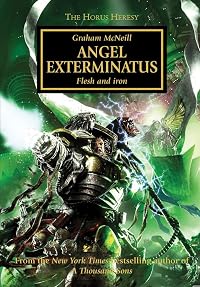

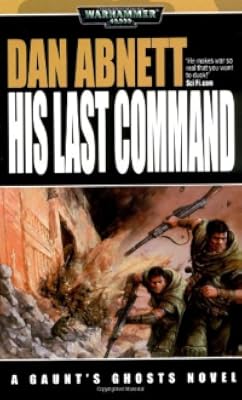
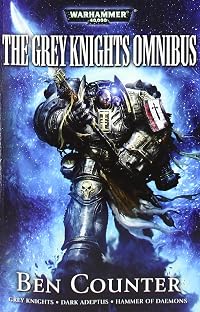
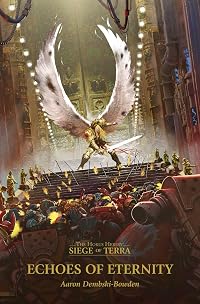

Member Recommendations
Member Reviews
False Gods is the second of dozens of Horus Heresy novels that supply background to the Warhammer 40,000 gothic space-opera gaming universe. It made an interesting contrast to the previous volume Horus Rising. Where I found the plot and content of this second book much more interesting, I felt like the prose was noticeably less polished and evocative.
The "starch-ass" space marine captain Garviel Loken continues to be the sympathetic hero for most of this novel, while many passages detail events well removed from his knowledge. Some of the enigmas posed in the first book are clearly resolved in this one, and the secular virtues of the Imperium of Man start to erode rapidly in the face of the burgeoning cult of the Emperor as well as the show more corrupting influence of Chaos.
The centerpiece of the book was the seduction to Chaos of the Warmaster Horus in a set of visionary experiences in the Warp while he is convalescing in the temple of the Lodge of the Serpent. I found this passage entertainingly reminiscent of Dickens' A Christmas Carol: a tour of Imperium Future, Imperium Past, and Imperium Present, with the Word Bearer Chaplain Erebus as the Jacob Marley psychopomp. The final chapter of the book makes the stakes for the upcoming volumes crystal clear.
As I mentioned, the writing in this book was a little step down from the previous one, and while there may be some artful Warhammer 40,000 literature out there, I'd say that the Horus Heresy series is one that will appeal to fans of the games, and few others. show less
The "starch-ass" space marine captain Garviel Loken continues to be the sympathetic hero for most of this novel, while many passages detail events well removed from his knowledge. Some of the enigmas posed in the first book are clearly resolved in this one, and the secular virtues of the Imperium of Man start to erode rapidly in the face of the burgeoning cult of the Emperor as well as the show more corrupting influence of Chaos.
The centerpiece of the book was the seduction to Chaos of the Warmaster Horus in a set of visionary experiences in the Warp while he is convalescing in the temple of the Lodge of the Serpent. I found this passage entertainingly reminiscent of Dickens' A Christmas Carol: a tour of Imperium Future, Imperium Past, and Imperium Present, with the Word Bearer Chaplain Erebus as the Jacob Marley psychopomp. The final chapter of the book makes the stakes for the upcoming volumes crystal clear.
As I mentioned, the writing in this book was a little step down from the previous one, and while there may be some artful Warhammer 40,000 literature out there, I'd say that the Horus Heresy series is one that will appeal to fans of the games, and few others. show less
Another, shockingly and unnecessarily as brilliant novel deserving of so much more recognition.
Going to need more time to work on a review because I really want to give it its due, but this I'd a phenomenal continuation of the story.
Where Horus Rising is the introduction and foundation of everything to come in the last gasps of the Great Crusade, False Gods documents its death throes, preparing for epoch that is the tragedy of fratricide that begins over 10,000 years of only war in Galaxy in Flames.
The only real criticism, one that sadly is repeated in the series, particularly in McNeill's writing, is a backwards and chauvinistic view of gender, but that's something to discuss in more in Fulgrim.
I absolutely adore these books and the show more autistic ADHD hyperfixation I have on Warhammer right now, which has been circular throughout my life with 40K snd myself sharing a birth year, brings me to much joy.
The real world is structurally grimdark, especially for those of us with multiple intersections of marginalisation, and, when it doesn't forget the satire and tragedy it's always been, Warhammer is truly a balm for my depression and growing nihilism; even in the worst possible universe where everything and everyone is awful on a macro scale, but individuals and events can snatch fleeting moments of triumph and joy on the micro, regardless of how ephemeral and doomed everything is. Really speaks to this Queer trans disable neurodivergent gal with chronic conditions. show less
Going to need more time to work on a review because I really want to give it its due, but this I'd a phenomenal continuation of the story.
Where Horus Rising is the introduction and foundation of everything to come in the last gasps of the Great Crusade, False Gods documents its death throes, preparing for epoch that is the tragedy of fratricide that begins over 10,000 years of only war in Galaxy in Flames.
The only real criticism, one that sadly is repeated in the series, particularly in McNeill's writing, is a backwards and chauvinistic view of gender, but that's something to discuss in more in Fulgrim.
I absolutely adore these books and the show more autistic ADHD hyperfixation I have on Warhammer right now, which has been circular throughout my life with 40K snd myself sharing a birth year, brings me to much joy.
The real world is structurally grimdark, especially for those of us with multiple intersections of marginalisation, and, when it doesn't forget the satire and tragedy it's always been, Warhammer is truly a balm for my depression and growing nihilism; even in the worst possible universe where everything and everyone is awful on a macro scale, but individuals and events can snatch fleeting moments of triumph and joy on the micro, regardless of how ephemeral and doomed everything is. Really speaks to this Queer trans disable neurodivergent gal with chronic conditions. show less
Fiction is a subjective art form. You either like something, or you do not like something. This review will not spoil anything, in fact, it will not focus on the material at all except to say, this is a story set in the "Warhammer 40K Universe," which is foremost an table-top wargame. What this will be is a small critical look at the format, writing style, and character development of the novel.
The book is broken down into chapters, with each chapter giving you, in bold print, three insights as to what in going on in the chapter. These three little "insights" could be easier defined as overshadowing statements that range from one word, to a few words. Each chapter has multiple story arcs beginning and ending with a double spaced break show more which gives the reader the opportunity to switch story arcs. This technique gives the reader the impression of multiple actions happening at or around the same time. Since the premise of the lore setting is futuristic and fantastical war setting, this writing strategy works well to move the whole story arc along with multiple characters interaction in the chaos of warfare.
The writing style is well developed, with multiple authors working together in writing books in the series. The authors work well together to create one seamless story arc, which is still going on today with over 50+ titles. The series itself is almost like the way a television show is developed. There are some books that need to be read in order that move the story along its long reaching story timeline, but every so often, there is a novel in the numerical sequence that is a one shot informative novel about a specific hero or villain, which are offshoots of the main story timeline, and usually deal with a past event. Because of this we also get great character development within the lore.
The ease of reading is about a low medium for me. The only thing that makes it a little more difficult to read is the use of similar spelling and pronunciation of words that seem familiar yet foreign and specific to this story's universe. The character development is good, and the ease of the sentence structure, punctuation, and vocabulary make for an easy and enjoyable read.
I recommend this book and the rest of the series if you enjoy military, science-fiction, aliens, or weird-fiction genres. show less
The book is broken down into chapters, with each chapter giving you, in bold print, three insights as to what in going on in the chapter. These three little "insights" could be easier defined as overshadowing statements that range from one word, to a few words. Each chapter has multiple story arcs beginning and ending with a double spaced break show more which gives the reader the opportunity to switch story arcs. This technique gives the reader the impression of multiple actions happening at or around the same time. Since the premise of the lore setting is futuristic and fantastical war setting, this writing strategy works well to move the whole story arc along with multiple characters interaction in the chaos of warfare.
The writing style is well developed, with multiple authors working together in writing books in the series. The authors work well together to create one seamless story arc, which is still going on today with over 50+ titles. The series itself is almost like the way a television show is developed. There are some books that need to be read in order that move the story along its long reaching story timeline, but every so often, there is a novel in the numerical sequence that is a one shot informative novel about a specific hero or villain, which are offshoots of the main story timeline, and usually deal with a past event. Because of this we also get great character development within the lore.
The ease of reading is about a low medium for me. The only thing that makes it a little more difficult to read is the use of similar spelling and pronunciation of words that seem familiar yet foreign and specific to this story's universe. The character development is good, and the ease of the sentence structure, punctuation, and vocabulary make for an easy and enjoyable read.
I recommend this book and the rest of the series if you enjoy military, science-fiction, aliens, or weird-fiction genres. show less
This was a very good novel. McNeill picks up right where Dan Abnett left off in Horus Rising, and the move from one book to the other is seamless. In a way, you can't tell where one book begins and the other ends if you go by the very good prose in these two novels. I can only hope that as I continue to read the series, which I will, that the feel of consistent quality storytelling and ambiance will be there. So far, so good.
The plot thickens in this novel. Revelations are made, and it seems not all is as it seems. I am fascinated by this series taking place so long before the "regular" events in Warhammer 40,000. I have said before that I often do not like books where you know how things will end beforehand. And in this series, that show more is the case. You know, if you have read any of the other books in the WH40K universe, how things will end for the most part: the Emperor as a corpse deity, the battle between the forces of the Imperium, the xenos, and other forces of Chaos raging on. And yet, the Horus Heresy series draws you right in. You really want to find out how things happen. What discoveries are made. Why things are the way they are. I think as a reader you get a sense of wonder as you see Horus, the Primarchs, the Astartes as well as other Imperial forces coming face to face for the first time with Chaos. Again, not all is as it seems.
In this novel, Horus is wounded. His men, some of them, rush to try to find a cure in the world of Davin where some mystics (so to speak. You could call them sorcerers, etc.) may or not have a remedy. And if he survives, Horus will be sorely tempted. Will he fall for that great temptation? He learns new things along the way that may tilt the balance of the Great Crusade. And what exactly are Erebus's motivations and machinations? There is a lot of intrigue in this book as well as a lot of action. McNeill chooses to focus much of the novel on the point of view of Captain Loken, and I think this makes a good choice. Loken, though an experienced warrior, does play the part of the new guy, and that view serves us readers well to appreciate the upcoming conflicts, when Astartes will have to decide if they will fight their brothers or not.
But I will not say more. If you are fan of WH40K, you need to be reading this series. If you like military science fiction in general, give this series a try. I know I will be looking for the next volume in the series. show less
The plot thickens in this novel. Revelations are made, and it seems not all is as it seems. I am fascinated by this series taking place so long before the "regular" events in Warhammer 40,000. I have said before that I often do not like books where you know how things will end beforehand. And in this series, that show more is the case. You know, if you have read any of the other books in the WH40K universe, how things will end for the most part: the Emperor as a corpse deity, the battle between the forces of the Imperium, the xenos, and other forces of Chaos raging on. And yet, the Horus Heresy series draws you right in. You really want to find out how things happen. What discoveries are made. Why things are the way they are. I think as a reader you get a sense of wonder as you see Horus, the Primarchs, the Astartes as well as other Imperial forces coming face to face for the first time with Chaos. Again, not all is as it seems.
In this novel, Horus is wounded. His men, some of them, rush to try to find a cure in the world of Davin where some mystics (so to speak. You could call them sorcerers, etc.) may or not have a remedy. And if he survives, Horus will be sorely tempted. Will he fall for that great temptation? He learns new things along the way that may tilt the balance of the Great Crusade. And what exactly are Erebus's motivations and machinations? There is a lot of intrigue in this book as well as a lot of action. McNeill chooses to focus much of the novel on the point of view of Captain Loken, and I think this makes a good choice. Loken, though an experienced warrior, does play the part of the new guy, and that view serves us readers well to appreciate the upcoming conflicts, when Astartes will have to decide if they will fight their brothers or not.
But I will not say more. If you are fan of WH40K, you need to be reading this series. If you like military science fiction in general, give this series a try. I know I will be looking for the next volume in the series. show less
My son gave me this to read.....he is a HUGE Warhammer fan...he paints and collects the models, plays the game, etc. and I've always been interested in the lore....especially after paging through some of his codex books. He isn't a big reader and listened to the first book on audio book...which I'm not a fan of....so, he filled me in and gave me this to start.
I actually really enjoyed this. Not being a fan of the game, it did take a little bit to familiarize myself with some of the wording used exclusively in the Warhammer universe. There's also a huge cast of characters to remember.
Overall, I think this is a series that anyone that appreciates fantasy, futuristic and/or militant type books would enjoy....even those not familiar with show more the game. I will definitely read some of the other books in this series. show less
I actually really enjoyed this. Not being a fan of the game, it did take a little bit to familiarize myself with some of the wording used exclusively in the Warhammer universe. There's also a huge cast of characters to remember.
Overall, I think this is a series that anyone that appreciates fantasy, futuristic and/or militant type books would enjoy....even those not familiar with show more the game. I will definitely read some of the other books in this series. show less
Continuing the brutal reality started in the first book, this one deftly interweaves a political scheme where Horus is injured to the precipice of death, brought to a religious environment for healing, recovers, then totally reverses his meaning for universal conquest from man-controlled peace to total annihilation of all not deemed worthy. This conveniently includes usurping the Emperor and taking his place. I enjoyed how Chaos was injected into this and how the Astartes Mournival was basically split in two. This novel basically sets up an arena of future conflict for all parties, and sets the galaxy on a path for destruction. Told you this was pure geek...RTYB.
A must read for fans of the Horus Heresy. This second installment in the series truly depicts the beginning of Horus's fall from grace as the 63rd Expedition encounters the infection of Chaos (interdimensional evil). What I liked about this book is the aggressive and unbridled loyalty the Space Marines display when Horus Lupercal is threatened. Like sons to a father, they mercilessly serve. Hard decisions are made and people are sacrificed to achieve victory.
The reader also gets a glimpse of the future and why someone like Horus would dare rebel against the Emperor.
It's an intriguing portrayal of a long descent into hell.
The reader also gets a glimpse of the future and why someone like Horus would dare rebel against the Emperor.
It's an intriguing portrayal of a long descent into hell.
Members
- Recently Added By
Lists

Best Military Science Fiction
57 works; 26 members

Books Read in 2011
684 works; 19 members
Author Information

193+ Works 8,018 Members
Some Editions
Series

The Horus Heresy Novels
54 works (2)

The Horus Heresy
55 works (II)

Warhammer 40,000 (fiction)
1240 works
Belongs to Publisher Series
Work Relationships
Is contained in
Is abridged in
Common Knowledge
- Canonical title
- False Gods
- Original title
- False Gods
- Alternate titles
- False Gods: The heresy takes root
- Original publication date
- 2006-06-15
- People/Characters
- Horus Lupercal (The Warmaster, Commander of the Sons of Horus Legion); Ezekyle Abaddon (First Captain of the Sons of Horus); Tarik Torgaddon (Captain, 2nd Company, Sons of Horus); Iacton Qruze ('The Half-Heard', Captain, 3rd Company, Sons of Horus); Hastur Sejanus (Captain, 4th Company, Sons of Horus, deceased); Horus Aximand ('Little Horus', Captain, 5th Company, Sons of Horus) (show all 33); Serghar Targost (Captain, 7th Company, Sons of Horus, lodge master); Garviel Loken (Captain, 10th Company, Sons of Horus); Luc Sedirae (Captain, 13th Company, Sons of Horus); Tybalt Marr ('The Either', Captain, 18th Company, Sons of Horus); Verulam Moy ('The Or', Captain, 19th Company, Sons of Horus); Kalus Ekaddon (Captain, Catulan Reaver Squad, Sons of Horus); Falkus Kibre ('Widowmaker', Captain, Justaerin Terminator Squad, Sons of Horus); Nero Vipus (Captain, Locasta Tactical Squad, Sons of Horus); Maloghurst ('The Twisted', Equerry to the Warmaster); Angron (Primarch of the World Eaters); Fulgrim (Primarch of the Emperor's Children); Erebus (First Chaplain of the Word Bearers); Khârn (Captain, 8th Assault Company of the World Eaters); Esau Turnet (Princeps, Commander Dies Irae, Legio Mortis); Titus Cassar (Moderati Primus, Dies Irae, Legio Mortis); Jonah Aruken (Moderati Primus, Dies Irae, Legio Mortis); Akshub (Davinite Lodge Priestess); Tsi Rekh (Davinite liaison); Tsepha (cultist of Davin); Petronella Vivar (Palatina Majoria of House Carpinus); Maggard (bodyguard to Petronella); Varvaras (Lord Commander, Imperial Army); Regulus (Mechanicum Adept); Ignace Karkasy; Euphrati Keeler; Mersadie Oliton; Kyril Sindermann
- Important places
- Davin; Aureus; Imperium of Man
- Important events
- Horus Heresy
- Epigraph
- 'It is the folly of men to believe that they are great players on the stage of history, that their actions might affect the grand procession that is the passage of time. It is an insulting conceit a powerful man might cla... (show all)sp tight to his bosom that he might sleep away the night, safe in the knowledge that, but for his presence, the world would not turn, the mountains would crumble and the seas dry up. But if the remembrance of history has taught us anything, it is that, in time, all things will pass. Unnumbered civilisations before ours are naught but dust and bones, and the greatest heroes of their age are forgotten legends. No man lives forever and even as memory fades, so too will any remembrance of him.
'It is a universal truth and an unavoidable law that cannot be denied, despite the protestations of the vain, the arrogant and the tyrannical.
'Horus was the exception.'
– Kyril Sinderman, Preface to the Remembrancers
'It would take a thousand clichés to describe the Warmaster, each one truer than the last.'
– Petronella Vivar
Palatina Majoria of House Carpinus
'Everything degenerates in the hands of men.'
– Ignace Karksay, Meditations on the Elegiac Hero - Dedication
- To Dan. Thanks for the illumination.
- First words
- Cyclopean Magnus, Rogal Dorn, Leman Russ: names that rang with history, names that shaped history.
- Last words
- (Click to show. Warning: May contain spoilers.)'A place not far from here,' said Horus. 'The Isstvan system.'
- Original language
- English
Classifications
Statistics
- Members
- 1,112
- Popularity
- 22,787
- Reviews
- 21
- Rating
- (3.69)
- Languages
- 9 — Czech, English, French, German, Hungarian, Italian, Polish, Russian, Spanish
- Media
- Paper, Audiobook, Ebook
- ISBNs
- 24
- ASINs
- 11