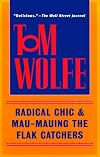
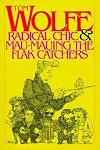
Radical Chic & Mau-Mauing the Flak Catchers
by Tom Wolfe
On This Page
Description
In these two devastatingly funny essays, Tom Wolfe examines political stances, social styles, "black rage," and "white guilt" in our status-minded world. In "These Radical Chic Evenings," Wolfe focuses primarily on one symbolic event: a gathering of the politically correct at Leonard Bernstein's duplex apartment on Park Avenue to meet spokesmen of the Black Panther Party. He re-creates the incongruous scene and its astonishing repercussions with high fidelity. And in "Mau-Mauing the Flak show more Catchers," Wolfe travels to San Francisco to survey another meeting-ground between militant minorities and the liberal white establishment. This time the meeting deals with the newly emerging art of confrontation, as practiced by San Francisco's militant minorities in response to a highly bureaucratized poverty program. With his fourth book, which brought the phrase "radical chic" into the cultural lexicon, Wolfe has never been more unflinching with his patented social criticism. show lessTags
Recommendations



































Member Reviews
Online definitions:
Radical Chic: "The alleged adoption and promotion of radical political causes by celebrities, socialites, and high society. People who insincerely identify themselves as radicals while conducting upper-class lifestyles and committing themselves, in reality, to much more reactionary opinions."
Mau-mau: "To intimidate (someone, such as an official) by hostile confrontation or threats."
Flak catcher: "A slick spokesperson who can turn any criticism to the advantage of their employer. flack, flack catcher, flak. spokesperson, representative, interpreter, voice - an advocate who represents someone else's policy or purpose."
************
Satirical intellectual Tom Wolfe wrote two connected biting essays, (or rather, a show more psycho-delicious orgy of words), in 1970 that rips apart the class divide and gives an inside observer's look at the workings and inspirations of The Black Panthers who were righteously focused on creating a revolution to cure poverty, end rascism, create equality, and feed their children.
The Radical Chic narrative opens in 1969 when Conductor Leonard and Felicia Bernstein, (STEIN!, not STEEN!), throw a party... (errr... a MEETNG) in their posh upper East side apartment to raise funds for the Black Panther Defense Fund. The Who's Who of the Radical Chic are there, and of course, a handful of reporters.
This brilliant political and society commentary sizzles it's way through the decades and manages to gain even more relevance as it goes. Wolfe has a wickedly good time namedropping with ease - from Otto Preminger to Panther Don Cox to Barbara Walters - like a hippie tossing flower petals into the wind; his tearingly accurate descriptions of people and policy are no holds barred and will thrill you to you toes.
The Mau-Mauing section dissects a visit to a legislators office by community organizers seeking aid and social-welfare reform. Does this sound like a dry read? It's not.
If you're picky about what you read, here is your book. show less
Radical Chic: "The alleged adoption and promotion of radical political causes by celebrities, socialites, and high society. People who insincerely identify themselves as radicals while conducting upper-class lifestyles and committing themselves, in reality, to much more reactionary opinions."
Mau-mau: "To intimidate (someone, such as an official) by hostile confrontation or threats."
Flak catcher: "A slick spokesperson who can turn any criticism to the advantage of their employer. flack, flack catcher, flak. spokesperson, representative, interpreter, voice - an advocate who represents someone else's policy or purpose."
************
Satirical intellectual Tom Wolfe wrote two connected biting essays, (or rather, a show more psycho-delicious orgy of words), in 1970 that rips apart the class divide and gives an inside observer's look at the workings and inspirations of The Black Panthers who were righteously focused on creating a revolution to cure poverty, end rascism, create equality, and feed their children.
The Radical Chic narrative opens in 1969 when Conductor Leonard and Felicia Bernstein, (STEIN!, not STEEN!), throw a party... (errr... a MEETNG) in their posh upper East side apartment to raise funds for the Black Panther Defense Fund. The Who's Who of the Radical Chic are there, and of course, a handful of reporters.
This brilliant political and society commentary sizzles it's way through the decades and manages to gain even more relevance as it goes. Wolfe has a wickedly good time namedropping with ease - from Otto Preminger to Panther Don Cox to Barbara Walters - like a hippie tossing flower petals into the wind; his tearingly accurate descriptions of people and policy are no holds barred and will thrill you to you toes.
The Mau-Mauing section dissects a visit to a legislators office by community organizers seeking aid and social-welfare reform. Does this sound like a dry read? It's not.
If you're picky about what you read, here is your book. show less
Tom Wolfe should probably tattoo "I'm a lover not a hater, baby" on the inside of his eyelids. The problem with being a hater is that it's just so much fun. In this book, Wolfe goes after two of the more hilariously misguided White Guilt efforts of the late 60s; the brief fling between the Black Panthers and New York's society elite, and various Community Development programs in San Francisco.
There's actually some decent journalism in here about conflicts between charismatic and bureaucratic styles of leadership, the romance of revolution and the hard work of hustling money from people who have and are willing to turn it over. Sure, it's a little racist, but at least Wolfe digs that it's all a game, that's there's a fundamental symmetry show more between New York society and SF Mission pimps. Unfortunately, this is buried under a lot of swipes at society wives for being useless and ornamental, which is kinda the point of society wives. At this point, a good 40 years removed from the subject matter, it's easy to see what parts of the 60s endured and which parts faded. The Black Panthers are far more interesting than Unfortunately, Wolfe treats it all with the same level of excited derision. Well, at least it's short and moderately sparky; Wolfe would have to hate a lot harder than he does here to be boring. show less
There's actually some decent journalism in here about conflicts between charismatic and bureaucratic styles of leadership, the romance of revolution and the hard work of hustling money from people who have and are willing to turn it over. Sure, it's a little racist, but at least Wolfe digs that it's all a game, that's there's a fundamental symmetry show more between New York society and SF Mission pimps. Unfortunately, this is buried under a lot of swipes at society wives for being useless and ornamental, which is kinda the point of society wives. At this point, a good 40 years removed from the subject matter, it's easy to see what parts of the 60s endured and which parts faded. The Black Panthers are far more interesting than Unfortunately, Wolfe treats it all with the same level of excited derision. Well, at least it's short and moderately sparky; Wolfe would have to hate a lot harder than he does here to be boring. show less
I had no idea what this book was about when I purchased it. But having read several of Tom Wolfe’s other collections of “New Journalism” essays, there was little doubt that it would be interesting, entertaining, and informative.
“New Journalism” was coined after Tom Wolfe’s unique style of reporting the news. He became famous in the 1960’s for a new style of writing in which he objectively presented factual information… laid out however, in the form of a short story. Wolfe worked for several major newspapers and magazines where he contributed many of these “New Journalism” essays. In each he would demonstrate the ability to accurately characterize a decade, an era, an incident, or phase of American history. Keeping show more his finger on the pulse of America, he intellectually described the mood, culture, customs, and attitudes in a precise, candid and unbiased manner… often humorous, and always “right on”.
This particular book includes 2 such essays, both of which occur in the late 1960s.
"Radical Chic" takes place on Park Avenue in New York City. Characters include high-society left wing intellectuals and celebrities such as Leonard Bernstein, Otto Preminger, and Barbara Walters. The trend amongst Manhattan social climbers was to ostentatiously give generously to any charitable organization that would result in personal public attention. No altruism here… just an arrogant attempt to demonstrate superiority over each other and the dreadful middle class. In fact, there was no interest in helping the middle class. But coming to the aid of poor black radicals was alluring....”primitive, exotic, romantic”. It just happened at the time that the Black Panthers were involved in terrorist anti-war activities and were seeking funds to pay for attorney fees. So all up and down Park Avenue, social climbing elitists were inviting the leaders of the Black Panthers into their penthouse suites and throwing fund raising parties. You won’t want to miss Tom Wolfe’s report on one party in particular… and the very amusing outcome.
The second essay "Mau-Mauing the Flak Catchers" is about community organizing. Have you ever wondered exactly what community organizing is, where it started, and how it evolved? Tom Wolf’s essay goes right to the heart of these questions. While Saul Alinski was community organizing in Chicago, the ghetto blacks were doing it in San Francisco… all with the government’s blessing.
"Mau-Mauing" takes place in 1968 in San Francisco where emerging government agencies aiming to help the poor became an attraction for tough black ghetto youth. The original intent was to help the poor with occupational training and jobs- but nothing ever seemed to change- so most of the budget eventually went into community organizing… the bureaucratic term for ‘power to the people’. It was a term that meant identifying the gang leaders of the ghetto and helping them organize the poor to uprise against the social system. Mau-mauing was the term used to describe the intimidating confrontation tactics used by the blacks. “Bad dudes were out mau-mauing at all the poverty agencies, at boards of education, at city halls, hospitals, conventions, foundations, schools, charities, civic organizations, all sorts of places”. All they had to do was come up with a fancy name like Head Start or ACORN… send a few thugs to mau-mau the government “flak catchers”, and they were suddenly on the government payroll. Tom Wolfe compares community organizers to pimps... “the aristocrat of the street- a job that paid a lot of money and you did nothing.”
I doubt "Mau-mauing the Flak Catchers" had much impact on readers at the time of publication in 1970. It all seemed so harmless and irrelevant to the big picture. The entitlement bureaucracy was in it’s infancy stage… with the consequences unforeseen.
Once again Tom Wolfe manages to document events that seemed at the time to escape everyone else’s attention. In this case, events that help bring clarity and understanding to why and how our country is in such a mess today. Thank you Tom Wolfe.
Rated 5 Stars
Sept 26, 2015 show less
“New Journalism” was coined after Tom Wolfe’s unique style of reporting the news. He became famous in the 1960’s for a new style of writing in which he objectively presented factual information… laid out however, in the form of a short story. Wolfe worked for several major newspapers and magazines where he contributed many of these “New Journalism” essays. In each he would demonstrate the ability to accurately characterize a decade, an era, an incident, or phase of American history. Keeping show more his finger on the pulse of America, he intellectually described the mood, culture, customs, and attitudes in a precise, candid and unbiased manner… often humorous, and always “right on”.
This particular book includes 2 such essays, both of which occur in the late 1960s.
"Radical Chic" takes place on Park Avenue in New York City. Characters include high-society left wing intellectuals and celebrities such as Leonard Bernstein, Otto Preminger, and Barbara Walters. The trend amongst Manhattan social climbers was to ostentatiously give generously to any charitable organization that would result in personal public attention. No altruism here… just an arrogant attempt to demonstrate superiority over each other and the dreadful middle class. In fact, there was no interest in helping the middle class. But coming to the aid of poor black radicals was alluring....”primitive, exotic, romantic”. It just happened at the time that the Black Panthers were involved in terrorist anti-war activities and were seeking funds to pay for attorney fees. So all up and down Park Avenue, social climbing elitists were inviting the leaders of the Black Panthers into their penthouse suites and throwing fund raising parties. You won’t want to miss Tom Wolfe’s report on one party in particular… and the very amusing outcome.
The second essay "Mau-Mauing the Flak Catchers" is about community organizing. Have you ever wondered exactly what community organizing is, where it started, and how it evolved? Tom Wolf’s essay goes right to the heart of these questions. While Saul Alinski was community organizing in Chicago, the ghetto blacks were doing it in San Francisco… all with the government’s blessing.
"Mau-Mauing" takes place in 1968 in San Francisco where emerging government agencies aiming to help the poor became an attraction for tough black ghetto youth. The original intent was to help the poor with occupational training and jobs- but nothing ever seemed to change- so most of the budget eventually went into community organizing… the bureaucratic term for ‘power to the people’. It was a term that meant identifying the gang leaders of the ghetto and helping them organize the poor to uprise against the social system. Mau-mauing was the term used to describe the intimidating confrontation tactics used by the blacks. “Bad dudes were out mau-mauing at all the poverty agencies, at boards of education, at city halls, hospitals, conventions, foundations, schools, charities, civic organizations, all sorts of places”. All they had to do was come up with a fancy name like Head Start or ACORN… send a few thugs to mau-mau the government “flak catchers”, and they were suddenly on the government payroll. Tom Wolfe compares community organizers to pimps... “the aristocrat of the street- a job that paid a lot of money and you did nothing.”
I doubt "Mau-mauing the Flak Catchers" had much impact on readers at the time of publication in 1970. It all seemed so harmless and irrelevant to the big picture. The entitlement bureaucracy was in it’s infancy stage… with the consequences unforeseen.
Once again Tom Wolfe manages to document events that seemed at the time to escape everyone else’s attention. In this case, events that help bring clarity and understanding to why and how our country is in such a mess today. Thank you Tom Wolfe.
Rated 5 Stars
Sept 26, 2015 show less
Wolfe exposes the underbelly of race relations in a New York Cit filled with satire and biting humor. Many times Wolfe just stands back and lets the silly people hang themselves.
Two excellent novella-length essays from the Man in White, both on the subject of dysfunctional race relations in America. Radical Chic is a hilarious examination of social elites who embrace radical causes, while Mau-Mauing the Flak Catchers describes a darkly amusing kabuki in which various ethnic groups in 1970s San Francisco take swing at the piñata of government anti-poverty programs.
Radical Chic: Mostly skewering the NYC elite. Secondarily showing off how smart he is. The primary stuff is dated and kind of nasty anyway. The secondary stuff has a few good insights, but the whole thing goes on for too long.
Mau-Mauing the Flak Catchers: It is a great title. In fact, the title is so great that the article is superfluous—it doesn't add anything. Wolfe didn't know anybody in San Francisco, so there isn't any backstabbing here. Just really repetitive quoting of black jive talk for fifty pages. There is an intro and an outro, but whatever.
Mau-Mauing the Flak Catchers: It is a great title. In fact, the title is so great that the article is superfluous—it doesn't add anything. Wolfe didn't know anybody in San Francisco, so there isn't any backstabbing here. Just really repetitive quoting of black jive talk for fifty pages. There is an intro and an outro, but whatever.
“The New Thang?” said Mayor Alioto, after they had put in their own unique and confounding appearance at City Hall.
“That’s right, The New Thang.” The Mayor looked wigged out, as if the lights had gone out in his skull.
“Thang,” said Ronnie. “That’s Thing in African.”
“Oh,” said the Mayor. There wasn’t even the faintest shade of meaning in his voice.
Wolfe, Tom. Radical Chic and Mau-Mauing the Flak Catchers (p. 132). Farrar, Straus and Giroux. Kindle Edition.
“That’s right, The New Thang.” The Mayor looked wigged out, as if the lights had gone out in his skull.
“Thang,” said Ronnie. “That’s Thing in African.”
“Oh,” said the Mayor. There wasn’t even the faintest shade of meaning in his voice.
Wolfe, Tom. Radical Chic and Mau-Mauing the Flak Catchers (p. 132). Farrar, Straus and Giroux. Kindle Edition.
Members
- Recently Added By
Lists

The Torchlight List
95 works; 1 member
Author Information

40+ Works 39,917 Members
Thomas Kennerly Wolfe Jr. was born in Richmond, Virginia on March 2, 1930. He received bachelor's degree in English from Washington and Lee University in 1951 and a Ph.D in American studies from Yale University in 1957. He started his journalism career as a general-assignment reporter at The Springfield Union. While he was working for The show more Washington Post, he was assigned to cover Latin America and won the Washington Newspaper Guild's foreign news prize for a series on Cuba in 1961. In 1962, he became a reporter for the New York Herald Tribune and a staff writer for New York magazine. His work also appeared in Harper's and Esquire. His first book, a collection of articles about the flamboyant Sixties written for New York and Esquire entitled The Kandy-Kolored Tangerine-Flake Streamline Baby, was published in 1968. His other collections included Radical Chic and Mau-Mauing the Flak Catchers and Hooking Up. His non-fiction works included The Pump House Gang; The Electric Kool-Aid Acid Test; The Painted Word; Mauve Gloves and Madmen, Clutter and Vine; In Our Time; and From Bauhaus to Our House. The Right Stuff won the American Book Award for nonfiction, the National Institute of Arts and Letters Harold Vursell Award for prose style, and the Columbia Journalism Award. It was adapted into a film in 1983. His fiction books included The Bonfire of the Vanities, Ambush at Fort Bragg, A Man in Full, The Kingdom of Speech, I Am Charlotte Simmons, and Back to Blood. He was also a contributing artist at Harper's from 1978 to 1981. Many of his illustrations were collected in In Our Time. He died on May 14, 2018 at the age of 88. (Bowker Author Biography) show less
Some Editions
Awards and Honors
Notable Lists
Work Relationships
Common Knowledge
- Canonical title*
- Radical chic & Mau-Mauing the flak catchers
- Original title
- Radical Chic & Mau-Mauing the Flak Catchers
- Original publication date
- 1970
- People/Characters
- Leonard Bernstein; Otto Preminger; Barbara Walters
- First words
- At 2 or 3 or 4 a.m., somewhere along in there, on August 25, 1966, his forty-eighth birthday, in fact, Leonard Bernstein woke up in the dark in a state of wild alarm.
- Last words
- (Click to show. Warning: May contain spoilers.)Would that black apparition, that damnable Negro by the piano, be rising up form the belly of a concert grand for the rest of his natural life?
*Some information comes from Common Knowledge in other languages. Click "Edit" for more information.
Classifications
Statistics
- Members
- 932
- Popularity
- 28,467
- Reviews
- 13
- Rating
- (3.70)
- Languages
- 6 — English, French, German, Italian, Spanish, Swedish
- Media
- Paper, Audiobook, Ebook
- ISBNs
- 27
- UPCs
- 1
- ASINs
- 21