A Man and His Dog
by Thomas Mann 
On This Page
Description
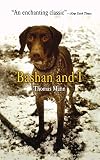
Bashan and I is the moving story of Thomas Mann's relationship with his spirited German short-haired pointer. From their first encounter at a local farm, Mann reveals how he slowly grows to love this energetic, loyal, and intelligent animal. Taking daily walks in the nearby parkland, Mann begins to understand and appreciate Bashan as a living being, witnessing his native delight in chasing rabbits, deer, and squirrels along with his careful investigations of stones, fallen branches, and show more clumps of wet leaves. As their bond deepens, Mann is led to contemplate Bashan's inner life, and marvels at the ease with which his dog trusts him, completely putting his life into his master's hands.Over time, the two develop a deep mutual understanding, but for Mann, there is always a sense of loss at never being able to enter the private world of his dear friend, and he slowly becomes conscious of the eternal divide between mankind and the rest of nature. Nonetheless, the unique relationship quietly moves to the forefront of Mann's life, and when master and companion are briefly separated, Mann is taken aback by the depth of his loneliness without his dog. It is this deep affection for another living creature that helps the writer to reach a newfound understanding of the nature of love, in all its complexity.First published in 1916 and translated into English in 1923, Bashan and I was heralded for its simple telling of how a dog became a priceless companion, an animal who brought meaning to the author's life. show lessTags
Recommendations
































Member Reviews
Bauschan é um perdigueiro alemão mestiço, marrom-ferrugem, tigrado de preto, branco no peito, patas e barriga. Muito além da detalhada descrição física, o escritor alemão Thomas Mann descreve com enorme sensibilidade o temperamento e o comportamento do animal em relação a seu tutor, à casa onde vive e ao ambiente silvestre pelo qual desfruta de longos e bucólicos passeios.
Mann relata desde a adoção de Bauschan (quando ainda era chamado de Lux), para substituir Percy, o cachorro anterior da família, sacrificado a tiros por uma doença incurável. Afinal, estamos em 1918, a medicina veterinária ainda vai evoluir, os costumes também, e uma arma de fogo era o métido mais humanitário para encerrar o sofrimento de um animal show more de estimação. A alternativa mais comum seria o “carniceiro”.
Thomas Mann gostava de cachorros. E “Um homem e seu cão: um idílio” deixa esse afeto muito claro, com a sensibilidade com que sua relação com Bauschan é descrita. A conexão entre o escritor Prêmio Nobel de Literatura com seu perdigueiro está representada também por uma estátua em Gmund, às margens do lago Tegernsee, feita em bronze pelo escultor alemão Quirin Roth. show less
Mann relata desde a adoção de Bauschan (quando ainda era chamado de Lux), para substituir Percy, o cachorro anterior da família, sacrificado a tiros por uma doença incurável. Afinal, estamos em 1918, a medicina veterinária ainda vai evoluir, os costumes também, e uma arma de fogo era o métido mais humanitário para encerrar o sofrimento de um animal show more de estimação. A alternativa mais comum seria o “carniceiro”.
Thomas Mann gostava de cachorros. E “Um homem e seu cão: um idílio” deixa esse afeto muito claro, com a sensibilidade com que sua relação com Bauschan é descrita. A conexão entre o escritor Prêmio Nobel de Literatura com seu perdigueiro está representada também por uma estátua em Gmund, às margens do lago Tegernsee, feita em bronze pelo escultor alemão Quirin Roth. show less
Thomas Mann's memoir of his dog, Bashan, written just after WWI is not anything like the modern animal memoir - no sentiment here, which is not to say that Mann did not have feelings for his dog. I felt by he end that he had great feeling for him - he just did not get all sloppy with what he felt for him. Mann writes exclusively about their life together - no part of his life outside of his time spent walking with Bashan gets into this book. It is a study of Bashan's personality, his faults, and his 'hobbies' (persuading Mann to come outside, walking, running and chasing small creatures around the countryside). At the end I felt that I knew this dog.
There was some talk of Bashan's being beaten and how certain things, like being show more encouraged to perform tricks made him behave as if he feared that he was going to be beaten, but I did not get the impression that Mann had ever treated him in this way. Mann owned him from his early days so maybe the farmers he lived with when a young puppy put this fear into him. Then again, due to the fact that I have never owned a dog, this could be completely wrong. Do dogs act this way without provocation? I don't know, but I am reassured by a follower of the 'Dog Whisperer' telling me that Bashan's behavior did not necessarily mean that he had ever been abused. That is a relief. show less
There was some talk of Bashan's being beaten and how certain things, like being show more encouraged to perform tricks made him behave as if he feared that he was going to be beaten, but I did not get the impression that Mann had ever treated him in this way. Mann owned him from his early days so maybe the farmers he lived with when a young puppy put this fear into him. Then again, due to the fact that I have never owned a dog, this could be completely wrong. Do dogs act this way without provocation? I don't know, but I am reassured by a follower of the 'Dog Whisperer' telling me that Bashan's behavior did not necessarily mean that he had ever been abused. That is a relief. show less
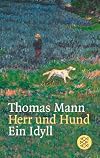
De hond, de beste vriend van de mens. Nobelprijswinnaar Thomas Mann schreef een erg amusant boekje over één van zijn honden, Bauschan, een kortharige Duitse patrijshond. Met even te googlen kan je hen beiden in brons vereeuwigd zien in Gmund am Tegernsee. Je ziet dan ook meteen dat de hond die op de voorpagina staat afgebeeld eerder een boxer is dan dat het Manns hond zou kunnen zijn. Maar zulke onnauwkeurigheid kan het plezier niet wegnemen dat het lezen van dit boekje geeft. Zoals Bauschan zich uitleeft in lange wandelingen waarin hij allerlei klein wild naar hartelust kan opjagen, zo lijkt Mann zich uit te leven in lange beschrijvingen van zijn hond en hun gezamenlijke wandelingen doorheen hun zogenaamde jachtgebied. Wie zijn show more volgende wandeling met de hond dat ietsje extra wil geven, leze vooraf even dit literaire kleinood. show less
Dec 5, 2010Dutch
Ratings
Members
- Recently Added By
Author Information

Thomas Mann was born into a well-to-do upper class family in Lubeck, Germany. His mother was a talented musician and his father a successful merchant. From this background, Mann derived one of his dominant themes, the clash of views between the artist and the merchant. Mann's novel, Buddenbrooks (1901), traces the declining fortunes of a merchant show more family much like his own as it gradually loses interest in business but gains an increasing artistic awareness. Mann was only 26 years old when this novel made him one of Germany's leading writers. Mann went on to write The Magic Mountain (1924), in which he studies the isolated world of the tuberculosis sanitarium. The novel was based on his wife's confinement in such an institution. Doctor Faustus (1947), his masterpiece, describes the life of a composer who sells his soul to the devil as a price for musical genius. Mann is also well known for Death in Venice (1912) and Mario the Magician (1930), both of which portray the tensions and disturbances in the lives of artists. His last unfinished work is The Confessions of Felix Krull, Confidence Man (1954), a brilliantly ironic story about a nineteenth-century swindler. An avowed anti-Nazi, Mann left Germany and lived in the United States during World War II. He returned to Switzerland after the war and became a celebrated literary figure in both East and West Germany. In 1929 he was awarded the Nobel Prize for literature. (Bowker Author Biography) show less
Thomas Mann has a Legacy Library. Legacy libraries are the personal libraries of famous readers, entered by LibraryThing members from the Legacy Libraries group.
Some Editions
Series
Belongs to Publisher Series
Work Relationships
Is contained in
Is abridged in
Common Knowledge
- Canonical title
- A Man and His Dog
- Original title
- Herr und Hund: Ein Idyll
- Alternate titles
- Bashan and I
- Original publication date
- 1919
- People/Characters
- Thomas Mann; Bashan (dog)
- Important places*
- Duitsland
- First words
- When spring, which all men agree is the fairest season of the year, comes round again and happens to do honour to its name, I love to go for half an hour's stroll in the open air before breakfast. (Translator = Herman George... (show all) Scheffauer)
- Quotations*
- Op het ogenblik echter, dat ik mij neerbuig en mijn hand uitstrek, is hij plotseling met een sprong naast mij en staat, zijn schouder tegen mijn scheenbeen aangeperst, als een standbeeld: scheef tegen mij aangeleund staat hij... (show all), zijn sterke poten tegen de grond gedrukt, zijn gezicht naar mij toe gekeerd, zodat hij mij omgekeerd en vanonder af in mijn ogen kijkt en zijn bewegingloosheid, terwijl ik hem met halfluide en goede woorden op zijn schouderblad klop, ademt dezelfde concentratie en hartstocht als de voorafgegane vervoering. Het is een kortharige Duitse patrijshond, - als men deze benaming niet al te streng en strikt, maar met een korreltje zout wil nemen; want een patrijshond zoals hij te boek staat en volgens de pijnlijkste observatie is Bauschan eigenlijk wel niet.
- Last words
- (Click to show. Warning: May contain spoilers.)And then I hurry into the house to rid myself of my hob-nailed books, for the soup has been served and stands smoking on the table. (Translator = Herman George Scheffauer).
- Original language
- German
*Some information comes from Common Knowledge in other languages. Click "Edit" for more information.
Classifications
Statistics
- Members
- 256
- Popularity
- 126,106
- Reviews
- 3
- Rating
- (3.80)
- Languages
- 13 — Catalan, Danish, Dutch, English, Estonian, Finnish, French, German, Irish, Hungarian, Italian, Portuguese, Spanish
- Media
- Paper, Audiobook, Ebook
- ISBNs
- 32
- UPCs
- 1
- ASINs
- 13