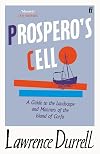
Prospero's Cell
by Lawrence Durrell 
On This Page
Description
With keen wit and astute observation, Lawrence Durrell introduces the world to a remarkable Greek isle that few outsiders have ever known. In the years before World War II, the tourist's eye seldom strayed farther east than Italy. But as the fashionable set enjoyed its Roman holidays, Lawrence Durrell settled on Corfu, an island jewel with beauty to match the long and fascinating history within its rocky shores. For four years, he fished, drank, and lived with the natives, sheltered from the show more tumult that was engulfing Europe, until finally he could ignore the world no longer. Durrell left for Alexandria, to serve his country as a wartime diplomat, but never forgot the wonders of Corfu. With a poet's grace, Durrell turned his attention to the country that had made him so happy. The result was Prospero's Cell, a slim volume of endless depths. Like the blue Aegean, Durrell's book is crystal clear, giving the reader a perfect view straight to the heart of a nation. show lessTags
Recommendations


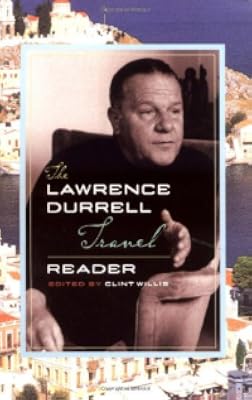

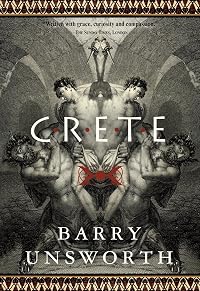


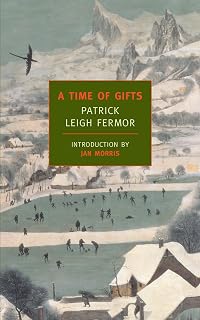
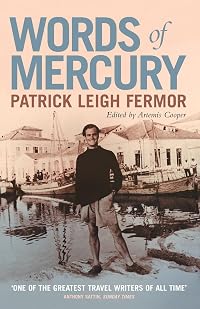


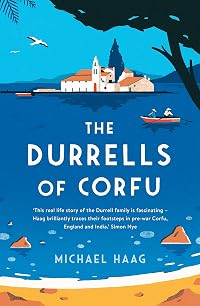
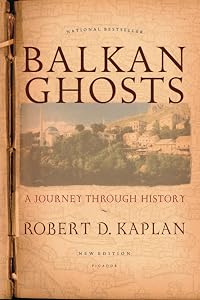
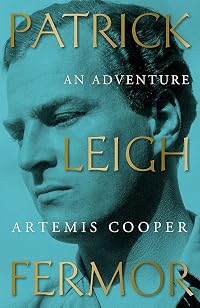

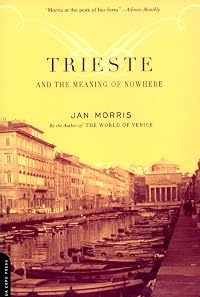
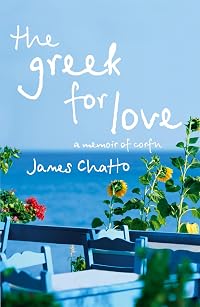


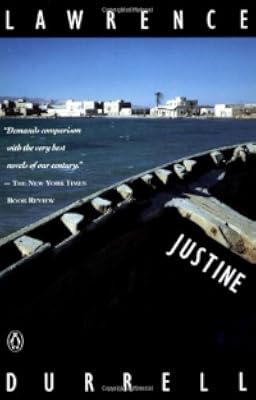

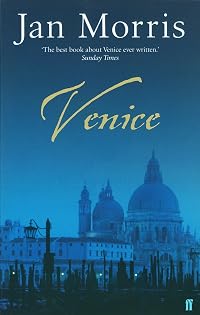


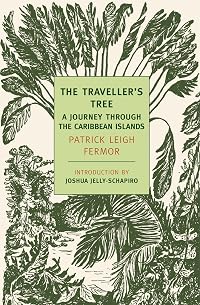

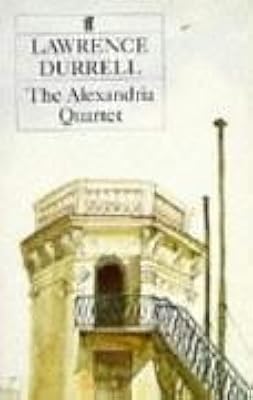

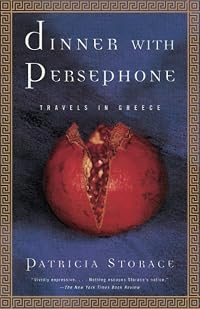

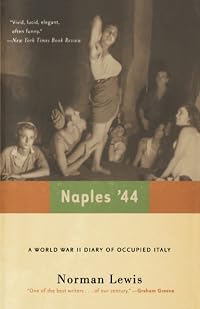

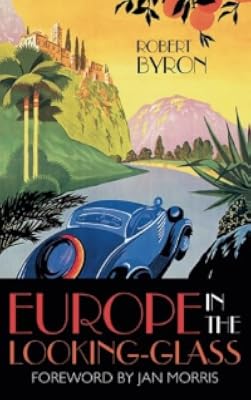


Member Recommendations
Estella22 A modern novel inspired by Prospero's Cell.
Member Reviews
A travelogue and memoir made by Lawrence Durrell who stayed on the Greek Island of Corfu just before the second world war. The book reads like jottings in a notebook with dates; for a period starting in April 1937 and finishing in August 1938. In between these jottings there are chapters on the history of the island, the Island Saint, olive production and winemaking. There is a final note in 1941 and an epilogue from Alexandria, when the second world war had caused many of the people friendly with the Durrells to leave the island.
Durrell refers to Corfu throughout as Corcyra the ancient Greek name for the capital of the island. The late 1930's was a time just before the tourists had discovered the Island and the Durrells lived for the show more most part among Greek people enjoying a simple lifestyle with time for Durrell to think and write his poetry. He was fortunate to make friends with Ivan Zarian a poet and sometime musician and Theodore Stephanides a professor in archeology, who spoke English. Lawrence shared a house with his brother Gerald of My Family and Other Animals fame but he is not mentioned in this book. Lawrence is more concerned with describing the natural beauty of Kalami bay, the Venetian architecture of Corfu town and his exploits with the local fishermen.
I enjoy Durrell's poetry and so I was willing to be entertained by his descriptions of the countryside and his connection with the people and the landscape that comes across so well in his poetry. I was not disappointed, here is Durrell telling us about the production of the black olives:
"The whole Mediterranean - the sculpture, the palms, the gold beads, the bearded heroes, the wine, the ideas, the ships, the moonlight, the winged gorgons, the bronze men, the philosophers - all of it seems to rise in the sour pungent taste of theses black olives between the teeth. A taste older than meat, older than wine. A taste as old as cold water."
These are not the sweet purple Kalamata olives, but the wrinkly black olives that you really have to persist with in order to enjoy. Another delicacy that needs work is the resinated wine called Retsina which Durrell calls divine turpentine. Another feature of everyday life, is the Greek cigarette which seems to be smoked universally by the men and is used to refer to time or distance and so the next village might be two cigarettes away when you ask for directions.
Perhaps I have to hold up my hands and say I am easily bewitched by this romantic view of the Greek islands, but it is there if you allow yourself to be sucked in to a more down to earth lifestyle with all its hardships. This little book reminded me so much of trips around those islands, and the people that live there, that I was willing to overlook some of the more flagrant pseudo cultural thoughts of a writer, an outsider who could easily move on to the next project. 4 stars. show less
Durrell refers to Corfu throughout as Corcyra the ancient Greek name for the capital of the island. The late 1930's was a time just before the tourists had discovered the Island and the Durrells lived for the show more most part among Greek people enjoying a simple lifestyle with time for Durrell to think and write his poetry. He was fortunate to make friends with Ivan Zarian a poet and sometime musician and Theodore Stephanides a professor in archeology, who spoke English. Lawrence shared a house with his brother Gerald of My Family and Other Animals fame but he is not mentioned in this book. Lawrence is more concerned with describing the natural beauty of Kalami bay, the Venetian architecture of Corfu town and his exploits with the local fishermen.
I enjoy Durrell's poetry and so I was willing to be entertained by his descriptions of the countryside and his connection with the people and the landscape that comes across so well in his poetry. I was not disappointed, here is Durrell telling us about the production of the black olives:
"The whole Mediterranean - the sculpture, the palms, the gold beads, the bearded heroes, the wine, the ideas, the ships, the moonlight, the winged gorgons, the bronze men, the philosophers - all of it seems to rise in the sour pungent taste of theses black olives between the teeth. A taste older than meat, older than wine. A taste as old as cold water."
These are not the sweet purple Kalamata olives, but the wrinkly black olives that you really have to persist with in order to enjoy. Another delicacy that needs work is the resinated wine called Retsina which Durrell calls divine turpentine. Another feature of everyday life, is the Greek cigarette which seems to be smoked universally by the men and is used to refer to time or distance and so the next village might be two cigarettes away when you ask for directions.
Perhaps I have to hold up my hands and say I am easily bewitched by this romantic view of the Greek islands, but it is there if you allow yourself to be sucked in to a more down to earth lifestyle with all its hardships. This little book reminded me so much of trips around those islands, and the people that live there, that I was willing to overlook some of the more flagrant pseudo cultural thoughts of a writer, an outsider who could easily move on to the next project. 4 stars. show less
You become aware of islands, coming to meet you.... This travel memoir dedicated to Durrell's first experience in Greece, on the island of Corfu from 1935 -1939 is a sensuous banquet of luminous impressions. Durrell’s travel memoirs are mosaics of history, landscape, folklore, diaries of daily experience filtered through an artist's eye searching for the patterns and the myth below the surface. They are not so much explorations of the soul of place per se, but of the ways the soul of place expresses itself through himself and others, physically, mentally, emotionally, sexually. On this bitter cold February day with rain lashing the window panes, I dream of an escape to an island, to a little white house above the sea, like the one show more where Durrell once lived.
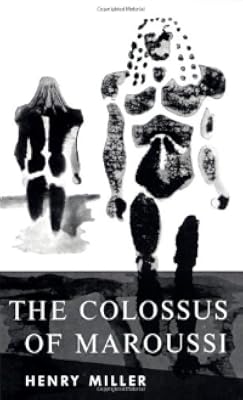
In keeping with Durrell's interest in multifaceted realities, I suggest reading this book together with Henry Miller's The Colossus of Maroussi, about his visit to the Durrells at that time, and with Amateurs in Eden a biography of the mysterious N. by her daughter Joanna Hodgkin, who gives us her own side of the story. show less
In keeping with Durrell's interest in multifaceted realities, I suggest reading this book together with Henry Miller's The Colossus of Maroussi, about his visit to the Durrells at that time, and with Amateurs in Eden a biography of the mysterious N. by her daughter Joanna Hodgkin, who gives us her own side of the story. show less
This was wonderful!
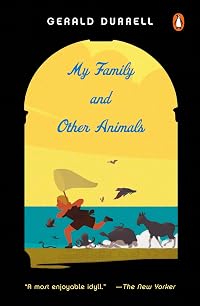
For years, one of my favorite books has been My Family and Other Animals, written by Lawrence’s brother, Gerald, and which tells the story of the family’s sojourn on the island of Corfu just before World War II. In it, we met the pompous Larry...a character we saw through the lens of Gerald’s irreverent and irrepressible humor.
I knew little of this book beyond that it was Lawrence’s view of this same period and I suppose I expected a travelogue, more somber in tone as befitting a serious poet and literary figure, but essentially the same story.
Instead I found something I can’t quite characterize. It has elements of the travelogue, stories about the places he visited and individuals he met, about the customs show more and idiosyncrasies of the people, and reflections upon the culture. But, interspersed with these are vignettes, often no more than a paragraph or two, each a gem illuminating a small moment of his stay. No plot, no story, just a word picture formed from short sentences and fragments that came together like an Impressionist painting to build a picture of the colors, moods and emotions so vivid that I found myself transported to his instant in time.
The Larry of his brother’s book is nowhere recognizable, nor does his family figure in the story. Instead the main character is Corfu. We find a very gifted author who was deeply in love with the land in which he found himself and whose memories of that place were focused into beautiful and evocative writing by its loss to the War.
This goes onto my bookshelf next to Gerald’s book…a pair of volumes that, between them, illuminate a somewhat bygone era, one a memoir of childhood adventure, the other reflections on adult experience. show less
For years, one of my favorite books has been My Family and Other Animals, written by Lawrence’s brother, Gerald, and which tells the story of the family’s sojourn on the island of Corfu just before World War II. In it, we met the pompous Larry...a character we saw through the lens of Gerald’s irreverent and irrepressible humor.
I knew little of this book beyond that it was Lawrence’s view of this same period and I suppose I expected a travelogue, more somber in tone as befitting a serious poet and literary figure, but essentially the same story.
Instead I found something I can’t quite characterize. It has elements of the travelogue, stories about the places he visited and individuals he met, about the customs show more and idiosyncrasies of the people, and reflections upon the culture. But, interspersed with these are vignettes, often no more than a paragraph or two, each a gem illuminating a small moment of his stay. No plot, no story, just a word picture formed from short sentences and fragments that came together like an Impressionist painting to build a picture of the colors, moods and emotions so vivid that I found myself transported to his instant in time.
The Larry of his brother’s book is nowhere recognizable, nor does his family figure in the story. Instead the main character is Corfu. We find a very gifted author who was deeply in love with the land in which he found himself and whose memories of that place were focused into beautiful and evocative writing by its loss to the War.
This goes onto my bookshelf next to Gerald’s book…a pair of volumes that, between them, illuminate a somewhat bygone era, one a memoir of childhood adventure, the other reflections on adult experience. show less
A marvellous and poetic evocation of Durrell's life with his first wife on the Ionian island of Kerkyra from 1937 until they were forced to leave for Alexandria by the war. The book was first published in 1945 and is a precursor of his best-known semi-autobiographical sequence of novels "The Alexandria Quartet" .The Greece of today is very different from what it was seventy years ago but anyone who has had his heart stolen by Greek landscape and character will recognise instantly those unchanged features which Durrell captured with such insight.
Mostly interesting, but got a bit dry in places - the history of Corfu doesn't interest me that much. Interesting to read straight after 'Amateurs in Eden' - a biography of Nancy Durrell, who features occasionally in Prospero's Cell as 'N'. I'd recommend Prospero's Cell for Durrell fans.
The master at work and at play in Corfu in the 1930s.
Members
- Recently Added By
Lists

Best of Travel Narratives
142 works; 28 members

Greece - a reading list
83 works; 4 members

Books mentioned in The Diary of a Bookseller
26 works; 1 member
Author Information

152+ Works 18,659 Members
Lawrence Durrell was born on February 27, 1912 in Jullundur, India to British parents. During World War II, he served as a British press officer. His first novel, Pied Piper of Lovers, was published in 1935, but was considered a failure. Some of his other works include The Black Book, The Alexandria Quartet, The Avignon Quintet, and Caesar's Vast show more Ghost: A Portrait of Provence. Bitter Lemons won the Duff Cooper Prize in 1959. He died on November 7, 1990 at the age of 78. (Bowker Author Biography) show less
Lawrence Durrell has a Legacy Library. Legacy libraries are the personal libraries of famous readers, entered by LibraryThing members from the Legacy Libraries group.
Work Relationships
Is contained in
Common Knowledge
- Canonical title
- Prospero's Cell
- Original publication date
- 1945
Classifications
- Genres
- Travel, Nonfiction, Biography & Memoir
- DDC/MDS
- 914.955 — History & geography Geography & travel Geography of and travel in Europe Other European Countries Greece Ionian Islands
- LCC
- DF901 .C7 .D8 — History of Europe, Asia, Africa and Oceania Greece History of Greece Modern Greece Local history and description Crete
- BISAC
Statistics
- Members
- 462
- Popularity
- 65,962
- Reviews
- 8
- Rating
- (3.72)
- Languages
- 8 — English, Estonian, French, German, Italian, Japanese, Spanish, Swedish
- Media
- Paper, Audiobook, Ebook
- ISBNs
- 27
- ASINs
- 20