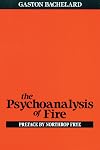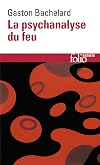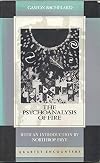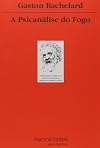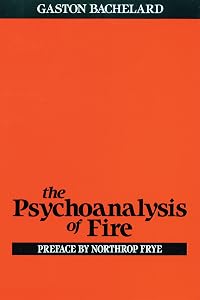
The Psychoanalysis of Fire
by Gaston Bachelard
On This Page
Description
"[Bachelard] is neither a self-confessed and tortured atheist like Satre, nor, like Chardin, a heretic combining a belief in God with a proficiency in modern science. But, within the French context, he is almost as important as they are because he has a pseudo-religious force, without taking a stand on religion. To define him as briefly as possible - he is a philosopher, with a professional training in the sciences, who devoted most of the second phase of his career to promoting that aspect show more of human nature which often seems most inimical to science: the poetic imagination ..." - J.G. Weightman, The New York Times Review of Books show lessTags
Recommendations


















Member Reviews
No idea how to rate this one—but it's got me thinking in excellent ways!
Quote: "We have only to speak of an object to think that we are being
objective. But, because we chose it in the first place, the object
reveals more about us than we do about it." [cited by McGrane].
objective. But, because we chose it in the first place, the object
reveals more about us than we do about it." [cited by McGrane].
> Babelio : https://www.babelio.com/livres/Bachelard-La-psychanalyse-du-feu/13773
> Les Études philosophiques, 15e Année, No. 3/4 (Décembre 1941), pp. 71-73 : https://drive.google.com/file/d/1efY_3YDRiTLPAJnEdG-ImBEb22y4Xjdq/view?usp=shari....
> Les Études philosophiques, Nouvelle Série, 6e Année, No. 4 (Octobre/Decembre 1951), pp. 366-367 : https://drive.google.com/file/d/1mLC8Cr9BbcnvRgOtUKe7al7NyEPOenQk/view?usp=shari....
> Revue de Métaphysique et de Morale, T. 46, No. 3 (Juillet 1939), pp. 522-523 : https://drive.google.com/file/d/1jquIJC-P57mdKzLT1S3PKkNl1gV9u1Kh/view?usp=shari....
> BAnQ (Roy C., Le nouvelliste, 16 oct. 1971) : https://collections.banq.qc.ca/ark:/52327/3180269
> Psycha Analyse : BACHELARD ET LA PSYCHANALYSE EN show more POLOGNE - BIBLIOGRAPHIE (4 Pages - 122 Ko)
> C’est une étude approfondie sur le feu, sur les éléments qui le composent et sur sa portée scientifique.
L’auteur a poussé son analyse plus loin que tout autre, mais ses dissertions, en dépit de l’aridité de son sujet, se lisent agréablement.
Ce traité intéressera tous ceux qui veulent approfondir le mystère du feu.
—Le franc-parleur, 17 février 1939 show less
> Les Études philosophiques, 15e Année, No. 3/4 (Décembre 1941), pp. 71-73 : https://drive.google.com/file/d/1efY_3YDRiTLPAJnEdG-ImBEb22y4Xjdq/view?usp=shari....
> Les Études philosophiques, Nouvelle Série, 6e Année, No. 4 (Octobre/Decembre 1951), pp. 366-367 : https://drive.google.com/file/d/1mLC8Cr9BbcnvRgOtUKe7al7NyEPOenQk/view?usp=shari....
> Revue de Métaphysique et de Morale, T. 46, No. 3 (Juillet 1939), pp. 522-523 : https://drive.google.com/file/d/1jquIJC-P57mdKzLT1S3PKkNl1gV9u1Kh/view?usp=shari....
> BAnQ (Roy C., Le nouvelliste, 16 oct. 1971) : https://collections.banq.qc.ca/ark:/52327/3180269
> Psycha Analyse : BACHELARD ET LA PSYCHANALYSE EN show more POLOGNE - BIBLIOGRAPHIE (4 Pages - 122 Ko)
> C’est une étude approfondie sur le feu, sur les éléments qui le composent et sur sa portée scientifique.
L’auteur a poussé son analyse plus loin que tout autre, mais ses dissertions, en dépit de l’aridité de son sujet, se lisent agréablement.
Ce traité intéressera tous ceux qui veulent approfondir le mystère du feu.
—Le franc-parleur, 17 février 1939 show less
Oct 5, 2020 (Edited)French
SUMÁRIO
[001] - Prefácio
[011] - I. Fogo e respeito. O complexo de Prometeu;
[021] - II. Fogo e devaneio. O complexo de Ampédocles;
[033] - III. Psicanálise e pré-história. O complexo de Novalis;
[065] - IV. O fogo sexualizado;
[089] - V. Química do fogo: história de um falso problemas;
[123] - VI. O álcool: a água ardente. O ponche: o complexo de Hoffmann. As combustões espontâneas;
[145] - VII. O fogo idealizado: fogo e pureza(.)
[159] - Conclusão(.)
[001] - Prefácio
[011] - I. Fogo e respeito. O complexo de Prometeu;
[021] - II. Fogo e devaneio. O complexo de Ampédocles;
[033] - III. Psicanálise e pré-história. O complexo de Novalis;
[065] - IV. O fogo sexualizado;
[089] - V. Química do fogo: história de um falso problemas;
[123] - VI. O álcool: a água ardente. O ponche: o complexo de Hoffmann. As combustões espontâneas;
[145] - VII. O fogo idealizado: fogo e pureza(.)
[159] - Conclusão(.)
Apr 6, 2012 (Edited)Portuguese (Brazil)
Gaston Bachelard, född 27 juni 1884 i Bar-Sur-Aube, död 16 oktober 1962, var en fransk filosof. Han var professor i vetenskapshistoria och filosofi vid Sorbonne.
Gaston Bachelards främsta arbeten rör vetenskapsfilosofin och den historiska epistemologin, som han kom att omforma, med flera inflytelserika anhängare, som Michel Foucault, Louis Althusser, Pierre Bourdieu, Alexandre Koyré, och Thomas S. Kuhn. Även hans poetologiska arbeten har varit inflytelserika och lade grunden för den tematiska kritiken. En utgångspunkt för hans filosofi är att dialektiskt ställa vetenskapen och poesin som motpoler, varmed han visar att vetenskapen skapar konstruktioner, och inte utgår från det empiriskt givna. För sin teori myntade han show more uttrycken epistemologisk brytning (coupure épistémologique) och epistemologiska hinder (obstacle épistémologique) för de mekanismer som skapar och omformar den konstruerade vetenskapen eller epistemologin.
Till hans mest representativa verk hör Le nouvel esprit scientifique (1934) och La formation de l'esprit scientifique (1938).
1955 invaldes han i Académie des Sciences morales et politiques (stol 7). show less
Gaston Bachelards främsta arbeten rör vetenskapsfilosofin och den historiska epistemologin, som han kom att omforma, med flera inflytelserika anhängare, som Michel Foucault, Louis Althusser, Pierre Bourdieu, Alexandre Koyré, och Thomas S. Kuhn. Även hans poetologiska arbeten har varit inflytelserika och lade grunden för den tematiska kritiken. En utgångspunkt för hans filosofi är att dialektiskt ställa vetenskapen och poesin som motpoler, varmed han visar att vetenskapen skapar konstruktioner, och inte utgår från det empiriskt givna. För sin teori myntade han show more uttrycken epistemologisk brytning (coupure épistémologique) och epistemologiska hinder (obstacle épistémologique) för de mekanismer som skapar och omformar den konstruerade vetenskapen eller epistemologin.
Till hans mest representativa verk hör Le nouvel esprit scientifique (1934) och La formation de l'esprit scientifique (1938).
1955 invaldes han i Académie des Sciences morales et politiques (stol 7). show less
May 17, 2010Swedish
Ratings
Members
- Recently Added By
Author Information

Born in Bar-sur-Aube, France, in 1884, Gaston Bachelard received his doctorate in 1927. He became professor of philosophy at the University of Dijon in 1930, and held the chair in the history and philosophy of science at the University of Paris from 1940 to 1954. In epistemology and the philosophy of science, Bachelard espoused a dialectical show more rationalism, or dialogue between reason and experience. He rejected the Cartesian conception of scientific truths as immutable; he insisted on experiment as well as mathematics in the development of science. Bachelard described the cooperation between the two as a philosophy of saying no, of being ever ready to revise or abandon the established framework of scientific theory to express the new discoveries. In addition to his contributions to the epistemological foundations of science, Bachelard explored the role of reverie and emotion in the expressions of both science and more imaginative thinking. His psychological explanations of the four elements-earth, air, fire, water-illustrate this almost poetic aspect of his philosophy. (Bowker Author Biography) show less
Some Editions
Series
Belongs to Publisher Series
Work Relationships
Is contained in
Common Knowledge
- Canonical title*
- La Psychanalyse du feu
- Original title
- La psychanalyse du feu
- Original publication date
- 1938
- First words
- We have only to speak of an object to think that we are being objective.
- Last words
- (Click to show. Warning: May contain spoilers.)What better proof can there be that fire, in the very precise sense of C. G. Jung, is the point of departure "for a fertile archaic complex," and that a special psychoanalysis must destroy its painful ambiguities the better to set free the lively dialectics which bestow on reverie its true liberty and its true function as a creative mental process?
- Original language*
- Français
*Some information comes from Common Knowledge in other languages. Click "Edit" for more information.
Classifications
Statistics
- Members
- 479
- Popularity
- 63,801
- Reviews
- 5
- Rating
- (3.91)
- Languages
- 9 — Czech, Dutch, English, French, German, Japanese, Portuguese, Swedish, Turkish
- Media
- Paper
- ISBNs
- 17
- UPCs
- 1
- ASINs
- 9