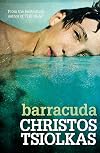
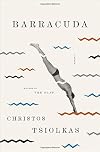
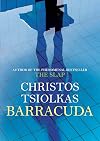
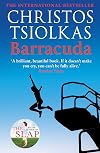
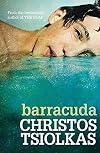
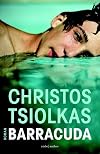
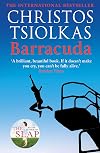
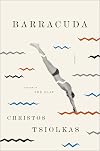
Barracuda
by Christos Tsiolkas
On This Page
Description
His whole life Danny Kelly's only wanted one thing: to win Olympic gold. Everything he's ever done - every thought, every dream, every action - takes him closer to that moment of glory, of vindication, when the world will see him for what he is: the fastest, the strongest and the best. His life has been a preparation for that moment. His parents struggle to send him to the most prestigious private school with the finest swimming program; Danny loathes it there and is bullied and shunned as show more an outsider, but his coach is the best and knows Danny is, too, better than all those rich boys, those pretenders. Danny's win-at-all-cost ferocity gradually wins favour with the coolest boys - he's Barracuda, he's the psycho, he's everything they want to be but don't have the guts to get there. He's going to show them all. He would be first, everything would be all right when he came first, all would be put back in place. When he thought of being the best, only then did he feel calm. A searing and provocative novel by the acclaimed author of the international bestseller The Slap, Barracuda is an unflinching look at modern Australia, at our hopes and dreams, our friendships, and our families. Should we teach our children to win, or should we teach them to live? How do we make and remake our lives? Can we atone for our past? Can we overcome shame? And what does it mean to be a good person? Barracuda is about living in Australia right now, about class and sport and politics and migration and education. It contains everything a person is: family and friendship and love and work, the identities we inhabit and discard, the means by which we fill the holes at our centre. It's brutal and tender and blazingly brilliant; everything we have come to expect from this fearless vivisector of our lives and world. show lessTags
Recommendations






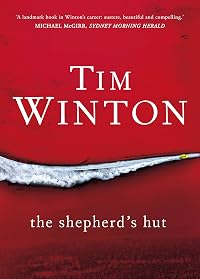







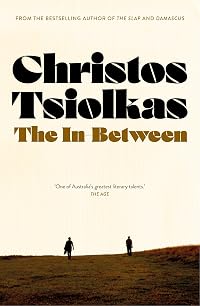
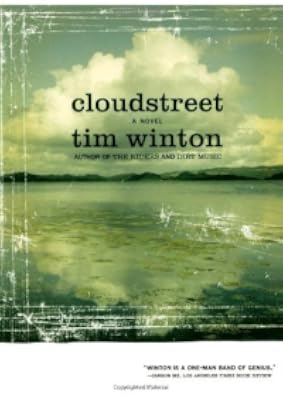
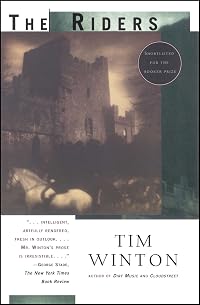
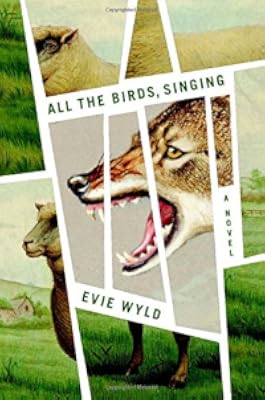







Member Recommendations

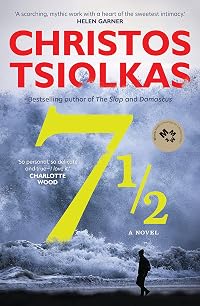
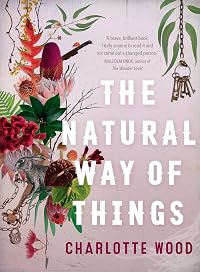
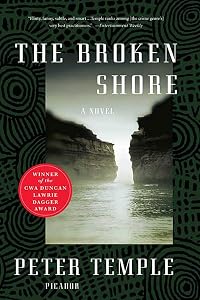
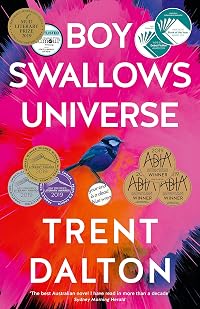
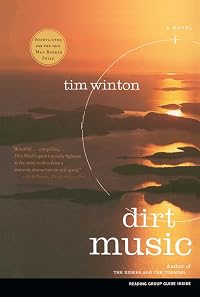
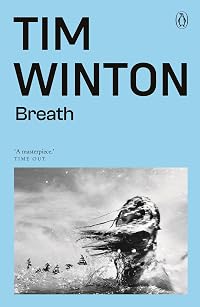
Eyrie by Tim Winton
by Brindle
Jayeless Both books deal with the sinister, ultra-competitive side of teenagers striving to break into elite-level sports, along with the social politicking of the upper-middle class
Member Reviews
There can be little doubt that Christos Tsiolkas is one of the writers of the moment when it comes to Australian fiction. His star was in the ascent from the moment his first novel, [b:Loaded|9564753|Loaded|Christos Tsiolkas|https://images.gr-assets.com/books/1287888301s/9564753.jpg|1197295], was turned into the movie Head On in 1998. The twenty-first century was his true time to shine, however, in an arc that begins with [b:Dead Europe|2883972|Dead Europe|Christos Tsiolkas|https://images.gr-assets.com/books/1323545872s/2883972.jpg|2910197] in 2005, to the scandalous success of [b:The Slap|6632916|The Slap|Christos Tsiolkas|https://images.gr-assets.com/books/1327122830s/6632916.jpg|5464024] in 2008, and its follow-up, Barracuda, in show more 2013. This trio of novels alone will have cemented Tsiolkas's place in Australian literary history.
In many ways, it is a bittersweet victory. Tsiolkas's success lies in his unflinching assessment of the hypocrisy and moral cowardice of Australian culture, its outwardly petty but deeply painful bickering about class, ethnicity, and sexuality. As a gay man and the son of Greek immigrants, Tsiolkas is uniquely positioned to observe these things.
Barracuda itself is focused on the story of Danny Kelly, a young boy who aspires to be a world-class swimmer. He lives in the working-class Melbourne suburb of Reservoir with his trucker father (of Irish descent) and hairdresser mother (of Greek descent), as well as young siblings Regan and Theo. Danny's talents see him get a scholarship at "Cunts College" - as he and his best friend, Demet, like to call it - an elite boy's school in the old-money suburb of Hawthorn.
Naturally, Danny has difficulty fitting in at this school because of the color of his skin, his sexuality, and most of all, his working-class status. At Cunts College, Danny makes a lifelong friend in Luke, the son of Vietnamese-Greek parents who, despite similar struggles, manages to become a prefect. Danny's main interactions, however, are with his Hungarian coach, Torma, who pushes him toward excellence, and swimming buddies like Wilco or Martin Taylor. Danny has a huge crush on Taylor that has important consequences for the overall plot.
Rather than tell the story in a linear fashion, Tsiolkas jumps back and forth in time between Danny's schooldays and his life in the present, some twenty years later, when he has a job as a care worker, helping to look after people whose lives have been damaged in various ways (car accidents, etc.). In this later life, Danny (or Dan, as he now calls himself) is in a back-and-forth relationship with Clyde, his Scottish lover, who wants Dan to move to Glasgow with him.
Tsiolkas skillfully maneuvers his way between these two timelines, circling ever closer to the kernel of the repressed event that Danny does not want to talk or think about: his assault on Martin Taylor, an incident that had sent him to jail and was the culmination of a spiral of shame and failure in Danny's life.
What makes Tsiolkas a seriously good novelist is that, unlike so many other writers looking to criticize society, he does not try to preach from a moral high ground. His most sympathetic characters are never exempted from the worst aspects of the society in which they are involved. There are no innocents in Tsiolkas's novels: everyone is tainted by the eddy of prejudices that constitute modern society.
Another strength of Tsiolkas's stories is the depth of his empathy and compassion. He has the wisdom to understand the extent to which hatred - even impersonal hatreds, like class hatred - is often anchored in the perversities of the human capacity to love. This is a repeated theme in his novels, and one of his most powerful. I particularly like how this manifests itself in Tsiolkas's depiction of women. Tsiolkas is clearly a man who has a deep and appreciative knowledge of women - this is particularly true for his portrayal of Danny's mother in Barracuda.
I loved Barracuda, not only because it is a great novel, but because it reflects so much of my own upbringing. I grew up in Melbourne in the 1990s, lived in a working-class suburb, and to crown it all, got a scholarship (albeit it not a sporting one) to attend Cunts College (yes, it is very much modeled on a real school). Tsiolkas also finds a way to end the book in a satisfying way, not by some false note of redemption, but through an ingenious usage of the shifting time perspective, one that allows us to glimpse, one last time, a Danny Kelly that is free of the burden of shame. show less
In many ways, it is a bittersweet victory. Tsiolkas's success lies in his unflinching assessment of the hypocrisy and moral cowardice of Australian culture, its outwardly petty but deeply painful bickering about class, ethnicity, and sexuality. As a gay man and the son of Greek immigrants, Tsiolkas is uniquely positioned to observe these things.
Barracuda itself is focused on the story of Danny Kelly, a young boy who aspires to be a world-class swimmer. He lives in the working-class Melbourne suburb of Reservoir with his trucker father (of Irish descent) and hairdresser mother (of Greek descent), as well as young siblings Regan and Theo. Danny's talents see him get a scholarship at "Cunts College" - as he and his best friend, Demet, like to call it - an elite boy's school in the old-money suburb of Hawthorn.
Naturally, Danny has difficulty fitting in at this school because of the color of his skin, his sexuality, and most of all, his working-class status. At Cunts College, Danny makes a lifelong friend in Luke, the son of Vietnamese-Greek parents who, despite similar struggles, manages to become a prefect. Danny's main interactions, however, are with his Hungarian coach, Torma, who pushes him toward excellence, and swimming buddies like Wilco or Martin Taylor. Danny has a huge crush on Taylor that has important consequences for the overall plot.
Rather than tell the story in a linear fashion, Tsiolkas jumps back and forth in time between Danny's schooldays and his life in the present, some twenty years later, when he has a job as a care worker, helping to look after people whose lives have been damaged in various ways (car accidents, etc.). In this later life, Danny (or Dan, as he now calls himself) is in a back-and-forth relationship with Clyde, his Scottish lover, who wants Dan to move to Glasgow with him.
Tsiolkas skillfully maneuvers his way between these two timelines, circling ever closer to the kernel of the repressed event that Danny does not want to talk or think about: his assault on Martin Taylor, an incident that had sent him to jail and was the culmination of a spiral of shame and failure in Danny's life.
What makes Tsiolkas a seriously good novelist is that, unlike so many other writers looking to criticize society, he does not try to preach from a moral high ground. His most sympathetic characters are never exempted from the worst aspects of the society in which they are involved. There are no innocents in Tsiolkas's novels: everyone is tainted by the eddy of prejudices that constitute modern society.
Another strength of Tsiolkas's stories is the depth of his empathy and compassion. He has the wisdom to understand the extent to which hatred - even impersonal hatreds, like class hatred - is often anchored in the perversities of the human capacity to love. This is a repeated theme in his novels, and one of his most powerful. I particularly like how this manifests itself in Tsiolkas's depiction of women. Tsiolkas is clearly a man who has a deep and appreciative knowledge of women - this is particularly true for his portrayal of Danny's mother in Barracuda.
I loved Barracuda, not only because it is a great novel, but because it reflects so much of my own upbringing. I grew up in Melbourne in the 1990s, lived in a working-class suburb, and to crown it all, got a scholarship (albeit it not a sporting one) to attend Cunts College (yes, it is very much modeled on a real school). Tsiolkas also finds a way to end the book in a satisfying way, not by some false note of redemption, but through an ingenious usage of the shifting time perspective, one that allows us to glimpse, one last time, a Danny Kelly that is free of the burden of shame. show less
“I’m the strongest, I’m the fastest, I’m the best”
Swimming is not only what Danny Kelly does, it defines who he is and who he will be. His talent wins him a scholarship at an exclusive private boy’s school where, amongst his privileged rivals, he earns the nickname of ‘The Barracuda’. Danny is a winner, on track to be an Olympic champion, until the day he loses and it all falls apart.
Shifting between Danny’s past and the present using a first person and third person narrative, Tsiolkas drives the story towards the event that divides ‘before’ and ‘after’. Before, Danny was a young boy, confident, aggressive and ambitious, with the talent and the drive to be a champion. After, Danny was a young man, ashamed, show more bitter and directionless, alienated from his family, his friends and himself.
Barracuda is a story about character, the way in which it is formed, influenced and changed by family, by friends, and enemies, by experience and knowledge, and for Danny especially, by life’s triumphs and failures. It is also a story about identity and when what Danny believes about himself is proved false, he struggles to deal with the consequences. Tsiolkas exposes Danny’s dreams and hopes, his vulnerabilities and his faults with unflinching honesty and keen insight into the thoughts and emotions of both the boy, and the man.
Wider themes of the novel include those of identity, class and status in modern day Australia. The Kelly’s working class background, dad is a truck driver and mum a hairdresser, contrasts with the privileged lives of his wealthy classmates. Similarly Danny is half ‘wog’ (Greek) and half Scottish while the majority of students at C***s College are white with “their perfect smiles and perfect skin”. Danny acutely feels the divide and he is both scornful and envious.
Barracuda also raises the issue of sport and it’s contribution to Australia’s national identity. Sport is one arena where wealth and class become irrelevant, with innate talent leveling the playing field. It is Danny’s ability to out swim his peers that allows him to hold his own, and when he loses that, he also sees his opportunity to one day be of ‘them’ slip through his fingers.
Tsiolkas’s casual use of crude language has the potential to offend but I thought the distinctly Australian dialogue to be natural and appropriate. What surprised me were the moments of poetry in Tsiolkas’s writing, lyrical phrasing and evocative description contrasting sharply with the blunter passages. I do feel Barracuda was a little overlong, though I admit only rarely did I find my attention wandering.
Barracuda is a powerful novel, less sensational than The Slap, but similarly provocative and thought provoking. I enjoyed it, but I think it is a book you will either love or hate. show less
Swimming is not only what Danny Kelly does, it defines who he is and who he will be. His talent wins him a scholarship at an exclusive private boy’s school where, amongst his privileged rivals, he earns the nickname of ‘The Barracuda’. Danny is a winner, on track to be an Olympic champion, until the day he loses and it all falls apart.
Shifting between Danny’s past and the present using a first person and third person narrative, Tsiolkas drives the story towards the event that divides ‘before’ and ‘after’. Before, Danny was a young boy, confident, aggressive and ambitious, with the talent and the drive to be a champion. After, Danny was a young man, ashamed, show more bitter and directionless, alienated from his family, his friends and himself.
Barracuda is a story about character, the way in which it is formed, influenced and changed by family, by friends, and enemies, by experience and knowledge, and for Danny especially, by life’s triumphs and failures. It is also a story about identity and when what Danny believes about himself is proved false, he struggles to deal with the consequences. Tsiolkas exposes Danny’s dreams and hopes, his vulnerabilities and his faults with unflinching honesty and keen insight into the thoughts and emotions of both the boy, and the man.
Wider themes of the novel include those of identity, class and status in modern day Australia. The Kelly’s working class background, dad is a truck driver and mum a hairdresser, contrasts with the privileged lives of his wealthy classmates. Similarly Danny is half ‘wog’ (Greek) and half Scottish while the majority of students at C***s College are white with “their perfect smiles and perfect skin”. Danny acutely feels the divide and he is both scornful and envious.
Barracuda also raises the issue of sport and it’s contribution to Australia’s national identity. Sport is one arena where wealth and class become irrelevant, with innate talent leveling the playing field. It is Danny’s ability to out swim his peers that allows him to hold his own, and when he loses that, he also sees his opportunity to one day be of ‘them’ slip through his fingers.
Tsiolkas’s casual use of crude language has the potential to offend but I thought the distinctly Australian dialogue to be natural and appropriate. What surprised me were the moments of poetry in Tsiolkas’s writing, lyrical phrasing and evocative description contrasting sharply with the blunter passages. I do feel Barracuda was a little overlong, though I admit only rarely did I find my attention wandering.
Barracuda is a powerful novel, less sensational than The Slap, but similarly provocative and thought provoking. I enjoyed it, but I think it is a book you will either love or hate. show less
In this book, Tsiolkas explores what happens when our view of ourselves depends entirely on how we think others view us. He has created a harrowing story of how shame breeds anger and violence as well as a story of redemption. The main character, Daniel Kelly, desperately wants to create a certain image of himself in everyone else's mind. By making up stories about others and what they think of him, without trying to find out if there is any truth in his assumptions, and by basing his actions on these stories, Danny inflicts a great deal of pain on himself and others. It is heart-breaking to watch. Tsiolkas is a fine writer. He writes particularly well about the power of reading and books, and about class.
 This review was written for LibraryThing Early Reviewers.
Danny Kelly is a swimmer. He is obsessed with swimming and with his dream of winning Olympic gold for Australia. Well, he doesn't care all that much about the Australia part but: winning. He cares about that a lot. The oldest of three children in a working class family, he is granted a scholarship to attend an expensive prep school where he will receive the best coaching. As hard as it is to leave his friends, especially soulmate Demet, he grabs this opportunity and blocks out everything except the goal. Initially an outcast at the new school, things shift perceptively for the better for him. He wins competitions and he wins the respect of the wealthy "golden boys" who are his class- and teammates. However, after he experiences his show more first major loss he has a meltdown which sends him into a spiral of devastating actions and consequences. As the narration shifts between then and now, first person and third person, we follow Danny's trajectory, learning the details of his life in bits and pieces.
Earnestly written and weirdly engaging, this is a novel about ambition, humiliation, and shame. It's almost a novel about forgiveness and redemption but Tsiolkas falls just short of convincingly pulling this off. Given the character he has created, pulling it off would be quite an accomplishment. Being in Danny's head is unpleasant. And at just over 400 pages, the novel spends a lot of time there. In the end, despite Tsiolkas' courageous and skillful storytelling, I wasn't certain that it had been worth it. I might read something else by him, but not for a while. show less
Earnestly written and weirdly engaging, this is a novel about ambition, humiliation, and shame. It's almost a novel about forgiveness and redemption but Tsiolkas falls just short of convincingly pulling this off. Given the character he has created, pulling it off would be quite an accomplishment. Being in Danny's head is unpleasant. And at just over 400 pages, the novel spends a lot of time there. In the end, despite Tsiolkas' courageous and skillful storytelling, I wasn't certain that it had been worth it. I might read something else by him, but not for a while. show less
This review was written for LibraryThing Early Reviewers.I was surprised by how much I enjoyed this book. It might sound strange, but it's incredibly refreshing to read a book that's about rage, which seems to be Danny Kelly's primary emotion. Danny is an Australian swimmer who dreams of making it to the Olympics; thankfully, there's no swelling inspirational music in this tightly-plotted, intricately structured novel. Danny is almost totally unlikeable, but so utterly fascinating that it doesn't matter. Rage isn't a primary emotion; it's a symptom of the mess of feelings roiling beneath the surface. Mr. Tsiolkas brings those feelings to brilliant life.
Also, I'm not Australian, and the look into Australian culture in this novel was a real eye-opener.
Also, I'm not Australian, and the look into Australian culture in this novel was a real eye-opener.
This review was written for LibraryThing Early Reviewers.I loved this book - the story of Danny Kelly, would-be Olympic swimming champion until it all goes horribly wrong. Danny is not always the most likeable character and his lack of insight is at times truly astounding but by the end of the book I was firmly on his side and hoping for the best for him. The book also has a lot to say about second generation Australians and about Australian culture and attitudes in general. The language can be quite confronting and I did get tired of reading "strongest, fastest, best" but overall this is a great book and one I couldn't put down.
Having struggled my way through the author’s previous book twice I approached BARRACUDA with more than a little trepidation but it only took me a few pages to realise it was a book I could lose myself in So I did.
At 14 Danny Kelly dreamed of being an Olympic champion swimmer and had enough raw talent to win a scholarship to an expensive private school with an excellent swimming program. The school was a long way – both physically and metaphorically – from his working class home in Melbourne. When the book opens we meet Danny – or Dan as he prefers to be called by then – as a twenty-something man, standing on the shores of a Scottish lake. The locals think it’s hot enough for swimming but Dan stands on the shore fully show more clothed, thinking “The sun feels weak to me; It can’t get any stronger than pleasant, it can’t build to fire, it can’t manage force”. BARRACUDA is the story of how Danny went from being that dream-filled boy to a homesick man still yearning but for something less tangible, perhaps even less easily attainable, than an Olympic medal.
Danny is a remarkable character. His gift sets him apart in some ways but overall it is his ordinariness that lingers. Because I bet you have more in common with a half-Greek, half Scots-Irish gay lad from Melbourne who has been to prison than you might think. Because who hasn’t felt like an outsider at some point in their life? Who hasn’t felt like a failure? Or the shame that accompanies not being able to stop yourself from doing something wrong? Or the kind of embarrassment that only a teenager can feel in the presence of their parents? Or the shattering belief you’ve let down the people in your life who least deserve it? Danny experiences all of this and much more besides and there isn’t a moment where I didn’t feel invested in learning more about these experiences and how he would live through them and cope with their aftermath. I suppose Danny isn’t likable in any traditional sense but he is believable. Admirable. Lovable.
The two themes that seem to be mentioned most in the reviews I’ve finally read now that I’ve finished the book myself are that it explores the class divide that supposedly doesn’t exist in our mythically classless country and the obsession we have with sports and what we’ll forgive or forget if someone is good at it. If they can win. Though I can certainly see these elements and even identify quite personally with some of this exploration, particularly the awkwardness that comes from realising you have moved into a different world – a different class – from the one your parents inhabit, neither of these are what really stood out for me. What I became so thoroughly engrossed by was the way BARRACUDA explored how to grow up. How to work out what kind of person you want to be and then how to get to that point, especially after stumbling. Can you make a conscious choice to be a good man? What if you’ve done a bad thing? What will other people forgive? What will you forgive yourself?
I am also still thinking about the way the book shows how our image of ourselves is usually vastly different from the image others have of us. And both of those are often different from reality. In BARRACUDA this applies equally to people and places. Adult Danny’s Scottish boyfriend Clyde is full of unkind but accurate observations about Australia and while these are interesting in themselves what lingers more for me is this notion that often the most incisive observations come with distance. And that no matter how much you might agree with the criticisms of your home you can still yearn to return to it. Especially if you’re in a place where the sun can’t manage force.
BARRACUDA has the grit and darkness of its predecessor. Even some of the language. But it has light as well as shade and not every character was hell-bent on destruction (of self or a loved one) which was what made THE SLAP so unpalatable to me. It’s not perfect. It is, for example, a little long and there’s a couple of threads, such as Danny’s excursion with his mother to visit the Jehovah’s Witness family who have disowned her, that don’t really add much. But I loved it anyway. Its flawed central character. Its heartache. Its unanswered questions about my country. The way its non-linear structure kept me completely engrossed. show less
At 14 Danny Kelly dreamed of being an Olympic champion swimmer and had enough raw talent to win a scholarship to an expensive private school with an excellent swimming program. The school was a long way – both physically and metaphorically – from his working class home in Melbourne. When the book opens we meet Danny – or Dan as he prefers to be called by then – as a twenty-something man, standing on the shores of a Scottish lake. The locals think it’s hot enough for swimming but Dan stands on the shore fully show more clothed, thinking “The sun feels weak to me; It can’t get any stronger than pleasant, it can’t build to fire, it can’t manage force”. BARRACUDA is the story of how Danny went from being that dream-filled boy to a homesick man still yearning but for something less tangible, perhaps even less easily attainable, than an Olympic medal.
Danny is a remarkable character. His gift sets him apart in some ways but overall it is his ordinariness that lingers. Because I bet you have more in common with a half-Greek, half Scots-Irish gay lad from Melbourne who has been to prison than you might think. Because who hasn’t felt like an outsider at some point in their life? Who hasn’t felt like a failure? Or the shame that accompanies not being able to stop yourself from doing something wrong? Or the kind of embarrassment that only a teenager can feel in the presence of their parents? Or the shattering belief you’ve let down the people in your life who least deserve it? Danny experiences all of this and much more besides and there isn’t a moment where I didn’t feel invested in learning more about these experiences and how he would live through them and cope with their aftermath. I suppose Danny isn’t likable in any traditional sense but he is believable. Admirable. Lovable.
The two themes that seem to be mentioned most in the reviews I’ve finally read now that I’ve finished the book myself are that it explores the class divide that supposedly doesn’t exist in our mythically classless country and the obsession we have with sports and what we’ll forgive or forget if someone is good at it. If they can win. Though I can certainly see these elements and even identify quite personally with some of this exploration, particularly the awkwardness that comes from realising you have moved into a different world – a different class – from the one your parents inhabit, neither of these are what really stood out for me. What I became so thoroughly engrossed by was the way BARRACUDA explored how to grow up. How to work out what kind of person you want to be and then how to get to that point, especially after stumbling. Can you make a conscious choice to be a good man? What if you’ve done a bad thing? What will other people forgive? What will you forgive yourself?
I am also still thinking about the way the book shows how our image of ourselves is usually vastly different from the image others have of us. And both of those are often different from reality. In BARRACUDA this applies equally to people and places. Adult Danny’s Scottish boyfriend Clyde is full of unkind but accurate observations about Australia and while these are interesting in themselves what lingers more for me is this notion that often the most incisive observations come with distance. And that no matter how much you might agree with the criticisms of your home you can still yearn to return to it. Especially if you’re in a place where the sun can’t manage force.
BARRACUDA has the grit and darkness of its predecessor. Even some of the language. But it has light as well as shade and not every character was hell-bent on destruction (of self or a loved one) which was what made THE SLAP so unpalatable to me. It’s not perfect. It is, for example, a little long and there’s a couple of threads, such as Danny’s excursion with his mother to visit the Jehovah’s Witness family who have disowned her, that don’t really add much. But I loved it anyway. Its flawed central character. Its heartache. Its unanswered questions about my country. The way its non-linear structure kept me completely engrossed. show less
Members
- Recently Added By
Published Reviews
Lists

in the name of the game ~ sport novels
23 works; 2 members

Kirkus Reviews Best Fiction of 2014
100 works; 7 members
Author Information

22+ Works 4,233 Members
Christos Tsiolkas is an Australian author who made the finalist for the Melbourne Prize for Literature 2015. He also won a Queensland Literary Award 2015 in the Steele Rudd Award category for a Short Story Collection. (Bowker Author Biography)
Some Editions
Awards and Honors
Awards
Common Knowledge
- Original publication date
- 2013
- People/Characters
- Dan Kelly; Danny Kelly; Clyde; Frank Torma; Wilco; Taylor (show all 28); Demet; Rosemary; Luke; Bill; John Morello; Ruth; Kieren Perkins; Theo; Daniel Kowalski; Mrs. Arnaud; Kurt Cobain; Mr. Oldfield; Sullivan; Mr. Celskoglu; Perkis; Grandad Bill; Albury; Graeme Smith; Mr. Canning; Jacob; Vincent; Dan
- Important places
- Barcelona, Catalonia, Spain; Melbourne, Victoria, Australia; Glasgow, Scotland, UK; Coburg, Victoria, Australia; Brisbane, Queensland, Australia; Sunshine, Victoria, Australia (show all 11); Perth, Western Australia, Australia; Keon Park railway station, Thomastown, Victoria, Australia; Tokyo, Japan; Albury, New South Wales, Australia; Sorrento, Victoria, Australia
- Important events
- Games of the XXVI Olympiad, Atlanta (1996); Games of the XXVI Olympiad (1996); Games of the XXVII Olympiad, Sydney (2000); Men's 1500m freestyle
- Related movies
- Barracuda (2016 | IMDb)
- Epigraph
- And now tell it to me/ in other words,/ says the stuffed owl/ to the fly/which, with a buzz,/ is trying with its head/ to break through the window-pane.
The Best Room, or Interpretation of a Poem, Miroslav H... (show all)olub - Dedication
- For Angela Savage
- First words*
- When the rain first spills from those egg-white foams of cloud that seem too delicate to have burst forth in such a deluge, I freeze.
- Last words
- (Click to show. Warning: May contain spoilers.)Together, we are flying.
- Original language
- English
*Some information comes from Common Knowledge in other languages. Click "Edit" for more information.
Classifications
Statistics
- Members
- 503
- Popularity
- 59,899
- Reviews
- 47
- Rating
- (3.73)
- Languages
- 6 — Dutch, English, French, German, Greek, Swedish
- Media
- Paper, Audiobook, Ebook
- ISBNs
- 37
- ASINs
- 8