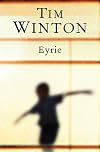
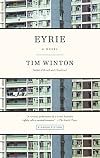
Eyrie
by Tim Winton
On This Page
Description
Eyrie tells the story of Tom Keely, a man who's lost his bearings in middle age and is now holed up in a flat at the top of a grim highrise, looking down on the world he's fallen out of love with. He's cut himself off, until one day he runs into some neighbours: a woman he used to know when they were kids, and her introverted young boy. The encounter shakes him up in a way that he doesn't understand. Despite himself, Keely lets them in. What follows is a heart-stopping, groundbreaking novel show more for our times, funny, confronting, exhilarating and haunting, populated by unforgettable characters. It asks how, in an impossibly compromised world, we can ever hope to do the right thing. show lessTags
Recommendations
















Member Recommendations

Member Reviews
I return to Winton from time to time because: Winton. He has a terse narrative style, and as others have noted, is able to convey his State and to a lesser, or less specific extent, his nation, with remarkbale brushstrokes of reality.
Though in the thirty years I spent in Australia I never heard anyone refer to a cigarette as a "fag." A "cancer stick.", a cigarette, a smoke, whatever. Not a fag. And I bludged a few thousand over the years.
As others have hinted, Winton doesn't quite happen here. Terse narrative, laconic dialogue, yes. A compelling plot, too, for a while. But then the Volvo and the Hyundai sort of part company, fluffily, meaninglessly. The back stories cease to be particulaly important, the bit characters become bittier, show more the ugly underworld just a bit, well, pastiche, really. In the end as the narrative accelerates I found myself thinking that this has to end in tears and then I found that maybe it does or maybe it doesn't but whatever. Doris and Gemma and Kai and Tom came and are gone and. .. . oh well. Meh.
Yet Winton could write a grocery list and I would sense narrative force. A poor Winton book, and perhaps this is, is still in the top 90% of can't put downs and "oh bugger I've finisheds." So yeah, four stars. Three and three quarters if I could. And I hope every Tom out there gets off the substance abuse somehow. And I hope every Kai out there gets help somewhere. But not from each other.
And give up on the fags already alright and have a smoke if you must. show less
Though in the thirty years I spent in Australia I never heard anyone refer to a cigarette as a "fag." A "cancer stick.", a cigarette, a smoke, whatever. Not a fag. And I bludged a few thousand over the years.
As others have hinted, Winton doesn't quite happen here. Terse narrative, laconic dialogue, yes. A compelling plot, too, for a while. But then the Volvo and the Hyundai sort of part company, fluffily, meaninglessly. The back stories cease to be particulaly important, the bit characters become bittier, show more the ugly underworld just a bit, well, pastiche, really. In the end as the narrative accelerates I found myself thinking that this has to end in tears and then I found that maybe it does or maybe it doesn't but whatever. Doris and Gemma and Kai and Tom came and are gone and. .. . oh well. Meh.
Yet Winton could write a grocery list and I would sense narrative force. A poor Winton book, and perhaps this is, is still in the top 90% of can't put downs and "oh bugger I've finisheds." So yeah, four stars. Three and three quarters if I could. And I hope every Tom out there gets off the substance abuse somehow. And I hope every Kai out there gets help somewhere. But not from each other.
And give up on the fags already alright and have a smoke if you must. show less
This book is about a place you wouldn't want to live in. people you would not want to meet and the terrible tale of their lives. Yet I did become engrossed in their lives which shows Tim Winton has written a great novel.
Such a different scene from the beach and bush of Winton's previous novels, but he manages to paint a picture of life for the "losers" in this part of the world, so descriptively that one can almost "smell" the squalor.
The main character Tom Keely lives on the top floor of a run-down block of high-rise units, looking down on Fremantle, WA on the "sleaze" of the city. Hence the title "Eyrie".
He is a person that I would call a "loser' but he does manage to rise from his own medicated and drunken self-pitying existence to show more become involved in the life of his neighbour Gemma and her grandson Kai .Whether he succeeds in bettering their lives , in particular that of the young boy, is for the reader to decide.
From the characters that the writer has created, we perceive how the female of the species, in this case Gemma., will fight on no matter how hard life's knocks ,while the male (Tom in this case0, gives up and takes refuge in alcohol drugs and self-pity. To me this is perhaps a problem facing the human race.
The book makes you think about these problems in our "modern day world" and is well worth reading. show less
Such a different scene from the beach and bush of Winton's previous novels, but he manages to paint a picture of life for the "losers" in this part of the world, so descriptively that one can almost "smell" the squalor.
The main character Tom Keely lives on the top floor of a run-down block of high-rise units, looking down on Fremantle, WA on the "sleaze" of the city. Hence the title "Eyrie".
He is a person that I would call a "loser' but he does manage to rise from his own medicated and drunken self-pitying existence to show more become involved in the life of his neighbour Gemma and her grandson Kai .Whether he succeeds in bettering their lives , in particular that of the young boy, is for the reader to decide.
From the characters that the writer has created, we perceive how the female of the species, in this case Gemma., will fight on no matter how hard life's knocks ,while the male (Tom in this case0, gives up and takes refuge in alcohol drugs and self-pity. To me this is perhaps a problem facing the human race.
The book makes you think about these problems in our "modern day world" and is well worth reading. show less
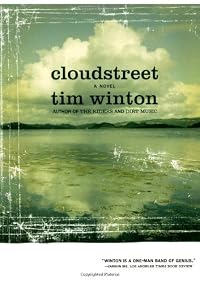
If anyone asks me about Tim Winton, I tend to reply – “Oh Cloudstreet – what a fantastic book!” (a book that can’t be ruined despite being studied in high school is extraordinarily great in my book). After reading Eyrie though, I’ll be adding it to my spiel.
Eyrie is different from Winton’s preceding novels in that it takes place completely within a city – Fremantle, Western Australia to be exact. (You can argue that Fremantle is a part of Perth, but the locals would argue that ‘Freo’ has its own bohemian atmosphere and sense of community, worlds away from the Big Bad Soulless City). Eyrie is set on the tenth floor of an ugly sixties apartment block, where the protagonist Tom Keely (or just Keely) resides after the show more loss of his high profile job, wife and house. He’s drinking and medicating himself into oblivion in the middle of a West Australian summer.
Keely is jaded too. West Australians will take particular delight in the sarcastic taunts at a state that’s growing out of control like an unruly teenager as mining becomes the king:
‘Port of Fremantle, gateway to the booming state of Western Australia. Which was, you could say, like Texas. Only it was big. Not to mention thin-skinned. And rich beyond dreaming. The greatest ore deposit in the world. The nation’s quarry, China’s swaggering enabler. A philistine giant eager to pass off its good fortune as virtue, quick to explain its shortcomings as east-coast conspiracies, always at the point of seceding from the Federation. Leviathan with an irritable bowel.
The great beast’s shining teeth were visible in the east…For while Perth had bulldozed its past and buried wits doubts in bluster, Fremantle nursed its grievances and scratched its arse.’ (page 5)
I adored this statement as despite its brevity, it describes Perth exactly. Always comparing itself to the eastern states of Australia and finding itself inferior (No Starbucks! Krispy Kremes must be hauled across the country in overhead lockers to satisfy the masses in between the McMansion, jet ski, boat, 4 wheel drive and V8 Commodore ute). Fremantle ingrains itself in its history and its creativity, while the city (Perth) is about money, football stadiums and a quay that nobody wants. I loved the biting satire and I hope this translates to readers who aren’t familiar with the complexes of Western Australia.
One bakingly hot day, Keely meets someone on the breezeway outside his flat (it’s not on trend enough to call it an apartment). It’s Gemma, a childhood neighbour, who his parents regularly took in when her father hit her mother. Gemma’s with Kai, who Keely soon finds out is not her son, but her grandson. Gemma looks faded, worn out – life has not been kind to her. Her only daughter is in gaol and she’s working nightfill in a supermarket to make ends meet. Keely is fascinated by Kai – a lost figure at the age of six, strange and reserved. Keely couldn’t save the wetlands in his former job (even though that smacks of corruption), but perhaps he can save Keely and Gemma... Keely becomes entangled in their lives, moving him out of his lonely eyrie and forcing him to glimpse the world that’s going on around him. Contact with his mum, former colleagues and ex-wife show that Keely’s really not right, but what is it? Drink, drugs or something organic? As it becomes evident that Keely can’t solve all of Gemma and Kai’s problems, his world begins to collapse.
Despite Keely having a lot of problems – money, drink, medication to name a few – he’s not really a likable character. He’s not someone you’d take home (even his mum leaves him out on the couch and verandah) and his quest to save Kai didn’t really endear him to me. Was it the lack of get up and go, to wallow in his problems rather than fix them? Was there something wrong with Keely? I did love his cynicism and he came out with some wonderfully acerbic statements about his environment (but Mr Winton, not enough about the Fremantle Dockers [Aussie Rules football team]). As he’s scratching the bottom, Keely’s not afraid to tell it how it is or act in desperation (even if it’s somewhat stupid desperation involving driving around posting anonymous postcards). Gemma is fed up, impatient with what life has dealt her but she has an honesty that Keely lacks. Keely won’t face up to the issues – he takes too many pills and drinks too much, but even Gemma (who he appears to respect occasionally) can’t fix it. Not can his mother, who rose through the working classes to go to university and become a respected person of the western suburbs (one of Perth’s gentler and more expensive areas). Perhaps it’s the gentrification of Keely’s mother that causes him to lose respect for her. Oh sure, he does turn to her in times of need like any son, but I think he feels she’s a traitor to her class. Keely desperately wants to be seen as one of the working class, despite that he’s been on television and had the big house and boat. Even a job washing dishes can’t bring him down to his roots.
But what about Kai? Kai’s an odd little boy, an old soul lost. He’s certain he won’t grow to be old and can’t stand falling asleep. A deep fascination with Scrabble at age six and balconies. Keely knows there something wrong with him and wants to fix him, but doesn’t know how. Kai’s childhood is nothing like Keely’s was and Keely can’t replicate it.
Winton’s language is as always, beautiful. Every word is crafted just so and short sentences describe big scenes and feelings. It’s a work of art. Fans of quotation marks for speech will be disappointed (Winton doesn’t use them) but the lack of them helps the speech to flow uninterrupted.
This is a book that you won’t forget in a hurry, if ever. A must.
Thank you to The Reading Room for the copy of the book.
http://samstillreading.wordpress.com show less
Eyrie is different from Winton’s preceding novels in that it takes place completely within a city – Fremantle, Western Australia to be exact. (You can argue that Fremantle is a part of Perth, but the locals would argue that ‘Freo’ has its own bohemian atmosphere and sense of community, worlds away from the Big Bad Soulless City). Eyrie is set on the tenth floor of an ugly sixties apartment block, where the protagonist Tom Keely (or just Keely) resides after the show more loss of his high profile job, wife and house. He’s drinking and medicating himself into oblivion in the middle of a West Australian summer.
Keely is jaded too. West Australians will take particular delight in the sarcastic taunts at a state that’s growing out of control like an unruly teenager as mining becomes the king:
‘Port of Fremantle, gateway to the booming state of Western Australia. Which was, you could say, like Texas. Only it was big. Not to mention thin-skinned. And rich beyond dreaming. The greatest ore deposit in the world. The nation’s quarry, China’s swaggering enabler. A philistine giant eager to pass off its good fortune as virtue, quick to explain its shortcomings as east-coast conspiracies, always at the point of seceding from the Federation. Leviathan with an irritable bowel.
The great beast’s shining teeth were visible in the east…For while Perth had bulldozed its past and buried wits doubts in bluster, Fremantle nursed its grievances and scratched its arse.’ (page 5)
I adored this statement as despite its brevity, it describes Perth exactly. Always comparing itself to the eastern states of Australia and finding itself inferior (No Starbucks! Krispy Kremes must be hauled across the country in overhead lockers to satisfy the masses in between the McMansion, jet ski, boat, 4 wheel drive and V8 Commodore ute). Fremantle ingrains itself in its history and its creativity, while the city (Perth) is about money, football stadiums and a quay that nobody wants. I loved the biting satire and I hope this translates to readers who aren’t familiar with the complexes of Western Australia.
One bakingly hot day, Keely meets someone on the breezeway outside his flat (it’s not on trend enough to call it an apartment). It’s Gemma, a childhood neighbour, who his parents regularly took in when her father hit her mother. Gemma’s with Kai, who Keely soon finds out is not her son, but her grandson. Gemma looks faded, worn out – life has not been kind to her. Her only daughter is in gaol and she’s working nightfill in a supermarket to make ends meet. Keely is fascinated by Kai – a lost figure at the age of six, strange and reserved. Keely couldn’t save the wetlands in his former job (even though that smacks of corruption), but perhaps he can save Keely and Gemma... Keely becomes entangled in their lives, moving him out of his lonely eyrie and forcing him to glimpse the world that’s going on around him. Contact with his mum, former colleagues and ex-wife show that Keely’s really not right, but what is it? Drink, drugs or something organic? As it becomes evident that Keely can’t solve all of Gemma and Kai’s problems, his world begins to collapse.
Despite Keely having a lot of problems – money, drink, medication to name a few – he’s not really a likable character. He’s not someone you’d take home (even his mum leaves him out on the couch and verandah) and his quest to save Kai didn’t really endear him to me. Was it the lack of get up and go, to wallow in his problems rather than fix them? Was there something wrong with Keely? I did love his cynicism and he came out with some wonderfully acerbic statements about his environment (but Mr Winton, not enough about the Fremantle Dockers [Aussie Rules football team]). As he’s scratching the bottom, Keely’s not afraid to tell it how it is or act in desperation (even if it’s somewhat stupid desperation involving driving around posting anonymous postcards). Gemma is fed up, impatient with what life has dealt her but she has an honesty that Keely lacks. Keely won’t face up to the issues – he takes too many pills and drinks too much, but even Gemma (who he appears to respect occasionally) can’t fix it. Not can his mother, who rose through the working classes to go to university and become a respected person of the western suburbs (one of Perth’s gentler and more expensive areas). Perhaps it’s the gentrification of Keely’s mother that causes him to lose respect for her. Oh sure, he does turn to her in times of need like any son, but I think he feels she’s a traitor to her class. Keely desperately wants to be seen as one of the working class, despite that he’s been on television and had the big house and boat. Even a job washing dishes can’t bring him down to his roots.
But what about Kai? Kai’s an odd little boy, an old soul lost. He’s certain he won’t grow to be old and can’t stand falling asleep. A deep fascination with Scrabble at age six and balconies. Keely knows there something wrong with him and wants to fix him, but doesn’t know how. Kai’s childhood is nothing like Keely’s was and Keely can’t replicate it.
Winton’s language is as always, beautiful. Every word is crafted just so and short sentences describe big scenes and feelings. It’s a work of art. Fans of quotation marks for speech will be disappointed (Winton doesn’t use them) but the lack of them helps the speech to flow uninterrupted.
This is a book that you won’t forget in a hurry, if ever. A must.
Thank you to The Reading Room for the copy of the book.
http://samstillreading.wordpress.com show less
Tim Winton’s ‘Eyrie’ is an engrossing and moving story of broken people in a modern and broken world.
Tom Keely, from whose point of view the story is told, has effectively removed himself from society after holding a prominent and very public position in the recent past. We never find out exactly what he did, but he was, apparently, right, and he has vindication coming. Not that any of that is doing him much good at present, as he abuses medication and alcohol attempting to obliterate that past. Other things happened, too, which tipped him over the edge of mental instability. Some of that is discussed in the story.
Despite everything, he remains an essentially good man, trying to do ‘the right thing’.
Unexpectedly, he crosses show more paths with Gemma, whom he knew well in childhood. As a result, his reclusiveness is compromised, and a world he knows nothing about lands in his lap. And it’s not good.
Keely is a fascinating character – a brilliant invention by Winton, equally likeable and despicable; a failed man trying to come to terms with the hand he has been dealt – not unlike Sam Pickles in ‘Cloudstreet’. Gemma, despite all the baggage she takes through life with her, is also a sympathetic, if annoyingly stubborn character. Her grandson, Kai, provides a point of connection for Tom and Gemma, and a reason for Tom to become reluctantly involved in their lives.
I have been in awe of Winton’s writing for many years, and while I haven’t enjoyed every novel he has written, I have certainly appreciated the craft of his writing. ‘Eyrie’ is quite possibly the best fiction Winton has produced – an outstanding story of modern gritty Australia, told with a heart that understands the Australian character in all its variations. show less
Tom Keely, from whose point of view the story is told, has effectively removed himself from society after holding a prominent and very public position in the recent past. We never find out exactly what he did, but he was, apparently, right, and he has vindication coming. Not that any of that is doing him much good at present, as he abuses medication and alcohol attempting to obliterate that past. Other things happened, too, which tipped him over the edge of mental instability. Some of that is discussed in the story.
Despite everything, he remains an essentially good man, trying to do ‘the right thing’.
Unexpectedly, he crosses show more paths with Gemma, whom he knew well in childhood. As a result, his reclusiveness is compromised, and a world he knows nothing about lands in his lap. And it’s not good.
Keely is a fascinating character – a brilliant invention by Winton, equally likeable and despicable; a failed man trying to come to terms with the hand he has been dealt – not unlike Sam Pickles in ‘Cloudstreet’. Gemma, despite all the baggage she takes through life with her, is also a sympathetic, if annoyingly stubborn character. Her grandson, Kai, provides a point of connection for Tom and Gemma, and a reason for Tom to become reluctantly involved in their lives.
I have been in awe of Winton’s writing for many years, and while I haven’t enjoyed every novel he has written, I have certainly appreciated the craft of his writing. ‘Eyrie’ is quite possibly the best fiction Winton has produced – an outstanding story of modern gritty Australia, told with a heart that understands the Australian character in all its variations. show less
Winton continues write about messy and broken characters (who we might naturally avoid in real life) in such a way that you see their humanity and feel deeply for them. He paints humanity, what Blaise Pascal called “the glory and shame of the universe”. There is so much human condition described here: grief, betrayal, hopelessness, failure, addiction; fear, lust, self destructiveness, violence, despair, concern, exhaustion, love, sacrifice, protection, fatherhood, friendship, motherhood, beauty, wonder.
There was an exuberance about the first chapter of this book - which headed nowhere in particular plot-wise but which seemed content to ramble around the streets of Fremantle ("Leviathan with an irritable bowel") gawking at its inhabitants and sketching them brilliantly - which seemed to point to a long and satisfying read. And the Indian Ocean setting was a great antidote to the freezing cold British winter in which I was reading it. I liked the way the central character's past was filled in sketchily, as though you were glimpsing it through venetian blinds, the coarse laugh-out-loud humour with which the most unsavoury characters were described ("....As he leant contemptuously against the doorjamb, he took the opportunity to reach show more into his trackpants and huffle his nuts"), and the earthy Aussie slang. Heck, I could even forgive the lack of speech marks and that's one of my pet hates.
Unfortunately at around the time the book afforded a good three pages to a hilarious description
of the local down-and-out there was a change of tone, and the story became an endless cycle of shagging the neighbour, fighting with the neighbour, waking up in the middle of the night to find the neighbour's kid standing there, being threatened by drugs barons, set to endless repeat. There were things I was hoping to hear the conclusion to - did we ever solve the mystery of the wet carpet?? - and yet the novel ended apparently mid-cycle. A bit like when my washing machine breaks down - kind of irritating. I was fascinated by the reviewer on the back cover who reports finishing the book with a "bruised sense of revelation". Now there's a thought. Would I be prepared to take a minor kicking in return for understanding what the hell it was all about? Yeah, maybe. show less
Unfortunately at around the time the book afforded a good three pages to a hilarious description
of the local down-and-out there was a change of tone, and the story became an endless cycle of shagging the neighbour, fighting with the neighbour, waking up in the middle of the night to find the neighbour's kid standing there, being threatened by drugs barons, set to endless repeat. There were things I was hoping to hear the conclusion to - did we ever solve the mystery of the wet carpet?? - and yet the novel ended apparently mid-cycle. A bit like when my washing machine breaks down - kind of irritating. I was fascinated by the reviewer on the back cover who reports finishing the book with a "bruised sense of revelation". Now there's a thought. Would I be prepared to take a minor kicking in return for understanding what the hell it was all about? Yeah, maybe. show less
Winton's novel is the compelling story of a broken, damaged man's attempt to protect those around him from dangers created by generational harm, the claws of a drug- ridden underclass and the inability of social safety nets to provide effective forms of help.
This is such a modern book, about life in the world right now. It's a hard life, full of threats and pressures and desperation. People are forced to endure these things without the help society pretends is available to all. Police, the law, government welfare, all fail the test of being realistic pathways to escape. Instead, fear, money, debts, burdens of family and work must be dealt with by resorting to drugs, legal and illegal, alcohol, violence, fear and flight.
Threading most show more powerfully through this novel is a building suspense, a feeling something dreadful is going to happen to the most vulnerable of characters.
Winton's depiction of "Freo"and Perth is excoriating. Heat, squalor, with dull, drab, terrible modern urban streetscapes and housing estates, and continual damage to the environment all add to the vision of a place you would never want to visit.
From the opening Winton's writing seems over the top, wildly pulsating with life, as if he is rushing to spill out all he can in word and imagery about people and place. As the book progresses, the pace continues in the same over heated, desperate way; it gradually becomes clear that this febrile world of words is the way we live now.
This is Tim Winton's most powerful book. It's not a place you would want to inhabit, most characters are people you hope to avoid, and the tale of their lives is a terrible one. The fact that we become so engrossed in their lives shows Winton has written a masterful work of modern literature . show less
This is such a modern book, about life in the world right now. It's a hard life, full of threats and pressures and desperation. People are forced to endure these things without the help society pretends is available to all. Police, the law, government welfare, all fail the test of being realistic pathways to escape. Instead, fear, money, debts, burdens of family and work must be dealt with by resorting to drugs, legal and illegal, alcohol, violence, fear and flight.
Threading most show more powerfully through this novel is a building suspense, a feeling something dreadful is going to happen to the most vulnerable of characters.
Winton's depiction of "Freo"and Perth is excoriating. Heat, squalor, with dull, drab, terrible modern urban streetscapes and housing estates, and continual damage to the environment all add to the vision of a place you would never want to visit.
From the opening Winton's writing seems over the top, wildly pulsating with life, as if he is rushing to spill out all he can in word and imagery about people and place. As the book progresses, the pace continues in the same over heated, desperate way; it gradually becomes clear that this febrile world of words is the way we live now.
This is Tim Winton's most powerful book. It's not a place you would want to inhabit, most characters are people you hope to avoid, and the tale of their lives is a terrible one. The fact that we become so engrossed in their lives shows Winton has written a masterful work of modern literature . show less
Members
- Recently Added By
Lists

Top Five Books of 2013
1,564 works; 721 members

Top Five Books of 2014
1,064 works; 397 members

Books Read in 2016
4,666 works; 197 members

Kirkus Reviews Best Fiction of 2014
100 works; 7 members

Folio Prize 2015 Longlist
79 works; 2 members
Author Information

41+ Works 13,795 Members
Tim Winton was born in 1960 in Western Australia. He attended a Creative Writing Course at Curtin University in Perth, and it was there that he began his first novel, An Open Swimmer. It was entered for The Australian/Vogel Award in 1981 and won. His other works include Shallows, which won the Miles Franklin Award in 1984; The Riders Winton, which show more won the Miles Franklin Award in 1992; and Island Home: A Landscape Memoir, the winner of the 2016 Australian Book Industry Awards, General nonfiction book of the year. The Boy Behind the Curtain, published in 2016, won the 2018 Adelaide Festival Awards for Literature, Nonfiction. His books also include The Shepherd's Hut, Breath, and Dirt Music. (Bowker Author Biography) show less
Awards and Honors
Awards
Series
Belongs to Publisher Series
Common Knowledge
- Canonical title
- Eyrie
- Original title
- Eyrie
- Important places
- Freemantle, Western Australia, Australia; Perth, Western Australia, Australia
- Epigraph
- they shall mount up with wings as eagles;
they shall run, and not be weary;
and they shall walk, and not faint.
ISAIAH 40:31 - Dedication
- FOR DENISE, ALWAYS
- First words
- So.
Here was this stain on the carpet, a wet patch big as a coffee table. - Original language
- English
Classifications
Statistics
- Members
- 550
- Popularity
- 53,550
- Reviews
- 25
- Rating
- (3.64)
- Languages
- English, French, German, Italian
- Media
- Paper, Audiobook, Ebook
- ISBNs
- 25
- ASINs
- 6