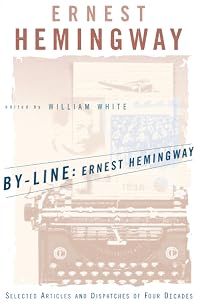
By-Line
by Ernest Hemingway 
On This Page
Description
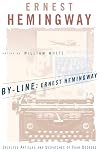
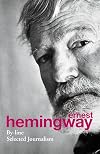
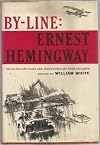
Across three continents and four decades...here is Hemingway - the adventurer, the reporter, the man! More intimately than all his fiction, Hemingway the reporter reveals Hemingway the man - driving an ambulance through a bullet-barrage or leading guerrilla forces into Paris - always in the thick of the action. Here are his most sensational dispatches - the grisly truth about Mussolini, the horrors of total war, the rootless expatriates of the Lost Generation, the blood and beauty of show more bullfighting and big game hunting...Here are the behind-the-scenes stories that became For Whom the Bell Toll, A Farewell to Arms, and The Sun Also Rises. show lessTags
Recommendations











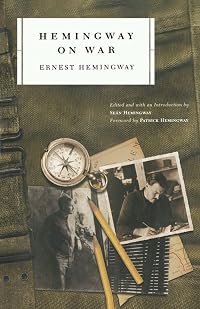
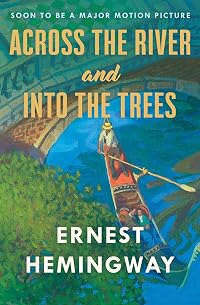
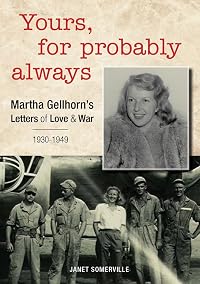

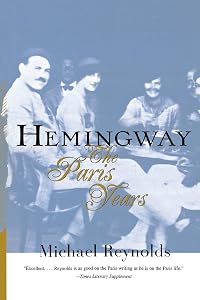





Member Recommendations

Member Reviews
A substantial collection of Ernest Hemingway's journalistic writings spanning four decades. It is a bit hit-and-miss – as, I suppose, any editorial collection would be. Many of the selections are dated newspaper articles reporting facts and (then-)current events, with Hemingway understandably not striving for literary greatness; these ones, of course, do not make for interesting reading nowadays. There is an undercurrent of obligation that I detected in many of these pieces and Hemingway lacks the artistic freedom that is allowed by the crafting of literature. On the other hand there are a number of real gems, particularly among the longer Esquire articles of the 1930s, where the writer is allowed to breathe. Whilst it is a truism show more that Hemingway's journalistic output never matched his literary output, some of these Esquire articles come damn close. Indeed, they serve as a better representation of Hemingway in the 1930s than his only novel published in that decade: To Have and Have Not.
What surprised and gladdened me the most about By-Line was the amount of humour Hemingway uses throughout. Perhaps because he never intended his journalism to be judged alongside his literature, perhaps as a reaction to the restrictions of writing to order for newspaper editors; for whatever reason, Hemingway cracks jokes and is in general more light-hearted and communicative with the reader than he often could be in his novels and his short stories. This gives you a greater appreciation of the writer's character, allowing you to flesh out the individual in a way that you cannot if you just read, say, The Sun Also Rises or Men Without Women.
The book as a whole can serve as a great introduction to Hemingway's writing, for it covers just about every topic that was of interest to him in his writing career. It covers fishing ('On the Blue Water' contains a passage which clearly served as the basis for The Old Man and the Sea), bullfighting, war ('Notes on the Next War' is as eloquent an anti-war message as anything in A Farewell to Arms or For Whom the Bell Tolls), big-game hunting ('Notes on Dangerous Game') and literature ('Monologue to the Maestro' is a gold mine of advice to writers). It also covers events of his life which he never really addressed in his fiction, such as his two plane crashes in Africa (recounted here in 'The Christmas Gift') and his experiences in World War Two. The latter are particularly good, if admittedly not on a par with the Esquire articles. What Hemingway aficionado could resist reading his experiences of a landing-craft on D-Day ('Voyage to Victory') or the battles for Paris ('How We Came to Paris') and Germany ('War in the Siegfried Line')? Overall, there are enough strong articles and enough literary flourishes to make By-Line a worthwhile read and a stellar addition to the Hemingway canon. show less
What surprised and gladdened me the most about By-Line was the amount of humour Hemingway uses throughout. Perhaps because he never intended his journalism to be judged alongside his literature, perhaps as a reaction to the restrictions of writing to order for newspaper editors; for whatever reason, Hemingway cracks jokes and is in general more light-hearted and communicative with the reader than he often could be in his novels and his short stories. This gives you a greater appreciation of the writer's character, allowing you to flesh out the individual in a way that you cannot if you just read, say, The Sun Also Rises or Men Without Women.
The book as a whole can serve as a great introduction to Hemingway's writing, for it covers just about every topic that was of interest to him in his writing career. It covers fishing ('On the Blue Water' contains a passage which clearly served as the basis for The Old Man and the Sea), bullfighting, war ('Notes on the Next War' is as eloquent an anti-war message as anything in A Farewell to Arms or For Whom the Bell Tolls), big-game hunting ('Notes on Dangerous Game') and literature ('Monologue to the Maestro' is a gold mine of advice to writers). It also covers events of his life which he never really addressed in his fiction, such as his two plane crashes in Africa (recounted here in 'The Christmas Gift') and his experiences in World War Two. The latter are particularly good, if admittedly not on a par with the Esquire articles. What Hemingway aficionado could resist reading his experiences of a landing-craft on D-Day ('Voyage to Victory') or the battles for Paris ('How We Came to Paris') and Germany ('War in the Siegfried Line')? Overall, there are enough strong articles and enough literary flourishes to make By-Line a worthwhile read and a stellar addition to the Hemingway canon. show less
By-line: Ernest Hemingway, read by Campbell Scott, was in many places mesmerizing. These are recordings of Hemingway's reporter's work--along with magazine etc. articles, written throughout his lifetime. Particularly poignant were his works while at the Toronto Star on fishing and hunting experiences, when he speaks of youthful excursions out with his father. Also, those writings near the end of his life when he'd been--along with his wife, Mary, and their airplane pilot--gone missing and for days in the newspaper headlines after being in a plane crash in Africa. This pieces of writing being both serious and humorous in proper parts--especially when staring down more than one elephant since the airplane came down in a long used elephant show more walk. Campbell Scott's tone in the narration just seemed so right on here, and all throughout the audio book too. show less
Hemmingway's Op-eds are a great look into how his style, personality, view on humanity developed over the years. I loved the articles about hunting lions.
This is a book every writer should read. If you are a writer, I won't have to tell you why.
Selected Articles and Dispatches of Four Decades
Ratings
Members
- Recently Added By
Lists

Best Journalistic Travel
14 works; 4 members
Author Information

668+ Works 174,254 Members
Ernest Miller Hemingway was born in the family home in Oak Park, Ill., on July 21, 1899. In high school, Hemingway enjoyed working on The Trapeze, his school newspaper, where he wrote his first articles. Upon graduation in the spring of 1917, Hemingway took a job as a cub reporter for the Kansas City Star. After a short stint in the U.S. Army as a show more volunteer Red Cross ambulance driver in Italy, Hemingway moved to Paris, and it was here that Hemingway began his well-documented career as a novelist. Hemingway's first collection of short stories and vignettes, entitled In Our Time, was published in 1925. His first major novel, The Sun Also Rises, the story of American and English expatriates in Paris and on excursion to Pamplona, immediately established him as one of the great prose stylists and preeminent writers of his time. In this book, Hemingway quotes Gertrude Stein, "You are all a lost generation," thereby labeling himself and other expatriate writers, including F. Scott Fitzgerald, T.S. Eliot, and Ford Madox Ford. Other novels written by Hemingway include: A Farewell To Arms, the story, based in part on Hemingway's life, of an American ambulance driver on the Italian front and his passion for a beautiful English nurse; For Whom the Bell Tolls, the story of an American who fought, loved, and died with the guerrillas in the mountains of Spain; and To Have and Have Not, about an honest man forced into running contraband between Cuba and Key West. Non-fiction includes Green Hills of Africa, Hemingway's lyrical journal of a month on safari in East Africa; and A Moveable Feast, his recollections of Paris in the Roaring 20s. In 1954, Hemingway won the Nobel Prize in Literature for his novella, The Old Man and the Sea. A year after being hospitalized for uncontrolled high blood pressure, liver disease, diabetes, and depression, Hemingway committed suicide on July 2, 1961, in Ketchum, Idaho. (Bowker Author Biography) show less
Ernest Hemingway has a Legacy Library. Legacy libraries are the personal libraries of famous readers, entered by LibraryThing members from the Legacy Libraries group.
All Editions
Awards and Honors
Distinctions
Common Knowledge
- Canonical title
- By-Line
- Original title
- By-line, Ernest Hemingway: Selected Articles and Dispatches of Four Decades
- Original publication date
- 1920-1956
- People/Characters
- Ernest Hemingway
- Blurbers
- Burgess, Anthony
Classifications
Statistics
- Members
- 657
- Popularity
- 44,046
- Reviews
- 5
- Rating
- (3.92)
- Languages
- 9 — Danish, Dutch, English, Finnish, French, German, Italian, Polish, Swedish
- Media
- Paper, Audiobook, Ebook
- ISBNs
- 24
- ASINs
- 43