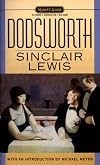
Dodsworth
by Sinclair Lewis
On This Page
Description
Meet Sam Dodsworth, an amiable fifty-year-old millionaire and "American Captain of Industry, believing in the Republican Party, high tariffs and, so long as they did not annoy him personally, in Prohibition and the Episcopal Church." Dodsworth runs an auto manufacturing firm, but his beautiful wife, Fran, obsessed with the notion that she is growing old, persuades him to sell his interest in the company and take her to Europe. He agrees for the sake of their marriage, but before long, the show more pretensions of the cosmopolitan scene prove more enticing to Fran than her husband. Both a devastating, surprisingly contemporary portrait of a marriage falling apart and a grand tour of the Europe of a bygone era, Dodsworth is stamped with Sinclair Lewis's signature satire, wickedly observant of America's foibles and great fun. show lessTags
Recommendations






















Member Recommendations

bluepiano I dote on Dodsworth but nonetheless it is to The Chateau as a made-for-TV movie is to whatever respectable literary work it might have been based upon.
Member Reviews
Dodsworth is generally viewed as focussing on differences between American and European culture, intellect, manners, and morals. But it depicts the long, slow collapse of a seemingly solid marriage between two accomplished and loving individuals.
The surface story is straightforward. Sam Dodsworth has sold his auto manufacturing business to a larger rival. He daughter has married, his son is settled in at Yale. His wife pursuades him to take her on a long, unhurried tour of Europe. And it'll be all about her, even if he doesn't immediately grasp that. In fact, he suppresses any such notion. After all, she's his wife, and she adores him.
Sam is treated more like an indulgent father than an adored husband. It's his money that pays for the show more two-bedroom hotel suites Fran requires, the lavish shopping excursions she goes on, the meals and entertainments for the two of them plus the friends she makes. Though most of her 41 years have been spent in Zenith, she is convinced she understands European manners and mores. And Sam is, well, something of an embarrassment. He's a lovely man and means well, but he's uncultured and just doesn't, you know, get it.
Fairly early on, Fran's ceaseless flirting elicits a pass from an Englishman, which traumatizes her and prompts the Dodsworths to flee to Paris. There she repeats her behavior. While Sam wants to see sights and meet with active, productive, inventive people, Fran wants to be indulged by shallow, frivolous society. She needs to be the center of attention.
Her complete lack of self-awareness is revealed again and again. She insults and belittles her husband. When he returns to America for his college reunion, she sends him letters revealing—without any sense that revealing is what she's doing--that she's having an affair. And Sam suppresses his own sensibilities, remaining true, loyal, loving, indulgent, virtually to the end. show less
The surface story is straightforward. Sam Dodsworth has sold his auto manufacturing business to a larger rival. He daughter has married, his son is settled in at Yale. His wife pursuades him to take her on a long, unhurried tour of Europe. And it'll be all about her, even if he doesn't immediately grasp that. In fact, he suppresses any such notion. After all, she's his wife, and she adores him.
Sam is treated more like an indulgent father than an adored husband. It's his money that pays for the show more two-bedroom hotel suites Fran requires, the lavish shopping excursions she goes on, the meals and entertainments for the two of them plus the friends she makes. Though most of her 41 years have been spent in Zenith, she is convinced she understands European manners and mores. And Sam is, well, something of an embarrassment. He's a lovely man and means well, but he's uncultured and just doesn't, you know, get it.
Fairly early on, Fran's ceaseless flirting elicits a pass from an Englishman, which traumatizes her and prompts the Dodsworths to flee to Paris. There she repeats her behavior. While Sam wants to see sights and meet with active, productive, inventive people, Fran wants to be indulged by shallow, frivolous society. She needs to be the center of attention.
Her complete lack of self-awareness is revealed again and again. She insults and belittles her husband. When he returns to America for his college reunion, she sends him letters revealing—without any sense that revealing is what she's doing--that she's having an affair. And Sam suppresses his own sensibilities, remaining true, loyal, loving, indulgent, virtually to the end. show less
I should begin by saying I love, ardently, William Wyler's 1936 film adaptation of Dodsworth. Now having read the book, I just marvel at the film more, and can't say that I'm aware of any more efficient and elegant translation of novel to screenplay, nor of a cast who has more successfully captured the spirit of their literary alter egos, without being a bit restrained by the text—very few lines straight from Lewis appear in the film.
Which isn't a pity since they couldn't play conversationally, but Lewis' command of words, words, words is often staggering. He irks, in attempting to capture dialect and slang, in insisting that people speak parenthetically (parenthetically, I'm convinced people speak exclusively in dashes), in asserting show more that people think in elaborate and well-constructed theses. But over and over his ability to just get it so astonishingly right has a way to cut through all manner of frills to simple, accurate, truthful human nakedness.
Strange that I should be so much more a partisan of Fran in reading the novel than watching the film (I'd expect it in the film, that is, always being a partisan of Ruth Chatterton). In the film, Sam's final choice seems both inevitable and right. Fran seems so certainly wrong. But in the novel, set beside her increasingly obvious ghastliness, there is so purely and faithfully Sam's love for her to contend with. "Have I remembered to tell you I adore you?" begins as youthful flirtation, becomes rote, becomes desperate, serves to cement their real affection despite it all, turns bitter and final... It is not banal shorthand but cuts a little deeper every time. He loves her; what else for the reader to feel but love? The ending doesn't feel so right. In fact it feels horrifyingly wrong—nothing inevitable in it but that no matter what Sam does for himself now he has lost.
But the film is fairer to Fran, or Chatterton makes her more human than Lewis cares to. I'm disappointed that her selfishness and pretentiousness and haughtiness is carried to inhuman extreme by the end—it goes beyond slowly revealing her for what she is as Sam slowly discovers it and turns her into a really unrecognizable monster, only redeemed by his baffling adoration for her—making the ending all the more troubling perhaps, but seriously damaging her credibility as a character. Besides I like Fran. I like the Fran of the first three hundred pages who acted reprehensibly but still turned and said "Have I remembered to tell you I adore you?" and you could almost positively convince yourself she means it.
It is a brilliant book—oh, I'm uninterested in the travelogues and endless debates about what it means to be European and American—but at core it is a terribly sad story about opening one's eyes to life, love, and self for the first time at fifty. It is a love tragedy about two people who love ardently without knowing one another—for I will insist upon viewing Fran that humanly, and crediting her with that much. I will be haunted, as Sam always will be, by the thought of her, a desolate wraith, flitting off to another adventure, head high, and terrified. Finding oneself feels like no great gain at all. show less
Which isn't a pity since they couldn't play conversationally, but Lewis' command of words, words, words is often staggering. He irks, in attempting to capture dialect and slang, in insisting that people speak parenthetically (parenthetically, I'm convinced people speak exclusively in dashes), in asserting show more that people think in elaborate and well-constructed theses. But over and over his ability to just get it so astonishingly right has a way to cut through all manner of frills to simple, accurate, truthful human nakedness.
Strange that I should be so much more a partisan of Fran in reading the novel than watching the film (I'd expect it in the film, that is, always being a partisan of Ruth Chatterton). In the film, Sam's final choice seems both inevitable and right. Fran seems so certainly wrong. But in the novel, set beside her increasingly obvious ghastliness, there is so purely and faithfully Sam's love for her to contend with. "Have I remembered to tell you I adore you?" begins as youthful flirtation, becomes rote, becomes desperate, serves to cement their real affection despite it all, turns bitter and final... It is not banal shorthand but cuts a little deeper every time. He loves her; what else for the reader to feel but love? The ending doesn't feel so right. In fact it feels horrifyingly wrong—nothing inevitable in it but that no matter what Sam does for himself now he has lost.
But the film is fairer to Fran, or Chatterton makes her more human than Lewis cares to. I'm disappointed that her selfishness and pretentiousness and haughtiness is carried to inhuman extreme by the end—it goes beyond slowly revealing her for what she is as Sam slowly discovers it and turns her into a really unrecognizable monster, only redeemed by his baffling adoration for her—making the ending all the more troubling perhaps, but seriously damaging her credibility as a character. Besides I like Fran. I like the Fran of the first three hundred pages who acted reprehensibly but still turned and said "Have I remembered to tell you I adore you?" and you could almost positively convince yourself she means it.
It is a brilliant book—oh, I'm uninterested in the travelogues and endless debates about what it means to be European and American—but at core it is a terribly sad story about opening one's eyes to life, love, and self for the first time at fifty. It is a love tragedy about two people who love ardently without knowing one another—for I will insist upon viewing Fran that humanly, and crediting her with that much. I will be haunted, as Sam always will be, by the thought of her, a desolate wraith, flitting off to another adventure, head high, and terrified. Finding oneself feels like no great gain at all. show less
Reading "Dodsworth" was like reading a script for a 1940s romantic comedy movie. It features an American couple who are living the American dream. Mr. Dodsworth is an entrepreneur and owns a successful business. Mrs. Dodsworth is a stay-at-home mom and raised 2 lovely children who are now grown and out of the house. She dedicates her time to social activities with the other upper-class women of her neighborhood. As the Dodsworth’s reach a peak of wealth and guaranteed security, Mr. Dodsworth, at 50 years of age, decides to sell his business and they joyfully contemplate dedicating the rest of their lives to travel and leisure. Sounds good, right? Guess again….
As Mr. and Mrs. Dodsworth embark on an open-ended European trip, Sam show more Dodsworth discovers his wife is a social climbing, opportunist, trying to ingratiate herself with every one she meets that may raise her on the scale of social standing. This string of acquaintances includes titled Englishmen, high-ranking military men, rich dowagers, and sophisticated aristocratic bachelors. Poor Mr. Dodsworth. He is just an all-American average guy. A beer drinking, avid sports fan, with his down-home buddies, somewhat vulgar slang riddled vocabulary, and unpretentious manners.
As the Dodsworth’s travel abroad, Mr. Dodsworth enters a whole different world than Sam is accustomed to. He is being humiliated for his lack of sophistication, and played for a fool by his wife’s reckless behavior, and he doesn’t quite know how to handle the situation. You see, Mrs. Dodsworth makes it clear she is done playing the subservient wife, and from this time forward all she wants is to “live a life of style” - at any cost. She has no intention of ever going back to her old life in America.
It’s a timeless story, cleverly written. Funny. Entertaining. It is enjoyable to detest the pretentious, narcissistic Fran Dodsworth, and chuckle at her delusional attempts to gain social status, and even more fun to root for poor Sam Dodsworth to hopefully find a happy ending.
Written in 1929 - it was not the finest or most popular of Sinclair Lewis’s books. However, he did win the Nobel Prize for Literature one year later in 1930.
Rated 4 Stars April 2021 show less
As Mr. and Mrs. Dodsworth embark on an open-ended European trip, Sam show more Dodsworth discovers his wife is a social climbing, opportunist, trying to ingratiate herself with every one she meets that may raise her on the scale of social standing. This string of acquaintances includes titled Englishmen, high-ranking military men, rich dowagers, and sophisticated aristocratic bachelors. Poor Mr. Dodsworth. He is just an all-American average guy. A beer drinking, avid sports fan, with his down-home buddies, somewhat vulgar slang riddled vocabulary, and unpretentious manners.
As the Dodsworth’s travel abroad, Mr. Dodsworth enters a whole different world than Sam is accustomed to. He is being humiliated for his lack of sophistication, and played for a fool by his wife’s reckless behavior, and he doesn’t quite know how to handle the situation. You see, Mrs. Dodsworth makes it clear she is done playing the subservient wife, and from this time forward all she wants is to “live a life of style” - at any cost. She has no intention of ever going back to her old life in America.
It’s a timeless story, cleverly written. Funny. Entertaining. It is enjoyable to detest the pretentious, narcissistic Fran Dodsworth, and chuckle at her delusional attempts to gain social status, and even more fun to root for poor Sam Dodsworth to hopefully find a happy ending.
Written in 1929 - it was not the finest or most popular of Sinclair Lewis’s books. However, he did win the Nobel Prize for Literature one year later in 1930.
Rated 4 Stars April 2021 show less
An underappreciated classic...one of the great novels of the 20th century. More so than Babbitt, which is justly recognized as such. The same is true of Arrowsmith. Babbitt is a brilliant satire of the early 20th century midwestern American bourgeois businessman (basically a portrait of a W.A.S.P.)---Dodsworth and Arrowsmith are, respectively, portraits of the American industrialist and scientist, and while they are naturalistic, "warts and all" portrayals, Lewis by and large portrays them as possessing a certain nobility, even heroism.
Dodsworth is also one of the great American fictional treatments of travel abroad, up there with those of Twain, and much better than, say, Updike's.
But mostly, Dodsworth is an examination of the show more disintegration of a marriage, and through the spouses that represent them, of American versus European culture. Lewis offers a lot of insight into these subjects, ranging in scope from the interpersonal to the intercontinental. I can't think of any other writers that have been able to do that better than he does here. show less
Dodsworth is also one of the great American fictional treatments of travel abroad, up there with those of Twain, and much better than, say, Updike's.
But mostly, Dodsworth is an examination of the show more disintegration of a marriage, and through the spouses that represent them, of American versus European culture. Lewis offers a lot of insight into these subjects, ranging in scope from the interpersonal to the intercontinental. I can't think of any other writers that have been able to do that better than he does here. show less
My personal favorite of Sinclair Lewis' books. It may not be as full of social impact or as groundbreaking as "Main Street", but it takes the personal renewal that George Babbitt experienced much further. Sam Dodsworth is a Babbitt type, married to a headstrong flighty girl-woman named Fran, who agrees to go to Europe with her after his retirement as a successful businessman. What follows is an illuminating picture of how Americans viewed and were viewed by Europe, combined with Lewis' most mature story of growth, romance and commitment. An underrated gem.
No one quite captures the banality and upwardly mobile social consciousness of Americans like Lewis.
(Reprinted from the Chicago Center for Literature and Photography [cclapcenter.com]. I am the original author of this review, as well as the owner of CCLaP; it is not being reprinted illegally.)
(CCLaP's rare-book service [cclapcenter.com/rarebooks] recently auctioned off a first edition, first printing copy of Sinclair Lewis' 1929 Dodsworth. Below is the write-up I did for the book's description.)
Poor Sinclair Lewis! Once one of the most celebrated writers on the planet, for an unprecedented string of commercial hits in the 1920s making vicious fun of the bored, corrupt, empty-headed middle class of the American Midwest, all of them turned into bestsellers precisely by the self-hating middle-classers he was making fun of, Lewis' career show more went quickly sour upon the start of the Great Depression, when these suddenly broke middle-classers found themselves being punished enough by life in general, and no longer needed his finger-wagging to produce the painless punishment that was assuaging their guilt throughout the "Roaring Twenties." But now that we're about to approach the centennial celebrations of these early hits, it's time that a new cultural assessment of Lewis be made, and that he be acknowledged as a sharp futurist who has a lot to say about our own times; because in reality you can strongly argue that he was the Jonathan Franzen of his times, a critically adored author (the first American writer in history to win the Nobel Prize, for example) who nonetheless heavily employed the pop culture and slang of his day in order to create devastating indictments against the consumerism, celebrity worship and herd mentality surrounding him, eaten up in the millions by the very people most guilty of the behavior, because they're able to recognize in these indictments every single person they know besides themselves, the problem that led to the Great Depression just as surely as it did in our own times to the 2008 Economic Meltdown.
Dodsworth was the last of these great hits, released just a few months before the stock market crash of 1929, and in a nutshell can be called "Lewis meets Henry James;" centered around Sam Dodsworth, the fifty-something founder of the hugely successful car manufacturer in Zenith* who has just sold the entire thing to a thinly disguised General Motors, now that he's "retired" his forty-something wife convinces him to go on an old-fashioned Grand Tour of Europe, just like rich Americans have been doing since the Victorian Age if they want to consider themselves truly cultured. (And note, by the way, that this would be the last period in history that this would be true, one of the many elements that makes this almost more important now as a historical document than as a piece of popular fiction; after the destruction of Europe and the ascendency of America at the end of World War Two, the global headquarters of culture quickly shifted to the US and specifically New York, and it suddenly became passe among rich Americans to take European grand tours anymore.) The simple plot, then, follows the same structure as so many of Lewis' novels from the '20s; our narrator starts as the living embodiment of whatever Lewis is trying to criticize (in this case, the business-focused, proudly ignorant American, forced on an unending parade of interchangeable cathedral visits and appalled by the lack of modern creature comforts now taken for granted in nearly every large American city), but after being exposed to the good things from that new environment (including, as always, the potential love of an enticingly independent modern woman) he slowly becomes a convert, just to be shunned by his former peers as pressure to "return to the fold."
And as mentioned, this is perhaps why collectors are best off thinking of this as an important historical document, rather than to focus on its admittedly only so-so quality as a novel; because given that Sam's payment for Dodsworth Motors would've likely been just a little cash but a whole lot of stock, it's fascinating to realize that in the real world, he would've been bankrupted just a few months after the events of this book take place, and that he suddenly would have a whole lot more to worry about than pompous Brits, brash expats, and how all those dirty artists in the Left Bank were always getting in his way. That's the treasure of this book in general, that it's a snapshot of a moment in history right before an unexpected period of tremendous upheaval, with none of the characters (nor even the author) even remotely aware that such upheaval is about to take place; note for example Sam's ho-hum attitude towards the pre-power Fascists he meets in Europe, or how one of the biggest sources of conflict is whether Sam is going to accept the high-powered VP position of the new conglomerate at home next year, or blow another million on staying at five-star hotels across the Continent for yet another year, a much more historically naked treat than any revisionist "winds of change" novel written after the fact. Lewis' fans in his own lifetime turned on him for this, but it's time that we restore the respect and fame he deserves for being such an astute prognosticator; and with this copy of Dodsworth being auctioned at a deliberately low starting bid to encourage an actual sale, this is a fine choice for a collector who wishes to "beat the odds" before this re-lionization of Lewis takes place next decade.
*For those who don't know, Lewis set many of his novels in the fictional Midwestern state of Winnemac, which was supposed to be sorta southish of Michigan and sorta northish of Indiana and Ohio; and Winnemac's version of Detroit or Cleveland or St. Louis was the industrial powerhouse of Zenith, where so many of his stories specifically take place. In fact, in Dodsworth Lewis makes almost a science-fiction author's amount of insider references to his now expansive alt-reality, name-dropping in casual conversations such former characters as George Babbitt and Elmer Gantry. show less
(CCLaP's rare-book service [cclapcenter.com/rarebooks] recently auctioned off a first edition, first printing copy of Sinclair Lewis' 1929 Dodsworth. Below is the write-up I did for the book's description.)
Poor Sinclair Lewis! Once one of the most celebrated writers on the planet, for an unprecedented string of commercial hits in the 1920s making vicious fun of the bored, corrupt, empty-headed middle class of the American Midwest, all of them turned into bestsellers precisely by the self-hating middle-classers he was making fun of, Lewis' career show more went quickly sour upon the start of the Great Depression, when these suddenly broke middle-classers found themselves being punished enough by life in general, and no longer needed his finger-wagging to produce the painless punishment that was assuaging their guilt throughout the "Roaring Twenties." But now that we're about to approach the centennial celebrations of these early hits, it's time that a new cultural assessment of Lewis be made, and that he be acknowledged as a sharp futurist who has a lot to say about our own times; because in reality you can strongly argue that he was the Jonathan Franzen of his times, a critically adored author (the first American writer in history to win the Nobel Prize, for example) who nonetheless heavily employed the pop culture and slang of his day in order to create devastating indictments against the consumerism, celebrity worship and herd mentality surrounding him, eaten up in the millions by the very people most guilty of the behavior, because they're able to recognize in these indictments every single person they know besides themselves, the problem that led to the Great Depression just as surely as it did in our own times to the 2008 Economic Meltdown.
Dodsworth was the last of these great hits, released just a few months before the stock market crash of 1929, and in a nutshell can be called "Lewis meets Henry James;" centered around Sam Dodsworth, the fifty-something founder of the hugely successful car manufacturer in Zenith* who has just sold the entire thing to a thinly disguised General Motors, now that he's "retired" his forty-something wife convinces him to go on an old-fashioned Grand Tour of Europe, just like rich Americans have been doing since the Victorian Age if they want to consider themselves truly cultured. (And note, by the way, that this would be the last period in history that this would be true, one of the many elements that makes this almost more important now as a historical document than as a piece of popular fiction; after the destruction of Europe and the ascendency of America at the end of World War Two, the global headquarters of culture quickly shifted to the US and specifically New York, and it suddenly became passe among rich Americans to take European grand tours anymore.) The simple plot, then, follows the same structure as so many of Lewis' novels from the '20s; our narrator starts as the living embodiment of whatever Lewis is trying to criticize (in this case, the business-focused, proudly ignorant American, forced on an unending parade of interchangeable cathedral visits and appalled by the lack of modern creature comforts now taken for granted in nearly every large American city), but after being exposed to the good things from that new environment (including, as always, the potential love of an enticingly independent modern woman) he slowly becomes a convert, just to be shunned by his former peers as pressure to "return to the fold."
And as mentioned, this is perhaps why collectors are best off thinking of this as an important historical document, rather than to focus on its admittedly only so-so quality as a novel; because given that Sam's payment for Dodsworth Motors would've likely been just a little cash but a whole lot of stock, it's fascinating to realize that in the real world, he would've been bankrupted just a few months after the events of this book take place, and that he suddenly would have a whole lot more to worry about than pompous Brits, brash expats, and how all those dirty artists in the Left Bank were always getting in his way. That's the treasure of this book in general, that it's a snapshot of a moment in history right before an unexpected period of tremendous upheaval, with none of the characters (nor even the author) even remotely aware that such upheaval is about to take place; note for example Sam's ho-hum attitude towards the pre-power Fascists he meets in Europe, or how one of the biggest sources of conflict is whether Sam is going to accept the high-powered VP position of the new conglomerate at home next year, or blow another million on staying at five-star hotels across the Continent for yet another year, a much more historically naked treat than any revisionist "winds of change" novel written after the fact. Lewis' fans in his own lifetime turned on him for this, but it's time that we restore the respect and fame he deserves for being such an astute prognosticator; and with this copy of Dodsworth being auctioned at a deliberately low starting bid to encourage an actual sale, this is a fine choice for a collector who wishes to "beat the odds" before this re-lionization of Lewis takes place next decade.
*For those who don't know, Lewis set many of his novels in the fictional Midwestern state of Winnemac, which was supposed to be sorta southish of Michigan and sorta northish of Indiana and Ohio; and Winnemac's version of Detroit or Cleveland or St. Louis was the industrial powerhouse of Zenith, where so many of his stories specifically take place. In fact, in Dodsworth Lewis makes almost a science-fiction author's amount of insider references to his now expansive alt-reality, name-dropping in casual conversations such former characters as George Babbitt and Elmer Gantry. show less
Members
- Recently Added By
Lists

Favourite Books
1,819 works; 316 members

The American Experience
173 works; 18 members

Favorite Sinclair Lewis Novels
10 works; 3 members

Americans Abroad
11 works; 6 members

Best Books of 1926-1935
403 works; 10 members

1964 College Preparatory Reading List
202 works; 8 members

Publisher's Weekly Bestsellers Part I - 1895-1939
399 works; 8 members

100 knjiga
100 works; 1 member
Author Information

127+ Works 23,012 Members
Harry Sinclair Lewis was born on February 7, 1885 in Minnesota. He was an American novelist, short-story writer, and playwright. In 1930, he became the first writer from the United States to receive the Nobel Prize in Literature. A lonely child, Lewis immersed himself in reading and diary writing. While studying at Yale University and living in show more writer Upton Sinclair's communal house, he wrote for Yale Literary Magazine and helped to build the Panama Canal. After graduating from Yale in 1908, Lewis began writing fiction, publishing 22 novels by the end of his career. His early works, while often praised by literary critics, did not reach popularity but with Main Street (1920), Babbitt (1922), Arrowsmith (1925), Elmer Gantry (1927), and Dodsworth (1929), Sinclair Lewis achieved fame as a writer. His style of choice was satire; he explored American small-town life, conformity, hypocrisy, and materialism. Sinclair Lewis was married and divorced twice. As his career wound down, he spent his later life in Europe and died in Rome on January 10, 1951. (Bowker Author Biography) show less
Some Editions
Awards and Honors
Distinctions
Notable Lists
Series
Belongs to Publisher Series
Florin Books (73)
Modern Library (252)
Work Relationships
Common Knowledge
- Canonical title
- Dodsworth
- Original title
- Dodsworth
- Original publication date
- 1929
- People/Characters
- Sam Dodsworth; Frances Voelker Dodsworth
- Important places
- Zenith, Winnemac, USA
- Related movies
- Dodsworth (1936 | IMDb)
- Dedication
- To Dorothy
- First words
- The aristocracy of Zenith were dancing at the Kennepoose Canoe Club.
- Quotations
- Paris is one of the largest, and certainly it is the pleasantest, of modern American cities. (Chapter 12)
- Last words
- (Click to show. Warning: May contain spoilers.)He was, indeed, so confidently happy that he completely forgot Fran and he did not again yearn over her, for almost two days.
- Original language
- English US
- Canonical DDC/MDS
- 813.52
- Canonical LCC
- PS3523.E94
Classifications
Statistics
- Members
- 663
- Popularity
- 43,452
- Reviews
- 15
- Rating
- (3.78)
- Languages
- 8 — Czech, English, Finnish, French, German, Italian, Spanish, Swedish
- Media
- Paper, Audiobook, Ebook
- ISBNs
- 39
- ASINs
- 61