On This Page
Description
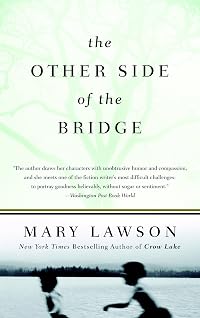
From the author of the beloved #1 national bestseller Crow Lake comes an exceptional new novel of jealously, rivalry and the dangerous power of obsession.Two brothers, Arthur and Jake Dunn, are the sons of a farmer in the mid-1930s, when life is tough and another world war is looming. Arthur is reticent, solid, dutiful and set to inherit the farm and his father's character; Jake is younger, attractive, mercurial and dangerous to know – the family misfit. When a beautiful young woman comes show more into the community, the fragile balance of sibling rivalry tips over the edge.
Then there is Ian, the family's next generation, and far too sure he knows the difference between right and wrong. By now it is the fifties, and the world has changed—a little, but not enough.
These two generations in the small town of Struan, Ontario, are tragically interlocked, linked by fate and community but separated by a war which devours its young men—its unimaginable horror reaching right into the heart of this remote corner of an empire. With her astonishing ability to turn the ratchet of tension slowly and delicately, Lawson builds their story to a shocking climax. Taut with apprehension, surprising us with moments of tenderness and humour, The Other Side of the Bridge is a compelling, humane and vividly evoked novel with an irresistible emotional undertow. show less
Tags
Recommendations












Member Reviews
"He stood alone in the silence of the night, remembering. In his mind's eye he saw the two of them – always saw them the same, standing together, faces turned upwards. Clouds pale against the blue-black of the night. Stars cold and bright. The moon hanging there, pale and brilliant, clouds drifting across it like smoke. The sky and the silent land beneath it stretching on, and on, and on, so that he and his father were shrunk to almost nothing by the vastness of it." (233)
Two brothers, Arthur and Jake Dunn, growing up on their family’s farm in the fictional community of Struan in northern Ontario in the 1930s, are polar opposites. Arthur is dependable, dutiful, and set to inherit the farm; Jake, the younger of the two, is handsome, show more insolent, and dangerous to know. When the beautiful Laura March moves to Struan, the fragile balance of the brothers’ rivalry is moved to teetering on the edge of catastrophe. Two decades later, young Ian Christopherson, son of Struan’s only doctor, is moved by his infatuation with Arthur’s wife to seek employment on the Dunn farm. The novel is fraught with deceit, rivalry, and obsession, played out over nearly half a century. The small northern community survives the Great Depression better than many, but not so World War II, which rocks it to its very core.
The Other Side of the Bridge moves gently back and forth in time, each chapter opening with headlines from local newspaper, the Timiskaming Speaker, including month and year, which allow readers to place themselves easily within the story and within history. Lawson’s prose is just beautiful, creating, as the Toronto Star has noted, some of the “most quotable images in Canadian literature.” Highly, highly recommended. show less
Two brothers, Arthur and Jake Dunn, growing up on their family’s farm in the fictional community of Struan in northern Ontario in the 1930s, are polar opposites. Arthur is dependable, dutiful, and set to inherit the farm; Jake, the younger of the two, is handsome, show more insolent, and dangerous to know. When the beautiful Laura March moves to Struan, the fragile balance of the brothers’ rivalry is moved to teetering on the edge of catastrophe. Two decades later, young Ian Christopherson, son of Struan’s only doctor, is moved by his infatuation with Arthur’s wife to seek employment on the Dunn farm. The novel is fraught with deceit, rivalry, and obsession, played out over nearly half a century. The small northern community survives the Great Depression better than many, but not so World War II, which rocks it to its very core.
The Other Side of the Bridge moves gently back and forth in time, each chapter opening with headlines from local newspaper, the Timiskaming Speaker, including month and year, which allow readers to place themselves easily within the story and within history. Lawson’s prose is just beautiful, creating, as the Toronto Star has noted, some of the “most quotable images in Canadian literature.” Highly, highly recommended. show less
This was a beautiful coming of age story set in rural northern Canada. Arthur and Jake are as different as brothers can be. Arthur takes after his father. He's a strong solid man who kind and helpful, but not a good student. His mother insists he stay in school, even though he knows an education won't help him on the Depression era farm. Jake, the younger brother, is smart, articulate and his mother's pride and joy. She can't see his cruelty and manipulation. One day Arthur is tasked with walking some cows to a nearby farm. While leading them over a rickety bridge, Jake plays around under the bridge, which leads to an incident that will haunt Arthur for the rest of his life.
The Depression era story is interwoven twenty years later with show more a new narrator, Ian Christopherson, son of the local doctor. Ian has an adolescent crush on Arthur's beautiful wife, Laura, and decides their farm would be the perfect place for his summer job before heading off to college. Jake is nowhere around and no one mentions him.
I loved this book but I can't put my finger on exactly why. It's a beautifully written, character driven human drama that echoes the story of Esau and Jacob, with each parent having a favorite. It's such a subtle book, yet filled with tragedy, humanity, and decency. I have to read something else by this talented author. show less
The Depression era story is interwoven twenty years later with show more a new narrator, Ian Christopherson, son of the local doctor. Ian has an adolescent crush on Arthur's beautiful wife, Laura, and decides their farm would be the perfect place for his summer job before heading off to college. Jake is nowhere around and no one mentions him.
I loved this book but I can't put my finger on exactly why. It's a beautifully written, character driven human drama that echoes the story of Esau and Jacob, with each parent having a favorite. It's such a subtle book, yet filled with tragedy, humanity, and decency. I have to read something else by this talented author. show less
This was a beautiful coming of age story set in rural northern Canada. Arthur and Jake are as different as brothers can be. Arthur takes after his father. He's a strong solid man who kind and helpful, but not a good student. His mother insists he stay in school, even though he knows an education won't help him on the Depression era farm. Jake, the younger brother, is smart, articulate and his mother's pride and joy. She can't see his cruelty and manipulation. One day Arthur is tasked with walking some cows to a nearby farm. While leading them over a rickety bridge, Jake plays around under the bridge, which leads to an incident that will haunt Arthur for the rest of his life.
The Depression era story is interwoven twenty years later with show more a new narrator, Ian Christopherson, son of the local doctor. Ian has an adolescent crush on Arthur's beautiful wife, Laura, and decides their farm would be the perfect place for his summer job before heading off to college. Jake is nowhere around and no one mentions him.
I loved this book but I can't put my finger on exactly why. It's a beautifully written, character driven human drama that echoes the story of Esau and Jacob, with each parent having a favorite. It's such a subtle book, yet filled with tragedy, humanity, and decency. I have to read something else by this talented author. show less
The Depression era story is interwoven twenty years later with show more a new narrator, Ian Christopherson, son of the local doctor. Ian has an adolescent crush on Arthur's beautiful wife, Laura, and decides their farm would be the perfect place for his summer job before heading off to college. Jake is nowhere around and no one mentions him.
I loved this book but I can't put my finger on exactly why. It's a beautifully written, character driven human drama that echoes the story of Esau and Jacob, with each parent having a favorite. It's such a subtle book, yet filled with tragedy, humanity, and decency. I have to read something else by this talented author. show less
This book is deceptively powerful and the last third read like a blistering thriller that had me on the edge of my seat and yet it’s Mary Lawson’s subtlety that is just so incredibly effective. For the setting, she returns to the rural northern Ontario area that was so evocative in her last book, Crow Lake.
Jake and Arthur Dunn, sons in a farm family in the 1930s, are as different as night and day. Arthur, the older son, loves the farm, works hard to help his father with all the work that’s involved with the running of a farm, and is the dutiful son in every way. Younger brother Jake is the wise guy who attracts girls and finds school easy and to his liking and never met a farm chore he liked or was willing to do. He is also the show more apple of his mother’s eye and quite obviously her favorite. Flash forward twenty years and Ian Christopherson, teenage son of the town’s doctor, takes a part-time job on the Dunn farm, attracted by Arthur’s beautiful wife Laura. He’s a young man whose emotions have tied him in knots and much of the story points to an ultimate explosive situation.
Tying the two generations together is WWII which has devastating and long-lasting effects on this small town. Lawson chose the sumptuous complexity and non-linear construction that I’ve come to really love as she moved back and forth in time telling first Arthur’s story and then Ian’s. Lawson’s prose is elegant, evocative and beautiful.
”Her lips were quivering. You’d have thought after suffering such a loss nothing else would matter to her but that didn’t seem to be how it worked. She was fearful about everything now. It was as if she had finally seen the awful power of fate, its deviousness, the way it could wipe out in an instant the one thing you had been certain you could rely on, and now she was constantly looking over her shoulder trying to work out where the next blow might fall.” (Page194)
The climax is staggering in both its unexpectedness and emotional wallop and the denouement is absolutely pitch perfect, even if fairly predictable. Full of tenderness, compassion and humor, this spellbinding story of sibling rivalry is a gripping emotional roller coaster ride that will have you turning pages well into the night. Highly recommended. show less
Jake and Arthur Dunn, sons in a farm family in the 1930s, are as different as night and day. Arthur, the older son, loves the farm, works hard to help his father with all the work that’s involved with the running of a farm, and is the dutiful son in every way. Younger brother Jake is the wise guy who attracts girls and finds school easy and to his liking and never met a farm chore he liked or was willing to do. He is also the show more apple of his mother’s eye and quite obviously her favorite. Flash forward twenty years and Ian Christopherson, teenage son of the town’s doctor, takes a part-time job on the Dunn farm, attracted by Arthur’s beautiful wife Laura. He’s a young man whose emotions have tied him in knots and much of the story points to an ultimate explosive situation.
Tying the two generations together is WWII which has devastating and long-lasting effects on this small town. Lawson chose the sumptuous complexity and non-linear construction that I’ve come to really love as she moved back and forth in time telling first Arthur’s story and then Ian’s. Lawson’s prose is elegant, evocative and beautiful.
”Her lips were quivering. You’d have thought after suffering such a loss nothing else would matter to her but that didn’t seem to be how it worked. She was fearful about everything now. It was as if she had finally seen the awful power of fate, its deviousness, the way it could wipe out in an instant the one thing you had been certain you could rely on, and now she was constantly looking over her shoulder trying to work out where the next blow might fall.” (Page194)
The climax is staggering in both its unexpectedness and emotional wallop and the denouement is absolutely pitch perfect, even if fairly predictable. Full of tenderness, compassion and humor, this spellbinding story of sibling rivalry is a gripping emotional roller coaster ride that will have you turning pages well into the night. Highly recommended. show less
Usually when you describe a book as 'riveting' it's a thriller about spies or murder mysteries. Mary Lawson's THE OTHER SIDE OF THE BRIDGE is neither, but it is as riveting a read as I've run across in quite a while. I bought the book because I'd so enjoyed her first novel CROW LAKE, which was simply superb. (I use that phrase, 'simply superb,' whenever I really like a book. So, sorry if you've seen it before, but it fits.) Well so is this one; in fact it might even be a bit better than her first. I kept thinking of Cain and Abel, or Essau and Jacob, but neither biblical parallel rally quite fits. Because Arthur and Jake are unique characters, and I know I won't soon forget them. And then there is Laura too, a beautifully drawn show more character, who also acts as a catalyst, who creates all that tension. And Ian, who is witness to everything and, later, participant. And I'm telling you right now, when you get down to those final pages, you will be wincing, because you've gotten to know these characters, and you just know there will be pain, there will be hurt, there will be - there IS - real genuine tragedy. And yet Lawson gives you some comfort in the epilogue.
This is a story, set against the war years in Canada and also 10-15 years after the war. It plays like Greek tragedy, RIVETING Greek tragedy. Mary Lawson is a great writer. I'll be watching for her next book. show less
This is a story, set against the war years in Canada and also 10-15 years after the war. It plays like Greek tragedy, RIVETING Greek tragedy. Mary Lawson is a great writer. I'll be watching for her next book. show less
Lawson has done it again. I absolutely loved her debut novel Crow Lake and she did not disappoint me with this, her second novel. In fact, this was the perfect read to pull me out of my reading funk after having abandoned a book. Told through a shifting narrative, Lawson's characters come to life in a way that continues to astound me. Lawson adeptly captures the essence of time and place, the place being the fictional small Northern Ontairo town of Struan, a stone's throw away from the setting for [Crow Lake]. Family dynamics take the forefront in this story, but Lawson delves deeper to also provide an examination of the clashes/tensions of urban versus rural and indigenous populations and the more recent land settlers. Not show more surprisingly, Lawson admits on her website that she vaguely thinks of her three novels - the third one being Road Ends - as ‘The Crow Lake Trilogy’ or ‘The Struan Trilogy’ because they are linked in place and time and have several characters who appear in more than one book. Yes, Lawson's writing style and the loose weaving of her novels remind me a bit of Marilynne Robinson's Gilead books. Lawson employs quiet, reflective prose to convey a powerful coming of age story mired in moral quandaries, sibling rivalry, the devastating impact the second World War had on small farming communities and the sheer daunting influence of Mother Nature and her ability to isolate communities.
The execution of this story is picture perfect and Lawson deserves a place of honor, IMO, alongside some of my favorite Canadian authors, such as Timothy Findley and David Adams Richards. What can I say... I tend to love books that have a tragic angle to them.
Highly, highly recommended! show less
The execution of this story is picture perfect and Lawson deserves a place of honor, IMO, alongside some of my favorite Canadian authors, such as Timothy Findley and David Adams Richards. What can I say... I tend to love books that have a tragic angle to them.
Highly, highly recommended! show less
I read Jane Smiley's Thousand Acres not long ago and it's impossible not to compare with this as the communities in which they are set have lots of similarities. The difference is that Mary Lawson sketches a community that has real bonds - however much they shrink or break, life goes on, people strive or shrivel in the company of others - while Jane Smiley's emotional world focuses only on the individual penned into a horrific family life. Horrendous things happen to people, or are committed by people in Mary Lawson's world - indeed the devastation of WWII on the community is a central theme - but despite the passing of hurt and damage down the generations the world does move on.
Members
- Recently Added By
Lists

Recommend the 20 best books you've read in the last five years
2,168 works; 608 members

Booker Prize
491 works; 62 members

Man Booker Prize Longlist 2006
19 works; 2 members

Most Popular Books Tagged Ontario
35 works; 2 members

Canadian Historical Fiction 🇨🇦
157 works; 8 members

Books Read in 2024
4,727 works; 125 members

Books Read in 2025
4,128 works; 98 members
Author Information

4 Works 4,579 Members
Mary Lawson was born and brought up in a farming community in Ontario, in 1946. She attended McGill University. Lawson's best known work, Crow Lake was Shortlisted for the Amazon/Books in Canada First Novel Award (Bowker Author Biography)
Awards and Honors
Series

Work Relationships
Is contained in
Common Knowledge
- Canonical title
- The Other Side of the Bridge
- Original publication date
- 2006
- People/Characters
- Arthur Dunn; Laura Dunn; Jake Dunn; Ian Christopherson
- First words
- There was a summer back when they were kids, when Arthur Dunn was thirteen or fourteen and his brother, Jake, was eight or nine, when for weeks on end Jake pestered Arthur to play the game he called knives.
Classifications
Statistics
- Members
- 1,072
- Popularity
- 24,032
- Reviews
- 45
- Rating
- (4.05)
- Languages
- 10 — Dutch, English, Finnish, French, German, Italian, Norwegian (Bokmål), Swedish, Turkish, Ukrainian
- Media
- Paper, Audiobook, Ebook
- ISBNs
- 32
- ASINs
- 8