On This Page
Description
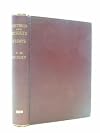
Method and Results - Essays by Thomas Henry Huxley. This book is a reproduction of the original book published in 1898 and may have some imperfections such as marks or hand-written notes.Tags
Recommendations




















Member Reviews
Method and Results is a collection of 9 essays which span just over four hundred pages. The first few are scientific, dealing with the motives for advancing science, the advantages and methods of doing so, and a summary of historical findings. He then writes about the physical basis of life, Descartes, and animal automatism. After this he goes onto more political stuff, discussing the inequality of man, his rights, education, political philosophy, and the collection ends with a nice critique of socialism.
Huxley is very knowledgeable, and rational and clear in his writings. He leaves alone subjects which cannot be fathomed, and deals with the theoretical in a practical manner. For this reason, he accepts that religion is something show more science should not deal with, in so far as its precepts are metaphysical and do not claim to intrude on the physical domain of science, and coined the term agnostic to describe his position. This is perhaps something which certain contemporary scientists should consider, instead of floundering around out of their depth.
The political opinions, though formed in a time different to our own, are still quite relevant. The principals on which they are built benefit from the distinctions made between nature and civilisation, distinctions made by someone with both good biological and ethical insight. show less
Huxley is very knowledgeable, and rational and clear in his writings. He leaves alone subjects which cannot be fathomed, and deals with the theoretical in a practical manner. For this reason, he accepts that religion is something show more science should not deal with, in so far as its precepts are metaphysical and do not claim to intrude on the physical domain of science, and coined the term agnostic to describe his position. This is perhaps something which certain contemporary scientists should consider, instead of floundering around out of their depth.
The political opinions, though formed in a time different to our own, are still quite relevant. The principals on which they are built benefit from the distinctions made between nature and civilisation, distinctions made by someone with both good biological and ethical insight. show less
Ratings
Members
- Recently Added By
Lists

Trinity College Booklist (1951): Class Three, Philosophy and Religion
80 works; 3 members
Author Information

122+ Works 1,392 Members
T. H. (Thomas Henry) Huxley, an English biologist born in London in 1825, was regarded as one of the leading scientists in England by the age of 26. His fame arose primarily from his support of Charles Darwin and Darwin's theory of evolution. Huxley's book Man's Place in Nature, published in 1873, added an anthropological perspective to Darwin's show more theory; in fact, this book was the first to advocate the idea that anthropoid apes are the closest relatives to humans. Huxley's other scientific interests included comparative anatomy and paleontology. His writings were extensive. On the topic of biology he wrote both from the scientific view and to popularize the subject. Huxley's other books were on education, philosophy, ethics, and theology. His grandson, Aldous Huxley, would later make significant contributions to English literature as well. T.H. Huxley died in 1895. (Bowker Author Biography) show less
Series

Classifications
Statistics
- Members
- 41
- Popularity
- 717,741
- Reviews
- 1
- Rating
- (3.50)
- Languages
- English
- Media
- Paper
- ISBNs
- 3
- ASINs
- 6