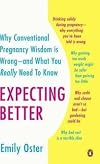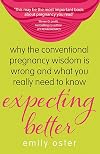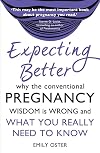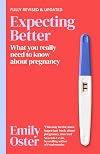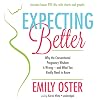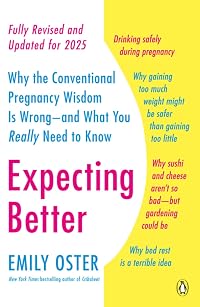
Expecting Better: Why the Conventional Pregnancy Wisdom Is Wrong and What You Really Need to Know
by Emily Oster
The ParentData Series (1)
On This Page
Description
What to Expect When You're Expecting meets Freakonomics: an award-winning economist disproves standard recommendations about pregnancy to empower women while they're expecting. From the author of Cribsheet, a data-driven decision making guide to the early years of parentingPregnancy—unquestionably one of the most profound, meaningful experiences of adulthood—can reduce otherwise intelligent women to, well, babies. Pregnant women are told to avoid cold cuts, sushi, alcohol, and show more coffee without ever being told why these are forbidden. Rules for prenatal testing are similarly unexplained. Moms-to-be desperately want a resource that empowers them to make their own right choices.
When award-winning economist Emily Oster was a mom-to-be herself, she evaluated the data behind the accepted rules of pregnancy, and discovered that most are often misguided and some are just flat-out wrong. Debunking myths and explaining everything from the real effects of caffeine to the surprising dangers of gardening, Expecting Better is the book for every pregnant woman who wants to enjoy a healthy and relaxed pregnancy—and the occasional glass of wine.
* This audiobook includes a downloadable PDf of charts, graphs and an Appendix from the book.. show less
Tags
Recommendations

Member Reviews
The basics: The subtitle of Expecting Better really says it all: why the conventional pregnancy wisdom is wrong--and what you really need to know. Emily Oster is a health economist, and in this book she offers up her analysis of what the data behind the pregnancy rules (the good, bad and unnecessary). While she offers her decisions, she also leaves room for the reader to make her own informed decisions about her pregnancy.
My thoughts: Expecting Better made headlines when it came out last August. I vividly recall the NPR headline "Pregnant? It's okay to have a glass of wine*" with the asterisk indicating "according to an economist." Which is true, but also according to doctors across Western Europe and Australia, but I'm getting ahead of show more myself. In August, we were still in that very frustrating stage of trying to get pregnant, so I purchased the book for my Kindle and impatiently waited until I was actually pregnant, which blessedly finally happened in December 2013, to start reading. Then I discovered the first section is about getting pregnant. Live and learn.
I'm not a fan of arbitrary rules, and being pregnant is no exception. Some are obvious, of course, but before I blindly follow rules, I want to understand the why, and that's what Oster does in Expecting Better. When I talk about being pregnant with women 20-30 years older than I am, they are quick to tell you all the things they were allowed to do that are forbidden now (soft cheese, steak cooked less than well-done, cold cuts, etc.) And as they're always quick to point out, my kids turned out okay. Admittedly, as much as I wanted a baby, I was never looking forward to actually being pregnant. I'm a sushi-eating, rare-steak loving, blue cheese devouring, wine-drinking fool. Nine months without them? It sounded unpleasant. I won't go as far to say I'm happy to do it, but if it's really putting my baby in danger, of course I will avoid things. If, however, there isn't a good answer to the "why?" question, then why make myself even more miserable if it's not helping my baby?
I'll let the data in Expecting Better speak for itself. I didn't make all the same choices as Oster did, but that's the beauty of this book: it's not about the advice; it's about the data. It's about equipping yourself with the right information so you (and your partner) can make informed decisions about your pregnancy. Oster distills it for you, but she also features extensive citations so you can read the actual data for yourself when you're so inclined.
As hard as it is, I avoid red meat that isn't well done (and that one is getting harder as grilling out season gears up.) I avoid unpasteurized cheeses (I did thankfully find a great pasteurized Stilton to satisfy my blue cheese craving.) I eat sushi. I eat runny eggs. I drink a glass of wine most nights (only twice a week in the first trimester.) I even have one glass with lunch and one with dinner on occasion. I cut back on caffeine in the first trimester, but I never cut it out. We opted not to do first trimester prenatal screening, which surprised me. I'm opting for an epidural.
The verdict: Expecting Better is a must-read for pregnant women, women trying to get pregnant, and anyone interested in the science of pregnancy. As an economist, Oster brings a Freakonomics-style approach to analyzing pregnancy data. She also brings her personal experience of being pregnant (plus many stories from her sister and friends, who often received different information from their different doctors.) I read it in a single day (the day I found out I was pregnant), but I've continued to refer to it throughout my pregnancy, particularly when people try to tell me not to eat cold cuts or enjoy my pregnancy-portion of wine. It's a book I'll keep giving to my pregnant friends for years to come. show less
My thoughts: Expecting Better made headlines when it came out last August. I vividly recall the NPR headline "Pregnant? It's okay to have a glass of wine*" with the asterisk indicating "according to an economist." Which is true, but also according to doctors across Western Europe and Australia, but I'm getting ahead of show more myself. In August, we were still in that very frustrating stage of trying to get pregnant, so I purchased the book for my Kindle and impatiently waited until I was actually pregnant, which blessedly finally happened in December 2013, to start reading. Then I discovered the first section is about getting pregnant. Live and learn.
I'm not a fan of arbitrary rules, and being pregnant is no exception. Some are obvious, of course, but before I blindly follow rules, I want to understand the why, and that's what Oster does in Expecting Better. When I talk about being pregnant with women 20-30 years older than I am, they are quick to tell you all the things they were allowed to do that are forbidden now (soft cheese, steak cooked less than well-done, cold cuts, etc.) And as they're always quick to point out, my kids turned out okay. Admittedly, as much as I wanted a baby, I was never looking forward to actually being pregnant. I'm a sushi-eating, rare-steak loving, blue cheese devouring, wine-drinking fool. Nine months without them? It sounded unpleasant. I won't go as far to say I'm happy to do it, but if it's really putting my baby in danger, of course I will avoid things. If, however, there isn't a good answer to the "why?" question, then why make myself even more miserable if it's not helping my baby?
I'll let the data in Expecting Better speak for itself. I didn't make all the same choices as Oster did, but that's the beauty of this book: it's not about the advice; it's about the data. It's about equipping yourself with the right information so you (and your partner) can make informed decisions about your pregnancy. Oster distills it for you, but she also features extensive citations so you can read the actual data for yourself when you're so inclined.
As hard as it is, I avoid red meat that isn't well done (and that one is getting harder as grilling out season gears up.) I avoid unpasteurized cheeses (I did thankfully find a great pasteurized Stilton to satisfy my blue cheese craving.) I eat sushi. I eat runny eggs. I drink a glass of wine most nights (only twice a week in the first trimester.) I even have one glass with lunch and one with dinner on occasion. I cut back on caffeine in the first trimester, but I never cut it out. We opted not to do first trimester prenatal screening, which surprised me. I'm opting for an epidural.
The verdict: Expecting Better is a must-read for pregnant women, women trying to get pregnant, and anyone interested in the science of pregnancy. As an economist, Oster brings a Freakonomics-style approach to analyzing pregnancy data. She also brings her personal experience of being pregnant (plus many stories from her sister and friends, who often received different information from their different doctors.) I read it in a single day (the day I found out I was pregnant), but I've continued to refer to it throughout my pregnancy, particularly when people try to tell me not to eat cold cuts or enjoy my pregnancy-portion of wine. It's a book I'll keep giving to my pregnant friends for years to come. show less
This book is the result of an economist (Oster) wanting to understand the actual risks behind the common advice given to pregnant women during her pregnancy. She doesn't just present to the reader her own view of the various recommendations, she presents the data so that the reader can decide on the risks and trade-offs on her own.
The largest take away theme is that many of the common recommendations to pregnant women are based on sparse or inconsistent data, often because it is difficult or unethical to do true randomized studies during pregnancy. Because Oster is exploring the data herself and because she does not take recommendations at face value, this book provides the reader with a framework for deciding which advice to take at show more face value and which to take with a grain of salt.
It's worth noting that there are a lot of negative reviews of this book on Amazon from people who are outraged at the suggestion that a very moderate amount of alcohol during pregnancy may not be harmful. I'll just note that Oster does not advocate for drinking during pregnancy. Rather, she points out some weaknesses of some of the studies that have shown harm and points out other studies that showed no observable harm. She personally concludes that a small amount of alcohol during pregnancy is OK, but she agrees that there is also no reason to drink if you are worried about the risks.
For women drowning in a sea of inconsistent advice — or who just want to understand why they are told to do or not do certain things, Oster's book is an incredibly valuable resource. While, of course, this should be paired with a book that is more detailed about pregnancy itself, I highly highly recommend this book as one to look at if you are pregnant or interested in the topic. show less
The largest take away theme is that many of the common recommendations to pregnant women are based on sparse or inconsistent data, often because it is difficult or unethical to do true randomized studies during pregnancy. Because Oster is exploring the data herself and because she does not take recommendations at face value, this book provides the reader with a framework for deciding which advice to take at show more face value and which to take with a grain of salt.
It's worth noting that there are a lot of negative reviews of this book on Amazon from people who are outraged at the suggestion that a very moderate amount of alcohol during pregnancy may not be harmful. I'll just note that Oster does not advocate for drinking during pregnancy. Rather, she points out some weaknesses of some of the studies that have shown harm and points out other studies that showed no observable harm. She personally concludes that a small amount of alcohol during pregnancy is OK, but she agrees that there is also no reason to drink if you are worried about the risks.
For women drowning in a sea of inconsistent advice — or who just want to understand why they are told to do or not do certain things, Oster's book is an incredibly valuable resource. While, of course, this should be paired with a book that is more detailed about pregnancy itself, I highly highly recommend this book as one to look at if you are pregnant or interested in the topic. show less
When economist Emily Oster became pregnant with her first child, she soon found herself frustrated with the lack of and quality of data behind the pregnancy rules her obstetrician gave her to follow. For example, who decided pregnant women shouldn’t eat deli meat and why? Emily set out to find the answers.
Oster explains in layman’s terms how to interpret study results without talking down to the reader. She addresses things like sample size and correlation versus causality.
I liked that she framed her conclusions in terms of risks verses benefits and recognized that what is an acceptable level of risk for her may not be an acceptable level of risk for the reader and vice versa, for a variety of reasons. It was surprising how many show more pregnancy don’ts are based on either outdated research or studies with very small sample sizes.
I appreciated Oster’s logical approach to issues that come up in pregnancy and that she didn’t present her conclusions as black and white. She has a new book out called Cribsheet about the early years of parenting that I am very much looking forward to reading as I am due to have my fourth child in a few weeks. My youngest is almost nine so the early years of raising a baby are a distant blur in my memory! I highly recommend Expecting Better for anyone who is pregnant or thinking about becoming pregnant in the future. show less
Oster explains in layman’s terms how to interpret study results without talking down to the reader. She addresses things like sample size and correlation versus causality.
I liked that she framed her conclusions in terms of risks verses benefits and recognized that what is an acceptable level of risk for her may not be an acceptable level of risk for the reader and vice versa, for a variety of reasons. It was surprising how many show more pregnancy don’ts are based on either outdated research or studies with very small sample sizes.
I appreciated Oster’s logical approach to issues that come up in pregnancy and that she didn’t present her conclusions as black and white. She has a new book out called Cribsheet about the early years of parenting that I am very much looking forward to reading as I am due to have my fourth child in a few weeks. My youngest is almost nine so the early years of raising a baby are a distant blur in my memory! I highly recommend Expecting Better for anyone who is pregnant or thinking about becoming pregnant in the future. show less
Wish I had read this before having my first. It's almost like people take great perverse delight in terrorizing pregnant mothers with decision fatigue and warnings. This book is a great antidote to that. The perfect baby and parenting book for people who hate or at least distrust parenting baby books.
Expecting Better is a data-driven approach towards pregnancy. Oster is a economist at Brown, specializing in health issues in the developing world. When she got pregnant, she turned her research skills on pregnancy, trying to determine the validity of conventional wisdom.
The results are a solid gloss of meta-analyses. Oster knows her way around a search engine and knows how to read a paper. But she's not an OB, nor any kind of medical doctor. In practical terms, it's more credible than your friend on Facebook, but in epistemic terms, there's a real difference between a professional and someone with Google Scholar, no matter how careful they are. Some of the recommendations are surprisingly commonsense. Listeria is awful, but rarely show more associated with cold cuts, so sandwiches are probably fine. Some are calculated to offend everybody. Drinking during pregnancy is fine, short of actual binge drinking and clinical alcoholism. Home births have higher risks than hospital births, though it's hard to tell in America because home births are done by wealthy white women who have pretty good outcomes in general. And doctors are too quick to induce labor, and too quick to go to C-sections when continual monitoring shows a dip in fetal vitals, rather than knowing that labor is hard for everyone involved.
There some good stuff here, and the basic thrust that you need to pick your risk tolerances and then follow the evidence, even when there isn't a gold standard randomized clinical trial, is a solid viewpoint. But this book is very much a product of a specific type of person (white, educated, economics, Ivy League), and doubles down on one of the worst attributes of that type of person by assuming those lessons are universal. show less
The results are a solid gloss of meta-analyses. Oster knows her way around a search engine and knows how to read a paper. But she's not an OB, nor any kind of medical doctor. In practical terms, it's more credible than your friend on Facebook, but in epistemic terms, there's a real difference between a professional and someone with Google Scholar, no matter how careful they are. Some of the recommendations are surprisingly commonsense. Listeria is awful, but rarely show more associated with cold cuts, so sandwiches are probably fine. Some are calculated to offend everybody. Drinking during pregnancy is fine, short of actual binge drinking and clinical alcoholism. Home births have higher risks than hospital births, though it's hard to tell in America because home births are done by wealthy white women who have pretty good outcomes in general. And doctors are too quick to induce labor, and too quick to go to C-sections when continual monitoring shows a dip in fetal vitals, rather than knowing that labor is hard for everyone involved.
There some good stuff here, and the basic thrust that you need to pick your risk tolerances and then follow the evidence, even when there isn't a gold standard randomized clinical trial, is a solid viewpoint. But this book is very much a product of a specific type of person (white, educated, economics, Ivy League), and doubles down on one of the worst attributes of that type of person by assuming those lessons are universal. show less
After 2 moderately complicated pregnancies and multiple thrown pregnancy books, I wanted to like this. I was attracted to the concept of applying decision-making principles to pregnancy. It's a great concept, and not enough pregnancy literature emphasizes the risk-and-tradeoff model (or if it does, presents inaccurate risks). The book has already gotten a backlash for daring to suggest that the zero-tolerance approach to alcohol in pregnancy is not backed by evidence, prompting 1-star Amazon reviews accusing the author of not caring about FASD. This particular criticism is, in my opinion, overblown.
Unfortunately, the book itself doesn't measure up to the concept. A full treatment of the problem would be a weighty tome, more akin to show more Henci Goer's Obstetric Myths and Research Realities (only less biased and more up to date). To her credit, Oster doesn't even pretend to have attempted that. Even so, the treatment verges on the cursory and would have benefited from closer collaboration with an OB/GYN.
The book is structured as a journey through pregnancy, using Oster's own pregnancy (low risk, with an unmedicated vaginal delivery) as a base narrative. This makes the book easy to follow, but also has its pitfalls. Given that a large number of women will have a relatively low risk pregnancy and delivery, this isn't entirely invalid. Many of the things she covers--especially in early pregnancy--are common to all (the true risks of cat litter and tuna, and the probabilities used in prenatal screening, have widespread relevance). However, it also means she completely ignores almost anything outside of her experience. Rightly, she decided that most of the complications of pregnancy are between you and your doctor, although she provides some bullet points, but this also means that C sections get no discussion at all. Strangely, VBACs do, and her discussion is surprisingly skewed. She leans towards VBACs being "too risky" while not mentioning the most frequently discussed concern, uterine rupture, and doesn't mention the downsides of planned repeats at all.
At times it comes off as actually slapdash. There's a short discussion of non-stress testing in the section about later pregnancy, and the potential value for delivery, but never mentions the possibility that a biophysical profile will be done. There's no discussion of the actual risks involved of routine induction at 40 vs 41 vs 42 weeks, which is a fairly common topic of discussion and a natural fit for the chapter. Her treatment of home birth is sure to rise some hackles. (Nor is it helped by a throwaway comment about higher home birth rates and lower infant mortality rates in Europe--although on the next page she discusses the difference between perinatal and neonatal mortality. Wherefore art thou, editor?) The section on drug classifications is helpful but not entirely so--the potential benefits of Category D medications aren't really mentioned.
It's a short, breezy read and provides some interesting food for thought, particularly with the early pregnancy risks, but is of limited practical use. show less
Unfortunately, the book itself doesn't measure up to the concept. A full treatment of the problem would be a weighty tome, more akin to show more Henci Goer's Obstetric Myths and Research Realities (only less biased and more up to date). To her credit, Oster doesn't even pretend to have attempted that. Even so, the treatment verges on the cursory and would have benefited from closer collaboration with an OB/GYN.
The book is structured as a journey through pregnancy, using Oster's own pregnancy (low risk, with an unmedicated vaginal delivery) as a base narrative. This makes the book easy to follow, but also has its pitfalls. Given that a large number of women will have a relatively low risk pregnancy and delivery, this isn't entirely invalid. Many of the things she covers--especially in early pregnancy--are common to all (the true risks of cat litter and tuna, and the probabilities used in prenatal screening, have widespread relevance). However, it also means she completely ignores almost anything outside of her experience. Rightly, she decided that most of the complications of pregnancy are between you and your doctor, although she provides some bullet points, but this also means that C sections get no discussion at all. Strangely, VBACs do, and her discussion is surprisingly skewed. She leans towards VBACs being "too risky" while not mentioning the most frequently discussed concern, uterine rupture, and doesn't mention the downsides of planned repeats at all.
At times it comes off as actually slapdash. There's a short discussion of non-stress testing in the section about later pregnancy, and the potential value for delivery, but never mentions the possibility that a biophysical profile will be done. There's no discussion of the actual risks involved of routine induction at 40 vs 41 vs 42 weeks, which is a fairly common topic of discussion and a natural fit for the chapter. Her treatment of home birth is sure to rise some hackles. (Nor is it helped by a throwaway comment about higher home birth rates and lower infant mortality rates in Europe--although on the next page she discusses the difference between perinatal and neonatal mortality. Wherefore art thou, editor?) The section on drug classifications is helpful but not entirely so--the potential benefits of Category D medications aren't really mentioned.
It's a short, breezy read and provides some interesting food for thought, particularly with the early pregnancy risks, but is of limited practical use. show less
I forgot to add this from my stealth reading, whoops (it popped as a Book You May Be interested In and I thought huh, pretty sure I reviewed it... I have not).
This was the first book I read in the pregnancy last spring, and it really helped set my frame of reference for the deluge of solicited & unsolicited information and advice headed my way. I really appreciated Oster's approach of looking not just at studies, but the quality of those studies: context matters, and if the correlation of alcohol and birth defects also coincides with cocaine usage, is that really informative? In general, I liked this more than some of the other "gal pal" type of books re: pregnancy.
Do take Oster's recommendations with a grain of salt as she's an show more economist by training and is essentially doing a bunch of metaanalyses and lit reviews in this book, which can be useful but context is key. She does acknowledge the choices she personally made weren't necessarily the right ones for expecting friends, and generally takes a "do what works for you" attitude.... which is why it's a little weird she became the leading voice for reopening schools during the pandemic (c'mon Oster, correlation isn't causation). I've already bought a used copy of [b:Cribsheet: A Data-Driven Guide to Better, More Relaxed Parenting, from Birth to Preschool|40121328|Cribsheet A Data-Driven Guide to Better, More Relaxed Parenting, from Birth to Preschool|Emily Oster|https://i.gr-assets.com/images/S/compressed.photo.goodreads.com/books/1534142751l/40121328._SY75_.jpg|62221619] and will probably read [b:The Family Firm: A Data-Driven Guide to Better Decision Making in the Early School Years|55997402|The Family Firm A Data-Driven Guide to Better Decision Making in the Early School Years|Emily Oster|https://i.gr-assets.com/images/S/compressed.photo.goodreads.com/books/1606112889l/55997402._SY75_.jpg|87227302] later, but hesitant to subscribe to her substack, if that makes sense. show less
This was the first book I read in the pregnancy last spring, and it really helped set my frame of reference for the deluge of solicited & unsolicited information and advice headed my way. I really appreciated Oster's approach of looking not just at studies, but the quality of those studies: context matters, and if the correlation of alcohol and birth defects also coincides with cocaine usage, is that really informative? In general, I liked this more than some of the other "gal pal" type of books re: pregnancy.
Do take Oster's recommendations with a grain of salt as she's an show more economist by training and is essentially doing a bunch of metaanalyses and lit reviews in this book, which can be useful but context is key. She does acknowledge the choices she personally made weren't necessarily the right ones for expecting friends, and generally takes a "do what works for you" attitude.... which is why it's a little weird she became the leading voice for reopening schools during the pandemic (c'mon Oster, correlation isn't causation). I've already bought a used copy of [b:Cribsheet: A Data-Driven Guide to Better, More Relaxed Parenting, from Birth to Preschool|40121328|Cribsheet A Data-Driven Guide to Better, More Relaxed Parenting, from Birth to Preschool|Emily Oster|https://i.gr-assets.com/images/S/compressed.photo.goodreads.com/books/1534142751l/40121328._SY75_.jpg|62221619] and will probably read [b:The Family Firm: A Data-Driven Guide to Better Decision Making in the Early School Years|55997402|The Family Firm A Data-Driven Guide to Better Decision Making in the Early School Years|Emily Oster|https://i.gr-assets.com/images/S/compressed.photo.goodreads.com/books/1606112889l/55997402._SY75_.jpg|87227302] later, but hesitant to subscribe to her substack, if that makes sense. show less
Members
- Recently Added By
Lists

21 Books for a Better You
21 works; 4 members

Books Read in 2023
5,547 works; 145 members
Author Information

5+ Works 1,385 Members
Series

Work Relationships
Is contained in
Common Knowledge
- Canonical title
- Expecting Better: Why the Conventional Pregnancy Wisdom Is Wrong and What You Really Need to Know
- Original publication date
- 2013
- Dedication
- To my sweet Penelope, who inspired this book, and to my mormor, who would have loved to meet her.
- First words
- In the fall of 2009 my husband, Jesse, and I decided to have a baby.
- Quotations
- As unpleasant as it is, nausea is a sign of a healthy pregnancy. Miscarriage rates are much lower for women who are nauseated than for those who are not. In early pregnancy the differences can be quite large: one study showed... (show all) that the overall risk of first-trimester miscarriage was 30 percent for women without nausea, versus just 8 percent for those who were nauseated.
Knowing this, the sicker I felt in the morning during my first trimester, the happier Jesse was. There is nothing quite like waking up, feeling terrible, and having your spouse tell you how excited he is that you feel bad. I don't think I've ever seen him quite as happy as the one day I actually threw up.
Pregnancy seemed to be a world of arbitrary rules. It was as if when we were shopping for houses, our realtor announced that people without kids do not like backyards, and therefore she would not be showing us any houses with... (show all) backyards. Worse, it was as if when we told her that we actually do like backyards she said, "No, you don't, this is the rule." You'd fire your real estate agent on the spot if she did this. Yet this is how pregnancy often seemed to work. - Last words
- (Click to show. Warning: May contain spoilers.)The real decision-making was just beginning.
- Publisher's editor
- Smith, Ginny
- Blurbers
- Druckerman, Pamela; Wheelan, Charles; Simmons, Rachel; Levitt, Steven D.; Karp, Harvey
- Original language
- English US
Classifications
Statistics
- Members
- 632
- Popularity
- 46,050
- Reviews
- 25
- Rating
- (4.06)
- Languages
- English, Korean, Spanish
- Media
- Paper, Audiobook, Ebook
- ISBNs
- 20
- UPCs
- 1
- ASINs
- 6