On This Page
Description
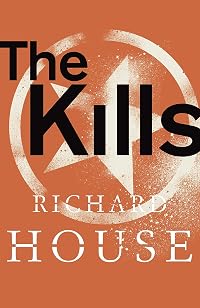
"A MASTERWORK OF INTERNATIONAL INTRIGUE SET IN THE ASHES OF WAR-TORN IRAQ, ITALY, AND AREAS IN BETWEEN. The Kills is an epic novel of crime and conspiracy told in four books. It begins with a man on the run and ends with a burned body. Moving across continents, characters, and genres and with the intelligence of John le Carre's The Spy Who Came in from the Cold and the scope of Roberto Bolaño's 2666, there will be no more ambitious or exciting novel published in 2014. "--Tags
Recommendations


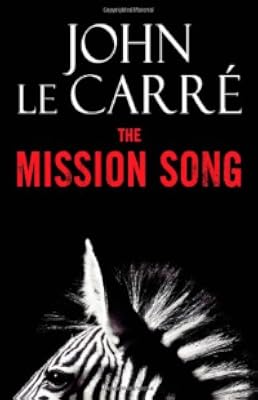
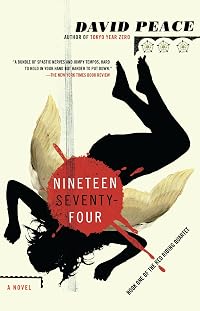
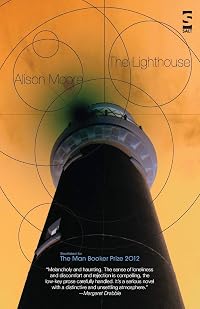
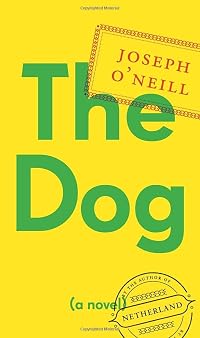




Member Recommendations
hairball Though the two novels don't seem at all alike on the surface, they manage to complement each other well.
Member Reviews
Well, this was grim. I mean, it's brilliantly written, masterfully constructed and a dazzling literary accomplishment, but it's a bit of a trip through various modern hells, some real, as with the bleak desert vistas and the carnage of incompetence and corruption that is Iraq, or the existential mental disintegration of a man trying patiently, ploddingly, to vanish but who seems to end up multiplying.
There's a lot of vanishing in this book, people disappearing in various sinister ways, some victims, some perpetrators of appalling crimes, and some just fall away or become confused and almost forgetful. There's the hideously banality of the motiveless murder and the hunt for the various versions of one particular vanishee. There aren't show more any answers - mostly there are just disappearances and vanishments, but as the book moves from place to place and character to character there is most definitely a story, or a series of stories. None of it amounts to the significance one might hope for in a thriller - a deliberate thematic choice - but lives are nonetheless devastated in various ways. Mostly it's about lives being devastated, corrupted, poisoned, derailed by venal, random, indifferent, greedy or malevolent agencies, all a microcosm of the geopolitical world, really. So, a bit grim and unremitting, but written with brilliance and a deep, troubling intelligence about the ugly mediocrity of evil, even on a grand scale. show less
There's a lot of vanishing in this book, people disappearing in various sinister ways, some victims, some perpetrators of appalling crimes, and some just fall away or become confused and almost forgetful. There's the hideously banality of the motiveless murder and the hunt for the various versions of one particular vanishee. There aren't show more any answers - mostly there are just disappearances and vanishments, but as the book moves from place to place and character to character there is most definitely a story, or a series of stories. None of it amounts to the significance one might hope for in a thriller - a deliberate thematic choice - but lives are nonetheless devastated in various ways. Mostly it's about lives being devastated, corrupted, poisoned, derailed by venal, random, indifferent, greedy or malevolent agencies, all a microcosm of the geopolitical world, really. So, a bit grim and unremitting, but written with brilliance and a deep, troubling intelligence about the ugly mediocrity of evil, even on a grand scale. show less
This omnibus consists of four books, which were released separately before this version was published. In book 1, Sutler, the main character is introduced: he is Stephen Lawrence Sutler, a British civilian contractor who works for HOSCO International, which builds facilities primarily in the Middle East and Asia, and is funded and supported by Western governments. He is sent to Amrah City in Iraq to oversee the conversion of a burn pit, used to incinerate waste from American and British military operations, into a free standing and fully equipped city, albeit one in the middle of the desert that is hundreds of miles away from other sizable cities in that country. Sutler, who uses an alibi given to him by his superior in place of his show more real name, is injured in an attack on the compound, and is ordered by his boss to make himself scarce, due to shady practices by HOSCO that leads the US and British governments and the media to charge him with the theft of over $50 million. He escapes to Turkey on foot, and begins a most unlikely misadventure that involves two journalists, a university professor capturing the Kurdish freedom movement in Turkey, and the professor's lover and student research assistant.
In book 2, The Massive, the focus is on the operation in Amrah City, along with the sad sack American men who work there. Book 3, The Kill, is a completely unrelated novel that is read by several characters in books 1 and 2, which is a gruesome murder mystery set in Naples in which several characters pay for their incredibly stupid choices with their lives. The last book, The Hit, involves a bizarre search for "Sutler Three", which contains some of the most insipid dialogue I've ever read in a Booker Prize nominated novel, such as this excerpt:
He's ready for her after the lesson when she comes out of the building. Rike looks quickly up and down the street as if she might be ready for him also. As soon as she passes by the café he steps forward, strides, in pace, right behind her.
'Take the book.'
She turns to face him, rolls her eyes. 'You again.'
'Take the book.'
'No.'
'Take it.'
'No.'
'Take it. Take it. Take it. Take it.'
She doesn't respond. In fact, she's not even bothered by him. She isn't threatened at all.
'Take the book. Take the book. Take the book.'
The book is supplemented by online video and audio content, which is meant to provide insight into the characters' lives outside of the book's text.
In an interview, House mentions that he was inspired by Roberto Bolaño's novel 2666, a long work that consists of four major sections, and this book appears to be an attempt to duplicate its structure. Unfortunately it doesn't come close to 2666, as it is nearly completely devoid of any coherent plot or significant character development, and it is filled with uninteresting and at times poorly written dialogue that must make Bolaño spin madly in his grave at the thought of this book being compared to his. The last two books were almost completely irrelevant to the first two, and the supplemental multimedia content was an unnecessary diversion that added nothing to my appreciation of the novel.
The Kills is a curious and disappointing choice for this year's Booker Prize longlist, and at just over 1000 pages it was a complete waste of time, money and paper, making it one of the worst Booker nominated novels I've ever read. show less
In book 2, The Massive, the focus is on the operation in Amrah City, along with the sad sack American men who work there. Book 3, The Kill, is a completely unrelated novel that is read by several characters in books 1 and 2, which is a gruesome murder mystery set in Naples in which several characters pay for their incredibly stupid choices with their lives. The last book, The Hit, involves a bizarre search for "Sutler Three", which contains some of the most insipid dialogue I've ever read in a Booker Prize nominated novel, such as this excerpt:
He's ready for her after the lesson when she comes out of the building. Rike looks quickly up and down the street as if she might be ready for him also. As soon as she passes by the café he steps forward, strides, in pace, right behind her.
'Take the book.'
She turns to face him, rolls her eyes. 'You again.'
'Take the book.'
'No.'
'Take it.'
'No.'
'Take it. Take it. Take it. Take it.'
She doesn't respond. In fact, she's not even bothered by him. She isn't threatened at all.
'Take the book. Take the book. Take the book.'
The book is supplemented by online video and audio content, which is meant to provide insight into the characters' lives outside of the book's text.
In an interview, House mentions that he was inspired by Roberto Bolaño's novel 2666, a long work that consists of four major sections, and this book appears to be an attempt to duplicate its structure. Unfortunately it doesn't come close to 2666, as it is nearly completely devoid of any coherent plot or significant character development, and it is filled with uninteresting and at times poorly written dialogue that must make Bolaño spin madly in his grave at the thought of this book being compared to his. The last two books were almost completely irrelevant to the first two, and the supplemental multimedia content was an unnecessary diversion that added nothing to my appreciation of the novel.
The Kills is a curious and disappointing choice for this year's Booker Prize longlist, and at just over 1000 pages it was a complete waste of time, money and paper, making it one of the worst Booker nominated novels I've ever read. show less
The Kills is a quartet of novels that is meant to transcend such limiting labels as a particular genre. And in some respects it achieves that lofty goal.
Take the first of the four parts, Sutler. It's definitely not a thriller. At one point the main character misses a bus. He then hangs around a bit, then catches the next bus. At another point he tries to do some online banking, but the webpage times out, so he doesn't bother. This is the kind of gritty realism that I could get from a high definition documentary about small stones. It's about as thrilling as making a sandwich. Less so, if the sandwich involves bacon.
The second part, The Massive definitely isn't a drama. It's a bit like that film Jarhead: a group of young men stationed in show more the middle of nowhere, Iraq, and finding that the only foe they have to combat is abject boredom. It's woefully tedious to get through, explains most of the ending at its beginning, and the reward for powering through it all? The explanation of an unresolved and forgotten plot point from the first part.
The penultimate part (the novel put me off reading so much that I had to think of part three as “the penultimate part” to trick myself into thinking I was nearly finished) is not a mystery. Much like the rest of the book, we're led to believe that nefarious machinations are going on behind the scenes, but our perspective is limited to characters who don't have the faintest idea what the hell is going on. Any real mystery the novel provokes is through the deliberate concealing of events, not through a deft touch.
The final part ties up all the loose ends. Hah! Not really. It's just another story vaguely linked through events and themes to the other three. It doesn't deign to wrap anything up, which I suppose is supposed to be artsy and clever because, like, you know, real life doesn't wrap things up. Oh no, wait, this is a story. The last two parts of the quartet aren't even bad stories, just kind of okay. But any hopes it had of clawing up to two stars went down the toilet on the final page whenit's hinted that the first three parts might be the demented musings of part four's protagonist, trapped underground and letting her imagination run wild . Or at least that's how I read it, but by then I was just glad to be done with the whole thing.
Oh, and the afterword really shouldn't be an afterword. Having slogged through over a thousand pages of not-very-enjoyable fiction, I don't particularly want to find a little note informing me that The Kills is not just a book, it's a multimedia experience, and that I should go to these URLs when I reach these pages to enrich the experience. For one thing I read books to get away from computer screens and videos, and for another thing if I did want to stop reading to watch little video clips, it would have been really useful to know these links existed before I started reading the book. show less
Take the first of the four parts, Sutler. It's definitely not a thriller. At one point the main character misses a bus. He then hangs around a bit, then catches the next bus. At another point he tries to do some online banking, but the webpage times out, so he doesn't bother. This is the kind of gritty realism that I could get from a high definition documentary about small stones. It's about as thrilling as making a sandwich. Less so, if the sandwich involves bacon.
The second part, The Massive definitely isn't a drama. It's a bit like that film Jarhead: a group of young men stationed in show more the middle of nowhere, Iraq, and finding that the only foe they have to combat is abject boredom. It's woefully tedious to get through, explains most of the ending at its beginning, and the reward for powering through it all? The explanation of an unresolved and forgotten plot point from the first part.
The penultimate part (the novel put me off reading so much that I had to think of part three as “the penultimate part” to trick myself into thinking I was nearly finished) is not a mystery. Much like the rest of the book, we're led to believe that nefarious machinations are going on behind the scenes, but our perspective is limited to characters who don't have the faintest idea what the hell is going on. Any real mystery the novel provokes is through the deliberate concealing of events, not through a deft touch.
The final part ties up all the loose ends. Hah! Not really. It's just another story vaguely linked through events and themes to the other three. It doesn't deign to wrap anything up, which I suppose is supposed to be artsy and clever because, like, you know, real life doesn't wrap things up. Oh no, wait, this is a story. The last two parts of the quartet aren't even bad stories, just kind of okay. But any hopes it had of clawing up to two stars went down the toilet on the final page when
Oh, and the afterword really shouldn't be an afterword. Having slogged through over a thousand pages of not-very-enjoyable fiction, I don't particularly want to find a little note informing me that The Kills is not just a book, it's a multimedia experience, and that I should go to these URLs when I reach these pages to enrich the experience. For one thing I read books to get away from computer screens and videos, and for another thing if I did want to stop reading to watch little video clips, it would have been really useful to know these links existed before I started reading the book. show less
The Kills is a quartet of novels that is meant to transcend such limiting labels as a particular genre. And in some respects it achieves that lofty goal.
Take the first of the four parts, Sutler. It's definitely not a thriller. At one point the main character misses a bus. He then hangs around a bit, then catches the next bus. At another point he tries to do some online banking, but the webpage times out, so he doesn't bother. This is the kind of gritty realism that I could get from a high definition documentary about small stones. It's about as thrilling as making a sandwich. Less so, if the sandwich involves bacon.
The second part, The Massive definitely isn't a drama. It's a bit like that film Jarhead: a group of young men stationed in show more the middle of nowhere, Iraq, and finding that the only foe they have to combat is abject boredom. It's woefully tedious to get through, explains most of the ending at its beginning, and the reward for powering through it all? The explanation of an unresolved and forgotten plot point from the first part.
The penultimate part (the novel put me off reading so much that I had to think of part three as “the penultimate part” to trick myself into thinking I was nearly finished) is not a mystery. Much like the rest of the book, we're led to believe that nefarious machinations are going on behind the scenes, but our perspective is limited to characters who don't have the faintest idea what the hell is going on. Any real mystery the novel provokes is through the deliberate concealing of events, not through a deft touch.
The final part ties up all the loose ends. Hah! Not really. It's just another story vaguely linked through events and themes to the other three. It doesn't deign to wrap anything up, which I suppose is supposed to be artsy and clever because, like, you know, real life doesn't wrap things up. Oh no, wait, this is a story. The last two parts of the quartet aren't even bad stories, just kind of okay. But any hopes it had of clawing up to two stars went down the toilet on the final page whenit's hinted that the first three parts might be the demented musings of part four's protagonist, trapped underground and letting her imagination run wild . Or at least that's how I read it, but by then I was just glad to be done with the whole thing.
Oh, and the afterword really shouldn't be an afterword. Having slogged through over a thousand pages of not-very-enjoyable fiction, I don't particularly want to find a little note informing me that The Kills is not just a book, it's a multimedia experience, and that I should go to these URLs when I reach these pages to enrich the experience. For one thing I read books to get away from computer screens and videos, and for another thing if I did want to stop reading to watch little video clips, it would have been really useful to know these links existed before I started reading the book. show less
Take the first of the four parts, Sutler. It's definitely not a thriller. At one point the main character misses a bus. He then hangs around a bit, then catches the next bus. At another point he tries to do some online banking, but the webpage times out, so he doesn't bother. This is the kind of gritty realism that I could get from a high definition documentary about small stones. It's about as thrilling as making a sandwich. Less so, if the sandwich involves bacon.
The second part, The Massive definitely isn't a drama. It's a bit like that film Jarhead: a group of young men stationed in show more the middle of nowhere, Iraq, and finding that the only foe they have to combat is abject boredom. It's woefully tedious to get through, explains most of the ending at its beginning, and the reward for powering through it all? The explanation of an unresolved and forgotten plot point from the first part.
The penultimate part (the novel put me off reading so much that I had to think of part three as “the penultimate part” to trick myself into thinking I was nearly finished) is not a mystery. Much like the rest of the book, we're led to believe that nefarious machinations are going on behind the scenes, but our perspective is limited to characters who don't have the faintest idea what the hell is going on. Any real mystery the novel provokes is through the deliberate concealing of events, not through a deft touch.
The final part ties up all the loose ends. Hah! Not really. It's just another story vaguely linked through events and themes to the other three. It doesn't deign to wrap anything up, which I suppose is supposed to be artsy and clever because, like, you know, real life doesn't wrap things up. Oh no, wait, this is a story. The last two parts of the quartet aren't even bad stories, just kind of okay. But any hopes it had of clawing up to two stars went down the toilet on the final page when
Oh, and the afterword really shouldn't be an afterword. Having slogged through over a thousand pages of not-very-enjoyable fiction, I don't particularly want to find a little note informing me that The Kills is not just a book, it's a multimedia experience, and that I should go to these URLs when I reach these pages to enrich the experience. For one thing I read books to get away from computer screens and videos, and for another thing if I did want to stop reading to watch little video clips, it would have been really useful to know these links existed before I started reading the book. show less
I'm putting this under "adult thriller" even though there's very little thrilling going on. I'm going to go out on a limb here and say that, if House had been a female author, this book never would have been published. Editors would have focused more on the average -- and way too lengthy writing -- and not on any supposed "machismo" of writing about war. It's Mad Max: Fury Road from the point of view of the grunting Max -- there's a story here somewhere, but at about page 60 I started using the book as a doorstop (cheap paper, not very effective). The Kills is bloated, dull, wandering, and very, very distant from the characters the readers are being asked to spend a fair chunk of their reading lives with (1,000 pages -- clunk). If you show more want international intrigue go back to experts (and less wordy writers) like [a:Ward Just|150037|Ward Just|https://d.gr-assets.com/authors/1256001060p2/150037.jpg] and [a:Ward Just|150037|Ward Just|https://d.gr-assets.com/authors/1256001060p2/150037.jpg]. show less
The Kills comes with a great deal of hype and promise. I was keen to be taken into a political world of intrigue and conspiracy. In some ways, I got that but in other ways I found too much time devoted to characters who did not drive the overall narrative forward.
There are some really interesting and engaging sections. Yet the four almost separate stories did not tie together.
There are some really interesting and engaging sections. Yet the four almost separate stories did not tie together.
A case of gigantism. There is a lot of good, interesting and thought provoking stuff here, but the inescapable conclusion for me is that the writer was seduced by a brilliant and clever idea, and then just hasn't managed to communicate effectively what it is..
Members
- Recently Added By
Lists

Booker Prize
491 works; 62 members

Man Booker Prize Longlist 2013
13 works; 3 members
Talk Discussions
Past Discussions
2013 Booker longlist: The Kills by Richard House in Booker Prize (September 2013)
Author Information

8+ Works 306 Members
Awards and Honors
Awards
Series

Work Relationships
Is contained in
Contains
Common Knowledge
- Canonical title
- The Kills
- Original publication date
- 2013-20-06; 2013-07-18
- Important places
- Amrah Province, Iraq; Naples, Campania, Italy; Cyprus
- Dedication
- For my parents Roy and Pauline, my partner Nick Webster, and to the memory of John Pakosta
- First words
- John Jacob Ford's morning began at 3:03 with a call from Paul Geezler, Advisor to the Division Chief, Europe, for HOSCO International.
- Quotations
- He's ready for her after the lesson when she comes out of the building.Rike looks quickly up and down the street as if she might be ready for him also. As soon as she passes by the café he steps forward, strides, in pace, ri... (show all)ght behind her.
'Take the book.'
She turns to face him, rolls her eyes. 'You again.'
'Take the book.'
'No.'
'Take it.'
'No.'
'Take it. Take it. Take it. Take it.'
She doesn't respond. In fact, she's not even bothered by him. She isn't threatened at all.
'Take the book. Take the book. Take the book.' - Last words
- (Click to show. Warning: May contain spoilers.)She will wait by the door, and when he returns he will come into the room and she will shut the door, even if she has to remain inside, because there needs to be an end.
Classifications
- Genres
- Fiction and Literature, General Fiction, Suspense & Thriller, Mystery
- DDC/MDS
- 813.54 — Literature & rhetoric American literature in English American fiction in English 1900-1999 1945-1999
- LCC
- PS3558 .O8658 .K66 — Language and Literature American literature American literature Individual authors 1961-
- BISAC
Statistics
- Members
- 225
- Popularity
- 145,035
- Reviews
- 9
- Rating
- (2.81)
- Languages
- English
- Media
- Paper, Audiobook, Ebook
- ISBNs
- 14
- ASINs
- 2