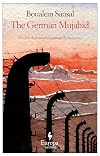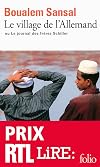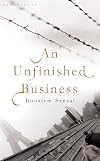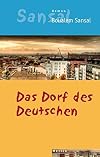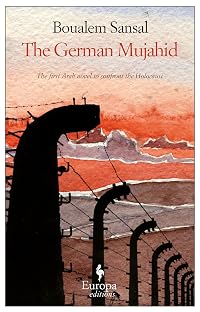
The German Mujahid
by Boualem Sansal
On This Page
Description
Two immigrant brothers discover the truth about their German father's past in this masterly investigation of evil, resistance and guilt, billed as "the first Arab novel to confront the Holocaust." Narrator Malrich, the younger son of a German father and an Algerian mother, lives with relatives in a gritty, mostly Arab housing estate outside Paris. Malrich is an indifferent hoodlum while his older brother, Rachel, has a university degree and a glamorous job at "a multinational." The plot show more hinges on Malrich's reading of Rachel's diary after Rachel commits suicide. After their parents were murdered in Algeria in 1994, Rachel discovered that their father was a Waffen SS officer posted to the death camps. In alternating chapters, the story is perfectly rendered in Malrich's wonderfully adolescent voice and Rachel's increasingly agonized diary entries. All this plays out against Malrich's perceptive likening of Hitler's Germany to the rise of fundamentalist Islamism on his housing estate ... show lessTags
Recommendations
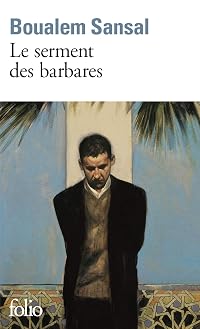










Member Recommendations
Member Reviews
This novel by Algerian author Boualem Sansal offers a unique view of the Holocaust--through the lens of present-day Islamic fundamentalism. Brothers Rachel and Malrich were sent to France from Algeria as young boys for a better education. Rachel, the elder of the two has completed a university education and works for a multinational corporation in Paris. Malrich is a troubled youth, living in a housing division inhabited mostly by emigrants from Muslim countries. The housing division is being infiltrated by and taken over by Islamic fundamentalists who issue fatwahs and terrorize the inhabitants into submission.
When the boys learn that their parents have been slaughtered by Islamic fundamentalists along with most of the other show more inhabitants of their small Algerian village, Rachel is compelled to return to the village to try to comprehend the tragedy. Their father was a German immigrant to Algeria, and their mother was a native of the small village where they lived. In going through their effects, Rachel is stunned to learn that his father was an SS officer at Auschwitz and other death camps.
The novel opens two years later with the suicide of Rachel, whose mental state has deteriorated steadily since learning about his father. Rachel left behind his journals recording his two year journey to try to understand his father's actions. These journals alternate with Malrich's journals to examine these and other issues, in particular how are intelligent people persuaded to shed their humanity, and whether we are answerable for the crimes of our fathers, our brothers, our children?
This is a serious novel of ideas, yet it is also a compelling story of people in difficult circumstances. Highly recommended. show less
When the boys learn that their parents have been slaughtered by Islamic fundamentalists along with most of the other show more inhabitants of their small Algerian village, Rachel is compelled to return to the village to try to comprehend the tragedy. Their father was a German immigrant to Algeria, and their mother was a native of the small village where they lived. In going through their effects, Rachel is stunned to learn that his father was an SS officer at Auschwitz and other death camps.
The novel opens two years later with the suicide of Rachel, whose mental state has deteriorated steadily since learning about his father. Rachel left behind his journals recording his two year journey to try to understand his father's actions. These journals alternate with Malrich's journals to examine these and other issues, in particular how are intelligent people persuaded to shed their humanity, and whether we are answerable for the crimes of our fathers, our brothers, our children?
This is a serious novel of ideas, yet it is also a compelling story of people in difficult circumstances. Highly recommended. show less
Here I am, faced with a question as old as time: are we answerable for the crimes of our fathers, of our brothers, of our children? Our tragedy is that we form a direct line, there is no way out without breaking the chain and vanishing completely.
This powerful, thought provoking and unsettling novel is narrated by Malrich Schiller, a young man born to a German father and an Algerian mother. He was sent from his home village of Aïn Deb in Algeria to a Parisian banlieue by his parents, in order to seek a better life there. Malrich, an abbreviation of his real name, Malek Ulrich, has dropped out of school and has frequently run afoul of the local police in his neighborhood, which is populated by Arab and African emigrants who are largely show more unemployed, bored and trapped in a meaningless existence, while being cowed by local Islamic fundamentalists. His much older brother Rachel, short for Rachid Helmut, also lives nearby; he has a college degree, a successful career in a multinational corporation, and an enviable but troubled marriage. Despite this, he is viewed as an outsider and a sell out by many residents of the banlieue.
Rachel committed suicide in April 1996, after he became increasingly erratic and unreliable, which caused him to lose his job and his wife, Ophélie. After his death she gave Malrich the keys to their house to live in after she moved to Canada, and he soon discovered his brother's diary.
Their parents and dozens of other residents of Aïn Deb were murdered by Islamic fundamentalists two years earlier, in a senseless response to the Algerian military crackdown that followed the election of an Islamist government earlier in the decade. Rachel traveled to his home village soon afterward, and while retrieving his parents' belongings he makes a shocking discovery. His father Hans emigrated from Germany to Egypt and eventually Algeria at the end of World War II, earned the title Mujahid, or Islamic freedom fighter, after he converted from Christianity to Islam and fought bravely in the resistance during the Algerian War for Independence, and was given the honorary title Cheïkh Hassan by his fellow villagers, who often consulted him and respected him for his wisdom and fairness. However, in his personal effects are honorary medals and papers that indicate that he willingly served in the SS during World War II, and was stationed in several of the most notorious concentration camps.
Rachel is profoundly disturbed by this discovery, and feels a suffocating sense of guilt that haunts him over the remainder of his life. He ignores his responsibilities to his job and his wife, and spends his days retracing his father's path from Germany to Egypt to Algeria, in an effort to learn what role his father played in the Holocaust, and how a man who was dearly loved and respected by his family and neighbors could have participated in such monstrous acts. He is likewise troubled by the rise of Islamic fundamentalism in Algeria and the banlieue where he resides, and he sees an uncanny parallel between the two.
When my parents and everyone else in Aïn Deb were murdered by the Islamists, Rachel got to thinking. He figured that fundamentalist Islam and Nazism were kif-kif—same old same old. He wanted to find out what would happen if people did nothing, the way people did nothing in Germany back in the day, what would happen if nobody did anything in Kabul and Algeria where they've got I don't know how many mass graves, or here in France where we've got all these Islamist Gestapo. In the end, the whole idea scared him so much he killed himself.
Malrich is also deeply affected after reading his brother's diary, as his brother hid this knowledge in an effort to protect him, and he is faced with a dilemma: can he stand by and passively accept the atrocities and restrictions that are being inflicted by the Islamic fundamentalists in the banlieue, or even join them in their cause, or should he stand up to them and openly reject their efforts to impose sharia on the community, knowing that he will could potentially pay for his indiscretions with his life?
The German Mujahid is a valuable and necessary book, which explores the history of former Nazis who escaped to Arabic countries toward the end of the Second World War, and compares their crimes to those being committed by Islamic and other religious fundamentalists and dictators throughout the world. It also questions the roles of citizens in these communities, who frequently passively accept or actively participate in crimes against their neighbors. This novel, and much of Sansal's work, was banned in Algeria after it was released. Sansal was recently vilified after his decision to attend the 2012 Jerusalem Writers Festival, which led to the revocation of the €15,000 prize he was slated to receive after he was awarded the Prix du Roman Arabe last year for his novel Rue Darwin. Sansal is a unique and courageous writer, whose voice must not be allowed to fall silent, and this reader eagerly looks forward to the translation of his past and upcoming works into English and the distribution of his books throughout the Arabic world. show less
This powerful, thought provoking and unsettling novel is narrated by Malrich Schiller, a young man born to a German father and an Algerian mother. He was sent from his home village of Aïn Deb in Algeria to a Parisian banlieue by his parents, in order to seek a better life there. Malrich, an abbreviation of his real name, Malek Ulrich, has dropped out of school and has frequently run afoul of the local police in his neighborhood, which is populated by Arab and African emigrants who are largely show more unemployed, bored and trapped in a meaningless existence, while being cowed by local Islamic fundamentalists. His much older brother Rachel, short for Rachid Helmut, also lives nearby; he has a college degree, a successful career in a multinational corporation, and an enviable but troubled marriage. Despite this, he is viewed as an outsider and a sell out by many residents of the banlieue.
Rachel committed suicide in April 1996, after he became increasingly erratic and unreliable, which caused him to lose his job and his wife, Ophélie. After his death she gave Malrich the keys to their house to live in after she moved to Canada, and he soon discovered his brother's diary.
Their parents and dozens of other residents of Aïn Deb were murdered by Islamic fundamentalists two years earlier, in a senseless response to the Algerian military crackdown that followed the election of an Islamist government earlier in the decade. Rachel traveled to his home village soon afterward, and while retrieving his parents' belongings he makes a shocking discovery. His father Hans emigrated from Germany to Egypt and eventually Algeria at the end of World War II, earned the title Mujahid, or Islamic freedom fighter, after he converted from Christianity to Islam and fought bravely in the resistance during the Algerian War for Independence, and was given the honorary title Cheïkh Hassan by his fellow villagers, who often consulted him and respected him for his wisdom and fairness. However, in his personal effects are honorary medals and papers that indicate that he willingly served in the SS during World War II, and was stationed in several of the most notorious concentration camps.
Rachel is profoundly disturbed by this discovery, and feels a suffocating sense of guilt that haunts him over the remainder of his life. He ignores his responsibilities to his job and his wife, and spends his days retracing his father's path from Germany to Egypt to Algeria, in an effort to learn what role his father played in the Holocaust, and how a man who was dearly loved and respected by his family and neighbors could have participated in such monstrous acts. He is likewise troubled by the rise of Islamic fundamentalism in Algeria and the banlieue where he resides, and he sees an uncanny parallel between the two.
When my parents and everyone else in Aïn Deb were murdered by the Islamists, Rachel got to thinking. He figured that fundamentalist Islam and Nazism were kif-kif—same old same old. He wanted to find out what would happen if people did nothing, the way people did nothing in Germany back in the day, what would happen if nobody did anything in Kabul and Algeria where they've got I don't know how many mass graves, or here in France where we've got all these Islamist Gestapo. In the end, the whole idea scared him so much he killed himself.
Malrich is also deeply affected after reading his brother's diary, as his brother hid this knowledge in an effort to protect him, and he is faced with a dilemma: can he stand by and passively accept the atrocities and restrictions that are being inflicted by the Islamic fundamentalists in the banlieue, or even join them in their cause, or should he stand up to them and openly reject their efforts to impose sharia on the community, knowing that he will could potentially pay for his indiscretions with his life?
The German Mujahid is a valuable and necessary book, which explores the history of former Nazis who escaped to Arabic countries toward the end of the Second World War, and compares their crimes to those being committed by Islamic and other religious fundamentalists and dictators throughout the world. It also questions the roles of citizens in these communities, who frequently passively accept or actively participate in crimes against their neighbors. This novel, and much of Sansal's work, was banned in Algeria after it was released. Sansal was recently vilified after his decision to attend the 2012 Jerusalem Writers Festival, which led to the revocation of the €15,000 prize he was slated to receive after he was awarded the Prix du Roman Arabe last year for his novel Rue Darwin. Sansal is a unique and courageous writer, whose voice must not be allowed to fall silent, and this reader eagerly looks forward to the translation of his past and upcoming works into English and the distribution of his books throughout the Arabic world. show less
Billed as the first Arab novel to confront the Holocaust, The German Mujahid is a book that can be read in many different ways. Some reviewers have focused on Sansal's condemnation of the Algerian military, Islamic fundamentalists, and the corruption of life in modern Algeria. (The book has been banned there). Other reviewers on the oblique comparison of the ways in which the modern Islamic fundamentalists and the former Nazis wield power. What struck me most, however, was the question To what extent are we responsible for the crimes of our parents?
Rachel and Malrich Schiller brothers were born in Algeria to a German father and Algerian mother. In an effort to provide them with more opportunities, the parents send first one and then the show more other brother to France to live with their uncle. Growing up in one of the many tough Muslim ghettos in France, Rachel, the oldest, becomes the model immigrant, boldly striving for success in his new country. Seventeen-year-old Malrich, on the other hand, is struggling to create an identity for himself and is often in trouble with his uncle, his school, and the police. The book begins: Rachel died six months ago.
His brother's death leads Malrich on a voyage of discovery about his family, his brother, and himself. He begins reading Rachel's diary and learns that his brother's descent into madness and suicide began with the massacre of their parents in their backwater Algerian village by Islamic fundamentalists two years ago. Rachel was horrified by the event and returned to the bled to try and reconnect and find closure. Instead he finds that his father has been buried under another name and that he kept a box of memorabilia under his bed which contains Nazi memorabilia. What does this mean? Rachel is driven to get to the truth of his father's past, even if it means destroying his present. As Malrich reads about his brother's life, he also has to make decisions about his own. Should he let himself be persuaded by his brother's posthumous guilt? How should he live with the knowledge that his brother has given him?
Because of the setting and Islamic tie-ins, The German Mujahid is an unusual exploration of the post-Holocaust question of guilt and justice. Equally compelling is the story of these two brothers, linked by the diary. Never especially close growing up, the diary is a way for the brothers to communicate on a completely different level: Rachel revealed as vulnerable and confused, Malrich enabled to make decisions about his life. I found myself wanting to read as fast as I could to uncover the plot, and at the same time wanting to savor and ponder particular descriptions or philosophical questions. With the use of sticky notes and scraps of paper, I was able to do both, but it is definitely a book I see myself reading again. It was a perfect follow up to my reading [The Good German], which deals with these questions from the German perspective. Instead of the immediate post-war period, however, , is set a generation later, but continues to probe the essence of guilt, justice, and reparations.
Edited to fix deleted line. show less
Rachel and Malrich Schiller brothers were born in Algeria to a German father and Algerian mother. In an effort to provide them with more opportunities, the parents send first one and then the show more other brother to France to live with their uncle. Growing up in one of the many tough Muslim ghettos in France, Rachel, the oldest, becomes the model immigrant, boldly striving for success in his new country. Seventeen-year-old Malrich, on the other hand, is struggling to create an identity for himself and is often in trouble with his uncle, his school, and the police. The book begins: Rachel died six months ago.
His brother's death leads Malrich on a voyage of discovery about his family, his brother, and himself. He begins reading Rachel's diary and learns that his brother's descent into madness and suicide began with the massacre of their parents in their backwater Algerian village by Islamic fundamentalists two years ago. Rachel was horrified by the event and returned to the bled to try and reconnect and find closure. Instead he finds that his father has been buried under another name and that he kept a box of memorabilia under his bed which contains Nazi memorabilia. What does this mean? Rachel is driven to get to the truth of his father's past, even if it means destroying his present. As Malrich reads about his brother's life, he also has to make decisions about his own. Should he let himself be persuaded by his brother's posthumous guilt? How should he live with the knowledge that his brother has given him?
Because of the setting and Islamic tie-ins, The German Mujahid is an unusual exploration of the post-Holocaust question of guilt and justice. Equally compelling is the story of these two brothers, linked by the diary. Never especially close growing up, the diary is a way for the brothers to communicate on a completely different level: Rachel revealed as vulnerable and confused, Malrich enabled to make decisions about his life. I found myself wanting to read as fast as I could to uncover the plot, and at the same time wanting to savor and ponder particular descriptions or philosophical questions. With the use of sticky notes and scraps of paper, I was able to do both, but it is definitely a book I see myself reading again. It was a perfect follow up to my reading [The Good German], which deals with these questions from the German perspective. Instead of the immediate post-war period, however, , is set a generation later, but continues to probe the essence of guilt, justice, and reparations.
Edited to fix deleted line. show less
Boualem Sansal has been described as a writer "exiled in his own country" of Algeria. Despite being awarded international prizes for writing, he has been stripped of his post as a high government official and his books are banned. In a country having its share of powerful, extremist Islamic factions it's not particularly hard to understand this. Sansal's novel draws stark parallels between modern jihadists who target Jews, Westerners, journalists, intellectuals and the genocide of Himmler's Final Solution.
Loosely based upon a real village chief he encountered when he was young, Sansal's story is one of two brothers of mixed German and Algerian parentage who live in France and, after the murder of their parents by Islamic terrorists, show more learn that their father was not only a village chief and hero of the Algerian independence struggle, he had also been an SS Hauptsturmführer in the Nazi death camps, a chemical engineer who helped to develop Zyklon B.
The book opens with the suicide of the older brother, Rachel, and delivery of his diaries to his brother, Malrich, who knows nothing of what Rachel had found about their parent. The reader follows Malrich as he struggles to understand why his brother could not bear to continue living and to come to his own terms with his father's past. Realizing that you "can't commit atrocities with enlightened people, you need hatred, blindness, and a knee-jerk xenophobia," he looks around at the growth all three in the Algerian ghetto and understands that he faces the same social choices as his father did: to conform and become a part of the howling mob, or to take a stand and risk his own destruction.
My perception of the subtitle of this book, "The first Arab novel to confront the Holocaust", changed significantly while reading it. I thought initially that the book would attempt come to grips with an Arabic perspective on Jews, either to explain or disavow institutionalized anti-Semitism. Instead, Sansal explores the idea that the steps from intolerance and violence to the systematic genocide of National Socialism are neither long nor complex.
Definitely recommended. show less
Loosely based upon a real village chief he encountered when he was young, Sansal's story is one of two brothers of mixed German and Algerian parentage who live in France and, after the murder of their parents by Islamic terrorists, show more learn that their father was not only a village chief and hero of the Algerian independence struggle, he had also been an SS Hauptsturmführer in the Nazi death camps, a chemical engineer who helped to develop Zyklon B.
The book opens with the suicide of the older brother, Rachel, and delivery of his diaries to his brother, Malrich, who knows nothing of what Rachel had found about their parent. The reader follows Malrich as he struggles to understand why his brother could not bear to continue living and to come to his own terms with his father's past. Realizing that you "can't commit atrocities with enlightened people, you need hatred, blindness, and a knee-jerk xenophobia," he looks around at the growth all three in the Algerian ghetto and understands that he faces the same social choices as his father did: to conform and become a part of the howling mob, or to take a stand and risk his own destruction.
My perception of the subtitle of this book, "The first Arab novel to confront the Holocaust", changed significantly while reading it. I thought initially that the book would attempt come to grips with an Arabic perspective on Jews, either to explain or disavow institutionalized anti-Semitism. Instead, Sansal explores the idea that the steps from intolerance and violence to the systematic genocide of National Socialism are neither long nor complex.
Definitely recommended. show less
Brothers Rachel and Malrich were born in a remote Algerian village to a German father and an Algerian mother (gosh, don't people end up in some strange places? how does a German come to be in an Algerian bled? You might well ask...) before being sent to France, one after the other, to live with family friends and go to school in one of the infamous Parisian high-rise banlieus. Rachel rises above the tower blocks, gets a good education and ends up with an excellent job and a house in a nice area, happily married, whilst the younger Malrich, tough and streetwise, has embraced gangster culture and flirted with the Islamist ideology increasingly prevalent on the estate.
The novel opens with news of Rachel's suicide, which Malrich is at a show more loss to understand, since as far as he can see his brother had it all...until the local police commissioner passes on Rachel's diaries, from which we learn that Rachel's descent into madness was triggered by a raid by Islamist fundamentalists on their home village a couple of years earlier, in which many villagers, including their parents, were murdered. We learn about Rachel's visit to the village (a risky undertaking), and his discovery of a box of their father's belongings, including items which clearly suggest their father had been a Nazi (their father had never discussed his past with them). Piecing together their father's role in the Holocaust becomes an obsession for Rachel, costing him his job, his marriage, his sanity, and ultimately his life.
Rachel is unable to shake off the idea that he, the son, is responsible for the sins of his father, which to Malrich is nonsense at first. Malrich, however, comes to feel that he has to complete his brother's unfinished business (hence the UK title, also the title of a Primo Levi poem included in the opening pages), and embarks on his own journey, both physically and metaphorically.
I think we've all read novels where there are too many threads, where you end up thinking, 'why couldn't you just concentrate on the essentials? why do you have to prove to me that you know about all these other things too?'; this novel's not like that. There is an astonishing amount crammed into under 250 pages (the Holocaust, Nazi war criminals, the civil war in Algeria, Islamic fundamentalism, the Parisian banlieus and their problems, racism, the integration of immigrants in France, etc etc), but it's all very necessary and it all works. And not only that - it all makes for a really compelling novel. Not comfortable to read, but one I couldn't put down. show less
The novel opens with news of Rachel's suicide, which Malrich is at a show more loss to understand, since as far as he can see his brother had it all...until the local police commissioner passes on Rachel's diaries, from which we learn that Rachel's descent into madness was triggered by a raid by Islamist fundamentalists on their home village a couple of years earlier, in which many villagers, including their parents, were murdered. We learn about Rachel's visit to the village (a risky undertaking), and his discovery of a box of their father's belongings, including items which clearly suggest their father had been a Nazi (their father had never discussed his past with them). Piecing together their father's role in the Holocaust becomes an obsession for Rachel, costing him his job, his marriage, his sanity, and ultimately his life.
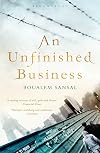
Rachel is unable to shake off the idea that he, the son, is responsible for the sins of his father, which to Malrich is nonsense at first. Malrich, however, comes to feel that he has to complete his brother's unfinished business (hence the UK title, also the title of a Primo Levi poem included in the opening pages), and embarks on his own journey, both physically and metaphorically.
I think we've all read novels where there are too many threads, where you end up thinking, 'why couldn't you just concentrate on the essentials? why do you have to prove to me that you know about all these other things too?'; this novel's not like that. There is an astonishing amount crammed into under 250 pages (the Holocaust, Nazi war criminals, the civil war in Algeria, Islamic fundamentalism, the Parisian banlieus and their problems, racism, the integration of immigrants in France, etc etc), but it's all very necessary and it all works. And not only that - it all makes for a really compelling novel. Not comfortable to read, but one I couldn't put down. show less
Boualem Sansal's second novel centers on two immigrant brothers, Malrich and Rachel, living in Paris. They have emigrated from Algeria, in a village where their Algerian mother and German father still reside.
The novel is narrated by both Malrich and Rachel, via their journals. Malrich discovers his older brother's diary after his death; as he reads it, he learns of the terrible family secret that led to his brother's demise. Their father was an SS officer in Nazi Germany. Through the journals of the brothers, the novel depicts how each deals with the vicarious shame and horror of what their father has done. Rachel's voice is pained and poignant; heart-wrenching to read and impossible to turn away from. Malrich's adolescent voice is show more equally poignant but also tinged with a cynical, sardonic humor somewhat reminiscent of, but to me, much more likeable than, that of Holden Caufield in "Catcher in the Rye." The writing style is just gorgeous; it gathers momentum and pulls the reader right into the story and emotions of the characters.
The story delves deeply into the atrocities of the Holocaust and themes of responsibility and restitution. Simultaneously, it explores the similarities between Naziism and Islamic fundamentalism, and makes a compelling argument that the ideas behind and the ultimate outcome of the two are very closely related. Malrich, living in a "sink estate" or ghetto in Paris, finds his estate taken over by fundamentalists and fears that, just as with the Holocaust, no one will take action until it's too late.
This is a beautifully written novel that is often painful to read, but in a necessary way. It provides no easy answers, but raises important and timely questions. Very highly recommended. show less
The novel is narrated by both Malrich and Rachel, via their journals. Malrich discovers his older brother's diary after his death; as he reads it, he learns of the terrible family secret that led to his brother's demise. Their father was an SS officer in Nazi Germany. Through the journals of the brothers, the novel depicts how each deals with the vicarious shame and horror of what their father has done. Rachel's voice is pained and poignant; heart-wrenching to read and impossible to turn away from. Malrich's adolescent voice is show more equally poignant but also tinged with a cynical, sardonic humor somewhat reminiscent of, but to me, much more likeable than, that of Holden Caufield in "Catcher in the Rye." The writing style is just gorgeous; it gathers momentum and pulls the reader right into the story and emotions of the characters.
The story delves deeply into the atrocities of the Holocaust and themes of responsibility and restitution. Simultaneously, it explores the similarities between Naziism and Islamic fundamentalism, and makes a compelling argument that the ideas behind and the ultimate outcome of the two are very closely related. Malrich, living in a "sink estate" or ghetto in Paris, finds his estate taken over by fundamentalists and fears that, just as with the Holocaust, no one will take action until it's too late.
This is a beautifully written novel that is often painful to read, but in a necessary way. It provides no easy answers, but raises important and timely questions. Very highly recommended. show less
I picked this novel up as part of my efforts to read literature from all parts of the world, especially in translation. This was my first Algerian author, and also one of a handful of Arab novels I have read. Sansal was awarded the Best First Novel Prize in France for his 1999 novel Le serment des barbares, which I don’t believe has been translated into English. The German Mujahid won the RTL-Lire Prize for Fiction in France and was translated by Frank Wynne who has received numerous awards for his work with Frédéric Beigbeder and Michel Houellebecq.
The German Mujahid is a grim novel. One of the first, if not the first, Arab novel to deal with the holocaust, it also draws parallels between the Nazis, the bloody Algerian war of show more independence with its equally violent aftermath of fundamentalism, and the repressive and frightening Islamic slums of Paris in the 1990's. The fact that it is based on a true story only adds to its power.
What if you discovered that your deceased parent was a war criminal? What if the evidence you uncovered made it impossible to believe they were just “following orders” but were proud and enthusiastic in taking part in the holocaust? Where would that knowledge take you? What effect would it have on you? Sansal shows two possible outcomes through the entries in two brothers diaries. Born in the remote bled(countryside) of Algeria and sent by their father to live with their simple and pious Aunt and Uncle in an Arab estate on the outskirts of Paris, the boys begin to learn the truth after their parents are massacred by Islamic fundamentalists. The effect on the sons as the truth oozes out is mesmerizing and gruesome. This book will bring the horrors of the holocaust and its relatives into your consciousness. These things need to be read about, acknowledged and talked about to keep them from continuing to happen. Read this book but be ready to learn from it. show less
The German Mujahid is a grim novel. One of the first, if not the first, Arab novel to deal with the holocaust, it also draws parallels between the Nazis, the bloody Algerian war of show more independence with its equally violent aftermath of fundamentalism, and the repressive and frightening Islamic slums of Paris in the 1990's. The fact that it is based on a true story only adds to its power.
What if you discovered that your deceased parent was a war criminal? What if the evidence you uncovered made it impossible to believe they were just “following orders” but were proud and enthusiastic in taking part in the holocaust? Where would that knowledge take you? What effect would it have on you? Sansal shows two possible outcomes through the entries in two brothers diaries. Born in the remote bled(countryside) of Algeria and sent by their father to live with their simple and pious Aunt and Uncle in an Arab estate on the outskirts of Paris, the boys begin to learn the truth after their parents are massacred by Islamic fundamentalists. The effect on the sons as the truth oozes out is mesmerizing and gruesome. This book will bring the horrors of the holocaust and its relatives into your consciousness. These things need to be read about, acknowledged and talked about to keep them from continuing to happen. Read this book but be ready to learn from it. show less
Members
- Recently Added By
Lists

Europa, Europa!
13 works; 3 members

Books Read in 2017
4,249 works; 130 members

Books Read in 2015
3,299 works; 129 members

Books translated from Romance Languages into English
102 works; 6 members

Arab and Arab Diaspora Literature We Recommend
112 works; 53 members
Author Information

Some Editions
Awards and Honors
Series
Belongs to Publisher Series
Common Knowledge
- Canonical title*
- Le village de l'Allemand ou Le journal des frères Schiller
- Original title
- Le village de l'Allemand ou le journal des frères Schiller
- Alternate titles
- An Unfinished Business
- Original publication date
- 2008; 2009 (English Edition) (English Edition)
- Important places
- Algeria; Paris, France; Auschwitz concentration camp, Oświęcim, Lesser Poland, Poland
- Epigraph*
- Je remercie très affectueusement Mme Dominique G.H., professeur au lycée A.M., qui a bien voulu réécrire mon livre en bon français. Son travail est tellement magnifique que je n’ai pas reconnu mon texte. J’ai eu du m... (show all)al à le lire. Elle l’a fait en mémoire de Rachel qu’elle a eu comme élève. « Son meilleur élève », a-t-elle souligné.
Dans certains cas, j’ai suivi ses conseils, j’ai changé des noms et supprimé des commentaires. Dans d’autres, j’ai conservé ma rédaction, c’est important pour moi. Elle dit qu’il y a des parallèles dangereux qui pourraient me valoir des ennuis. Je m’en fiche, ce que j’avais à dire, je l’ai dit, point, et je signe :
MALRICH SCHILLER. - First words
- Rachel died six months ago.
- Quotations
- Here I am, faced with a question as old as time: are we answerable for the crimes of our fathers, of our brothers, of our children? Our tragedy is that we form a direct line, there is no way out without breaking the chain and... (show all) vanishing completely.
When my parents and everyone else in Aïn Deb were murdered by the Islamists, Rachel got to thinking. He figured that fundamentalist Islam and Nazism were kif-kif—same old same old. He wanted to find out what would h... (show all)appen if people did nothing, the way people did nothing in Germany back in the day, what would happen if nobody did anything in Kabul and Algeria where they've got I don't know how many mass graves, or here in France where we've got all these Islamist Gestapo. In the end, the whole idea scared him so much he killed himself. - Original language
- French
- Disambiguation notice
- Published in the US as The German Mujahid and in the UK as An Unfinished Business.
*Some information comes from Common Knowledge in other languages. Click "Edit" for more information.
Classifications
Statistics
- Members
- 280
- Popularity
- 115,184
- Reviews
- 20
- Rating
- (3.78)
- Languages
- 11 — Czech, Danish, Dutch, English, Finnish, French, German, Hebrew, Italian, Norwegian (Bokmål), Spanish
- Media
- Paper, Ebook
- ISBNs
- 20
- ASINs
- 4